
If you’re in manufacturing, automotive, or aerospace, you know that traditional rust removal is a messy, time-consuming, and often destructive process. A laser rust remover offers a modern, high-tech solution that is faster, more precise, and safer than sandblasting or chemical treatments. This technology uses a non-contact, non-abrasive process to vaporize rust and other contaminants from a surface, leaving the underlying metal completely unharmed. For engineers, operations managers, and procurement specialists looking to improve efficiency, enhance quality, and reduce operational costs, laser cleaning represents the future of industrial surface preparation.

This guide provides the key information you need to understand, compare, and choose the right laser rust removal system for your work.
How Does Laser Rust Removal Work?
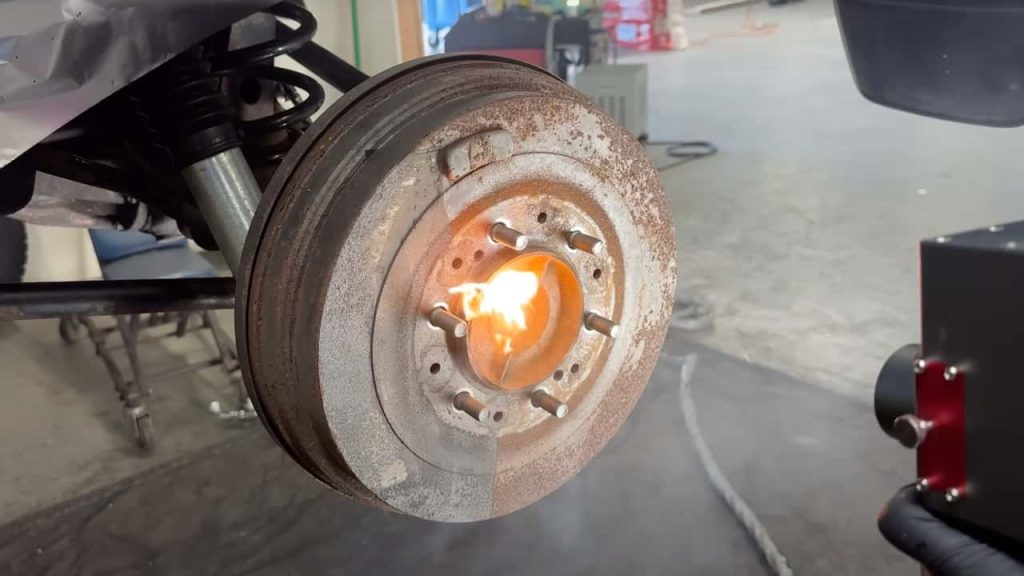
The technology behind laser rust removal is a process called laser ablation. It works by directing short, powerful pulses of light onto a surface. The contaminant layer—like rust—absorbs this energy, heats up instantly, and vaporizes, leaving the clean substrate behind.
The Ablation Threshold
Every material has a unique ablation threshold—a minimum energy level required to vaporize it. The success of laser cleaning hinges on a critical difference: rust, paint, and oil have a much lower ablation threshold than the metals they form on, like steel and aluminum.
A laser rust remover is precisely tuned to deliver an energy level that is above the threshold for rust but safely below the damage threshold of the underlying metal. This allows the laser to completely remove the corrosion layer without affecting the structural integrity of the part itself.
Laser Cleaning vs. Traditional Methods
For decision-makers in the consideration stage, comparing laser cleaning to legacy methods reveals clear advantages in efficiency, safety, and total cost of ownership.
Laser Cleaning vs. Sandblasting
- The Problem with Sandblasting: Abrasive blasting is a destructive process that erodes the base metal, creates enormous amounts of hazardous dust and secondary waste, and poses significant health risks to operators from noise and airborne particles.
- The Laser Solution: Laser cleaning is a non-contact process that preserves the substrate. It generates minimal waste, which is immediately captured by an integrated fume extraction system, and is significantly quieter and safer for operators.
Laser Cleaning vs. Chemical Treatments
- The Problem with Chemicals: Using acids to dissolve rust involves hazardous materials that pose risks of chemical burns and toxic fume inhalation. The process is slow, requires multiple steps (including rinsing and drying), and generates liquid waste that is expensive to dispose of properly.
- The Laser Solution: Laser rust removal is a completely chemical-free process. It produces no hazardous liquid waste and is dramatically faster, reducing project timelines from hours to minutes.
Laser Cleaning vs. Mechanical Grinding (Wire Wheels, Sanding)
- The Problem with Grinding: Using wire wheels or grinders is highly labor-intensive, provides inconsistent results, and invariably leaves deep scratches and gouges on the metal surface. This damage can weaken the part and create new sites for corrosion to form.
- The Laser Solution: Laser cleaning is a perfectly repeatable and controllable process. It can be fully automated to deliver consistent, high-quality results while preserving the original surface texture and dimensions of the component.
| Feature | Laser Cleaning | Sandblasting | Chemical Cleaning |
| Substrate Damage | None | High | Medium (Etching) |
| Waste Generation | Minimal (Filtered Dust) | Very High | High (Liquid Waste) |
| Operating Cost | Very Low | High | High |
| Operator Safety | High | Very High | Very High |
Types of Laser Cleaners: Pulsed vs. Continuous Wave (CW)
Laser cleaners deliver energy in one of two ways: pulsed or continuous wave. The choice between them is critical and depends entirely on your application’s requirements for precision and speed.
Pulsed Lasers: For Precision and Heat-Sensitive Materials
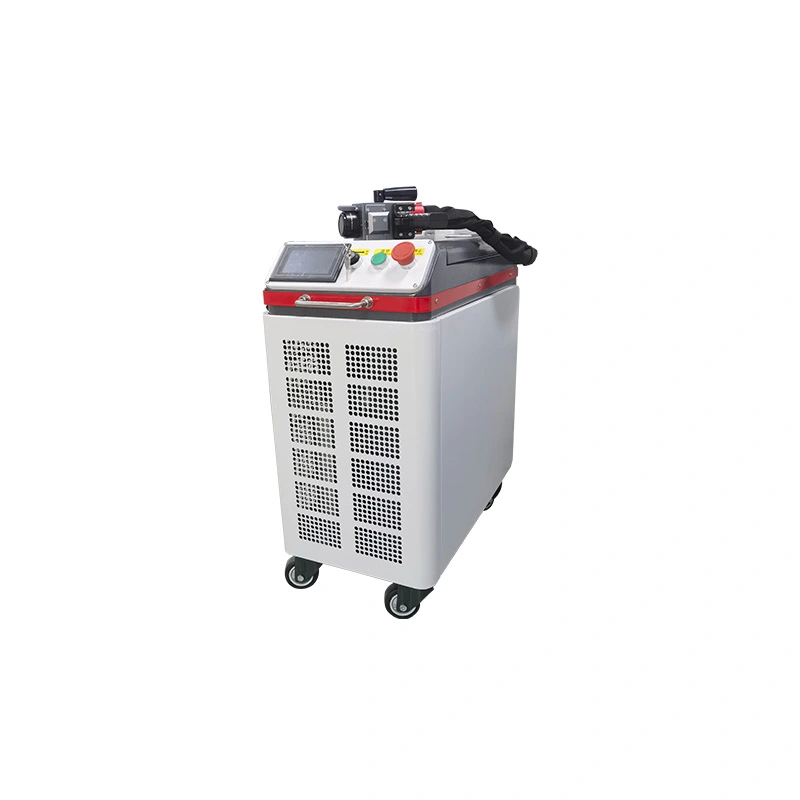
Pulsed lasers emit energy in short, high-power bursts with brief pauses in between. This method creates a “cold” ablation process, as the heat generated from vaporizing the contaminant doesn’t have time to transfer into the substrate.
- Choose Pulsed Lasers for: Precision tasks, cleaning thin metals, or working on delicate components where any heat-affected zone (HAZ) is unacceptable.
Continuous Wave (CW) Lasers: For Speed on Heavy-Duty Jobs
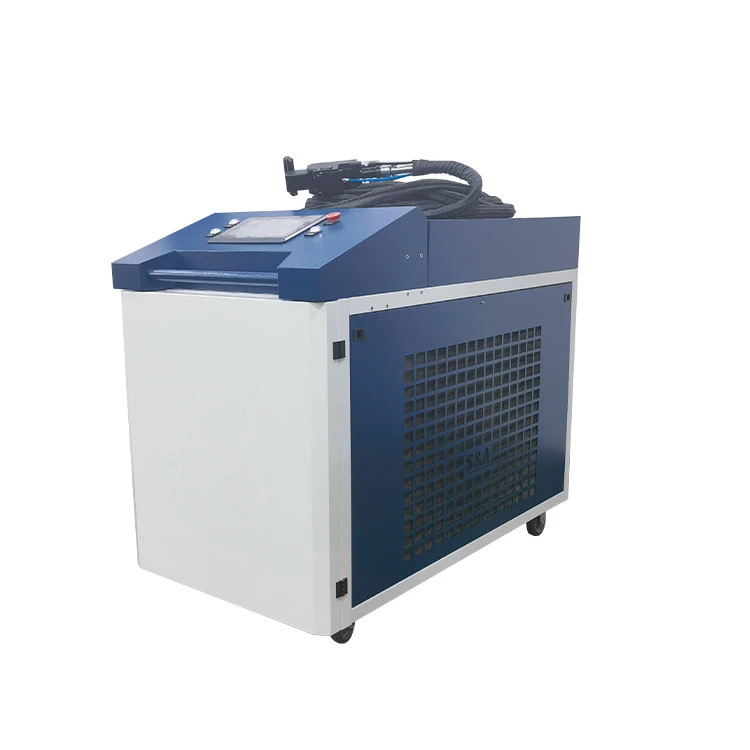
Continuous Wave (CW) lasers emit a constant, uninterrupted beam of light. They are generally more cost-effective and available in higher average power levels (1000W to 3000W+), making them ideal for cleaning large, robust surfaces quickly.
- Choose CW Lasers for: Heavy-duty applications on thick metal structures like ship hulls, pipelines, or large steel plates where maximum cleaning speed is the priority and a small HAZ is tolerable.
How to Choose the Right Laser Rust Remover
For buyers in the decision stage, selecting the right system requires a clear evaluation of your specific operational needs.
5 Key Factors to Consider Before You Buy
- Application and Material: What are you cleaning? The substrate (e.g., steel, aluminum) and contaminant (light rust, thick paint, oil) will determine the best laser type and power level. For example, delicate artifact restoration requires low-power pulsed lasers (50-100W), while heavy rust on ship hulls needs high-power CW lasers (1000-3000W).
- Required Power (Wattage): Power dictates cleaning speed. Match the wattage to the task to ensure efficiency without overspending.
- Low Power (50W–200W): Best for light rust, precision work, and delicate surfaces.
- Medium Power (200W–500W): The workhorse for general industrial use, including paint stripping and mold cleaning.
- High Power (1000W+): Reserved for heavy-duty, large-scale industrial cleaning.
- System Configuration: Do you need portability or automation?
- Handheld Systems: Ideal for field repairs, large or immovable objects, and spot cleaning.
- Automated/Fixed Systems: Designed for integration into production lines for high-throughput, repeatable cleaning.
- Laser Type (Pulsed vs. CW): As covered in the Laser Type section above, choose a pulsed laser for precision work and thin metals, or a CW laser for high-speed industrial cleaning on robust surfaces.
- Vendor Support and Training: Choose a reputable supplier that offers comprehensive after-sales support, including installation, operator training, a solid warranty, and readily available technical assistance. This is crucial for minimizing downtime and maximizing your return on investment.
Understanding the Total Cost of Ownership (TCO)
While the initial capital expenditure (CapEx) for a laser rust remover is high, its operational expenditure (OpEx) is minimal.
- Initial Cost: Prices can range from under $4,500 for entry-level models to over $80,000 for high-power industrial systems.
- Operating Cost: The only significant ongoing cost is electricity, which is often just $1 to $2 per hour for a 1000W system. There are no consumables like abrasive media or chemicals to purchase, and no hazardous waste to dispose of.
- Return on Investment (ROI): Because of the dramatic reduction in labor, consumables, and waste management costs, many businesses achieve a full ROI in just one to three years.
Essential Safety Protocols for Laser Cleaning
Class 4 industrial lasers are powerful tools that demand strict adherence to safety protocols.
Primary Hazards to Be Aware Of
- Eye Damage: This is the most severe risk. An invisible laser beam, whether direct or reflected, can cause immediate and permanent retinal damage, leading to blindness.
- Fume Inhalation: The ablation process creates a plume of nanoparticles that can be toxic if inhaled. An effective fume extraction system is mandatory.
- Skin Burns and Fire Risk: Direct contact with the beam will cause severe burns, and the intense heat can ignite flammable materials in the work area.
Must-Have Personal Protective Equipment (PPE)
- Laser Safety Goggles: This is the most critical piece of PPE. Goggles must be rated for the specific wavelength of the laser (e.g., Optical Density OD 6+ for 1064 nm fiber lasers). Standard safety glasses offer no protection.
- Respirator: An N95/P100 particulate respirator or a Powered Air-Purifying Respirator (PAPR) should be used to protect against fume inhalation.
- Flame-Resistant Clothing: FR-rated clothing and leather gloves protect the skin from burns and fire hazards.
Frequently Asked Questions (FAQ)
No. When parameters are set correctly, the laser energy is only sufficient to vaporize the rust layer, leaving the metal substrate completely untouched and structurally sound.
The rust is vaporized into a fine dust and fume, which is immediately captured by an integrated fume extraction and filtration system. This keeps the work area clean and safe.
Yes. Laser systems are highly effective at removing a wide range of contaminants, including paint, coatings, oils, and oxides, by adjusting the laser parameters for each specific material.
Yes, provided that all safety protocols are strictly followed. This includes using a designated and controlled work area, removing all flammable materials, and wearing the correct PPE at all times, especially certified laser safety goggles.
Conclusion: The Future of Industrial Cleaning
Laser rust removal is not the right solution for every job, but it is often the better choice when surface protection, repeatability, and low secondary waste matter. For precision parts, thin metals, molds, and restoration work, it offers clear advantages over abrasive and chemical methods. For large-scale, heavy-duty cleaning, the right result depends on the material, rust severity, required speed, and whether pulsed or CW cleaning is more suitable.
The key is not simply choosing a laser rust remover, but choosing the right system for your actual application. If you evaluate the substrate, contamination level, throughput needs, and safety requirements first, you will make a better investment and get more reliable cleaning results over time.
Ready to see how laser cleaning can optimize your process? Schedule a complimentary application audit with our experts to analyze your needs and calculate your potential ROI.
FAQs
No, laser rust removal does not damage the base metal when the settings are correct. The laser targets the rust layer first, so the underlying metal stays intact. This makes it suitable for precision parts, thin metals, and surfaces that cannot tolerate abrasive cleaning.
Laser rust removal is better than sandblasting when surface protection, precision, and low secondary waste matter. Sandblasting is still better for some large-scale, heavy-duty jobs that need fast bulk removal or a rough surface profile before coating.
A laser rust remover can clean steel, stainless steel, iron, aluminum, and other common metal surfaces. It can also remove rust, paint, oxide layers, oil, and some coatings. Results depend on the laser type, power level, and the sensitivity of the base material.
Choose a pulsed laser for delicate parts, thin metals, and precision cleaning. Choose a CW laser for larger, tougher surfaces where cleaning speed matters more. The best option depends on rust severity, substrate sensitivity, and required production efficiency.
Yes, a laser rust remover is often worth the investment for businesses that need frequent, repeatable cleaning. Although the upfront cost is higher, it can reduce labor, consumables, cleanup time, and waste handling costs over the long term.