
When operations and procurement managers first research pricing, many encounter a confusing paradox: some 1500W “laser cleaners” cost $2,500, while many 100W models are listed for $5,000 or more. This isn’t a typo. The high price of a professional laser rust removal machine is a direct reflection of its complex, high-tech components, and the market is split between two fundamentally different technologies.
The short answer: Laser rust removal machines are expensive because their “laser source”—the heart of the machine—is an incredibly complex, high-tech component. The high price of a premium machine is a direct payment for precision, safety, and the ability to remove contaminants without damaging the high-value part underneath.
This guide deconstructs the cost drivers for an industrial buyer, comparing the cheap “brute force” tools with the high-end precision systems to explain what you are—and are not—paying for.

The Great Divide: “Brute Force” CW vs. “Precision” Pulsed Lasers
The single biggest factor in laser cleaning cost is the type of laser source. The market is not selling one tool at different quality levels; it is selling two different tools—a blowtorch and a scalpel—that are often given the same name.
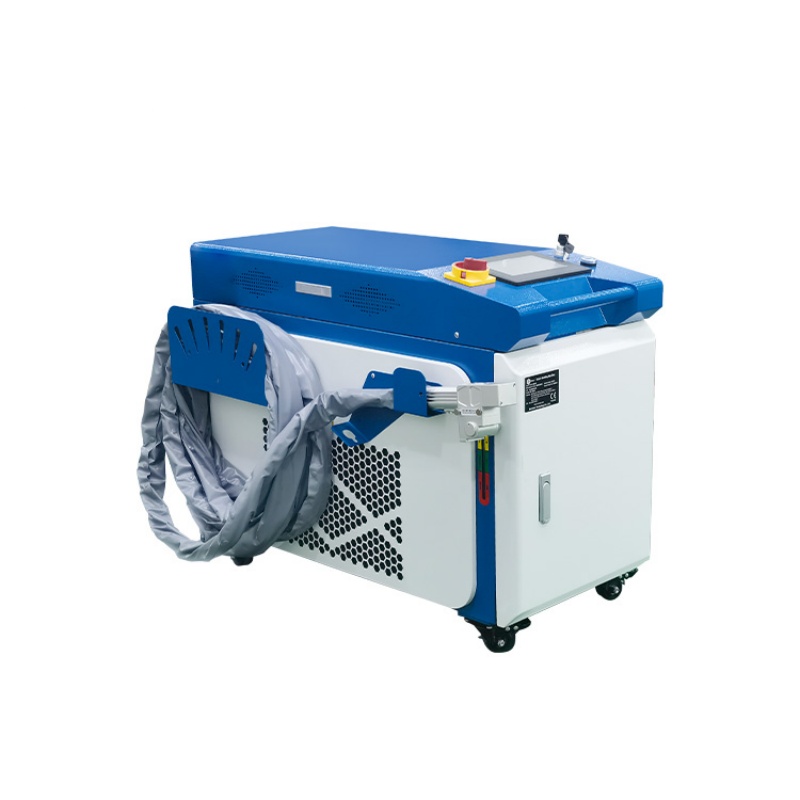
The “Brute Force” Tool: Continuous Wave (CW) Lasers
- 2025 Est. Price (1500W – 3000W): $2,500 – $15,000+
- What It Is: A Continuous Wave (CW) laser emits a constant, uninterrupted beam of light.
- Mechanism: This method relies on “high-temperature burning”. It continuously dumps high-energy heat into the surface, melting and burning the contaminant layer off.
- The Catch (The Hidden Cost): This brute-force heating introduces a significant thermal load. It can easily warp, melt, discolor, or “scratch… everything you touch”. Many cheap CW systems are simply repurposed laser cutting sources with a handheld attachment.
- Best For: Heavy rust on thick, robust, non-delicate surfaces where substrate damage or heat-affected zones are acceptable (e.g., shipping containers, thick steel plates).
The “Precision” Tool: Pulsed Lasers
- 2025 Est. Price (50W – 300W+): $3,500 – $20,000+ (and up to $150,000 for high-end systems )
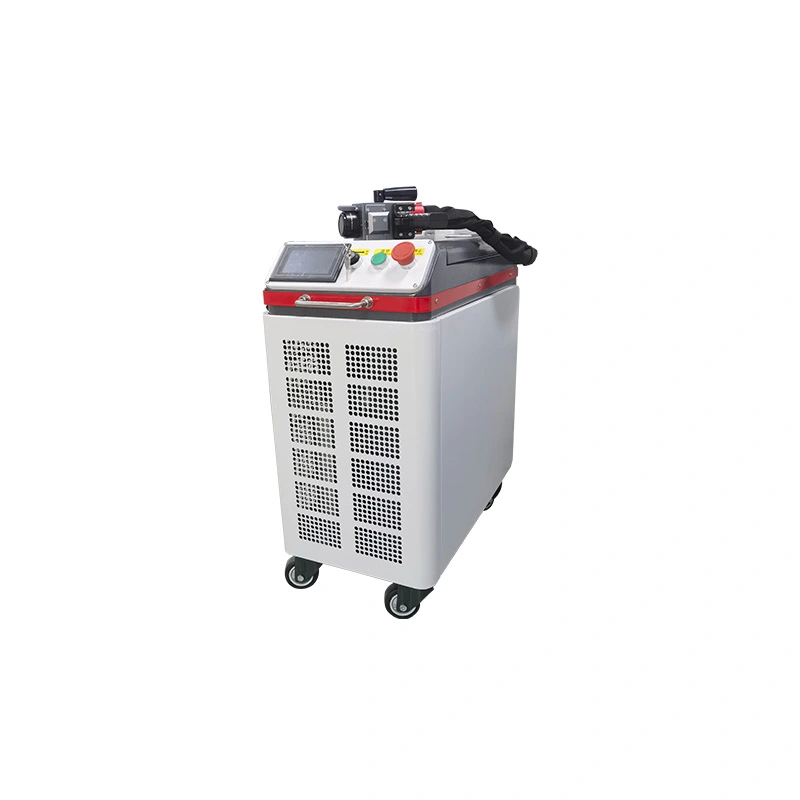
- What It Is: A pulsed laser emits energy in extremely short, intense “bursts” or “pulses”.
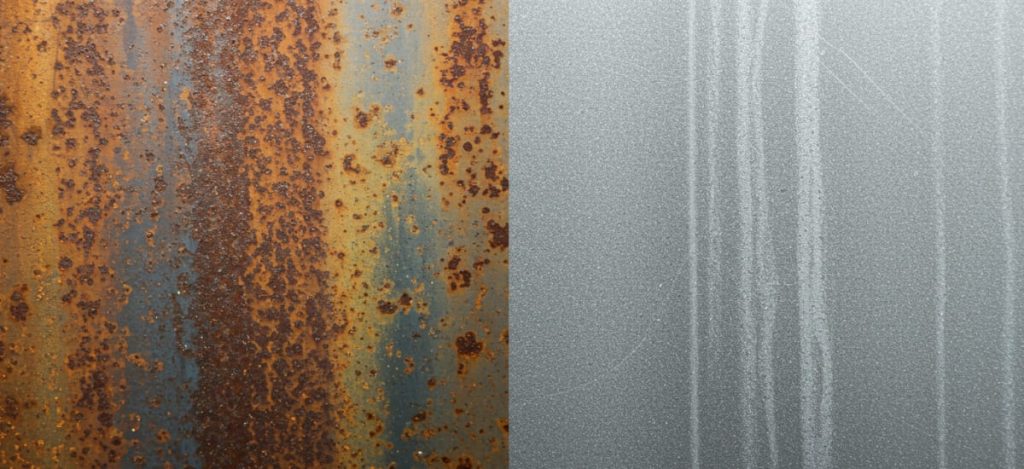
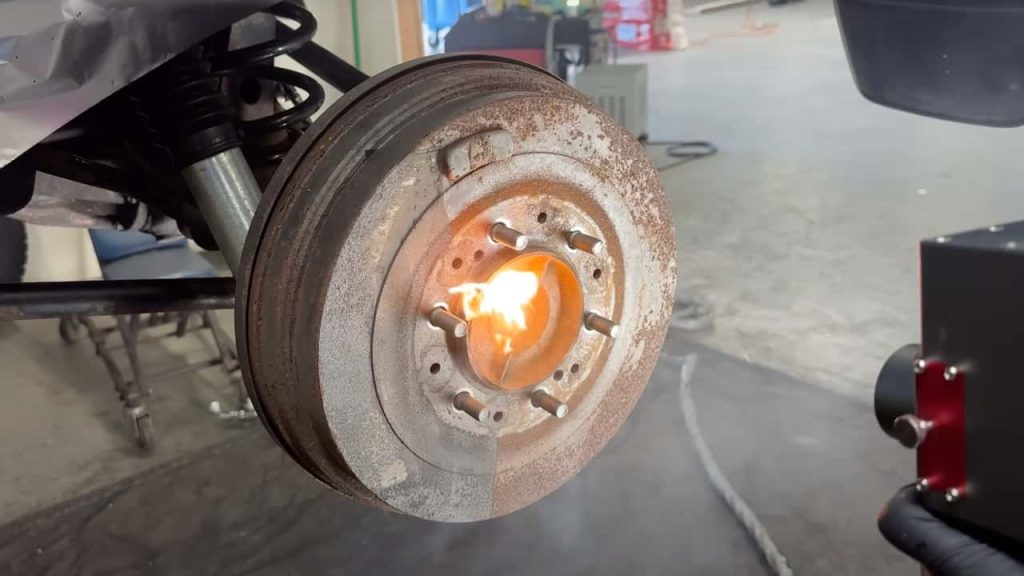
- Mechanism: This is true “laser ablation”. The laser delivers enormous peak power (e.g., 10,000W+ from a 100W average power laser ) in a nanosecond-scale pulse. This intense energy instantly vaporizes the contaminant (rust, paint, oil) into a gas or plasma, which is then removed by a fume extractor.
- The Value Proposition: The “off” time between pulses allows the surface to cool. This results in “minimal heat transfer” , which prevents any damage to the underlying metal substrate.
- Best For: High-value, delicate, or precision components where substrate integrity is non-negotiable: electronics, injection molds, aerospace components, and historical artifacts.
This technological divide is why a high-wattage CW laser can be 10x cheaper than a low-wattage pulsed laser. They are not comparable machines.
The High-Cost Components
While a complete machine includes a power supply, casing, and cooling system, the vast majority of the machine’s final price is concentrated in two high-performance, complex components: the laser source and the cleaning head.
The Laser Source
The laser source is the single most important and “priciest part” of the entire machine. A high-end pulsed fiber laser source, in particular, is not a simple commodity. Its high cost is rooted in a complex, high-overhead manufacturing process:
- Exotic Materials: The core of the fiber laser is not glass; it is a specialized optical fiber “doped” with expensive rare-earth elements like Ytterbium (Yb) or Erbium (Er).
- Complex Assembly: These optical components must be assembled in a “dust-free environment” (a cleanroom). The system is so sensitive that a single microscopic speck of dust during assembly can lead to “catastrophic damage” when the high-power laser is activated. This “black art” of manufacturing is inherently costly.
The Cleaning Head
The handheld “gun” or “head” is not a simple nozzle; it is a precision instrument that houses two more key costly components:
- Galvanometer (Galvo) Scanners: These are the high-speed, precision motors that steer mirrors to “draw” the laser beam across the target surface. Industrial-grade galvo heads built for 24/7 reliability and speed are a significant cost contributor.
- Precision Optics (F-Theta Lens): The lenses that focus the beam are not standard glass. They are high-purity, specialized optics (like F-theta lenses) with special coatings to resist thermal distortion from the laser’s energy. A high-quality, large-field lens for an industrial system can cost $500 to $1,000 or more.
Mandatory Auxiliary Systems
The high cost of the laser source and head requires an ecosystem of robust support systems. The cost of these systems is bundled into the final price. For example, high-power lasers are not 100% efficient and generate significant waste heat, requiring integrated industrial cooling systems (either air-cooled for low-power pulsed lasers or water-chillers for high-power systems) to prevent the laser source from destroying itself.
Furthermore, the ablation process vaporizes contaminants into hazardous fumes that are dangerous to inhale. This makes a professional fume extraction system mandatory for operator safety and OSHA compliance. While sometimes bundled, this is often a separate, necessary purchase, with industrial-grade units adding to the total cost of implementation.
The “Intangible” Costs: R&D, Precision, and Safety
The physical hardware is only part of the price. A significant portion of the cost is tied to the intelligence, portability, and safety engineering built into the machine.
Research & Development (R&D) and Proprietary Software
Laser cleaning is an evolving technology. Manufacturers “invest heavily in research and development” to improve performance and safety. One-premium manufacturer, for example, allocates 15% of its annual revenue to R&D.
This R&D cost is what pays for the “brain” of the machine. It’s the difference between a “dumb” tool and a “smart” solution. This includes:
- Proprietary Software with AI-powered weld monitoring.
- 3-Axis Control for cleaning complex geometries.
- Autofocus and Built-in Cameras that automatically adjust for shifted parts.
The Price of Portability & Precision
For pulsed lasers, two more factors significantly impact price:
- Backpack vs. Rack-Mount: Pulsed lasers in the 50W-200W range are often available in portable backpack models. This portability comes at a high cost. A 100W backpack model is typically more expensive than a 100W rack-mount machine. The price difference is due to the complex engineering required for miniaturization and advanced, compact air-cooling systems.
- Single-Mode vs. Multi-Mode (Pulse Energy): This is a highly technical, application-specific cost driver.
- Single-Mode: These lasers (e.g., 1.5mJ pulse energy) have a “Gaussian” beam, concentrating energy in the center. This is highly effective for strong removal tasks like cutting through thick rust.
- Multi-Mode: These lasers (e.g., 15mJ or 50mJ pulse energy) have a “flat-top” beam, which distributes energy “softer” and more evenly.
- The Cost: Multi-mode systems are generally more expensive. They are the required choice for high-precision, no-damage applications, such as cleaning expensive injection molds. The “softer” flat-top beam can vaporize the contaminant layer without etching or damaging the delicate substrate underneath, which a “hotter” single-mode beam might do.
The High Cost of Safety (Class 4 Lasers)
This is a critical, non-negotiable cost for any B2B buyer. The lasers used for rust removal are Class 4, the most powerful and dangerous classification.
- The Hazard: They pose “significant risks to eyes, skin, and can ignite flammable materials”.
- The Compliance: Because of this extreme hazard, machines and facilities are subject to strict regulations from bodies like OSHA and must adhere to standards like ANSI Z136.1-2022.
- The Price: Reputable manufacturers “bake in” this compliance. Meeting all safety standards (e.g., CE, FDA certification), which includes engineering safety interlocks, certified enclosures, and protective barriers, “adds 10–20% to production costs”.
A cheap machine may cut corners on safety, shifting the legal liability and physical danger directly to you, the end-user. The high price of a certified machine is a payment for operator safety and corporate liability protection.
Why “Expensive” Is Relative (TCO vs. ROI)
For an industrial facility, the high initial purchase price (Capital Expenditure, or CAPEX) is misleading. The business case for laser cleaning is built on its near-zero operational cost (OPEX) and massive Return on Investment (ROI).
The TCO (Total Cost of Ownership) Trap of “Cheap” Alternatives
Traditional methods like sandblasting and chemical cleaning have a low initial cost ($15,000 – $30,000) but are a TCO trap.
- Consumables: They require a constant “ongoing purchase of abrasive media” or chemicals.
- Labor: They require “multiple personnel for setup, operation, and cleanup”.
- Waste: They generate “secondary waste” (used media or chemical sludge) that is often classified as hazardous and requires “costly disposal” and regulatory compliance.
- Damage: Abrasive methods are destructive. They “cause wear and tear” and “dents [and] scratches” on the part, reducing its lifespan.
A quantitative analysis of a 5-year Total Cost of Ownership projected that a $15,000 sandblasting setup could have a 5-year TCO of $220,000.
The Laser Cleaning ROI
Laser cleaning inverts this economic model, demanding a high initial CAPEX for a near-zero OPEX. It eliminates recurring costs for consumables (media, chemicals), hazardous waste disposal, and extensive labor. A 5-year TCO analysis highlights this: while a $15,000 sandblasting setup can have a 5-year TCO of $220,000, the laser system’s total cost was projected at just $35,000. Because of these operational savings, many owners report the investment “can often pay for itself within just a few months.”
For any serious industrial application, the high price of a pulsed laser is an investment in quality, safety, and a dramatically lower total cost of ownership.
Is a Laser Rust Remover Worth the Cost?
The high price of a professional laser rust removal machine is not arbitrary. It is a direct payment for precision, safety, and advanced manufacturing.
When evaluating a purchase, the most important question is not “What is the wattage?” but “What is the application?”
- For cleaning heavy, non-delicate items like a shipping container, a cheap CW laser is a logical, cost-effective tool.
- For any high-value, precision, or delicate substrate—an injection mold, an aerospace component, a circuit board—you are not just paying for the laser. You are paying for what the laser doesn’t do: it doesn’t damage your part.
For any serious industrial application, the high price of a pulsed laser is an investment in quality, safety, and a dramatically lower total cost of ownership.
FAQs
A: The primary expense is the advanced pulsed fiber laser source and the precision optics. These high-tech components require complex, cleanroom manufacturing, use expensive rare-earth materials, and have significant R&D costs, making them inherently expensive to produce.
A: This is unlikely. While low-end CW laser prices are falling, the primary barrier is safety. All effective rust removal lasers are Class 4, which are extremely dangerous and pose significant risks to an untrained user’s eyes and skin. The necessary safety systems to make them consumer-proof would add significant cost and liability.
A: Yes. A cheap Continuous Wave (CW) laser often will damage, warp, or etch the metal because it works by “burning” the surface with constant heat. A high-end Pulsed laser is specifically designed not to. It uses “ablation” to vaporize the contaminant with minimal heat transfer, leaving the substrate underneath unharmed.
A: The 100W pulsed laser is a high-precision, non-damaging tool. It uses short bursts of extremely high peak power (e.g., 10,000W+) to vaporize rust. The 1500W CW laser is a low-cost, brute-force “burning” tool. Its peak power is the same as its average power (1500W), and it risks damaging the substrate with high heat. The 100W pulsed machine is a far more complex and expensive technology.