
Automatisation de l’usinage des métaux

Traitement laser : technologie de fabrication avancée
Le traitement laser est une technologie de fabrication avancée caractérisée par ses propriétés et ses paramètres uniques. Au fil des années de développement, le traitement laser a établi sa propre base théorique et ses propres applications. Poussée par les progrès de la science, de la technologie et du développement économique mondiaux, la technologie laser a connu une croissance rapide. Par rapport à la lumière ordinaire, les lasers se distinguent par leur monochromaticité, leur cohérence, leur directivité et leur haute intensité.
L’équipement de traitement laser intègre plusieurs disciplines, ce qui en fait une solution de haute technologie et à haut rendement. Après des années de recherche et de perfectionnement sur les marchés internationaux et nationaux, la technologie et l’équipement de traitement laser ont considérablement évolué, formant une série complète de technologies fiables.
Applications de l’usinage laser
Dans de nombreuses industries, telles que la construction automobile et la production de machines-outils, la découpe laser est devenue une méthode privilégiée pour le traitement des pièces en tôle. Les lasers sont capables de découper une variété de matériaux, notamment :
- Matériaux non métalliques : Plexiglas, bois, plastique
- Matériaux métalliques : Acier inoxydable, acier au carbone, acier allié, aluminium
Grâce à des opérations contrôlées par ordinateur, la découpe laser élimine le besoin d’outils et de moules, ce qui permet un traitement bidimensionnel et tridimensionnel flexible des plaques et des pièces de coque.
Comment fonctionne la découpe laser
La découpe laser repose sur l’énergie à haute densité de puissance générée après la focalisation du faisceau laser. Contrôlé par un ordinateur, le laser émet des impulsions pour générer des faisceaux pulsés contrôlés à haute fréquence. Ces faisceaux sont guidés et réfléchis à travers un chemin optique et focalisés sur la surface du matériau à l’aide d’un système de lentilles, créant ainsi un point fin à haute densité d’énergie.
À ce point focal, le matériau fond ou se vaporise à une température instantanément élevée, ce qui permet des coupes précises.
Avantages de la découpe laser
La découpe laser offre plusieurs avantages par rapport aux méthodes traditionnelles de traitement des plaques :
- Haute précision : Précision de positionnement de 0,05 mm et précision de positionnement répétée de 0,02 mm
- Haute vitesse : Vitesses de coupe jusqu’à 10 m/min et vitesses de positionnement maximales de 70 m/min, nettement plus rapides que la coupe de fil
- Polyvalence des matériaux : Capable de traiter des plaques d’acier, de l’acier inoxydable, des alliages d’aluminium, du carbure cémenté et d’autres matériaux, quelle que soit leur dureté, sans provoquer de déformation
- Coupes de haute qualité : Résultats lisses et précis, réduisant le besoin de traitement secondaire
La technologie de découpe laser continue d’améliorer l’efficacité et la qualité de la fabrication dans tous les secteurs, offrant une flexibilité et une précision inégalées.
Laser Cutting Automation: Advancing Metal Fabrication
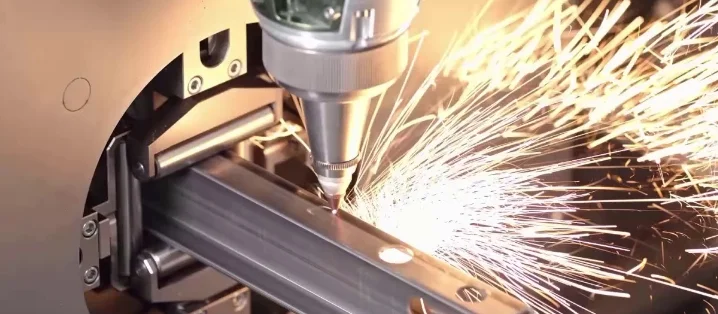
Automated laser cutting systems are very important in today’s metal making. They provide speed, accuracy, and efficiency. These systems use advanced tools to make clean cuts and save material. This also helps keep machines running longer without stopping.
Advanced Laser Cutting Technologies
Modern laser cutting uses powerful fiber lasers. These lasers cut metal fast and use energy well. They work on many types of metal sheets and plates. Machines like loaders, unloaders, and sorters help make the process smooth. Software programs arrange parts on metal sheets to reduce waste. This saves money. Fast sheet changes and exact cuts keep quality high when making lots of metal parts. Fiber lasers make thin, clean cuts without heating the metal too much.
Material Processing Applications and Benefits
Laser cutting can work with many materials like strong steel, aluminum, stainless steel, and mixed materials. One big plus is that the laser doesn’t touch the metal. This means no tools wear out and the metal doesn’t get bent or damaged by heat. Laser cutting is great for detailed designs and delicate materials that need careful handling. Sensors check the edges in real time to keep cuts perfect. They can change the cutting path if the metal moves. These features let machines run by themselves, increasing how much can be made without stopping.
Robotic Laser Welding: Delivering Precision and Flexibility
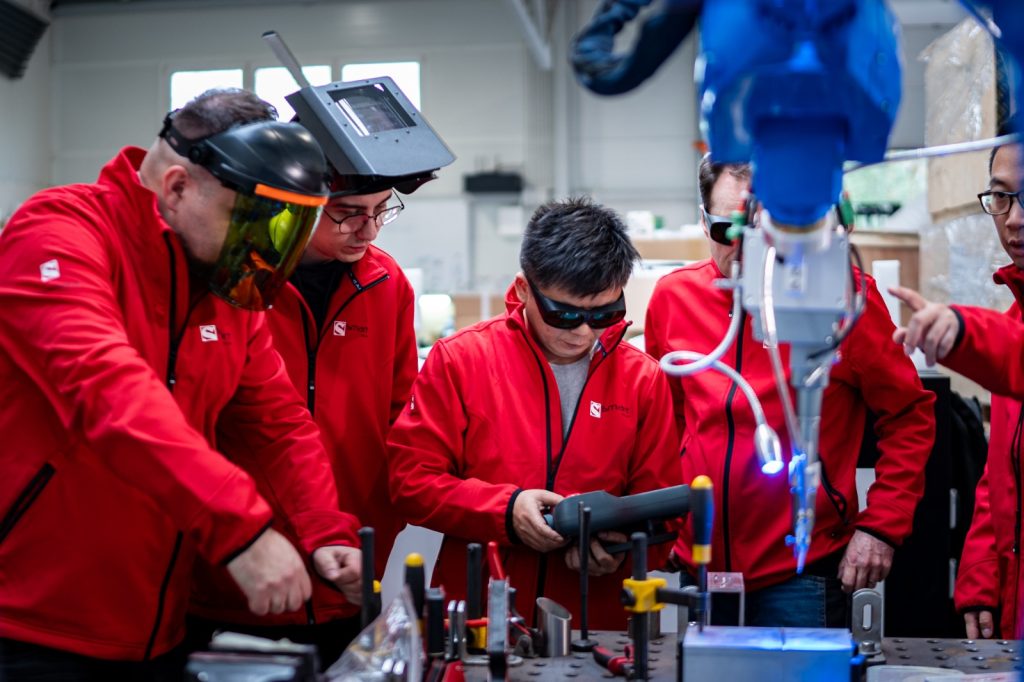
Robotic laser welding is a big step forward in joining metal parts. It offers great accuracy and can handle tricky jobs. This technology mixes laser precision with robot flexibility to make strong, high-quality welds.
Robotic Welding System Advancements
Today’s robotic laser welding uses multi-axis robots with powerful fiber lasers. These robots can weld in 3D, doing things that people or older robots can’t. They handle complex shapes with skill and work faster. A key improvement is real-time weld path correction. Sensors like cameras and seam trackers watch the welding as it happens. They help the robot adjust its path and laser settings on the spot. This keeps welds consistent and reduces mistakes. It also helps when parts don’t fit perfectly, which is important for precise manufacturing.
Industry-Specific Welding Applications
Robotic laser welding is popular in important industries because of its control and accuracy:
Automotive: These systems weld very strong steel and aluminum. The laser’s focused heat causes little damage to the metal. This keeps materials strong for safety and makes cars lighter. Laser welding can also join different metals together.
Healthcare: Robots weld tight seals on titanium implants like pacemakers and cochlear implants. They also weld stainless steel surgical tools. Using pulsed lasers controls energy carefully, protecting sensitive parts and making sure implants last long.
Electronics: These systems do tiny welds with great precision. They work on circuit boards, sensors, and battery parts. This is key for making small, reliable electronic devices.
Laser Marking and Engraving: Ensuring High-Speed Traceability
Automated laser marking and engraving systems give permanent, clear labels on metal parts. These labels help with tracking, branding, and following rules.
High-Speed Laser Traceability Solutions
Tracking parts is very important in making products. Laser marking automation makes this easier. These systems quickly engrave codes like barcodes, QR codes, serial numbers, and logos right on metal. Special lasers called Q-switched and MOPA fiber lasers make sharp, long-lasting marks fast. They fit well into busy production lines. Using the Internet of Things (IoT), the machines can watch themselves and predict when they need fixing. For tough industries like aerospace and defense, UV or green lasers make high-contrast marks without heating or damaging sensitive parts. This helps meet strict tracking rules.
Laser Etching for Customization and Compliance
Laser systems also add detailed designs and meet industry rules. Electronics companies use lasers to etch fine designs, logos, and important info on their products. These marks last a long time and look good. In healthcare, marking surgical tools and implants with lasers is very important. Laser marking is clean and safe. It adds unique ID codes without changing the material or making sterilization harder. This meets strict quality rules like those from the FDA.

Laser Cleaning and Surface Preparation: Eco-Friendly and Precise
Laser cleaning and surface preparation are smart, eco-friendly ways to treat metal surfaces. These automated tools work with great control. They remove dirt and prepare surfaces without the usual problems. This is important for modern surface work.
Eco-Friendly Surface Treatment via Laser Ablation
Eco-friendly laser cleaning uses pulsed fiber lasers to remove rust, paint, and oxides. It saves energy compared to older methods. It also avoids using harmful chemicals and rough materials. This means less waste and less harm to the environment. The laser cleans gently, only taking off the dirty layer without hurting the metal underneath. For tricky shapes, 3D scanners help map the surface. Robots then clean carefully without bumping into anything.
Key Laser Cleaning Applications in Automotive and Aerospace
Laser cleaning is very useful in tough industries:
Automotive: Lasers clean aluminum and steel car parts before bonding or welding. Taking off dirt helps glue and welds stick better. This makes cars safer, stronger, and longer-lasting. It also gets parts ready for painting with e-coating.
Aerospace: Lasers remove thermal barrier coatings from turbine blades during manufacturing and repairs. They do this without hurting the metal underneath. This lowers repair costs, reduces waste, and helps parts last longer.
Conclusion: The Future of Metal Processing is Laser-Driven
In short, laser technology in metal processing automation is a big change. It gives manufacturers clear benefits like better accuracy, faster production, and more chances to grow. Many industries face problems like not enough workers and the need to be eco-friendly. Automated laser systems help solve these problems. They cut down on manual work, reduce material waste, and save energy. In the future, laser processing will get better with improved control and smarter systems. Combining laser methods with other techniques, like 3D printing, will keep growing too. Overall, laser automation is important for building efficient, flexible, and strong factories. These factories help businesses adjust to market changes and stay ahead of competitors.
Abonnez-vous à notre newsletter
Obtenez les dernières informations sur le produit
Le nettoyage laser offre une méthode précise, efficace et écologique pour la préparation et la restauration de surfaces, marquant une avancée significative par rapport aux méthodes traditionnelles comme le sablage ou le décapage chimique. Naturellement, cette technologie avancée amène à une interrogation centrale pour tout acheteur potentiel : celle du
Le soudage laser, technologie améliorée et étendue, voit son coût baisser. Coût des systèmes : réduit de moitié en quelques années. Cette baisse de prix facilite son adoption par les entreprises. Malgré ces prix attractifs, comprendre le soudeur laser prix dans son ensemble reste crucial pour les entreprises. Le soudage
Imaginez pouvoir nettoyer une surface, enlever de la rouille, de la peinture ou des contaminants tenaces, avec une précision incroyable, sans produits chimiques, sans sable et sans même toucher la pièce. Science-fiction ? Non, c’est la réalité du nettoyage laser, une technologie innovante qui transforme de nombreux secteurs industriels et