Home » Robot Laser Welding Machines
China Robot Laser Welding Machine Manufacturers
What is Robot Laser Welding Machine
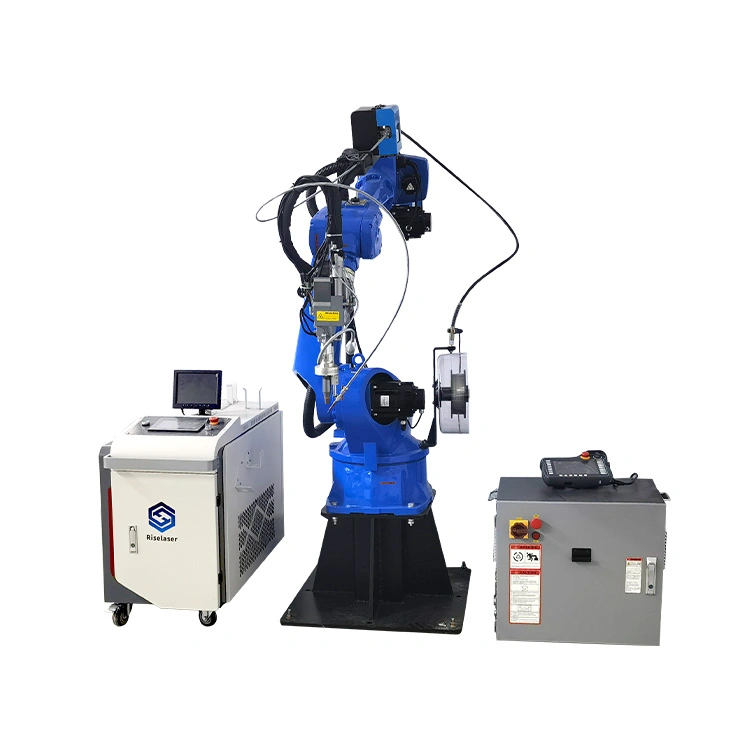
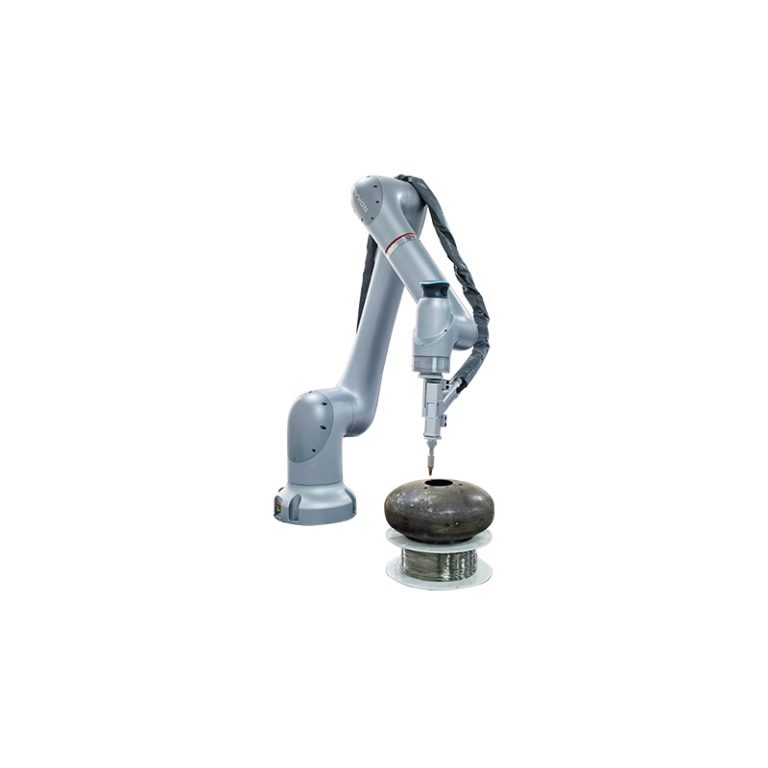
A Robot Laser Welding Machine, sometimes called a Robotic Laser Welder, is a smart automated system. It combines the precise movement of a robotic arm with the power of a laser beam to join materials. There are two main types: Collaborative Laser Welding Robots, known as ‘Cobots,’ and Industrial Laser Welding Robots. These machines use a focused, strong laser beam to melt and fuse metals like stainless steel, carbon steel, aluminum, titanium, and other alloys. This creates strong and accurate welds.
Laser welding robots are more accurate than manual welding. They also work much faster. These robots can run for many hours without stopping. They can weld in hard-to-reach spots or on complex designs that are hard for people to handle.
Robot Laser Welding Machine for Sale
Choosing the optimal Robot Laser Welding Machine requires careful consideration. There are many options like different integrators, robot types such as Cobots or Industrial arms, and various laser power levels. This can make the decision confusing, especially when automating manual work or for specific tasks.
To make it easier, we offer a full range of robotic laser welding systems. These are carefully put together in-house by experts. This means we can set up a system that fits your exact welding needs and production goals. Plus, our skilled team is ready to support you and help make your automation successful.
RL-CR Collaborative Laser Welding Robot
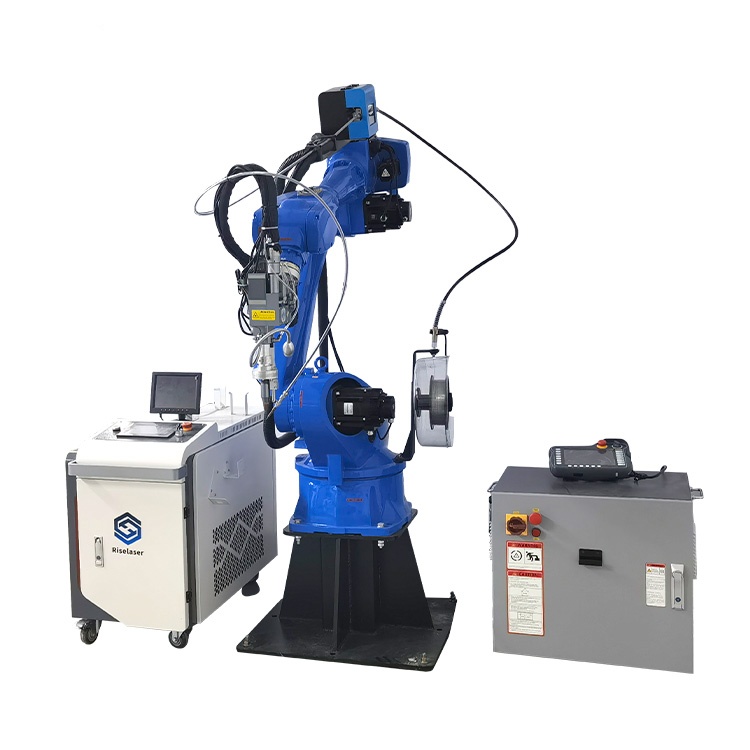
RL-R1825 Automatic 6 Axis Fiber Robotic Laser Welding Machine
What can a Robot Laser Welding Machine do?
A Robot Laser Welding Machine uses a robotic arm to guide a powerful laser beam. It melts and joins metal parts to make strong, high-quality connections. Compared to manual welding, it is much more precise. It also works faster and keeps the same quality over long periods.
These machines are great for welding tricky shapes or hard-to-reach spots. They can weld many metals like stainless steel, carbon steel, aluminum, titanium, and other alloys. This makes them useful in many industries. For example, they help in making cars, especially bodies and batteries. They are also used in aerospace, medical devices, electronics, and sheet metal work. These robots improve productivity and make sure welds are reliable.
What is the Robot Laser Welding Machine Price?
Simple or entry-level robot laser welding systems can start at about $10,000. On the other hand, high-power, complex automated welding cells may cost $100,000 or more. Prices vary because of differences in system setups. Factors like the type of robot and the laser source affect the cost. For example, top brands like IPG usually cost more than brands like Raycus or Maxphotonics. The price also depends on fixtures and automation features. Even systems with the same laser power can have very different prices.
Frequently Asked Questions
What are the advantages of using robotic laser welding?
Exploring the advantages of robotic laser welding reveals several significant benefits:
* Superior Precision & Consistency: Robots ensure highly accurate and repeatable welds, minimizing human error and improving quality control.
* Increased Speed & Productivity: Automated laser welding is typically much faster than manual processes, leading to higher throughput.
* Low Heat Distortion: The focused laser beam minimizes the heat-affected zone, reducing warping or damage to sensitive parts.
* High-Quality, Strong Welds: Often produces deep, narrow welds with excellent strength and a clean finish, sometimes reducing the need for post-processing.
* Accessibility: Robot arms can easily maneuver the welding head into complex or confined joint locations difficult to reach manually.
* Continuous Operation: Robots can work tirelessly around the clock, ideal for high-volume production.
How does Robot Laser Welding compare to traditional Robot Arc Welding (MIG/TIG)?
Key differences include:
* Speed: Laser welding is often much faster, particularly on thinner materials.
* Heat Input: Laser welding generally has lower total heat input, resulting in less material distortion.
* Precision & Weld Size: Laser allows for finer, more precise control and smaller weld spots/seams, ideal for delicate parts.
* Filler Material: MIG and TIG almost always use filler wire. Laser welding can often join materials without filler (autogenous welding), though filler can be added if needed.
* Initial Cost: Robotic laser welding systems typically have a higher upfront investment cost than robotic MIG or TIG setups.
* Best Applications: Laser excels in high-speed, high-precision applications (automotive, electronics, medical). MIG/TIG are often preferred for thicker structural components and applications where filler metal is essential.
How strong are the welds made by Robot Laser Welding Machines?
Laser welds produced by robotic systems are generally very strong and reliable when the process parameters are set correctly for the materials being joined. The technique often results in deep weld penetration with a fine grain structure in the weld seam. The high consistency achieved through robotic automation ensures that this strength and quality are repeatable, often meeting or exceeding the requirements met by traditional welding methods for many applications.
Is it difficult to program and operate a Robot Laser Welding Machine?
The complexity can vary. Programming traditional industrial robots typically requires specialized skills and training. However, many modern systems, particularly Collaborative Robots (Cobots) designed for welding, feature more intuitive user interfaces, hand-guiding capabilities (where you physically guide the arm to teach points), and simplified software. While expertise is still valuable for optimizing the welding process itself (laser parameters, gas flow, etc.), setting up basic paths and operating the machine for production runs has become significantly easier, especially with cobot systems.