Heavy industry forms the backbone of our modern world. It builds the massive machines for construction. It crafts the ships crossing our oceans. It assembles the vehicles we drive. It forges components for aerospace exploration. Manufacturing in these sectors demands exceptional precision, high efficiency, and remarkable versatility. Laser technology is increasingly the key to meeting these needs. It is changing how large parts are made, joined, and treated. This guide explores how lasers are transforming heavy industry. It covers the main types of laser machines and their uses across important sectors. It also looks at future trends shaping this fast-growing field. Understanding this technology is important for anyone involved in modern manufacturing.
The Evolution: From Mechanical Limits to Laser Precision
Traditional heavy fabrication used mechanical cutting, punching, and regular welding. These methods had some big problems. Tools would wear out quickly. Parts could get damaged from the mechanical stress. The processes were often slow. They also had trouble with complex shapes or delicate materials. Lasers changed everything. They use focused light energy to work without touching the material. This means no tool wear and less stress on the parts. The heat is concentrated in a small area. That helps keep the material from warping. As a result, lasers can achieve much higher accuracy.
Early Days (CO₂ Lasers):
Carbon dioxide (CO₂) lasers were the main tools in industry starting in the 1970s. They produced high power and worked well to cut and weld thick steel. This type of steel is common in heavy industry. CO₂ lasers use a 10.6-micrometer wavelength. They are still useful today, especially for very thick steel or non-metal materials. However, they are not very energy efficient, only about 10-15%. They also need regular maintenance to keep the mirrors aligned for the beam path.
The Game Changer (Fiber Lasers):
Fiber lasers became a game changer in the early 2000s. They create light inside special optical fibers, powered by reliable laser diodes. These lasers usually emit light near 1 micrometer, which metals absorb very well. Fiber lasers have many important advantages:
They are very energy efficient, often reaching 30-40% efficiency. This helps cut down on energy costs. Their sealed fiber optic design means no mirrors need alignment. This lowers maintenance and keeps machines running longer. The beam quality is excellent, allowing faster cutting speeds. This is especially true for metals of medium thickness. They also handle reflective materials like aluminum better. Fiber lasers are compact and tough. This makes them easy to fit into harsh industrial environments.
Solid-State Options (DPSS Lasers):
Diode-Pumped Solid-State (DPSS) lasers (e.g., Nd:YAG) use diodes to energize a crystal. Often operating near 1 micrometer, they are efficient for marking, engraving, and specific welding tasks, particularly those requiring high pulse energy.
The trend, especially for metal cutting and welding, clearly favors fiber lasers due to their compelling performance and operational benefits in demanding heavy industry settings.
Types of Laser Machines Driving Heavy Industry
Different laser applications require specialized machine configurations:
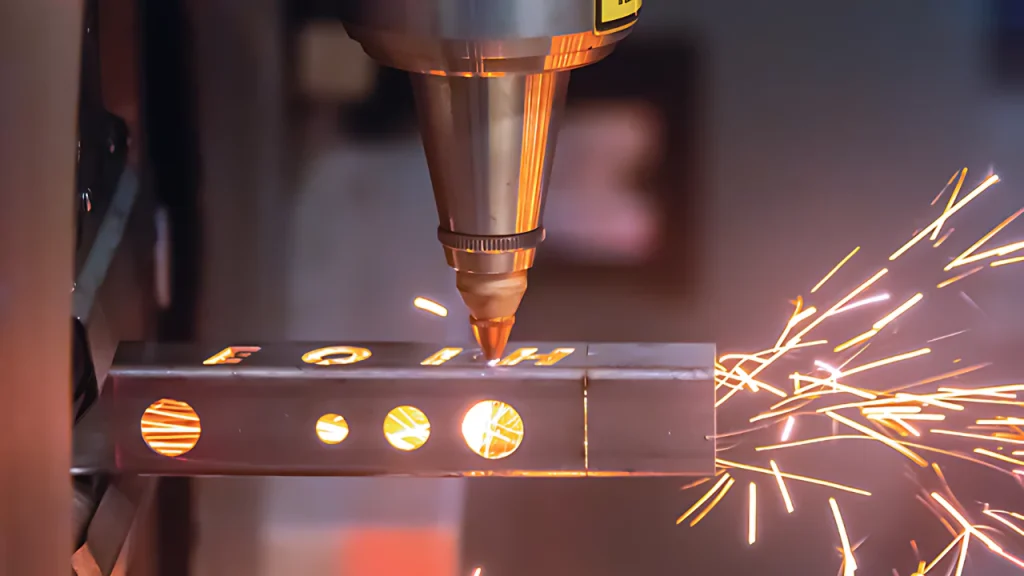
These machines focus a powerful laser beam to melt or vaporize material. A jet of gas blows away the melted debris, making a clean cut. CNC laser cutting can create complex shapes with great accuracy. It also causes little heat damage to the material. These machines are essential for shaping plates and sheets in construction, automotive, rail, defense, and heavy equipment. They cut materials like mild and stainless steel, aluminum, titanium, and some composites. The thickness they can cut depends on the laser’s power.
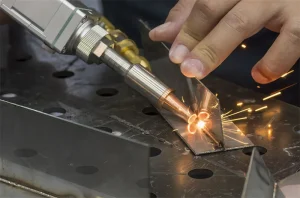
Lasers melt and fuse materials quickly to form strong, narrow welds. Laser welding goes deep but uses low heat overall. This helps prevent warping in large parts. It works well with automation and can join metals with or without extra filler. These machines are important in automotive assembly, heavy machinery, aerospace, and shipbuilding. They can weld different metals together, like copper to steel. They also handle aluminum alloys well, which helps make lighter parts.
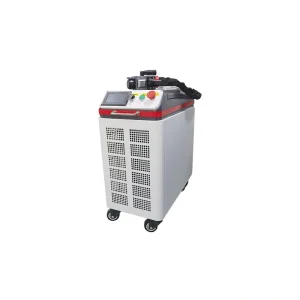
Laser cleaning uses short bursts of laser energy to remove rust, paint, oxides, and grease. It does this without touching the surface or using chemicals. This dry process cleans without harming the base material. It’s used more and more for mold cleaning, pre-weld or paint prep, aerospace maintenance, automotive restoration, and infrastructure upkeep. Laser cleaning is very green since it avoids chemicals and creates little waste. It targets only the unwanted layers and keeps the surface intact.
Laser marking makes permanent marks by heating or engraving materials. It creates clear, durable labels without ink or stickers. This is vital for tracking parts with serial numbers, barcodes, or QR codes. It’s also used for branding and safety labels. Laser marking works on most metals, many plastics, and some composites. The marks last a long time and resist harsh conditions. Since it doesn’t touch the part, it keeps the material strong and undamaged.
Key Applications of Laser Technology Across Industries
Let’s see how these laser processes translate into specific industrial outcomes:
1. Key Application: Precision Laser Cutting Across Industries
In shipbuilding, lasers cut complex hull shapes and internal parts from marine-grade steel and aluminum. This improves how well pieces fit together during assembly. In rail manufacturing, lasers precisely cut parts for train bodies, undercarriages, and special track components. This helps keep trains safe and running smoothly. For structural steel fabrication, lasers cut custom beams, plates, and architectural pieces for bridges and buildings. This allows for more complex and creative designs.
In the automotive sector, laser welding builds lightweight Body-in-White structures. It also joins tailored blanks, welds powertrain parts, and seals electric vehicle battery packs. Construction machinery uses laser welding to create strong, deep welds. These welds make excavator booms, dozer blades, and heavy frames last longer. In aerospace, lasers join lightweight alloys for airframes and engine parts. This meets strict demands for precision, strength, and low weight.
3. Key Application: Laser Surface Treatment and Cleaning
For maintenance and refurbishment, laser cleaning removes rust and coatings from ships, bridges, and vehicles. It does this without damaging the base material. Turbine blade restoration uses lasers to clean and sometimes texture blades from jet engines and power plants. This helps prepare them for recoating and reuse. Before welding, lasers clean surfaces to ensure better weld quality. They also remove spatter and oxides after welding, cutting down on manual work.
The Future of Laser Technology in Heavy Manufacturing
Laser technology continues its rapid evolution, promising even greater integration and capability:
1. Smarter Manufacturing: AI, IoT, and Automation
Artificial intelligence (AI) looks at process data in real-time. It adjusts laser settings automatically to keep quality high and steady. Laser systems connected through the Internet of Things (IoT) can be monitored from far away. They send alerts for maintenance before problems happen. Robots now do complex tasks like loading and unloading. This creates flexible, fully automated production lines.
2. Greener Processes: Sustainability Through Laser Technology
Research keeps making laser sources more energy efficient, especially fiber lasers. Smarter energy use helps save power. Precise laser cutting cuts down on wasted material. Better laser welding means less fixing mistakes. Laser cleaning and marking reduce the use of chemicals and other waste. These steps help make manufacturing more eco-friendly.
3. Next-Generation Laser Sources
New laser designs shape the beam to cut smoother edges or reduce welding spatter. Blue diode lasers work great on shiny metals like copper. This is important for making electric vehicle batteries and electronics. Ultrashort pulse lasers use very quick bursts of light. They can create tiny, precise features with almost no heat damage. This opens up new possibilities in manufacturing.
Conclusion: Laser Technology – An Indispensable Tool for Modern Heavy Industry
Laser technology is no longer just a niche process. It has become a key part of modern heavy industry manufacturing. It offers unmatched precision, boosts efficiency, and provides great versatility. Lasers can cut intricate shapes in thick steel with ease. They weld different metals quickly and accurately. They clean surfaces without using chemicals. They also mark parts permanently to help with traceability. These capabilities make lasers essential for many industrial tasks.
Innovation keeps pushing laser technology forward. AI and IoT are being integrated to improve performance. Sustainability is becoming a bigger focus, with lasers helping reduce waste and energy use. New types of lasers are being developed for even better results. Because of this, lasers will play an even bigger role in heavy industry. They drive quality, productivity, and competitiveness. Lasers will stay at the forefront of advanced manufacturing for many years to come.
How much does a laser cleaning machine cost? In 2026, a handheld laser cleaning machine can range from approximately $2,200 for an entry-level CW model to $70,000 for a 2000W high-power pulsed system. Fully automated robotic laser cleaning systems can exceed $200,000. The final price depends mainly on laser technology,
If you’re still relying on sandblasting, chemical solvents, or mechanical grinding for surface preparation, you may face issues such as substrate damage, waste disposal, and longer cleaning processes. A pulse laser cleaning machine offers a precise alternative, using focused laser energy to remove rust, paint, and contaminants while helping protect
How thick can a handheld laser welder weld? A handheld laser welder can usually weld about 0.5 mm to 6 mm steel with standard 1kW to 3kW models. For thicker carbon steel, a 6kW handheld laser welder can extend the welding range to about 10–12 mm under suitable test conditions.
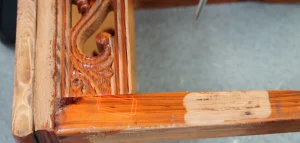
Laser paint removal from wood uses a pulsed laser cleaning machine to remove paint, coatings, and surface residue without sanding away the wood grain. Some buyers also search for this tool as a laser sander, but it does not work like traditional sandpaper. Instead of grinding the surface, the laser