
How thick can a handheld laser welder weld? A handheld laser welder can usually weld about 0.5 mm to 6 mm steel with standard 1kW to 3kW models. For thicker carbon steel, a 6kW handheld laser welder can extend the welding range to about 10–12 mm under suitable test conditions. The actual welding thickness depends on laser power, material type, joint design, wire feeding, travel speed, shielding gas, and operator settings.
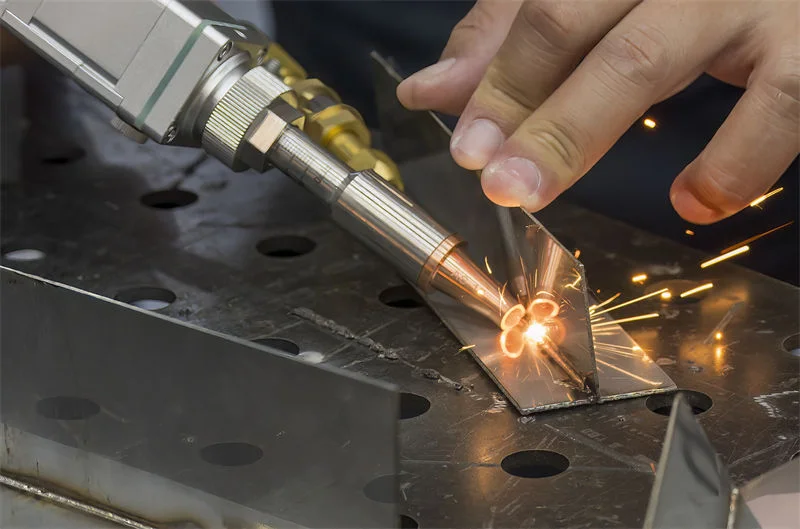
For example, a 1500W handheld laser welder is commonly used for thin to medium sheet metal, while a 2000W or 3000W model is better for thicker steel and aluminum applications. When the material thickness goes beyond the normal 3kW range, a 6kW handheld laser welder may be used for thicker carbon steel applications, such as 10–12 mm welding under suitable test conditions.
This guide provides practical, data-backed answers to help engineers, operations managers, and procurement teams select the right power level for their application.
Handheld Laser Welder Thickness Chart: 1kW to 6kW
For procurement teams, fabricators, and production managers, the chart below gives a practical thickness reference for common handheld laser welding applications. These values are based on typical single-pass welding use under suitable settings, including proper focus, shielding gas, wire feeding, travel speed, and joint preparation.
| Material | 1000W | 1500W | 2000W | 3000W | 6000W |
|---|---|---|---|---|---|
| Carbon Steel | Up to 2 mm | Up to 3 mm | Up to 5 mm | Up to 6 mm | About 10–12 mm |
| Stainless Steel | Up to 2 mm | Up to 3 mm | Up to 5 mm | Up to 6 mm | About 10–12 mm |
| Aluminum | Up to 2 mm | Up to 3 mm | Up to 4 mm | Up to 5 mm | About 8–10 mm |
| Brass-coated Steel | Up to 2 mm | Up to 3 mm | Up to 4 mm | Up to 6 mm | About 10–12 mm |
Note: This chart is a practical reference, not a fixed guarantee for every job. Actual welding thickness depends on joint type, material grade, surface condition, fit-up gap, shielding gas, wire feeding, wobble width, travel speed, and whether full penetration is required.
In general, 1000W to 1500W handheld laser welders are better for thin sheet metal. A 2000W or 3000W model is more suitable for medium-thickness production work. For thicker carbon steel applications above the normal 3kW range, a 6kW handheld laser welder can provide higher power and deeper welding capability under suitable process conditions.
Max Welding Thickness by Laser Power
Selecting a handheld laser welder should not be based only on the maximum steel thickness. The right power level depends on your main material, plate thickness, joint type, production speed, and whether you need full penetration or surface joining.
1000W Handheld Laser Welders: For Thin Sheet Metal
A 1000W handheld laser welder is mainly used for thin sheet metal. It is suitable for about 0.5–2 mm carbon steel, stainless steel, aluminum, and brass-coated steel under proper settings.
This power level is a good choice for light fabrication, stainless steel cabinets, kitchen equipment, sheet metal enclosures, and thin repair work. It is not the best option for thicker parts because penetration becomes limited when the material goes above about 2 mm.
1500W Handheld Laser Welders: For General Light Fabrication
A 1500W handheld laser welder is a common all-around choice for light fabrication. It can handle about 3 mm carbon steel, stainless steel, aluminum, and brass-coated steel in many standard welding jobs.
Compared with 1000W, a 1500W laser welder gives better welding speed and stronger penetration on medium-thin sheet metal. It is suitable for workshops that mainly weld thin stainless steel, carbon steel parts, cabinets, frames, and general sheet metal products.
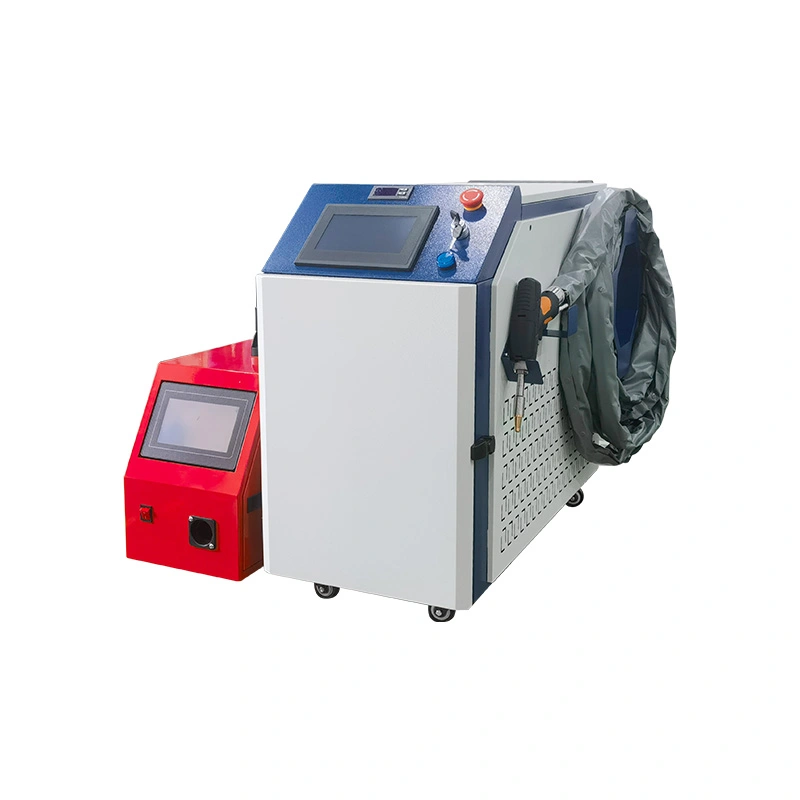
2000W Handheld Laser Welders: For Medium-Thickness Work
A 2000W handheld laser welder is better for medium-thickness welding. It is commonly used for about 5 mm carbon steel and stainless steel, and about 4 mm aluminum or brass-coated steel under suitable conditions.
This power level is often a better choice when your work includes thicker steel parts, aluminum products, trailer components, metal frames, and production welding that needs more penetration than a 1500W machine can provide.
3000W Handheld Laser Welders: For Heavy-Duty Standard Welding
A 3000W handheld laser welder is suitable for heavier standard welding work. It can handle about 6 mm carbon steel, stainless steel, and brass-coated steel, and about 5 mm aluminum under optimized settings.
This power level gives more process margin than 2000W, especially when the material is thicker, the welding speed is higher, or the joint fit-up is not perfect. However, for carbon steel thicker than about 6 mm, a 6kW handheld laser welder may be more suitable.
6000W Handheld Laser Welders: For Thick Carbon Steel Applications
A 6000W handheld laser welder is designed for thick carbon steel welding applications where 1kW to 3kW systems may not provide enough penetration or production speed. Based on extended thickness reference logic and tested carbon steel parameters, a 6kW handheld laser welder can be used for about 10–12 mm carbon steel under suitable process conditions.
For carbon steel and stainless steel, 6kW can extend the welding range to about 10–12 mm. For aluminum, the practical range should be more conservative, usually around 8–10 mm, because aluminum reflects more laser energy and conducts heat away faster than steel.
A 6kW system is not always the best choice for thin sheet metal. It is more suitable for thick plates, heavy fabrication, structural parts, machinery frames, and production jobs where deeper welding capability is required. The final result still depends on joint type, fit-up gap, wire feeding, wobble width, shielding gas, travel speed, and operator control.
Selecting a welder based on its maximum steel capability is a common purchasing error. The right machine must have sufficient power for all materials you process, especially reflective metals.
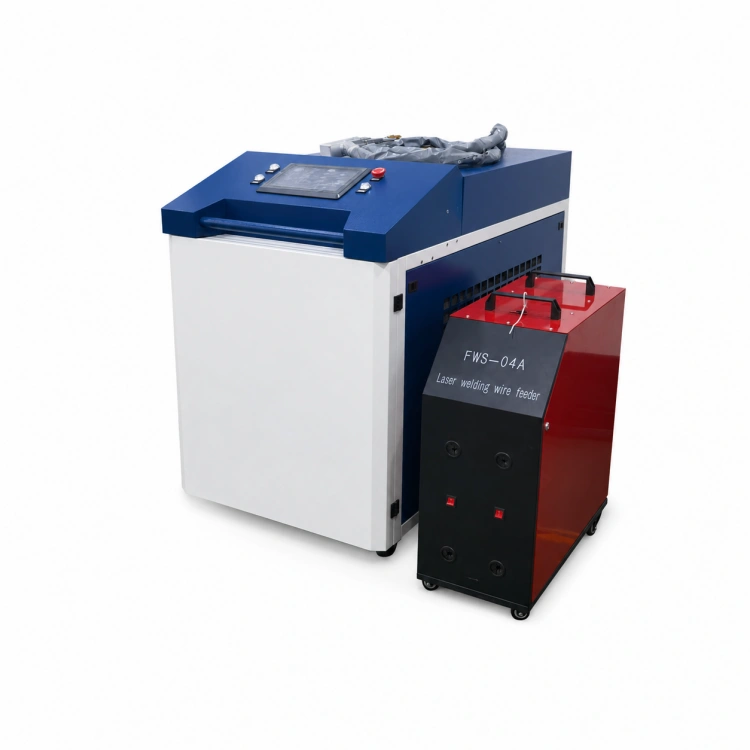
Why Aluminum Needs More Laser Power Than Steel
Aluminum is harder to laser weld than carbon steel or stainless steel at the same thickness. A handheld laser welder that works well on 5 mm steel may not give the same penetration on 5 mm aluminum. This does not mean the machine is defective. It is mainly caused by the physical properties of aluminum.
The Baseline: Carbon Steel and Stainless Steel
Carbon steel and stainless steel usually absorb fiber laser energy more efficiently than aluminum. They also keep more heat near the weld area, which helps the laser form a deeper and more stable weld pool.
This is why the same power level can usually weld thicker steel than aluminum. For example, a 2000W handheld laser welder may be suitable for about 5 mm carbon steel or stainless steel, but aluminum should be treated more conservatively, usually around 4 mm under similar handheld welding conditions.
The Challenge: Laser Welding Aluminum
Aluminum creates two main challenges for laser welding:
- High reflectivity: Aluminum reflects more laser energy, so less energy is absorbed into the weld area at the beginning of the process.
- High thermal conductivity: Aluminum spreads heat away from the weld pool quickly, making it harder to maintain deep penetration.
Because of this, aluminum often needs more laser power, slower travel speed, better surface cleaning, stable wire feeding, and careful focus control. In practical thickness selection, a 3000W handheld laser welder is more suitable for about 5 mm aluminum, while a 6000W system may be considered for thicker aluminum applications around 8–10 mm under suitable test conditions.
Practical note: Aluminum welding performance can change a lot based on alloy grade, surface oxidation, fit-up gap, shielding gas, wire material, and operator speed. Always confirm the final setting with sample testing before production.
6 Key Factors That Control Your Actual Weld Depth
The maximum welding thickness is not achieved by laser power alone. A high-power handheld laser welder can still produce a shallow or weak weld if the settings are not correct. To reach deeper penetration, especially on 6 mm to 12 mm steel, the operator must control travel speed, focus, wobble width, wire feeding, joint type, and shielding gas.
1. Travel Speed vs. Penetration
Travel speed has a direct effect on weld depth. Slower travel speed gives the laser more time to put heat into the joint, which helps create deeper penetration. Faster travel speed improves productivity, but it may reduce weld depth if the power and wire feeding are not adjusted correctly.
For thin sheet metal, higher welding speed is usually possible. For thicker steel, especially above 6 mm, the operator often needs slower movement, stable hand control, and suitable wire feeding to maintain a deep and consistent weld.
2. Laser Power and Duty Cycle
Maximum thickness welding is usually done with continuous laser output instead of low-energy pulsed settings. Continuous output provides stable heat input and helps form a deeper weld pool.
Pulsed mode is more useful for thin materials, delicate parts, or applications that need lower heat input. For thick carbon steel welding, especially with 3kW or 6kW systems, stable continuous welding is usually required.
3. Wobble Width and Weld Bead Control
Wobble width, also called scan width, controls how the laser beam moves across the weld seam. A narrow wobble can help concentrate energy for deeper penetration. A wider wobble can cover a larger gap and create a wider weld bead, but it may reduce penetration if the travel speed and power are not adjusted.
For thick plate welding, wobble width must match the joint gap and wire feeding. Too much wobble can spread the energy too widely. Too little wobble may not fill the seam properly.
4. Wire Feeding and Fit-Up Gap
Wire feeding becomes more important as material thickness increases. For thin sheet metal, autogenous welding without filler wire may be enough in some cases. For thicker steel, filler wire helps fill the joint, improve bead shape, and support stronger fusion.
The fit-up gap also matters. A tight and clean joint is easier to weld. A wide or uneven gap needs more filler wire, better wobble control, and slower travel speed. This is why the same 6kW laser welder may perform differently on two parts with the same thickness but different joint preparation.
5. Beam Focus and Power Density
Total laser power is only one part of the result. Focus position controls power density, which means how concentrated the laser energy is at the weld area.
A correctly focused beam can create deeper penetration. A defocused beam spreads the energy over a wider area, which may create a wider but shallower weld. This can reduce weld strength when full penetration is required.
6. Joint Type and Welding Position
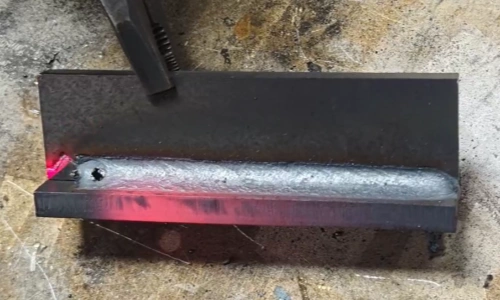
Joint type changes the actual welding thickness. A flat butt weld is usually easier to penetrate because the laser energy goes directly into the seam. Fillet welding, lap welding, and wide-gap welding need more careful control because the heat must melt and connect different contact areas.
This is especially important for 6kW handheld laser welding. A 6kW system may be suitable for about 10–12 mm carbon steel under suitable conditions, but the final result depends on whether the joint is a butt weld, fillet weld, lap joint, or wide seam. Sample testing is still necessary before production.
How to Weld Material Thicker Than a Single-Pass Limit
Sometimes the material is thicker than the normal single-pass range of your handheld laser welder. In this case, the answer is not always to force the same machine to weld deeper. You need to choose the right method based on thickness, joint design, access to both sides, and the required weld strength.
Option 1: Choose a Higher-Power Laser Welder
If thick carbon steel welding is a regular production task, choosing a higher-power machine is usually the better solution. For example, if your work often goes beyond the normal 3000W range, a 6000W handheld laser welder may be more suitable for 10–12 mm carbon steel applications under proper process conditions.
This is especially important when you need stable production speed, deeper penetration, and fewer welding passes. However, sample testing is still needed because joint gap, wire feeding, surface condition, shielding gas, and operator speed can change the final result.
Option 2: Double-Sided Welding
If you can access both sides of the workpiece, double-sided welding can help you weld thicker material than a single pass from one side. The operator welds one side first, then turns the part over and welds from the other side so the two weld zones meet in the middle.
This method can be useful for thicker steel plates when full penetration is required but the available laser power is limited. It works best when the part can be flipped, the joint is well prepared, and the operator can keep both welds aligned.
Option 3: Multi-Pass Welding with Beveling
For very thick plates, the joint may need to be prepared with a V-groove or bevel before welding. The operator then uses filler wire to complete the weld in multiple passes, such as a root pass, fill passes, and a final cap pass.
Multi-pass welding is slower than single-pass welding, but it can improve weld filling and joint strength for thick materials. It is often used when the material is too thick for one direct pass or when the joint needs a stronger weld structure.
Option 4: Improve Joint Preparation Before Welding
Good joint preparation can make a major difference. A clean surface, tight fit-up, suitable gap, correct bevel angle, and stable clamping all help the laser energy work more effectively.
If the joint gap is too wide or uneven, the welder may need more filler wire, wider wobble, slower travel speed, or additional passes. This is why two plates with the same thickness can require different welding settings in real production.
A Critical Note on Laser Welding Safety
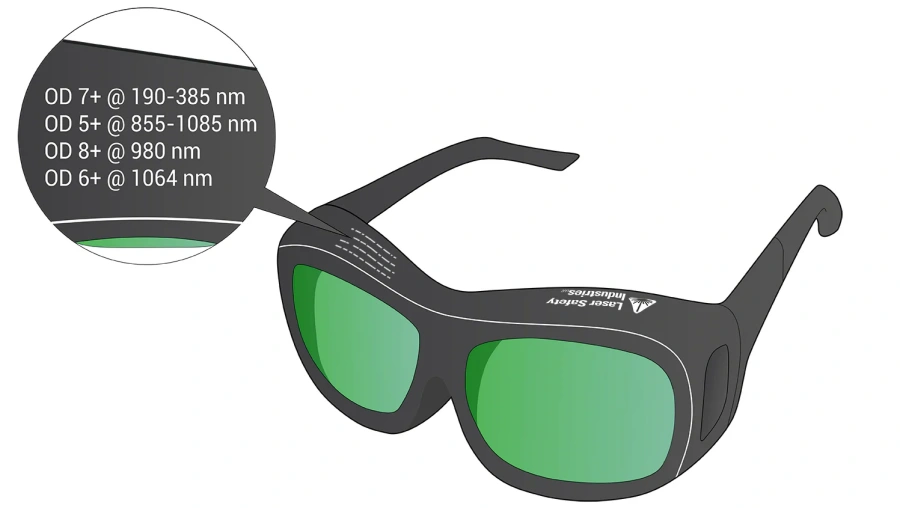
Handheld laser welders are Class 4 laser devices and must be used with strict safety control. The direct beam, reflected beam, and scattered laser radiation can cause serious eye injury, skin burns, and fire risks if the work area is not properly protected.
All operators should wear laser safety glasses rated for the correct fiber laser wavelength, usually around 1080 nm. The welding area should also use laser-safe barriers, warning signs, controlled access, and proper fume extraction.
Safety becomes even more important when using high-power systems such as 3kW and 6kW handheld laser welders. A 6kW laser welder can produce stronger reflected energy, higher heat input, more smoke, and greater risk from poor clamping or unstable operation. Operators should be trained before using the machine, and sample testing should be done in a controlled area before production welding.
Before welding reflective materials such as aluminum, brass-coated steel, or polished stainless steel, check the reflection risk carefully. Clean the surface, set the correct focus, confirm the shielding gas, and make sure nearby people are protected from direct and reflected laser exposure.
Which Laser Welder Power Do You Actually Need?
Choosing a handheld laser welder is not about buying the highest power possible. The better approach is to match the laser power to your most common material, thickness, joint type, and production speed.
- For thin sheet metal up to about 2 mm: A 1000W handheld laser welder is usually enough for light stainless steel, carbon steel, aluminum, and thin sheet metal parts.
- For general light fabrication around 3 mm: A 1500W handheld laser welder is a common choice for workshops that mainly weld cabinets, frames, enclosures, kitchen equipment, and thin-to-medium sheet metal.
- For medium-thickness steel around 4–5 mm: A 2000W handheld laser welder is more suitable when you need better penetration, faster welding speed, or regular welding of thicker steel parts.
- For heavier standard welding around 5–6 mm: A 3000W handheld laser welder gives more process margin for carbon steel, stainless steel, brass-coated steel, and thicker aluminum work.
- For thick carbon steel around 10–12 mm: A 6000W handheld laser welder may be more suitable when 3kW power is not enough for the required penetration or production speed.
If your work is mostly thin stainless steel or light sheet metal, 6kW is usually unnecessary and may be harder to control. If your work often includes thick carbon steel, heavy plates, structural parts, or machinery frames, 6kW can reduce the need for double-sided welding or multiple passes under suitable process conditions.
The safest choice is to confirm your material type, thickness, joint type, and welding requirement before buying. For difficult materials such as aluminum or reflective stainless steel, sample testing is recommended before production.
Frequently Asked Questions (FAQ)
A 1.5kW handheld laser welder is commonly used for material up to about 3 mm, including carbon steel, stainless steel, aluminum, and brass-coated steel under suitable settings. It is a good choice for light fabrication, sheet metal products, cabinets, frames, and general workshop welding.
A 3kW handheld laser welder can usually weld about 6 mm carbon steel, stainless steel, or brass-coated steel, and about 5 mm aluminum under optimized settings. For carbon steel around 10–12 mm, a 6kW handheld laser welder may be more suitable.
A 6kW handheld laser welder can be used for thicker carbon steel applications, commonly around 10–12 mm under suitable test conditions. The actual result depends on joint type, fit-up gap, wire feeding, wobble width, shielding gas, travel speed, and whether full penetration is required.
Yes. A handheld laser welder can weld aluminum, but aluminum usually needs more power and better process control than steel. In practical use, 2kW is often used around 4 mm aluminum, 3kW around 5 mm aluminum, and 6kW may be considered for thicker aluminum around 8–10 mm after sample testing.
No. A 6kW handheld laser welder is better for thick carbon steel and heavy-duty production work, but it is not always the best choice for thin sheet metal. For thin stainless steel, light fabrication, or small parts, 1.5kW to 3kW may be easier to control and more cost-effective.