
Laser welding is very fast and precise, but it also creates serious hazards in the workplace. The main risks are invisible laser beams that can permanently hurt the eyes, toxic fumes, and fire safety problems. These dangers are real, but they can be controlled.
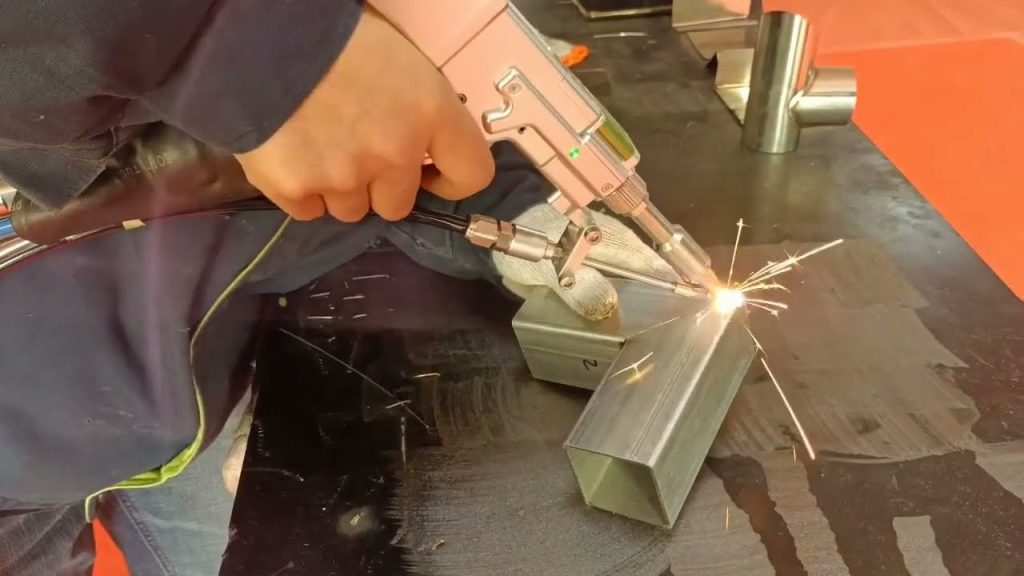
A simple, strong way to stay safe is to use the Hierarchy of Controls. This approach starts with fixing the problem with safer designs, then uses rules and procedures, and only then relies on personal protective equipment (PPE) as a last line of defense.
This guide breaks down the essential safety rules, Class 4 laser PPE requirements, and facility setup protocols to keep your operators safe, pass inspections, and keep your production line moving.
The Big Three: Core Hazards of Handheld Laser Welding
Before you can design a safe workspace, you must understand how a Class 4 laser differs from traditional electrical arc welding.
Hazard 1: Invisible Laser Radiation
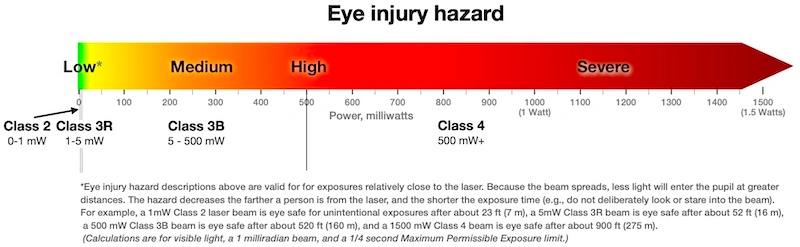
The fiber lasers used in modern welding systems typically emit near-infrared light at wavelengths around 1064 nm to 1070 nm. This light is completely invisible to the human eye, meaning your natural blink reflex offers zero protection.
If a stray beam enters your eye, the cornea and lens act as a biological magnifying glass. They concentrate the invisible radiant exposure by up to 100,000 times onto the retina. Because retinal tissue cannot repair itself, a direct hit—or even a scattered reflection off polished aluminum—causes instantaneous thermal burns and permanent blind spots.
Hazard 2: Toxic Laser Welding Fumes (LGACs)
Laser welding vaporizes metal instantly, creating ultra-fine particulate plumes known as Laser Generated Airborne Contaminants (LGACs). When welding 1–4 mm stainless steel, these fumes contain hexavalent chromium and nickel, which are known carcinogens. Processing galvanized steel releases zinc oxide, triggering Metal Fume Fever, while aluminum processing releases aluminum oxide that can cause irreversible lung damage called aluminosis.
Hazard 3: Electrical and Fire Risks
Beyond the beam and fumes, the laser system itself introduces other significant hazards.
- Fire Risks: The intense heat from the laser beam, sparks, and molten metal can easily ignite flammable materials in the work area, such as cardboard, cleaning solvents, or accumulated dust.
- Electrical Hazards: Industrial laser systems use high-voltage power supplies that present a lethal risk of electrocution, particularly during maintenance or service when protective panels may be removed. All electrical work must comply with the National Electrical Code.
First Priority: Engineering Controls (Designing Safety In)
Engineering controls physically remove or isolate the hazard. Because they do not rely on human memory, they are your strongest line of defense.
Establish a Laser Controlled Area (LCA)
You cannot operate a handheld laser in an open shop. You must designate a Laser Controlled Area (LCA) enclosed by light-tight, EN 12254-certified laser blocking panels or curtains. All access doors should feature interlock switches; if a door is opened during operation, the interlock instantly severs power to the laser.
Rely on ISO 11553-1 Torch Interlocks
Modern handheld systems feature built-in, un-bypassable hardware redundancies mandated by the ISO 11553-1 standard :
- Workpiece Contact Circuit: The laser will only fire when the conductive copper nozzle is in direct physical contact with the grounded workpiece.
- Plasma Detection Sensor: If the torch does not detect the bright light of a plasma arc within milliseconds of the trigger pull (meaning it is firing into thin air), it terminates emission instantly.
- Active Fiber Monitoring: If the flexible fiber-optic delivery cable is crushed or bent, internal sensors break the circuit, preventing the multi-kilowatt beam from melting through the cable jacket and exposing the operator.
Source-Capture Fume Extraction
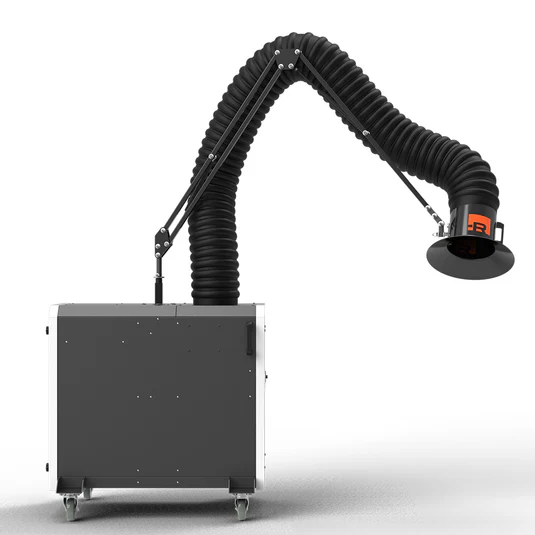
Standard shop ventilation is inadequate for LGACs. You must use Local Exhaust Ventilation (LEV) pulling between 80 to 600 Cubic Feet per Minute (CFM) directly at the weld zone. The extractor must utilize a HEPA filter to capture 99.97% of 0.3-micron particulates, followed by an activated carbon filter to absorb volatile organic compounds (VOCs) and ozone.
Second Priority: Administrative Controls (Safe Work Practices)
Administrative controls dictate how work is safely performed.
- Appoint a Laser Safety Officer (LSO): ANSI Z136.1 requires any facility operating a Class 4 laser to designate a qualified LSO. The LSO calculates the Nominal Hazard Zone (NHZ), enforces safety boundaries, and selects appropriate eyewear.
- Standard Operating Procedures (SOPs): Operators must follow strict daily checklists. This includes verifying argon shielding gas flows, checking filler wire feeds, and properly setting up advanced features. For example, setting the WOBBLE head—a mechanism that rapidly oscillates the beam up to 4-5 mm wide to bridge gaps and stabilize the keyhole—requires specific parameter checks before firing.
- Electrical Lockout/Tagout (LOTO): Maintenance personnel servicing Master Oscillator Power Amplifier (MOPA) lasers or Continuous Wave (CW) units must use insulated grounding probes to actively discharge capacitors before opening the equipment chassis.
Last Line of Defense: Class 4 Laser PPE
When engineering and administrative controls cannot mitigate all risks, Personal Protective Equipment (PPE) is mandatory. Standard auto-darkening welding hoods will melt instantly under a Class 4 laser strike.
- Redundant Eye Protection: Operators must wear specialized laser safety glasses rated for the exact wavelength (e.g., 1070 nm) and a specific Optical Density (OD). To prevent accidents caused by the habit of lifting a hood to inspect a joint, standards require wearing these laser safety glasses underneath a certified handheld laser welding helmet.
- Flame-Resistant Clothing (FRC): Exposed skin must be covered with tightly woven, flame-resistant fabrics like Kevlar or heavy leather to protect against scattered radiation and intense spatter reduction processes.
| Safety Category | Traditional MIG/TIG Welding | Handheld Laser Welding |
| Primary Eye Hazard | UV / Bright Visible Light | Invisible Near-Infrared Radiation (1070 nm) |
| Eye Protection | Standard Auto-darkening hood | Laser-rated eyewear worn UNDER a laser helmet |
| Workspace Boundary | Standard welding screens | Light-tight Laser Controlled Area (LCA) with interlocks |
| Fume Management | Ambient or local extraction | Mandatory High-velocity HEPA/Carbon extraction |
Emergency Preparedness: When Things Go Wrong
Even with robust controls, your shop must have a clear emergency response protocol.
Preserve the Scene: The LSO must lock out the equipment to conduct a root-cause investigation. Under OSHA regulations, specific severe injuries, such as the loss of an eye or in-patient hospitalization, must be reported within 24 hours.
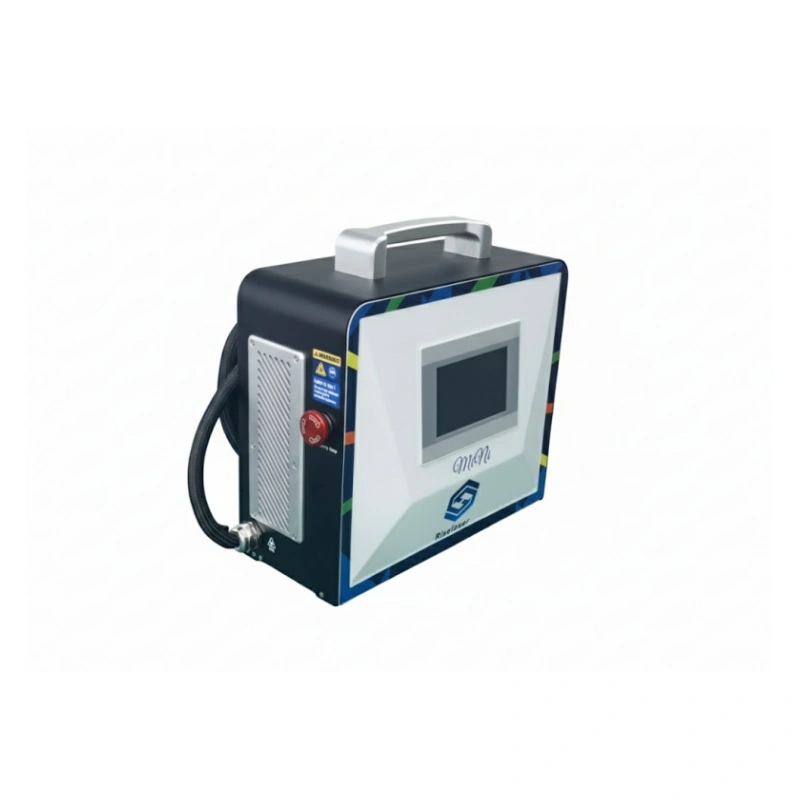
Immediate Shutdown: Hit the large, red Emergency Stop (E-stop) button to instantly neutralize the optical threat.
Medical Response: Any suspected eye injury is a severe medical emergency. Do not allow the victim to drive themselves. Have them lie flat face down (to prevent internal eye bleeding from pooling over the macula) and call 911.
Frequently Asked Questions (FAQ)
A: The single biggest hazard is exposure to the laser beam, which is often invisible and can cause instantaneous, permanent eye damage from a direct or even a reflected beam.
A: Yes, absolutely. You must use laser safety PPE, specifically eyewear designed to block the exact wavelength and power (measured in Optical Density) of your laser. Standard safety glasses or traditional welding helmets offer no protection against laser radiation and must not be used.
A: A Laser Safety Officer (LSO) is a person designated with the authority and responsibility to manage a laser safety program. As required by the ANSI Z136.1 standard for facilities using Class 3B or Class 4 lasers, the LSO evaluates hazards, implements controls, and ensures all personnel are properly trained.
A: Yes, laser welding fumes are very dangerous. They can contain toxic, ultrafine metal particles that, when inhaled, can cause short-term illness (Metal Fume Fever) and long-term diseases, including lung damage and cancer. Proper ventilation is essential.
A: No. Standard helmets protect against UV and visible arc rays but offer zero protection against concentrated infrared laser radiation. You must wear certified laser protective eyewear beneath a laser-specific welding helmet.
Take the Next Step in Fabrication Safety
Deploying handheld laser welding transforms your shop’s throughput and capabilities, but treating a Class 4 laser like a standard TIG torch is a recipe for catastrophic injury.
Ensure your shop is ready for the transition. Contact our engineering team today to schedule a comprehensive Laser Application Audit and calculate your Total Cost of Ownership (TCO), including the exact safety enclosures and HEPA extraction systems required to keep your facility profitable and OSHA compliant.