
Laser cladding is a laser-based surface engineering process that deposits metal powder or wire onto a substrate to create a metallurgically bonded layer. It is widely used to restore worn parts, improve wear resistance, enhance corrosion protection, and extend the service life of high-value components. Because the process applies heat in a highly localized way, it typically causes less distortion and dilution than many conventional repair or coating methods.
Laser cladding is commonly used in aerospace, oil and gas, mining, power generation, tooling, and heavy equipment repair. Typical applications include tool and die restoration, gear tooth repair, hydraulic component rebuilding, and protective coatings for drilling tools and turbine parts. Depending on the material system and process setup, laser cladding can be used for both part repair and performance enhancement.
In this guide, we explain what laser cladding is, how the process works, what materials are commonly used, where it is applied, and how it compares with laser welding and thermal spray.
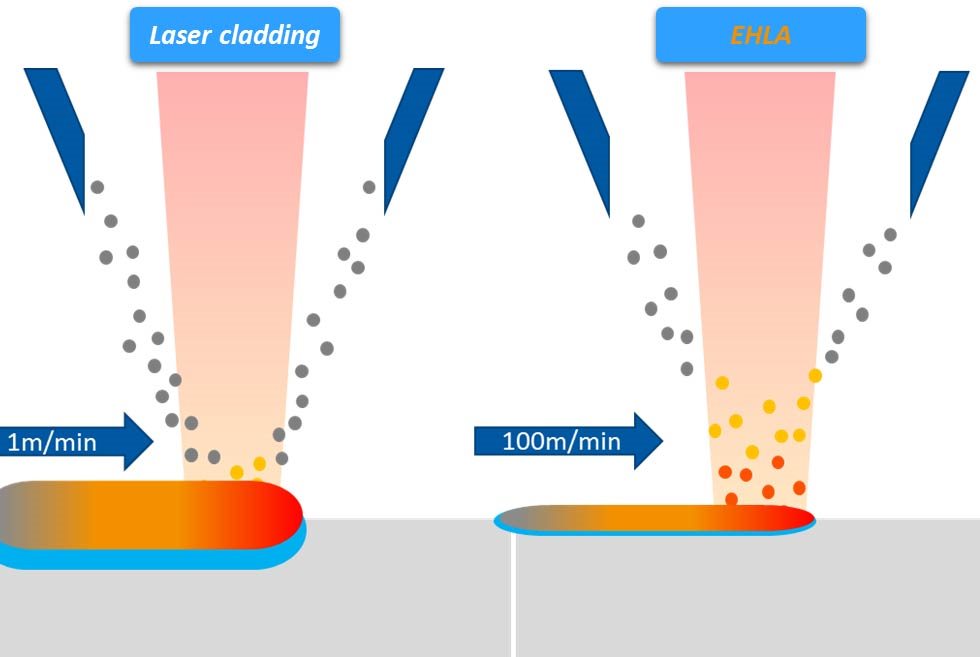
Laser Cladding at a Glance
Laser cladding deposits metal powder or wire onto a substrate using a focused laser beam.
It is used for part repair, wear resistance, corrosion protection, and dimensional restoration.
Common applications include tool and die repair, gear tooth repair, oil drilling tools, and aerospace components.
Compared with many conventional methods, laser cladding offers localized heat input and a strong bonded layer.
It differs from laser welding because the goal is surface enhancement rather than joining separate parts.
What is Laser Cladding Technology?
Laser cladding is a surface engineering process in which a laser melts a feed material, typically metal powder or wire, onto the surface of a substrate to form a bonded layer. The resulting clad layer is used to improve surface properties such as wear resistance, corrosion resistance, hardness, or dimensional recovery. Unlike simple coating methods, laser cladding creates a metallurgically bonded layer, which makes it suitable for demanding repair and hardfacing applications.
Key Advantages of Laser Cladding Technology
Laser cladding has many advantages over traditional surface treatments like thermal spraying, chrome plating, and regular welding. These benefits include better performance, cost savings, and being safer for the environment.

Technical Advantages
Strong Bond: Laser cladding creates a full metallurgical bond with shear strengths often exceeding 500 MPa, ensuring an exceptionally strong and dense connection. This process creates a fully dense, non-porous layer that meets rigorous industry standards like AWS D17.1 for aerospace applications, preventing peeling or chipping under extreme stress.
Works with Many Materials: It can be used with lots of materials, including special metal mixes, carbides, and ceramics. This lets us make surfaces that resist wear, corrosion, and heat very well.
Low Heat and Less Warping: The laser focuses energy precisely, keeping the heat-affected zone (HAZ) minimal—typically less than 0.5 mm. This prevents thermal distortion, making it ideal for dimensionally critical or thin-walled components that would be damaged by traditional welding.
Little Mixing of Materials: Only a small amount (less than 5%) of the base metal mixes with the coating. This helps the coating keep its strong properties and lets us make thinner, better layers.
Precise and Controlled: Laser cladding is automated and allows very accurate control of where and how thick the coating is, even on parts with complex shapes.
Good for Repairs: It works well for fixing worn parts. Laser cladding can bring parts back to their original shape or even give them a stronger surface, saving valuable equipment.
Economic Advantages
Longer Part Life: By applying a tough, wear-resistant surface, laser cladding can increase component lifespan by up to 300-500% in high-wear applications, drastically extending the operational life of critical parts.
Less Downtime: Parts that last longer break down less often, so machines stay running and need fewer repairs.
Cheaper Repairs: Fixing expensive parts with laser cladding usually costs less than buying new ones.
Saves Materials: Less expensive metals can be used for the main part, with the expensive coating only applied where needed.
Environmental Advantages
Energy Efficient: New laser systems, especially diode lasers, use electricity very efficiently, lowering energy use compared to older machines.
No Dangerous Chemicals: Laser cladding replaces harmful methods like hard chrome plating, which uses toxic substances.
Less Waste: Because it applies material very precisely, almost all of the powder or wire is used, making less waste than spraying or plating.
Saves Resources: Repairing parts means fewer new parts need to be made, saving raw materials and energy.
Common Laser Cladding Materials
The versatility of laser cladding is greatly enhanced by the wide range of available materials. Choosing the right one is key to achieving the desired surface properties. Common choices include:
- Stellite™ (Cobalt-Chromium Alloys): Renowned for exceptional wear and corrosion resistance, especially at high temperatures.
- Inconel® (Nickel-Chromium Alloys): Ideal for applications in harsh environments that require superior heat and chemical resistance.
- Tungsten Carbides: Used in hardfacing with laser cladding to create extremely hard, abrasion-resistant surfaces for parts in high-wear situations.
Laser Cladding vs. Laser Welding
While both processes use a laser, their functions are fundamentally different. Laser cladding is a surface enhancement process, while laser welding is a joining process.
| Property | Laser Cladding | Laser Welding |
| Primary Goal | Adds a protective coating to a surface. | Joins two or more separate pieces of metal. |
| Process | Melts a new material onto a substrate. | Fuses the base materials of the pieces together. |
| Outcome | Creates a distinct, protective surface layer on a single part. | Creates a single, unified component from multiple pieces. |

Laser Cladding Technology Applications by Industry
Because it is versatile, precise, and improves performance, laser cladding is used in many tough industries. It helps repair parts, improve surface strength, and make things last longer, adding great value.
Aerospace and Aviation
In aerospace, safety and performance are very important. Laser cladding is used to fix and strengthen expensive parts, helping keep flights safe and lowering maintenance costs.
Turbine Blades: Repair worn or damaged tips and edges to last longer under high heat and stress.
Engine Parts: Add wear-resistant coatings to make parts stronger and last longer.
Landing Gear: Repair and reinforce parts that face heavy impact and wear.
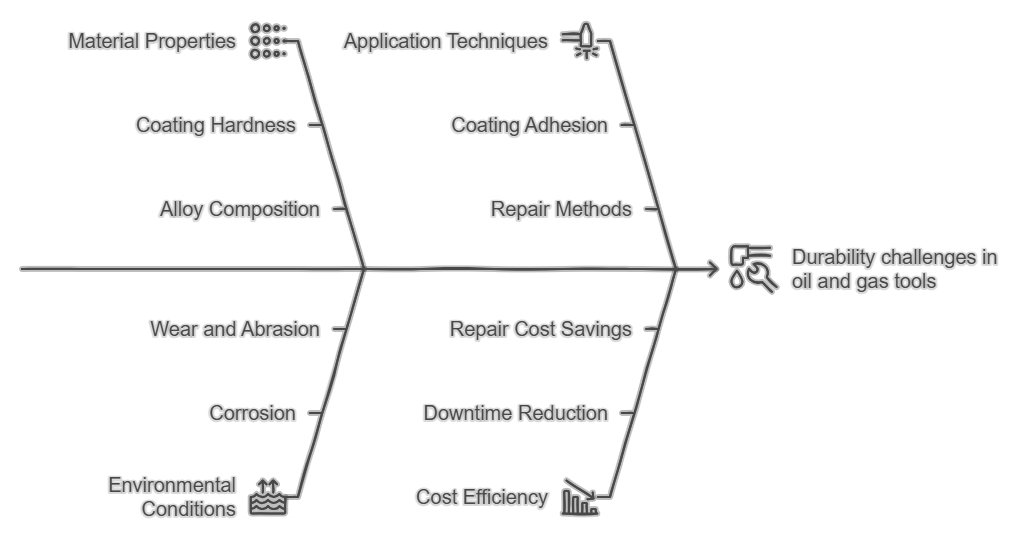
Oil & Gas Exploration
The oil and gas industry uses laser cladding to protect gear from tough conditions, like corrosion and wear, so parts last longer underground and underwater.
Pipes and Risers: Use corrosion-resistant metals to shield subsea equipment from harsh saltwater.
Drilling Tools: Oil drilling tools laser cladding is a critical application, used to add very hard coatings like tungsten carbide to bits and stabilizers to fight extreme wear and erosion.
Valves and Pumps: Repair and coat parts inside to protect against corrosive fluids and abrasion.
Mining and Heavy Equipment
Mining machines face harsh conditions. Laser cladding helps them last longer and work better, reducing costly downtime.
Hydraulic Cylinders: For operations managers asking how to repair worn hydraulic cylinders, our process restores critical dimensions and adds an advanced wear-resistant coating that is a superior alternative to traditional chrome plating.
Ground-Engaging Tools: Add hard surfacing on bucket teeth and cutting parts to handle strong abrasion and impact.
Shafts and Gears: Repair worn parts to last even longer than new ones.
Power Generation
Power plants rely on strong parts that last. Laser cladding is used for quick repairs and protective coatings.
Turbine Components: Repair blades and rotors on-site to keep machines running.
Boiler Tubes: Add protective coatings inside to resist heat and corrosion.
Valve Seats: Add hard coatings to improve durability and sealing under pressure and high temperatures.
Automotive Manufacturing
Laser cladding makes car parts more durable and helps create better designs, leading to longer-lasting vehicles.
Engine Parts: Add wear-resistant coatings to valves, camshafts, and crankshafts.
Brake Discs: Apply coatings to reduce brake dust and fight rust.
Transmission Parts: Coat gears and other important parts to resist wear.
Manufacturing, Tooling, and Die Repair
In factories, laser cladding helps repair and extend the life of tools and equipment, keeping production going and saving money.
Molds and Dies: Precisely fix worn or broken surfaces. For example, shear dies laser cladding is a highly effective process for repairing damaged edges and restoring critical dimensions, preventing the need for costly replacements.
Cutting Tools: Add hard coatings to keep tools sharp and last longer.
Industrial Rollers: Restore surfaces to their original shape and size.
Industry Applications at a Glance
| Industry Sector | Example Applications | Key Benefit(s) Achieved |
|---|---|---|
| Aerospace & Aviation | Turbine blades, engine parts, landing gear | Repair, wear/heat resistance, extended life |
| Oil & Gas | Drilling tools, valves, pumps, pipes | Wear, corrosion, erosion resistance |
| Mining & Heavy Equipment | Hydraulic cylinders, bucket teeth, shafts, gears | Wear/impact resistance, repair, durability |
| Power Generation | Turbine components, boiler tubes, valve seats | Repair, heat/corrosion resistance, reliability |
| Automotive Manufacturing | Engine valves, crankshafts, brake discs, gears | Durability, wear resistance, reduced emissions |
| Manufacturing & Tooling | Molds, dies, cutting tools, industrial rollers | Repair, extended tool life, cost savings |
Conclusion: Embracing Enhanced Performance with Laser Cladding
Laser cladding is a big change in surface engineering. It does more than just repair parts — it improves how well parts work, how long they last, and how safe they are for the environment. By carefully adding advanced materials, laser cladding creates strong surfaces that help important parts last much longer in tough industries like aerospace, oil & gas, mining, and power generation.
The main benefits of using this technology are:
- Better Performance: It creates surfaces that resist wear and corrosion very well because the coating bonds strongly with the base metal.
- High Precision: The process uses very little heat, so it keeps parts from bending or changing shape.
- Cost Savings: Laser cladding can save money over time by making parts last longer, cutting downtime, and avoiding the need to buy new parts.
- Environmentally Friendly: It is a clean and efficient method that replaces older surface treatments that use harmful chemicals.
Whether you want to fix worn parts to make them even better than new or improve original equipment, laser cladding offers a strong and flexible solution.
To learn more about our industry-leading laser cladding services or to inquire about our advanced laser cladding machines, please contact our team of experts for custom advice and solutions.
FAQ
The low amount of heat used in laser cladding is a major advantage because it prevents the main part from getting too hot. This means the part is much less likely to warp, change shape, or lose its original strength. It makes laser cladding ideal for coating delicate or precisely machined components that could be easily damaged by the higher heat used in traditional welding methods.
Laser cladding and thermal spray are different processes with their own strengths. Laser cladding forms a strong, fully fused bond with the base metal. This creates a very dense coating with almost no pores. That makes it great for durability and stopping corrosion. Thermal spray, on the other hand, sticks mechanically. Its coatings can be more porous and less tough under heavy impact. But thermal spray is often cheaper and faster for covering large areas. It can also be used in places where laser cladding gear can’t reach. The best choice depends on the job. It matters what kind of wear the part faces and how good the coating needs to be.
No, laser cladding is not just for fixing worn or damaged parts. It often makes them better than new. But it is also used on brand new parts. Adding a strong laser-cladded coating to a new part from the beginning can boost its resistance to wear, rust, or heat. This helps the part last much longer, even before it starts to wear out.