
Keeping trees well-trimmed is important for safety and looks. Traditional tree trimming is hard work and can be dangerous. Because of these problems, people have been looking for safer and easier ways to trim trees. One new idea is the Laser Tree Trimmer, which uses advanced technology to cut branches from a distance. This idea sounds exciting, but many wonder if it is ready for real use. Can it work well, be easy to use, and save money compared to old methods? This article takes a close look at laser tree trimming. It checks how well it works in real life and if it can really replace regular tree trimming.
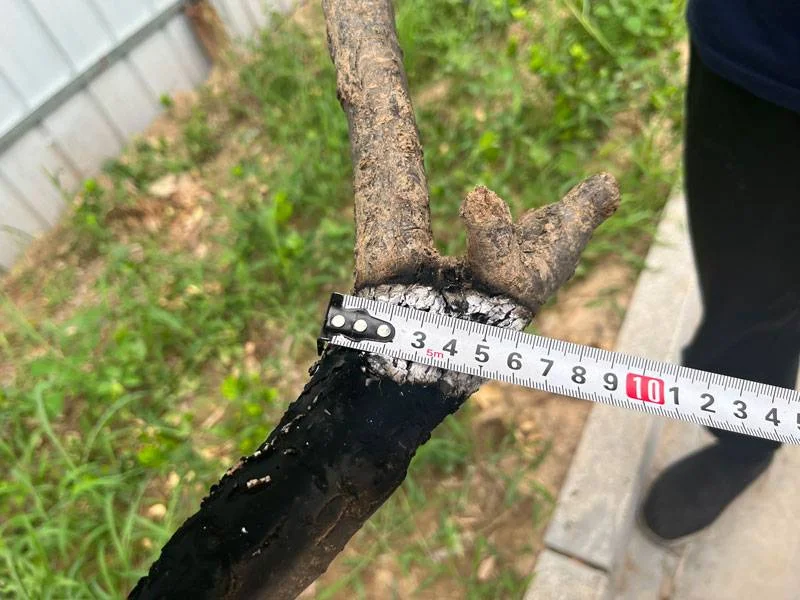
How Does Laser Tree Trimming Work? The Technological Foundation
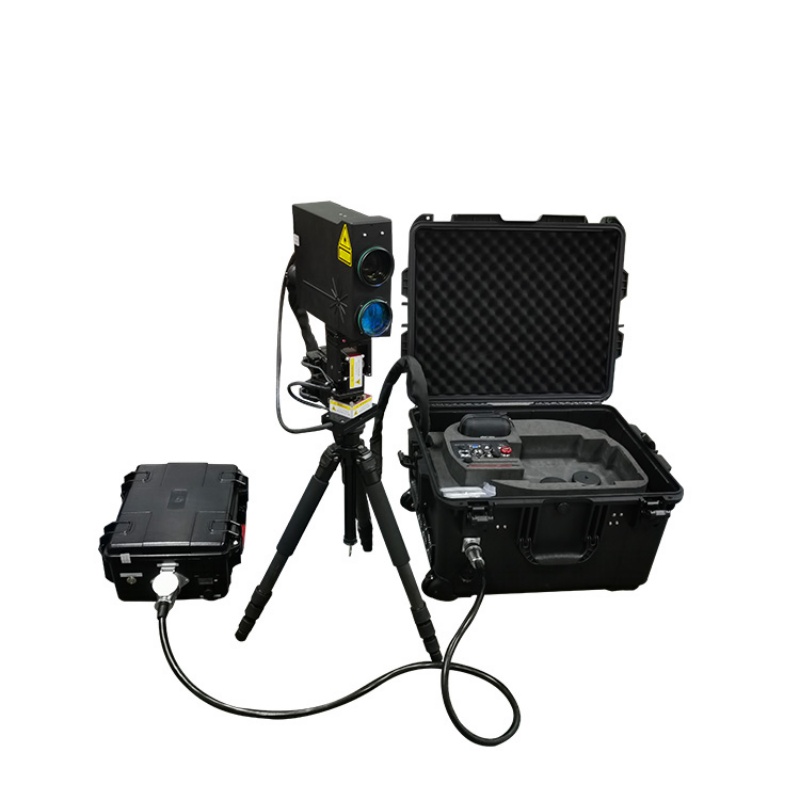
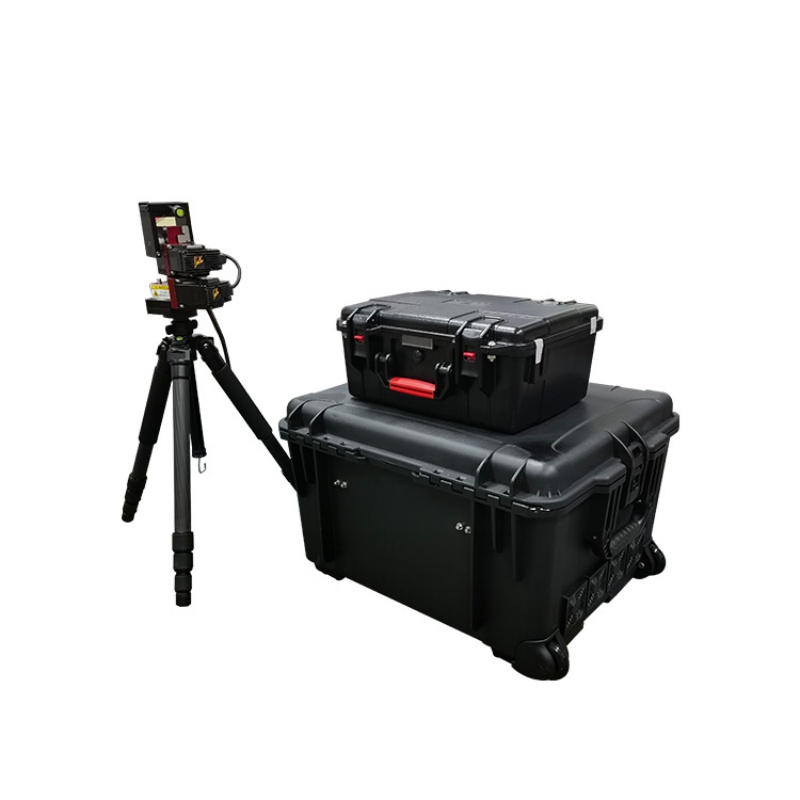
A laser tree cutting machine isn’t just a simple handheld pointer. It’s a complex system usually involving:
A Powerful Laser: These lasers are not like the small pointers used in presentations. They are industrial-strength lasers that can cut through wood. Often, they are high-power fiber lasers. These usually run between 500 watts and over 1000 watts. They give off infrared light at about 1080 nanometers in wavelength.
A Delivery System: This could involve mirrors and lenses to direct the laser beam accurately. Sometimes, these systems might be mounted on trucks with extendable arms, or potentially even on drones for reaching tricky spots.
Targeting and Control: Sophisticated cameras and computer systems help the operator aim the laser exactly at the target branch. The cutting process is often controlled remotely. These advanced cameras sometimes have crosshairs and electronic focusing tools. This lets the operator aim very precisely from a distance using remote control.
Power Source: These powerful lasers need a lot of electricity, often supplied by generators or large battery packs.
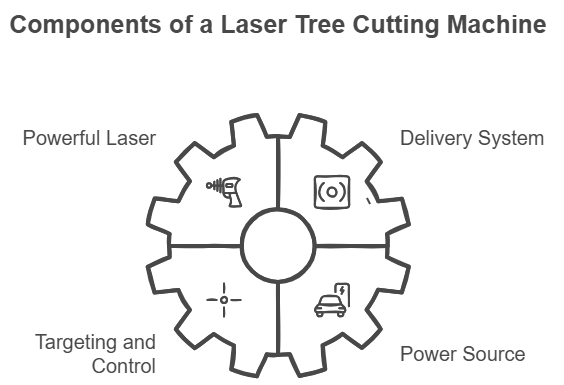
Think of it as a high-tech, super-focused heat ray designed specifically for cutting wood from a distance.
Key Features and Capabilities of Laser Tree Cutters
What makes the idea of a laser branch cutter so interesting? It promises some cool features:
- Remote Operation: Operators can potentially stand safely on the ground and aim the laser, reducing the risks of climbing or using aerial lifts.
- Precision: High-tech targeting systems could allow for very precise cuts, essentially turning the device into a remote laser tree pruner, potentially damaging the tree less than some manual methods.
- Reach: A laser limb cutter could potentially reach branches that are very high or in awkward positions without needing someone to physically climb up there.
- Non-Contact Cutting: Unlike a saw, the laser cuts without physically touching the branch (beyond the light beam). This might reduce vibrations or shaking of the tree.
- Reach: A laser limb cutter could potentially reach branches that are very high or in awkward positions without needing someone to physically climb up there, sometimes designed to operate effectively up to 400 meters (nearly 1300 feet) away.
These features sound great on paper, offering a potentially safer and more precise way to manage trees.
Precision and Efficiency in Practice: Performance Analysis
Okay, so the features sound cool, but how well does laser tree trimming actually work in the real world?
The precision part seems promising. Aiming a beam of light can be very accurate, like a surgeon using a high-tech tool. This could be great for carefully shaping a tree or removing only very specific branches without disturbing others. Using laser to cut tree branches could mean cleaner cuts in some situations.
However, efficiency (how fast the job gets done) is more complicated. While a laser might cut a single, small branch quickly, setting up the equipment, generating enough power, and dealing with potential issues might take time. Factors like:
- Branch Thickness: Lasers work best on smaller to medium-sized branches. Cutting very thick logs efficiently with current mobile laser tech is a major challenge.
- Weather: Rain, fog, or even high winds could potentially scatter the laser beam or make aiming difficult, impacting performance and safety.
- Energy Needs: Running a powerful laser takes a lot of energy, which can be a practical limitation out in the field.
While a traditional chainsaw is much faster for cutting large wood, laser systems focus on clearing smaller obstacles and branches near power lines. In our tests, a branch about 10 cm (4 inches) thick could usually be cut in one to two minutes, showing lasers can handle common obstructions. However, the actual cutting speed depends heavily on factors like laser power, wood type and density, moisture content, and especially branch thickness.
So, while it can be precise, tree cutting lasers aren’t necessarily a magic bullet for speed in all situations. They might be efficient for specific tasks, like clearing many small branches around power lines from a distance, but less so for heavy-duty tree removal.
Safety Considerations and Risk Mitigation
Safety is a huge factor in tree work. Does using tree cutting lasers make things safer? It’s a mixed bag.
- Pros: The biggest potential safety win is reducing the need for workers to climb trees or use bucket trucks, which is where many serious accidents happen. Operating remotely from the ground is generally much safer for the person.
- Cons: Laser Tree Trimmers employ Class 4 lasers, which are powerful enough to cause severe eye injuries and ignite flammable materials if not handled properly. Operators must use wavelength-specific protective eyewear and follow strict safety protocols to mitigate risks. Additionally, environmental factors such as wind and dry vegetation can increase fire hazards, necessitating careful operational planning.
Compared to traditional methods, laser cutting trades climbing risks for laser-specific risks. Overall safety depends heavily on the equipment design, operator skill, and the specific environment.
Cost Analysis: Investment vs. Long-Term Value
The cost is often the biggest question when evaluating any new professional tool: Is a laser tree trimmer worth the money?
Upfront Cost
Laser tree trimmers for professional use usually cost between $15,000 and $20,000 as of May 2025. The price depends on things like laser power, battery or power system size, cooling features, and advanced safety or targeting options. Higher-end models with more features tend to be at the top of this price range.
This cost is much less than huge custom industrial laser systems but still a big investment compared to a professional chainsaw. A good chainsaw typically costs between $500 and $1,000. The higher price of laser trimmers reflects the complex technology inside, like precision lasers, optics, control systems, and power management.
Laser tree trimmers are specialized tools made for businesses ready to invest in advanced equipment. They aren’t usually found in regular hardware stores. Instead, they are designed for professionals who need precise and efficient tree trimming with modern technology.
Operational Cost
Beyond the initial purchase, operating these machines involves ongoing costs. These include:
- Energy Costs: Providing power, whether via batteries needing recharge or potentially fuel for portable generators depending on the model.
- Maintenance: Servicing the laser source, optics, cooling systems, and other components can require specialized knowledge and parts.
- Skilled Operators: While potentially reducing total crew size in some scenarios, the operator may require specific training, potentially impacting labor costs.
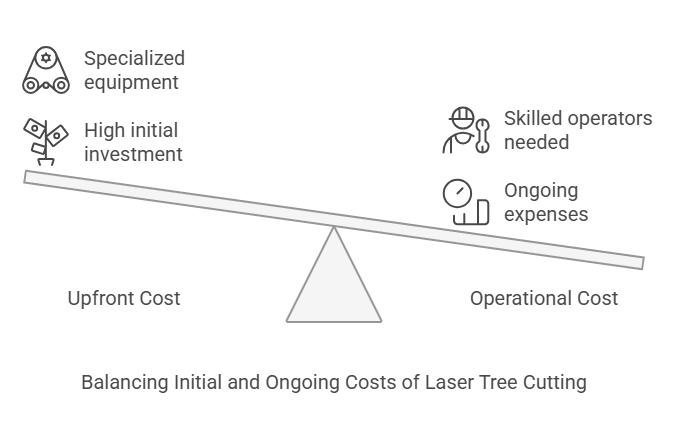
Evaluating Long-Term Value:The long-term value depends on whether the benefits can make up for the high initial and ongoing costs. These benefits might include saving labor time, improving safety to lower insurance or liability costs, better precision, or reaching hard-to-access areas. Compared to cheap traditional tools and regular tree services, spending $15,000 to $20,000 on a laser trimmer is still a big hurdle.
It’s important to think carefully about how often you will use the laser and what specific savings it can bring to your workflow. If you only use it rarely, the cost might not be worth it. But if it helps you save time and money regularly, it could pay off in the long run. In short, a careful evaluation of your needs and potential savings is key before investing in this expensive technology.
Why Choose Professional Laser Tree Trimming Services?
Given the complexity, cost, and safety requirement ourself activity. If this technology is used, it’s almost exclusively through highly specialized professional services. Why?
- Extreme Cost: The equipment is too expensive for most, only large companies or specialized contractors can afford it.
- Training & Expertise: Operating a powerful laser tree branch cutter needs in-depth technical knowledge and thorough training.
- Safety Regulations: High-power lasers used outdoors must follow strict safety rules to protect operators and the public. Professionals are trained to meet these regulations.
So, if you see laser tree trimming, it will likely be done by a professional crew. They are typically hired for large-scale or hard-to-reach jobs, mainly by utility companies or similar organizations.
Market Alternatives: Laser vs. Traditional & Hybrid Solutions
How does a laser tree trimmer stack up against the tools we already have?
- Traditional Methods: Chainsaws, pole saws, handsaws, aerial lifts, and skilled climbers are the standard. They are versatile, relatively affordable, and well-understood. While they have risks, safety procedures are well-established. You can easily find traditional tree cutters for sale.
- Other Mechanized Methods: For large-scale clearing, machines like feller bunchers (grabs and cuts trees at the base) or even helicopter-mounted saws are sometimes used. These are also expensive and specialized but proven for high-volume work.
- Laser: The laser cut tree approach offers unique potential for precision and remote operation in hard-to-reach areas. Its main drawbacks are cost, limitations on branch size, weather sensitivity, and laser-specific safety concerns.
Currently, laser trimming is a niche technology. It’s not trying to replace chainsaws for every job. It’s being explored for specific problems where traditional methods are particularly slow, dangerous, or difficult. Hybrid solutions, perhaps using lasers for precise cuts on smaller, high branches and traditional methods for larger wood, might also emerge.
| Feature | Laser Tree Trimming | Traditional Methods (e.g., Chainsaw, Pole Saw, Climbing) |
|---|---|---|
| Primary Method | Focused Light/Heat Beam | Physical Cutting Blade/Chain |
| Operator Location | Typically Remote (Ground-based) | Often At Height (Climbing, Lift) or Ground w/ Pole Saw |
| Equipment Cost | Extremely High | Low to Moderate |
| Service Cost | Very High | Moderate to High |
| Precision | Potentially Very High | Moderate to High (Skill Dependent) |
| Branch Size | Best for Small/Medium | Handles All Sizes (Appropriate tool needed) |
| Speed | Variable (Setup vs. Cut time) | Variable (Access vs. Cut time) |
| Key Safety Risk | Laser Exposure (Eye/Skin), Fire | Falls, Cuts, Falling Debris |
| Weather Impact | High Sensitivity (Visibility/Beam) | Moderate Sensitivity (Affects worker safety/access) |
| Availability | Very Limited / Niche | Widely Available |
Is Laser Tree Trimming Worth It for You?
So, after looking at how it works, its features, safety, cost, and alternatives, is the laser tree trimmer worth it? The answer depends heavily on who is asking and what job needs doing.
- For Utility Companies: Maybe. Clearing branches near power lines is a constant, expensive, and sometimes dangerous task. If a laser to cut tree branches remotely proves significantly safer and efficient enough for this specific, large-scale application, it could be worth the investment for these big companies, despite the high laser tree cutting machine price. They might see value in reduced risk and potentially faster clearing along miles of lines. The idea of using a powerful laser cannon tree cutting machine might be appealing for these specific industrial uses, despite the high laser tree cutting machine price.
- For Large-Scale Land Management: Possibly, in very specific situations where precision or access is a major issue not easily solved by other machines.
- For Typical Residential Homeowners or Small Businesses: Almost certainly No, not currently. The cost is far too high, the technology isn’t readily available as a service for small jobs, and traditional methods are much more practical and affordable. You won’t be buying a laser tree cutter for sale for your backyard anytime soon. A regular tree cutter price is vastly lower, and professional arborist services using traditional tools are readily available.
Conclusion
Laser tree trimming is a new technology that offers safety and precision, especially for hard-to-reach branches. However, its high cost, limited cutting power for large branches, energy needs, sensitivity to weather, and the need for specialized training mean it’s mainly a niche tool. It’s mostly explored for industrial-scale tasks like utility line maintenance. The idea of easily zapping branches away with a handheld Laser Tree Trimmer isn’t ready for everyday use. Still, this development shows how technology seeks smarter and safer ways to tackle tough jobs. For now, your local tree service with trucks and saws is the best choice for most tree trimming needs.
Frequently Asked Questions (FAQs)
Generally, no. Current professional laser tree trimmers (like those discussed in the $15k-$20k range) are most effective on small to medium-sized branches. Our tests show cutting a ~10 cm (4-inch) branch can take one to two minutes. They are not designed for cutting very thick logs or felling entire trees – traditional chainsaws are much faster and better suited for heavy-duty work. The laser’s cutting speed heavily depends on its power, the wood type, moisture, and branch thickness.
The laser cuts by intensely heating and burning wood fibers in a focused spot. The precision can lead to clean cuts, potentially better than some manual methods that might tear bark. However, the intense heat is a key factor – care must be taken to avoid scorching nearby leaves or branches, and there’s a fire risk, especially with dry material. When used correctly by trained operators targeting only the specific branch, unintended damage to the rest of the tree should be minimized, but it’s a factor requiring careful operation.
No, laser trimmers usually cost a lot more. Buying one can cost $15,000 to $20,000 or more. In comparison, a professional chainsaw costs just a few hundred to maybe a thousand dollars. Hiring a laser trimming service is also more expensive than regular arborist work. This is because the equipment is costly, and workers need special training. Plus, running the laser machines takes more money. While some industries, like utility line clearing, might save money over time, most people find traditional methods cheaper. For most jobs, chainsaws and regular trimming are the better, more affordable choice.