
Are you struggling to machine hard, brittle ceramic components without causing cracks or fractures? Traditional manufacturing methods like diamond grinding and sawing are often slow, cause significant tool wear, and impart mechanical stress that can lead to part failure and costly material waste. The thought of a scrapped, high-value ceramic component is enough to make any engineer anxious.
But there’s a better way. Laser cutting offers a high-precision, non-contact solution that sidesteps these issues entirely. In this comprehensive guide, we’ll explore the fundamental science of how lasers cut ceramics, compare the different laser systems available, detail the costs and challenges, and show you how to design parts for optimal results.
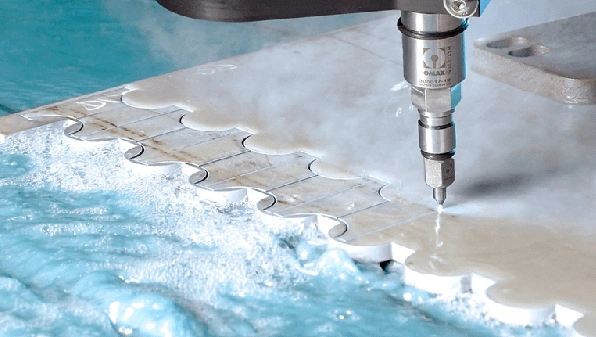
How Does Laser Cutting Ceramics Work?
Laser cutting is a manufacturing process that uses a focused beam of light to remove material with extreme precision. For ceramics, the interaction between the laser and the material is not a single process but falls into three distinct physical mechanisms, depending on the type of laser used. Understanding these mechanisms is key to choosing the right tool for the job.
1. Photothermal Process (Melting & Vaporization)
This is the most common mechanism, used by CO₂, Fiber, and Nd:YAG lasers. The laser’s light is absorbed by the ceramic, rapidly converting it to intense heat. This heat skyrockets the temperature past the material’s high melting and vaporization points, and the resulting vapor pressure expels the molten material from the cut. While effective, this process creates a Heat-Affected Zone (HAZ), a small area where the heat alters the material’s properties.
2. Photochemical Process (Cold Ablation)
Characteristic of UV lasers, this “cold cutting” method uses high-energy photons to break the atomic bonds holding the ceramic together directly. Instead of melting the material, it’s vaporized layer-by-layer with minimal heat transfer. This results in a much cleaner cut with an almost non-existent HAZ, making it ideal for delicate electronics.
3. Non-linear Absorption (Athermal Ablation)
This is the most advanced method, exclusive to ultrashort pulse lasers like the femtosecond laser. The laser pulse duration is incredibly short (just 10−15 seconds). The energy is delivered so fast that it creates an explosive plasma that ejects material cleanly with virtually no time for heat to spread. This “athermal” process produces superior, crack-free edge quality with no HAZ, meeting the stringent requirements of medical device manufacturing.
Advantages of Laser Cutting vs. Mechanical Methods
Switching from a traditional diamond saw to a laser offers a host of significant advantages, especially when working with challenging materials like ceramics.
- Unmatched Precision & Complexity: A laser beam’s “tool” is a beam of light; it doesn’t wear down. This ensures unwavering repeatability from the first part to the thousandth, allowing for intricate designs impossible with physical tools.
- No Mechanical Stress: As a non-contact process, laser cutting eliminates the mechanical stress, vibrations, and pressure that cause chipping and micro-cracks in brittle materials. This is crucial for maintaining the structural integrity of the final component.
- Speed & Design Flexibility: Design changes are made in a CAD file and uploaded instantly. This agility makes lasers ideal for rapid prototyping and manufacturing where designs are constantly evolving.
- Miniaturization Capability: A laser beam can be focused down to a spot just a few micrometers in diameter, enabling micro-machining of incredibly small features essential for modern electronics and medical devices.
Laser Systems for Ceramic Processing
Not all lasers are created equal. The right choice is critical and depends entirely on the specific ceramic material, the required thickness, and the desired edge quality.
Comparison of Laser Systems
| Feature | CO₂ Laser | Fiber Laser | Nd:YAG Laser | UV Laser | Femtosecond Laser |
| Wavelength | Long (10.6μm) | Short (~1μm) | Short (~1μm) | Very Short (UV, e.g., 355 nm) | Short (~1μm) |
| Mechanism | Photothermal | Photothermal | Photothermal | Photochemical | Athermal Ablation |
| Best For | Scribing, LiST, thick sheets (Alumina, Zirconia) | Scribing, thin films, marking | Drilling, engraving | Delicate materials, no HAZ | Ultimate precision, no HAZ |
| Edge Quality | Good (can have HAZ) | Good | Good | Excellent | Superior (no HAZ) |
| Cost | Low-Medium | Medium | Medium | High | Very High |
Core Laser Cutting Techniques
The method used to apply the laser’s energy is as important as the laser itself. Different techniques are used to achieve different goals.
- Laser Ablation (Direct Cutting): The most straightforward method where the laser makes multiple passes to “carve” completely through the material. It’s used when the final edge quality is critical and the part needs to be fully separated by the laser alone.
- Scoring & Scribe-and-Break: A highly efficient two-step process. The laser quickly etches a shallow, precise “scribe line” on the surface. A small mechanical force is then applied, and the ceramic cleanly snaps along the line. This is much faster and is ideal for high-volume cutting of straight lines on thin substrates like alumina circuit boards.
- Laser-induced Thermal Shock (LiST): A clever technique where a CO₂ laser beam rapidly heats a spot, and a fine jet of cooling liquid (like water) immediately follows. This extreme thermal shock induces a controlled crack that propagates through the material, producing a very clean, stress-free edge.
- Laser Drilling: This technique focuses on creating holes rather than lines. It is a core process in electronics for creating vias—tiny vertical holes that connect different layers of a ceramic circuit board.
Design, Challenges, and Economics
While powerful, lasers require careful planning, from the initial design phase to a realistic understanding of the costs and challenges.
Design Considerations for Laser Cutting
To get the best results, parts should be designed for the process:
- Kerf Compensation: The design file must be adjusted to account for the width of the material removed by the laser (the kerf) to ensure final parts have the correct dimensions.
- Thermal Management: Sharp internal corners act as heat traps and stress concentrators, making them prime locations for cracks. Good design practice involves adding small fillets or radii to these corners to allow heat to flow more smoothly.
- Minimum Feature Size: Designers must know the physical limit of how small a feature the laser can create, which is determined by the laser’s spot size and the material properties.
Challenges and Economic Viability
- Technical Challenges: The biggest hurdle is material-laser matching and the extensive process development required to tune parameters and manage thermal stress to avoid cracking.
- Cost Analysis: Laser systems, especially advanced UV and femtosecond models, have a high initial investment. This is a major barrier. However, this is often offset by lower operational costs:
- There are no consumable tooling costs (e.g., no diamond blades to replace).
- The process can be highly automated, reducing labor costs.
- Precision leads to higher yields and less material waste, a significant saving when using expensive advanced ceramics.
Safety Considerations
Operating high-power industrial lasers requires strict, non-negotiable safety protocols to manage the significant hazards from intense light and airborne particulates.
- Eye Safety: This is the highest priority. Laser safety goggles rated for the specific wavelength of the laser in use are mandatory to prevent instantaneous and permanent blindness.
- Fume & Particle Extraction: Laser ablation creates a plume of hazardous airborne nanoparticles. A robust fume and particle extraction system with HEPA filtration is essential to capture this dust at the source and prevent serious lung damage.
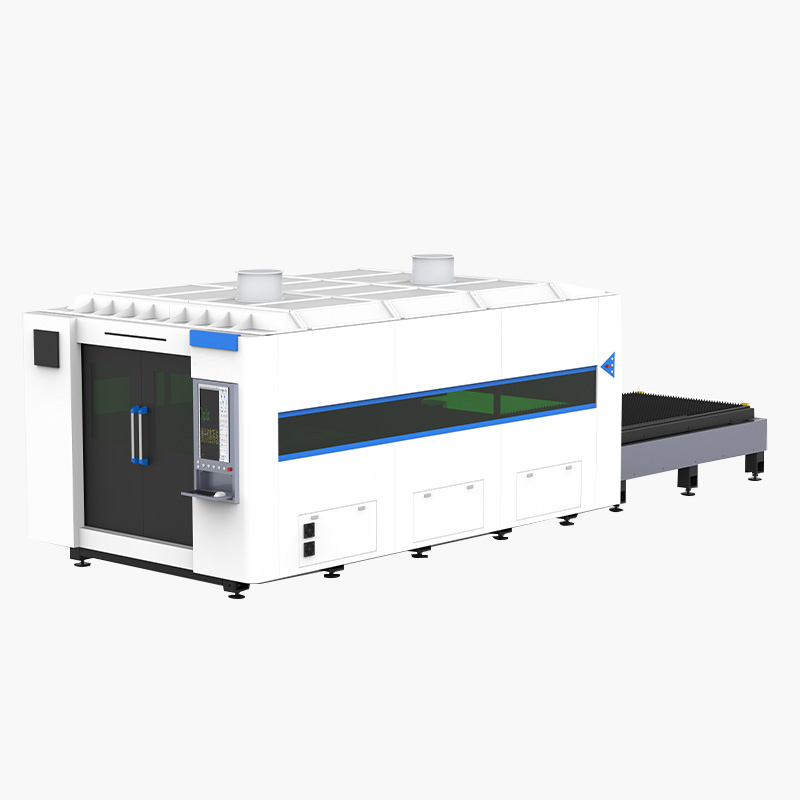
- Enclosure & Interlocks: Professional laser cutters are built as Class 1 laser systems, meaning the entire process is contained within a light-tight safety enclosure with interlocks on all doors. If a door is opened, the laser shuts down immediately, preventing any accidental exposure.
The Future and Conclusion
The field of laser processing is not static. The future is focused on making the process smarter and more predictable through the use of Finite Element Method (FEM) simulation to model outcomes digitally and intelligent systems that use real-time sensors (acoustic, optical) to monitor the cut and adjust parameters on the fly.
In conclusion, laser cutting has fundamentally transformed our ability to work with advanced ceramics. By replacing mechanical force with light, it offers a versatile, precise, and non-contact method for creating components once thought impossible. Success hinges on a deep understanding of the crucial interplay between the laser type, the material’s properties, and the fine-tuning of process parameters. As the technology continues to integrate predictive simulations and intelligent feedback, it will become an even more powerful and reliable tool, further pushing the boundaries of engineering and science.
FAQs
It depends entirely on the application. A CO₂ laser is a cost-effective workhorse for thicker materials like alumina. A femtosecond laser is the best choice for medical-grade applications where absolutely no heat damage or micro-cracks are permissible.
The initial equipment cost can be high, ranging from tens of thousands to over half a million dollars for advanced systems. However, for high-volume production or high-value parts, it can be more economical in the long run due to lower labor costs, zero tool wear, and reduced material waste.
The primary challenge is managing thermal stress to prevent cracking. This requires careful selection of the laser type and precise tuning of dozens of process parameters like laser power, scanning speed, and pulse frequency.