
Laser welding in the electronics industry is a key reason why your smartphone, electric cars, and life-saving medical devices work so well. This powerful technology uses a focused beam of light to join tiny metal parts together with incredible accuracy. Because it creates very little heat, it can build complex electronics without damaging delicate components.
This article will explain in simple terms how laser welding works, where it’s used, how it compares to other methods, and what’s next for this amazing technology.
What is Laser Welding? A Quick Primer

Think of using a magnifying glass to focus sunlight onto a single point to burn a leaf. Laser welding works in a similar way, but with a much more powerful and controlled beam of light. It uses this focused energy to melt and fuse materials together, creating a strong, permanent bond.
The Basic Principle: Fusing Materials with a Focused Beam of Light
A laser machine creates a high-energy beam of light that is aimed at the parts that need to be joined. This beam is so focused that it instantly melts the material in a tiny spot. As the laser moves along the seam, the melted material cools and hardens, locking the two pieces together as one. The biggest advantage is that this happens very quickly and in a very small area, which keeps the rest of the part from getting too hot.
Conduction vs. Keyhole Welding: Two Modes for Different Needs
Laser welding can be done in two main ways, depending on the job:
- Conduction Welding: This method uses lower power to melt just the surface of the material. It creates a smooth, clean weld that looks good, making it perfect for joining thin materials where appearance matters.
- Keyhole Welding: This method uses high power to not only melt the material but also vaporize it, creating a tiny hole called a “keyhole.” This allows the laser to reach deep into the material, forming a very strong and narrow weld. It’s used for structural parts, like the thick metal cases for electric car batteries.
5 Core Advantages: Why Laser Welding is Crucial for Electronics
Precision laser welding is a game-changer for electronics because it solves many of the biggest manufacturing challenges.
- It’s Incredibly Accurate A laser beam can be focused on a spot smaller than the tip of a pen. This amazing precision is necessary for building modern circuit boards, where tiny components are packed closely together.
- It Keeps Delicate Parts Safe From Heat The heat from the laser is kept in a very small area, known as the Heat-Affected Zone (HAZ). This means it can weld a connection right next to a sensitive computer chip without damaging it. It also prevents the parts from warping or bending out of shape.
- It’s Fast and Makes Strong, Reliable Connections Laser welding is much faster than older methods. A job that might take minutes with traditional welding can be done in seconds with a laser. This speed helps factories produce more products, and the welds are extremely strong and high-quality.
- Nothing Touches the Part, So There Are No Tools to Wear Out Because it’s a non-contact process, no tools or electrodes ever touch the workpiece. This means there’s nothing to wear out or replace, which leads to more consistent results and less downtime for maintenance.
- Robots Can Do It Perfectly Every Time Laser welding is easy to automate. Robots can be programmed to follow complex paths, making perfect welds over and over again. This improves quality and reduces the need for manual labor.
High-Impact Applications: Where Laser Welding Shines in Electronics
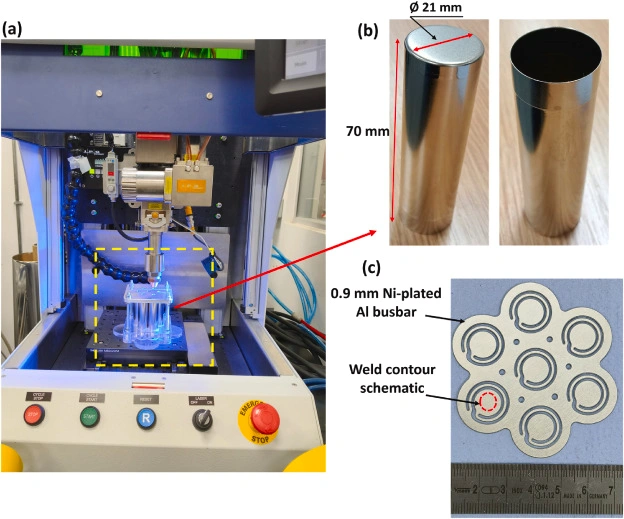
You can find laser welding at work in some of today’s most exciting technologies.
Powering the Future: EV and Consumer Electronics Battery Manufacturing
An EV battery pack is made of thousands of individual battery cells that all need to be connected. Laser welding is the only technology fast and precise enough to make all these connections reliably. It’s especially important for laser welding copper and aluminum parts together, which is a common but difficult task in battery making.
Mission-Critical Protection: Hermetic Sealing of Sensitive Packages
For electronics that have to work in extreme conditions—like in a satellite orbiting Earth or a pacemaker inside the human body—they need to be completely sealed off from the outside world. This is called hermetic sealing. Laser welding creates a perfect, airtight metal seal that protects sensitive electronics from moisture and other contaminants that could cause them to fail.
Micro-Assembly: The World of Smartphone Camera Modules
The tiny camera in your phone is a marvel of engineering. It uses a tiny motor called a Voice Coil Motor (VCM) to focus the lens. The electrical connections for this motor are microscopic. Laser welding is used to make these tiny joints without applying any heat or force that could knock the camera’s lens out of alignment.
A Crucial Distinction: Laser Welding vs. Laser Soldering on PCBs
In electronics manufacturing, people often talk about laser welding and laser soldering. They sound similar, but they are very different processes.
What’s the Difference? Direct Fusion vs. Using a Filler Material
- Laser Welding is like melting two pieces of plastic and fusing them directly into one solid piece. The laser melts the actual parts themselves.
- Laser Soldering is more like using a hot glue gun. The laser is used as a heat source to melt a separate material called solder, which acts like a glue to join the components together.
When to Use Laser Soldering: Fine-Pitch Components and Heat-Sensitive Boards
Laser soldering is the best choice for attaching components to crowded circuit boards. A traditional oven would heat the whole board and risk damaging sensitive parts. A laser can apply heat to just one tiny solder joint at a time, making it perfect for delicate jobs in tight spaces.
How Laser Welding Stacks Up: A Competitive Analysis
Laser welding is a powerful tool, but it’s not always the only option. Here’s how it compares to other common methods.
| Factor | Laser Welding | Resistance Welding | Ultrasonic Welding |
| How it Works | Melts parts with a light beam | Pinches parts and uses electricity to create heat | Uses high-speed vibrations to bond parts without melting |
| Best For | High-precision jobs, delicate parts, automation | Simple, low-cost jobs on steel or tin-plated parts | Joining soft, conductive metals like copper and aluminum |
| Main Advantage | Incredible precision, minimal heat, no contact | Low initial cost | Very fast, uses little energy, great for dissimilar metals |
| Main Drawback | High equipment cost, tricky with shiny metals | Wears out tools (electrodes), less precise | Doesn’t work on hard materials like steel |
Overcoming the Hurdles: Key Challenges in Laser Welding
While laser welding is powerful, it has a few challenges that engineers need to manage.
- It’s Expensive to Get Started: Laser welding machines, especially automated ones, are a big investment.
- Shiny Metals Can Be Tricky: Highly reflective metals like copper and aluminum can bounce the laser’s energy away instead of absorbing it. This makes it harder to start the weld and requires special techniques.
- The Parts Have to Fit Together Perfectly: Because the laser beam is so small, there can’t be any gaps between the parts being joined. They need to be clamped together tightly and precisely.
The Future is Bright: Emerging Trends in Laser Technology
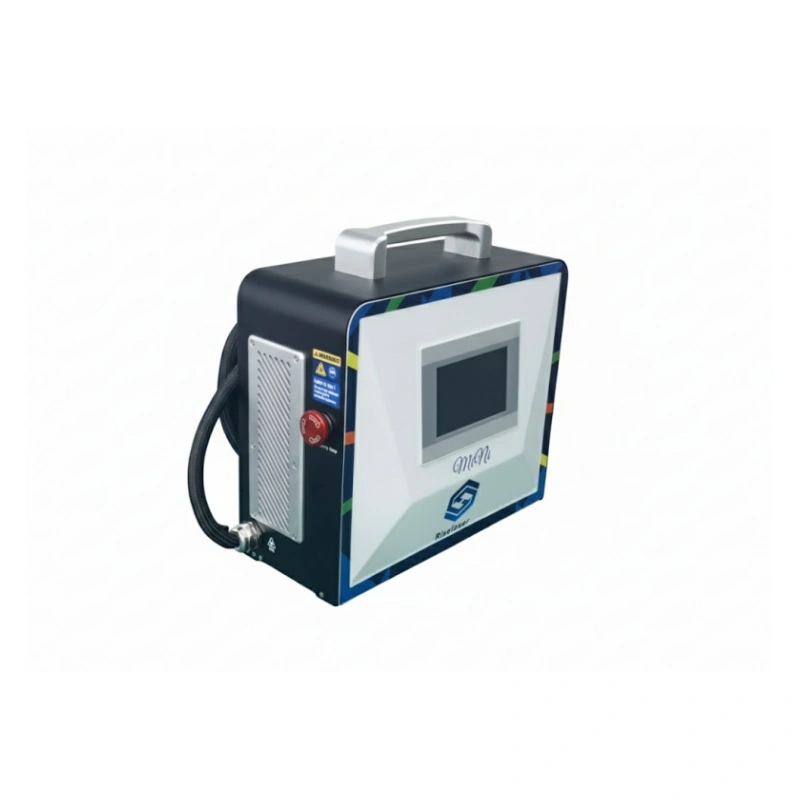
Laser welding technology is always getting better. Here are a few exciting trends to watch.
- New Laser Colors (Green & Blue): To solve the problem of shiny metals, companies are now using green and blue lasers. These colors are absorbed much better by materials like copper, making the welding process more stable and efficient.
- Smarter Welding with AI: The next generation of laser welders will use Artificial Intelligence (AI) and sensors to watch the weld as it happens. If the system detects a problem, it can adjust the laser’s settings in real-time to fix it, ensuring a perfect weld every time.
- Smaller and Portable Welders: As technology shrinks, so do the tools. There is a growing demand for micro-laser welders for tiny electronics, as well as portable, handheld welders that can be used for repairs or on-the-go jobs.
Conclusion: The Indispensable Role of Laser Welding
Laser welding is a vital technology that is helping to build the future of electronics. Its unique ability to join materials with incredible precision and minimal heat makes it essential for creating everything from powerful EV batteries to the tiny devices in our pockets. While it has its challenges, ongoing innovations are making it smarter, more versatile, and more accessible than ever before, ensuring it will remain a key manufacturing tool for years to come.
Frequently Asked Questions (FAQ)
The main advantage is its precision and very small heat-affected zone. This allows it to weld tiny parts without damaging nearby sensitive components.
Yes, this is a very common and important application, especially for EV battery welding. It is difficult, however, and requires special techniques to create a strong bond.
Laser welding melts the actual parts to fuse them together directly. Laser soldering uses the laser as a heat source to melt a separate material (solder) that acts as a glue to join the parts.
The initial equipment is expensive, but it can save money in the long run. It is very fast, doesn’t use consumable parts like electrodes, and produces high-quality work that reduces waste