
Laser technology in steel processing is a revolutionary shift from traditional methods, using a focused beam of light for surgical precision. This modern approach delivers higher quality parts, faster production, and less material waste by fundamentally changing how steel is cut, joined, and treated.
The core benefits of laser technology are its incredible accuracy, minimal heat damage to the surrounding material, and the ability to create complex designs that were once too expensive or impossible to make. This article covers the key applications of laser technology in steel processing, compares it to traditional methods, and explores the business case for investing in this transformative tool.
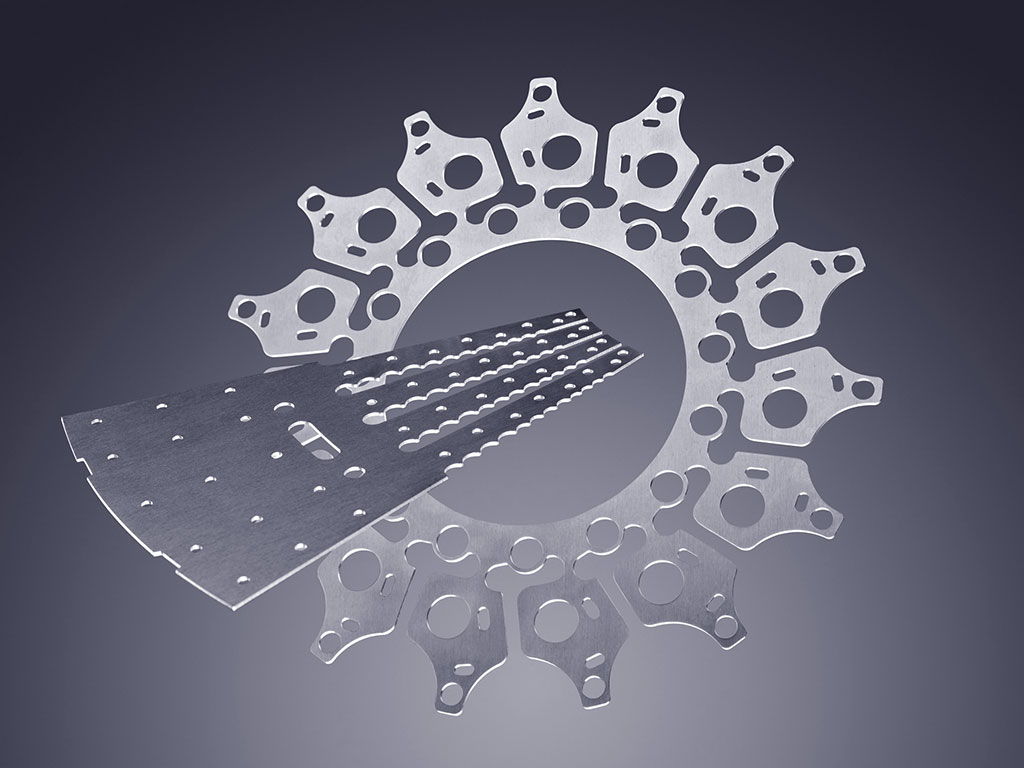
How Lasers Are Upgrading Steel Fabrication
Laser technology isn’t just one process; it’s a versatile toolset that improves steel fabrication at every stage. The main applications are laser cutting, laser welding, and laser surface engineering.
Laser Cutting: Unmatched Precision and Speed
Laser cutting steel is a non-contact process that uses a focused beam of light to melt or vaporize the material with extreme accuracy.
Its biggest advantage is the creation of a very small Heat-Affected Zone (HAZ). The HAZ is the area of metal that is altered by heat during cutting. A large HAZ can weaken the part, cause it to warp, or require extra finishing steps. Because laser cutting is so precise and fast, the heat doesn’t have time to spread, preserving the steel’s strength right up to the edge. This is a major improvement over plasma cutting, which creates a moderate HAZ, and oxy-fuel cutting, which creates a very large one.
Laser Welding: Stronger, Cleaner, and Faster Joints
Laser welding steel uses a high-energy beam to create deep, narrow welds quickly and with very little distortion.
Unlike traditional arc welding, which floods the joint with heat, laser welding is highly focused. This low heat input prevents the warping and stress that can compromise the strength and fit of finished parts. The process can be performed in two main ways:
- Conduction Welding: A lower-power method for thin materials that creates a smooth, wide weld.
- Keyhole Welding: A high-power method that vaporizes the metal to create a deep, narrow “keyhole,” ensuring the weld penetrates the full thickness of the material for maximum strength.
Laser Surface Engineering: Creating Custom Super-Surfaces
Laser surface engineering precisely alters the surface of a steel part to improve its performance without changing its tough inner core.
Two key applications are:
- Laser Surface Hardening: A laser rapidly heats the surface, and the part’s own cold interior quickly cools it down in a process called “self-quenching.” This creates an incredibly hard, wear-resistant surface layer, perfect for high-wear parts like gears and tools.
- Laser Cladding: This process adds a new layer of a different, high-performance metal onto a specific area of a steel part. For example, a corrosion-resistant alloy can be clad onto a valve seat, extending its life in harsh environments.
Laser Processing vs. Traditional Methods
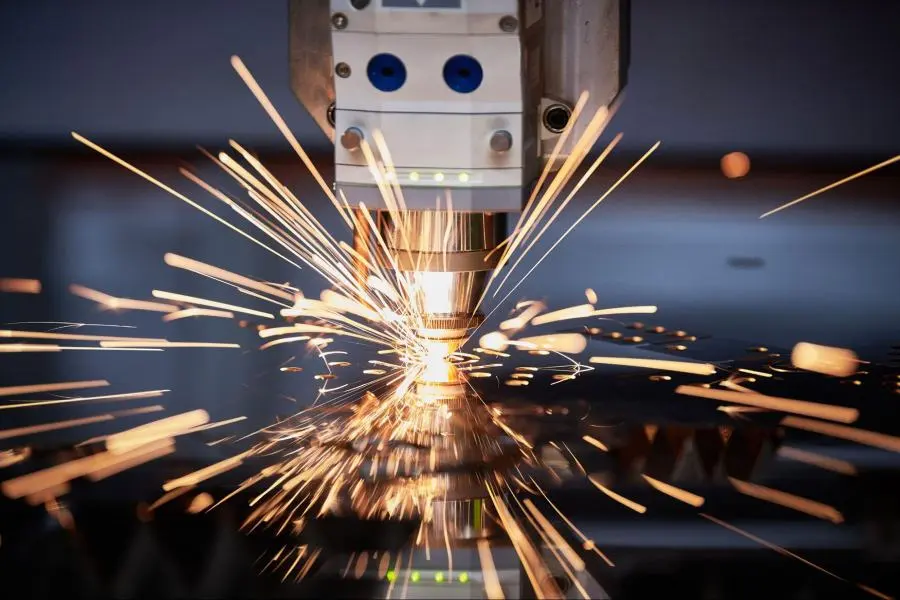
When evaluating laser technology, it’s helpful to see how it stacks up against conventional methods like plasma cutting, arc welding, and shearing.
| Feature | Laser Processing | Traditional Methods (Plasma, Shearing, Arc Welding) |
| Precision | Excellent (tolerances of +/- 0.1 mm) | Fair to Poor (wider cuts, rougher edges) |
| Edge Quality | Smooth, clean edges with minimal burrs | Rougher edges with burrs or dross that often need grinding |
| Heat-Affected Zone (HAZ) | Minimal, preserving material strength | Moderate to Large, can cause warping and weaken the part |
| Speed | Very fast on thin to medium-thick steel | Varies; shearing is fast for straight cuts, plasma is better for very thick steel |
| Material Waste | Low, due to narrow cuts and tight part nesting | Higher, due to wider cuts and process limitations |
| Design Flexibility | Excellent; can create highly complex and intricate shapes | Limited; shearing is only for straight lines, other methods are less precise |
Is Investing in Laser Technology a Smart Move?
For many businesses, the decision to adopt laser technology comes down to cost versus benefit.
Understanding the Costs
The primary barrier to entry is the high initial capital investment. An industrial laser cutting system can cost anywhere from $50,000 to over $300,000, depending on its power and features. This can be a significant expense for small to medium-sized shops.
The Real ROI
The return on investment (ROI) for laser technology is driven by long-term operational savings.
- Reduced Costs: Lasers reduce costs through automation (less labor), efficient part nesting (less material waste), and high energy efficiency, especially with modern fiber lasers.
- Eliminating the “Hidden Factory”: The biggest financial benefit often comes from eliminating secondary operations. The time and money spent on grinding, deburring, and straightening parts cut or welded with traditional methods—the “hidden factory”—are almost entirely removed by the high quality of laser processing.
Challenges and Limitations to Consider
While powerful, laser technology is not the perfect solution for every application.
- Material Thickness: Laser cutting becomes slower and less efficient on very thick steel plates (over 1-1.5 inches). For these jobs, high-definition plasma or waterjet cutting may be more cost-effective.
- Reflective Materials: Metals like copper and brass can reflect the laser beam, which can damage the machine’s optics. Modern fiber lasers handle these materials much better than older CO2 lasers, but it remains a consideration.
- Safety: Industrial lasers are Class 4 devices, the most hazardous classification. They can cause severe eye and skin damage. The process also generates fumes and carries a fire risk. Proper safety enclosures, ventilation, and personal protective equipment (PPE) are absolutely essential.
The Future of Steel: Additive Manufacturing
The next frontier for laser technology in steel processing is additive manufacturing, also known as 3D printing. Instead of cutting a shape from a sheet of steel (subtractive), additive manufacturing uses a laser to build a part from the ground up, layer by layer, by fusing metal powder.
This process unlocks unprecedented design freedom, allowing engineers to create complex internal structures or lightweight lattice designs that are impossible to make with any other method.
Conclusion: A Revolution in Precision and Possibility
Laser technology is a true paradigm shift for the steel industry. It offers a level of precision, quality, and efficiency that traditional methods cannot match. By reducing waste, eliminating secondary processes, and enabling more complex designs, lasers empower manufacturers to produce better parts, faster and more cost-effectively.
Adopting laser technology is more than a simple equipment upgrade; it is a strategic investment in a more agile, innovative, and competitive future for steel manufacturing.
Frequently Asked Questions (FAQ)
The main advantages are precision and a minimal Heat-Affected Zone (HAZ). Laser cutting produces a much cleaner, more accurate edge with almost no thermal damage, which often eliminates the need for post-processing and results in a stronger finished part.
While the initial investment is high, the long-term ROI can be very compelling. Savings from reduced material waste, lower labor costs, and the elimination of secondary finishing steps can make it a profitable investment. The availability of more compact and affordable fiber laser systems is also making the technology more accessible.
Fiber lasers are the more modern technology. They are more energy-efficient, require less maintenance, and are significantly faster when cutting thin to medium-thickness metals. Fiber lasers can also process reflective metals like copper and brass more effectively than CO2 lasers.