
If you are looking to integrate permanent laser marking into your workflow, the first question is inevitably: how much does a laser marking machine cost? In 2026, the price spans a massive spectrum depending on your needs. A consumer-grade diode laser for home crafting can cost as little as $300, standard industrial desktop fiber lasers can be sourced internationally for $1,000 to $1,500, and fully automated, inline manufacturing cells can exceed $80,000.
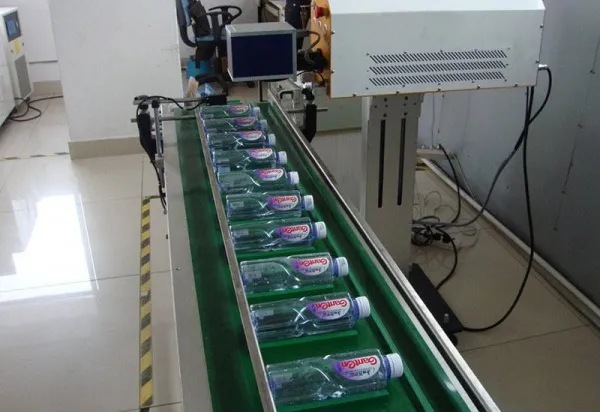
Before diving into specifications, you must match the machine to your search intent. Are you focused on Creative Customization (jewelry, gifts, wood crafts), Deep Engraving (mold making, firearms), or strict Industrial Traceability (part serialization, QR codes)? Your application dictates whether you need an entry-level Diode, a CO2, a UV, or an industrial Fiber laser. Understanding this distinction is critical to calculating your true equipment cost.
The Price Tiers of Laser Marking Systems
Prices scale directly with the laser source, the level of enclosure, motorized axes, and factory automation compatibility.
- Consumer-Grade and Hobbyist Diode Lasers ($300 – $1,500): For creative customization, home businesses, and makers, consumer-grade diode lasers offer the lowest barrier to entry. Entry-level desktop diode models (typically 10W to 40W) are highly accessible and perfect for engraving wood, leather, and coated tumblers, though they lack the beam intensity for deep metal ablation.
- Desktop and Standalone Fiber Workstations ($1,000 – $2,000): These open-frame or split-structure units are ideal for low-volume metal production or job shops. A standard 20-30W desktop fiber laser averages $1,000 to $1,500. Stepping up to a 50W unit or an entry-level MOPA (Master Oscillator Power Amplifier) laser pushes the median price to $1,300 – $1,800. A MOPA laser features an adjustable pulse width (typically 2-500ns), allowing operators to perform black annealing on anodized aluminum or vibrant color marking on stainless steel without warping the metal.
- Mid-Volume Industrial Enclosed Systems ($3,500 – $12,000): Engineered for safer factory environments, these systems utilize motorized Z-axes and fully enclosed Class 1 safety cabinets. Sourcing a 50-60W enclosed workstation directly from Chinese manufacturers typically costs $3,500 to $5,000. Conversely, comparable systems from localized Western brands carry a median price of $6,000 to $12,000 due to domestic warranties, software ecosystems, and immediate support.
- Automated & “Fly Marking” Cells ($2,000 – $12,000+): For inline production, “fly-on-the-fly” software syncs the galvo scanner with a moving conveyor belt. A basic automated unit with a simple conveyor starts at just $2,000 to $3,000. Mid-to-high configurations (50-100W) equipped with CCD vision positioning and auto-focus average $4,000 to $6,000. Multi-machine cells integrated with robotics push these prices significantly higher.
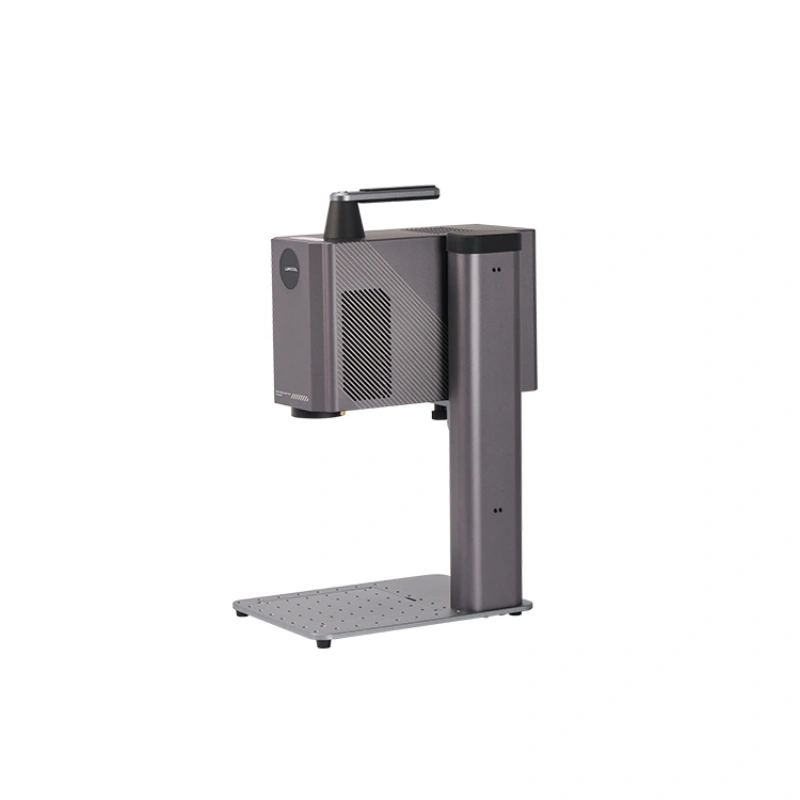
What Actually Drives the Price of a Laser Marking System?
To understand the price fluctuations within these tiers, you must evaluate three core drivers:
- Laser Power and Optics: Higher wattage dictates faster cycle times. A 100W fiber laser can mark a 10-digit serial number on Aluminum in 0.5 seconds with 0.01mm precision, significantly outpacing a 20W system. The quality of the F-theta lens and the galvo scanner directly impacts the repeatability and the machine’s ability to maintain a tight focal spot across the marking envelope.
- Machine Vision Integration: Adding CCD visual positioning increases the base price, but these smart vision cameras can immediately verify QR code readability and Data Matrix codes against ISO/IEC 16022 standards before the part moves down the line, preventing costly downstream defects.
- Software Ecosystems: The software dictates your operational flexibility. Consumer and creative setups often rely on software like LightBurn, which offers an intuitive, modern interface ideal for design-heavy, multi-platform projects. Conversely, high-volume industrial fiber systems typically rely on software like EzCad2 or EzCad3, which are optimized for raw marking speed and direct integration with factory databases.
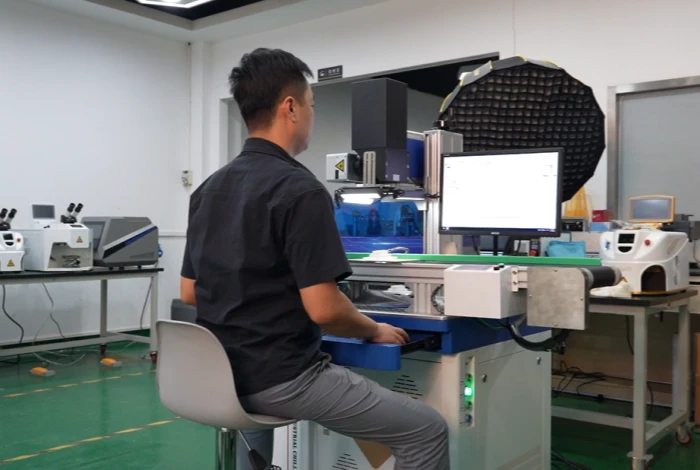
Material Compatibility Guide: Fiber, CO2, UV, and Diode
Choosing the wrong laser wavelength will immediately ruin your product. Use this compatibility matrix to determine the right core technology.
| Laser Source | Wavelength | Primary Materials | Ideal Application | 2026 Base Price Range |
| Diode | ~450nm | Wood, Leather, Coated Metals | Hobbyist crafting, light creative customization | $300 – $1,500 |
| Fiber | 1064nm | Stainless Steel, Aluminum, Titanium, Brass | Deep engraving, automotive VINs, black annealing | $1,000 – $12,000+ |
| UV | 355nm | Glass, Silicon Wafers, Medical Plastics | “Cold marking” to prevent heat-affected zones | $5,299 – $20,000+ |
| CO2 | 10600nm | Wood, Acrylic, Leather, Textiles, Organics | High-speed organic cutting and raster engraving | $2,650 – $10,000+ |
Laser Marking vs. Inkjet (CIJ) and Dot Peen: A Total Cost of Ownership (TCO) Analysis
When evaluating an industrial laser marking vs inkjet cost analysis, plant managers must shift their focus from the initial capital expenditure to the Total Cost of Ownership (TCO).
Historically, Continuous Inkjet (CIJ) printers were appealing because of their lower upfront cost. However, intense competition among international suppliers has driven laser module pricing down significantly; mid-sized manufacturers previously limited to dot-peen or inkjet solutions can now afford industrial lasers that run completely consumable-free.
The true laser marking total cost of ownership is drastically lower over a five-year period. Industrial lasers use absolutely zero consumables—eliminating the need for expensive daily ink refills, hazardous solvent disposal, and routine printhead cleanings. Furthermore, an industrial fiber laser boasts a lifetime of roughly 100,000 operating hours, offering virtually maintenance-free operation. When comparing lasers to Dot Peen markers, fiber lasers offer superior noise reduction and a non-contact process, introducing zero mechanical stress to delicate components.
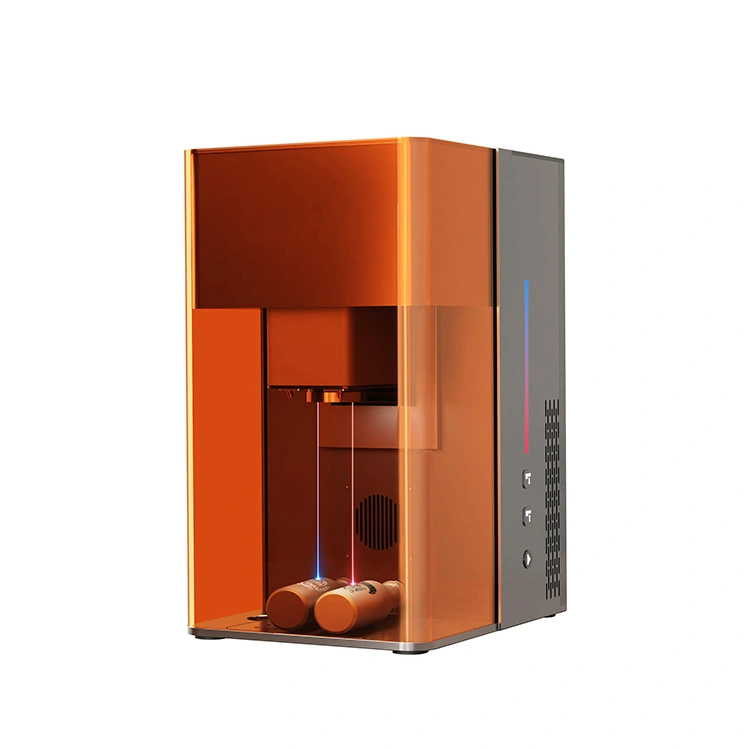
Direct Sourcing vs. Localized Brands: The Hidden Costs of Bargain Machines
With international sourcing, the hardware itself has become incredibly affordable, but commercial buyers must weigh the hidden operational costs. Purchasing a $4,000 enclosed system directly from an overseas supplier offers massive upfront savings compared to a $10,000 Western-branded equivalent.
However, the premium paid for localized systems often covers immediate technical support, rapid warranty replacement, pre-configured safety compliance, and on-site integration. In a high-volume automotive facility running 24/7, an unexpected breakdown on a direct-sourced machine that requires waiting weeks for an overseas replacement board can cause line-down scenarios that rapidly eclipse the initial hardware savings.
Meeting Stringent Automotive and Aerospace Traceability Standards
In 2026, automotive parts traceability requires that marks survive extreme heat, engine vibration, and harsh chemical baths. Ink and adhesive labels degrade quickly in these environments.
Laser marking generates permanent, tamper-proof 2D Data Matrix codes and serial numbers directly into the substrate. This ensures that parts comply with strict OEM requirements and military/aerospace standards (such as MIL-STD-130 for UID labels), enabling flawless tracking throughout the vehicle’s entire lifecycle for warranty and recall management.
Safety, Compliance, and Facility Integration
Lasers present significant safety hazards that must be accommodated in your budget.
- Enclosures: Operating an open-table Class 4 laser requires strict administrative controls. Most industrial environments require a Class 1 safety enclosure equipped with safety interlocks.
- Fume Extraction: Laser ablation, especially when burning plastics, leather, or PVC, releases hazardous volatile organic compounds (VOCs). Investing in heavy-duty cleanroom fume extractors and regular HEPA filter replacements is a strict safety mandate.
- Protective Eyewear: Operators must wear heavily calibrated safety glasses matched to the specific wavelength of the machine (e.g., 1064nm for Fiber, 10600nm for CO2, and specific blue-light ratings for 450nm Diodes).
Ready to Upgrade Your Traceability or Launch Your Business?
Whether you are bringing product customization in-house or upgrading a factory line to a fully automated fiber system, laser technology offers an incredible return on investment through speed, precision, and the total elimination of ongoing consumables.
- Explore Our Laser Marking Machines: View our full catalog of high-performance Fiber, CO2, and UV systems to find the perfect fit for your commercial or industrial application.
- Get a Custom Quote: Reach out today to calculate your custom laser ROI, get an exact price quote, and explore our 2-Year Source Warranty.