
Laser graffiti removal uses pulsed laser cleaning technology to remove spray paint from brick, natural stone and concrete. Short laser pulses act on the paint layer while limiting heat buildup in the wall. The result still depends on the paint, surface condition and machine settings, so every project should begin with a small test area.
Pulsed laser systems are recommended for graffiti removal from brick and natural stone because they provide better control over heat input. CW laser cleaners deliver continuous heat and can cause discoloration, glazing or thermal damage on masonry. For this reason, they are not recommended for the wall-cleaning applications covered in this guide.
Machine selection usually comes down to the cleaning area, required productivity and available budget. This guide compares 200W, 300W and 500W pulse laser cleaning machines, along with typical prices, starting parameters and common limitations.
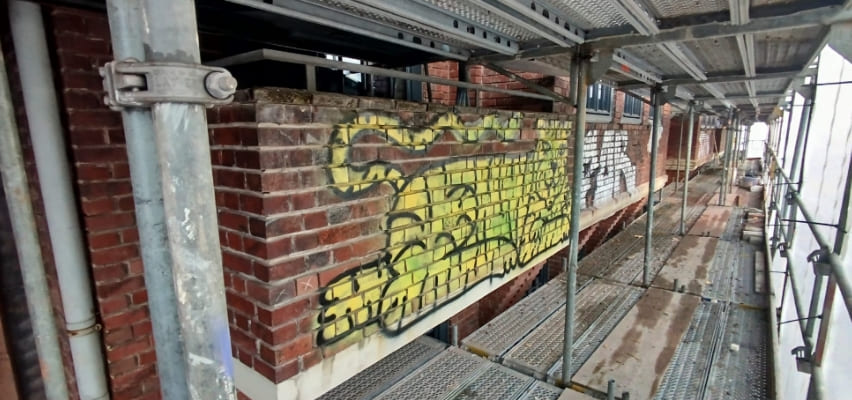
Quick Recommendation
| Power | Suitable for | Main reason to choose it |
|---|---|---|
| 200W | Small areas and occasional work | Lower purchase cost |
| 300W | Regular graffiti removal | Popular balance of price and productivity |
| 500W | Larger areas and frequent commercial work | Higher cleaning capacity |
The 300W model is the most common choice because it normally costs only slightly more than a 200W machine. Contractors with larger or more frequent projects may prefer 500W.
How Pulse Laser Graffiti Removal Works
A pulse laser directs short bursts of energy across the painted wall. The spray paint absorbs part of this energy and heats rapidly, causing the coating to crack, lift or break into fine particles and vapor. A fume extractor collects the material released during cleaning.
The operator controls the process by adjusting pulse energy, pulse width, frequency, scan speed and working distance. Average power affects productivity, but wattage alone does not determine the result. The same settings can produce different results on hard brick, weak mortar and soft stone.
Several controlled passes are usually safer than trying to remove the entire paint layer in one pass. The aim is to remove the spray paint before the color or texture of the wall begins to change.
Pulse lasers allow better control of heat input than CW systems. A CW laser applies energy continuously and is mainly used for heavy rust or thick coating removal from durable metal. On brick and natural stone, sustained heat can cause discoloration, glazing or other unwanted surface changes. For this reason, this article only recommends pulsed laser cleaning for graffiti removal.
Choosing a 200W, 300W or 500W Laser Graffiti Removal Machine
All three power levels can remove spray paint when the machine configuration and settings match the wall. The main differences are equipment cost and potential productivity.
200W Pulse Laser Cleaner
A 200W machine is suitable for property maintenance teams, small restoration companies and users who only handle occasional graffiti. It can clean brick and stone, but larger areas will generally take longer than with a 300W or 500W system.
The lower initial price is its main advantage. However, because the price difference between many 200W and 300W machines is small, buyers should consider whether the lower cleaning speed justifies the saving.
300W Pulse Laser Cleaner
A 300W machine is the most popular option for regular graffiti removal. It provides better productivity than a 200W system without the higher cost of a 500W machine.
This power level is commonly considered by graffiti removal contractors, property maintenance teams and restoration companies working on brick, natural stone and concrete walls. It is often the practical choice when both equipment cost and working speed matter.
500W Pulse Laser Cleaner
A 500W system is aimed at larger cleaning areas and more frequent commercial use. It can provide higher output for contractors that expect to use the machine regularly.
Higher power does not mean that operators can ignore the wall condition. Old brick, soft stone and weak mortar still require careful parameter control and small-area testing.
| Power | Typical buyer | Typical use | Indicative EXW price |
|---|---|---|---|
| 200W | Maintenance teams and small restoration companies | Small areas and occasional projects | US$5,000-6,000 |
| 300W | Graffiti removal contractors | Regular brick and stone cleaning | Around US$6,000 |
| 500W | Commercial cleaning companies | Larger areas and frequent use | US$9,800-13,000 |
These are indicative advertised EXW prices from Chinese manufacturers. They are not fixed global averages or formal quotations. The final price depends on the laser source, pulse energy, cooling system, cleaning head, field lens, accessories and support package.
Prices from European or North American suppliers may be higher when local inventory, import handling, training, warranty support or on-site service is included. Buyers should compare the complete configuration and delivered cost rather than the machine price alone.
You can also read our laser cleaning machine price guide or compare available pulse laser cleaning machines.
If you are unsure which power to choose, send the wall material, approximate area and clear photos or videos before ordering. A test is more useful than selecting a machine by wattage alone.
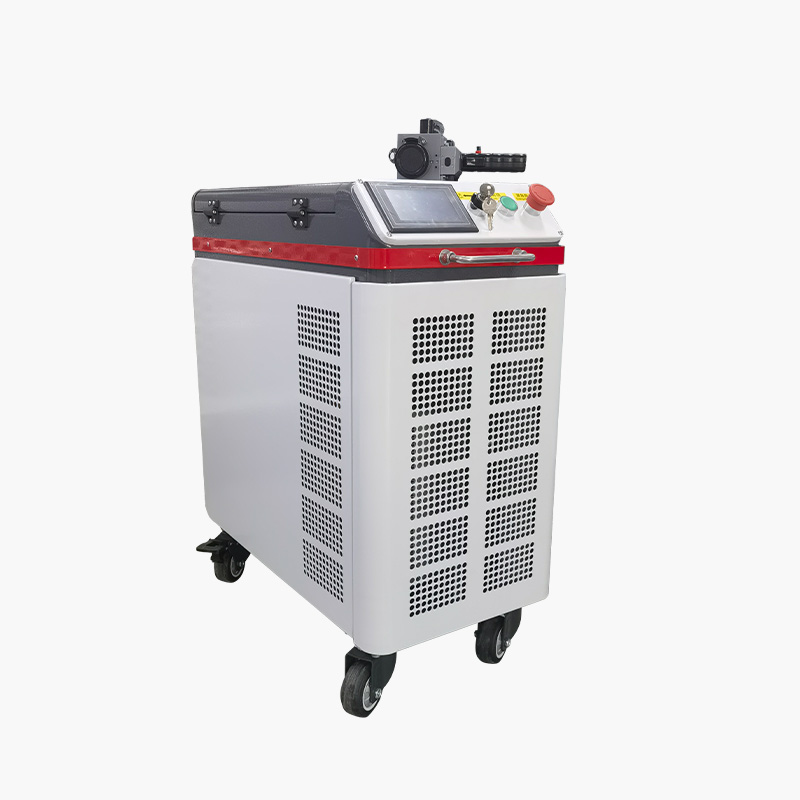
Example 300W Starting Parameters for Graffiti on Brick
The following settings can be used as an initial test for a 300W pulse laser removing spray paint from red brick.
| Setting | Starting value |
|---|---|
| Laser power | 300W |
| Maximum pulse energy | 5 mJ |
| Pulse width | 500 ns |
| Frequency | 60 kHz |
| Field lens | 254 mm |
These are reference settings, not universal parameters. Begin on a small, inconspicuous area and inspect both the brick face and mortar after one controlled pass.
If the wall remains unchanged but paint is still present, make another controlled pass or adjust the settings gradually. If the brick or mortar begins to discolor, glaze or lose texture, reduce the output power and test again.
Do not keep increasing the energy to remove a faint shadow. Some pigment may have entered the pores and may not respond like the paint on the surface.
Brick, Stone and Concrete: What to Check Before Cleaning
Red brick is one of the most common surfaces for laser graffiti removal. Fired brick can often be cleaned with a pulse laser, but its hardness, porosity and surface condition vary. Older bricks may have a weak outer face, while mortar joints can be softer than the surrounding wall.
Natural stone requires more caution because different stones respond differently. Limestone and sandstone are often softer and more porous than granite. They may retain pigment or show darkening, grain loss or changes in surface texture. Historic, weathered or previously repaired stone may require assessment by a conservation specialist.
Concrete is generally more durable, but it is not uniform. Smooth concrete, exposed aggregate and decorative finishes can react differently. The cleaned area may also appear lighter than the surrounding wall if the rest of the surface is covered with soot, dust or weathering.
| Surface | Main concern |
|---|---|
| Red brick | Color change, glazing and pigment ghosting |
| Mortar joints | Lower strength and uneven cleaning |
| Limestone | Darkening or loss of surface detail |
| Sandstone | Pigment penetration and grain loss |
| Granite | Changes to the existing finish |
| Concrete | Uneven color between cleaned and surrounding areas |
Metal, glass and wood can require different cleaning settings. This guide focuses on spray-paint removal from masonry walls.
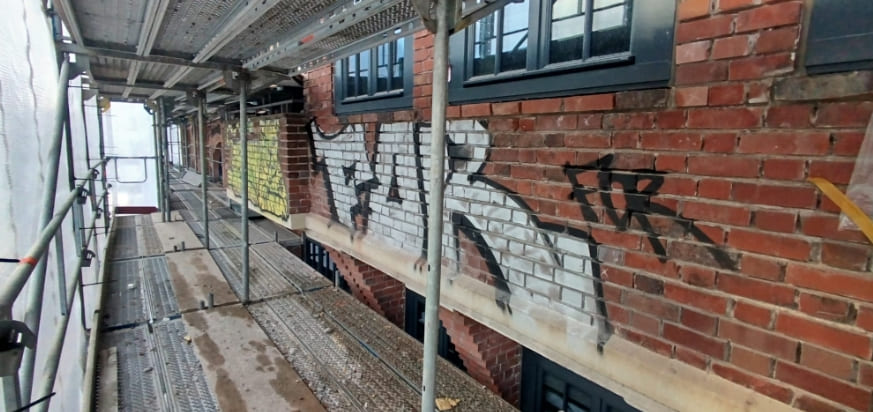
Why Ghosting Can Remain After Graffiti Removal
A faint outline may remain after the visible paint has been removed. This is known as ghosting. It occurs when spray-paint pigment and binder enter pores, cracks or worn areas below the surface.
The laser may remove the upper coating more easily than pigment trapped inside the wall. Repeated passes or higher energy may begin to change the brick before the deeper pigment disappears.
A second problem is the contrast between the treated area and the surrounding wall. Cleaning the graffiti may expose a brighter patch in the shape of the original tag. This is sometimes called inverse graffiti.
A test area should show whether either problem is likely. Depending on the required finish, the operator may clean a wider area, soften the boundary with controlled passes or accept a faint remaining shadow.
When Another Cleaning Method Is Needed
If several laser passes no longer improve the result, increasing the power may do more harm than good. A laser-first, chemical-second process can then be considered.
The pulse laser removes the accessible surface paint. The wall is inspected afterward to determine whether a compatible shadow remover, poultice or other treatment is needed for pigment below the surface.
Any chemical treatment should be tested separately and used according to its manufacturer’s instructions. Runoff, residue and disposal must also be considered. On historic or heavily weathered walls, leaving a faint shadow may be safer than removing part of the original surface.
Cleaning Process and Safety
Start by identifying the wall material, mortar condition and approximate number of paint layers. Check whether the wall has an existing coating or previous repair. Old paint may also contain lead or other hazardous substances.
Test a small area with conservative settings. Make one pass, inspect the surface and adjust the parameters gradually. Watch the wall rather than judging the process only by how quickly the paint disappears.
Place the fume extraction inlet close to the cleaning point. Laser cleaning avoids spent blasting media and wastewater, but it still produces smoke, particles and contaminated filters that require proper handling.
Handheld pulse laser cleaners are Class 4 laser systems. Outdoor work requires a controlled area that keeps workers, pedestrians and vehicles away from the beam path. Operators need training, warning signs and protective eyewear selected for the laser wavelength and assessed exposure risk.
If lead-containing paint may be present, the employer should assess worker exposure and follow the applicable rules for extraction, respiratory protection, handling and disposal. In the United States, this may include the OSHA lead standard for construction work.
After cleaning, record the machine power, pulse settings, field lens, cleaning time and visible result. These records make it easier to repeat the process on other areas of the same wall.
Documented Use on Historic Stone
Laser cleaning has been used for sensitive heritage work, but these cases do not prove that every wall can be cleaned without surface change.
A published case study documents laser graffiti removal at the Heel Stone at Stonehenge and West Kennet Avenue. Protecting the historic stone and existing biological growth was an important part of the work. The project also showed that heritage cleaning requires careful testing and can be time-consuming.
Guidance from the U.S. National Park Service also notes that laser cleaning can remove paint from masonry, while warning that unsuitable treatment may roughen, stain or darken some stone surfaces.
Frequently Asked Questions
Can a laser remove spray paint from brick?
Yes. A pulse laser can remove spray paint from many brick surfaces. The brick face and mortar must be tested first because old, soft or porous walls may respond differently.
What laser power is best for graffiti removal?
A 200W machine can handle small areas, while a 500W machine is better suited to larger or frequent projects. The 300W model is the most popular choice because it usually costs only slightly more than a 200W system while offering better productivity.
Can a CW laser remove graffiti from brick or stone?
CW laser cleaners are not suitable for the masonry applications covered in this guide. Their continuous heat input increases the risk of discoloration, glazing and other surface changes. Use a pulse laser instead.
Will laser cleaning damage the wall?
Laser cleaning avoids direct grinding or abrasive impact, but unsuitable settings can still alter the wall. A small test area is required before full cleaning.
Why is there a shadow after the paint is removed?
Some pigment may have entered the pores below the visible surface. Increasing the laser power may not remove it and can begin to change the brick or stone.
How much does a laser graffiti removal machine cost?
Indicative EXW prices from Chinese manufacturers are about US$5,000-6,000 for 200W, around US$6,000 for 300W and US$9,800-13,000 for 500W pulse laser cleaning machines. Shipping, taxes, accessories and local support are normally priced separately.