
For industrial integrators and OEMs, the choice between Wuhan Raycus Fiber Laser Technologies and Shenzhen Maxphotonics is no longer about “budget vs. quality” but about specific architectural fit. In 2026, the market has matured into distinct segments based on beam characteristics and control integration.
- The Integrator’s Verdict (Decision Stage): If your primary application is heavy industrial cutting (20mm+ carbon steel) requiring absolute power linearity over 24-hour shifts, Raycus remains the standard. Their “Global Series” prioritizes mode stability to prevent loss-of-cut events.
- The Performance Verdict (Consideration Stage): For high-mix job shops processing reflective alloys (copper, brass) or requiring high energy efficiency, Maxphotonics (Max) is the superior technical choice. Their G5/G6 series offers aggressive anti-back-reflection isolation and higher wall-plug efficiency (~34% vs ~30%).
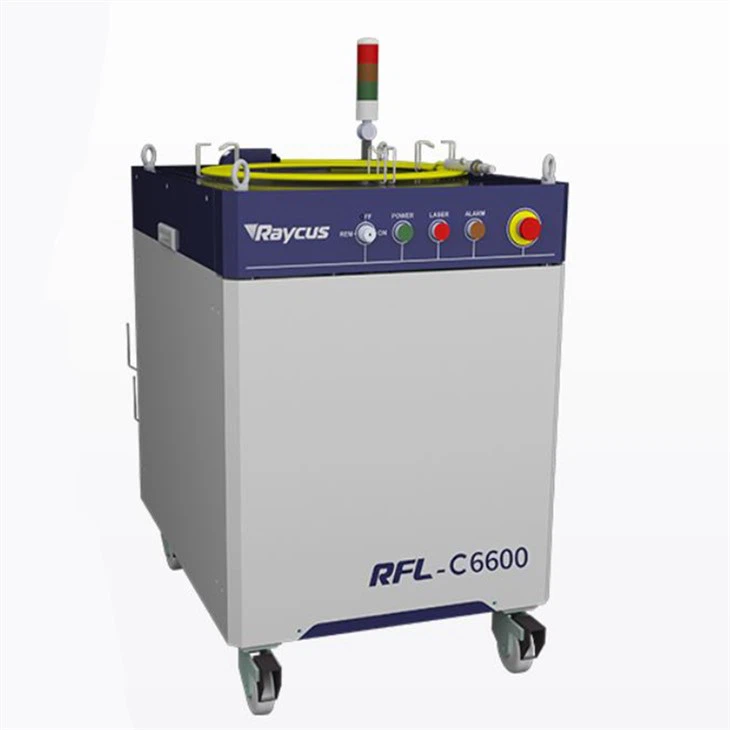
Technical Architecture: Beam Quality and Modulation
At the Awareness Stage, buyers must distinguish between the fundamental physics of the source. The critical metric is the Beam Parameter Product (BPP) and the M^2 factor, which define the focusability of the beam.
Continuous Wave (CW) Performance: The 6kW Fiber Laser Source Battle
Comparing a standard 6kW Fiber Laser Source from both manufacturers reveals distinct engineering philosophies regarding beam density.
| Specification | Raycus RFL-C6000S (Global Series) | Max MFSC-6000X (G6 Series) |
| Beam Quality (BPP) | 2.7−3.1 mm⋅mrad | 3.0−3.8 mm⋅mrad |
| Output Fiber Core | 50μm or 75μm | 100μm (Standard) |
| Power Stability | ±1.5% | ±1% (Short Term) / ±3% (Long Term) |
| Modulation Freq | 1−20 kHz | ≤5 kHz |
| Connector | QBH | QBH / LOE |
Engineering Insight:
- Raycus: The lower BPP (2.7) indicates a “stiffer,” brighter beam. This provides superior energy density for penetrating thick carbon steel, maintaining a narrower kerf.
- Max: The slightly higher BPP (3.0+) and larger standard core (100μm) create a flatter top-hat profile. This is advantageous for welding and cutting reflective materials, as the wider spot size reduces the sensitivity to focus shift.
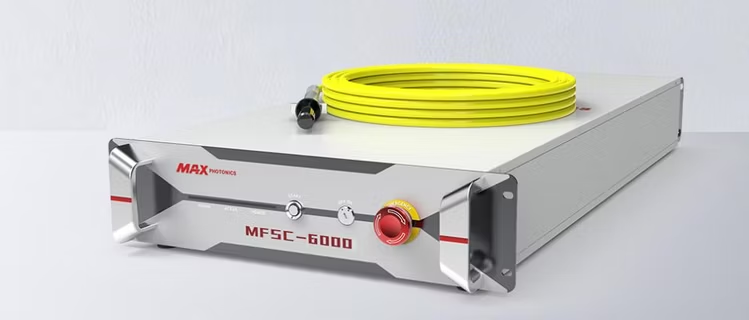
Pulsed Architecture: Q-Switched vs. MOPA
For marking and engraving, the distinction is binary.
- Raycus (Q-Switched): Uses a fixed pulse width (typically80-120 ns). It delivers high peak energy >1 mJ) in a narrow frequency window (20-80kHZ). Best for deep engraving where material removal rates are paramount.
- Max (MOPA): Utilizes Master Oscillator Power Amplifier technology. This allows independent control of pulse duration (2-500ns) and frequencies up to 400kHz. This architecture is required for “color marking” on stainless steel and high-contrast annealing on plastics.
Integration and Reliability: The Decision Factors
For the Decision Stage, system integrators must evaluate Mean Time Between Failures (MTBF) and integration complexity.
Reliability and Degradation Curves
- Power Fading: Industrial fiber lasers experience “photodarkening”—a gradual increase in optical loss within the active fiber. Raycus sources exhibit a predictable, linear degradation of approximately 2.5% per year. This linearity allows CNC controllers to easily compensate by increasing current over time.
- Environmental Tolerance: Early Max models struggled with humidity. The new G6 Series has mitigated this with IP54-rated cabinets and active dehumidification. However, Raycus remains the “safe bet” for harsh, non-climate-controlled environments due to a longer track record of sealed optical engine performance.
The “Achilles Heel”: Anti-Reflection Technology
Cutting copper or brass sends harmful back-reflections into the laser.
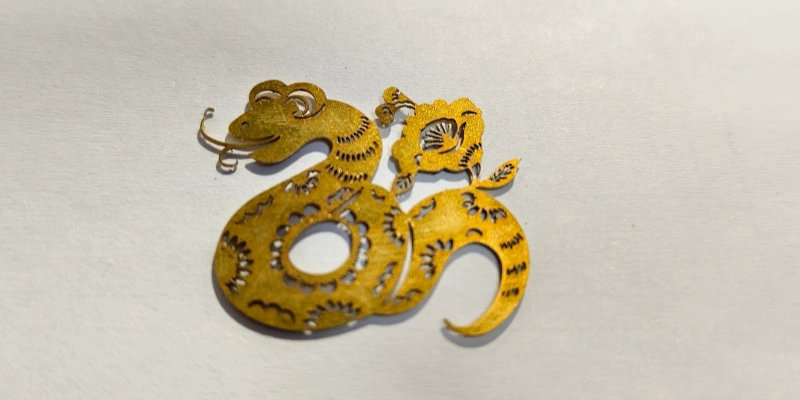
- Maxphotonics: Features a multi-stage optical isolation system. In the G5/G6 series, sensors detect back-light at the output head and the combiner, shutting down the seed laser within microseconds to prevent oscillator damage. This makes Max the preferred choice for conductive metal processing.
- Raycus: The Global Series includes ABR (Anti-Back Reflection) capability, but older models rely heavily on software alarms that can interrupt production frequent “High Back Reflection” errors.
Integration Pinout and Control
Replacing a Raycus source with a Max source (or vice-versa) is not always plug-and-play. Both utilize the standard DB25 interface, but timing logic differs.
- Pin 19 (Modulation): Critical for external control. Mismatched logic levels (5V vs 24V) can result in the laser firing continuously or not at all.
- Laser On/Off Delay: Max sources typically have a faster rise time (<10μs vs Raycus~50μs ). CNC parameters (e.g., in CypCut or EzCad) must be adjusted. Failure to decrease the “Laser On Delay” when switching to Max will result in burn marks at the start of cut paths.
Integration Warning: Ensure your PLC or interface board (e.g., JCZ, Bodor) supports the specific voltage logic of the modulation pins before swapping brands.
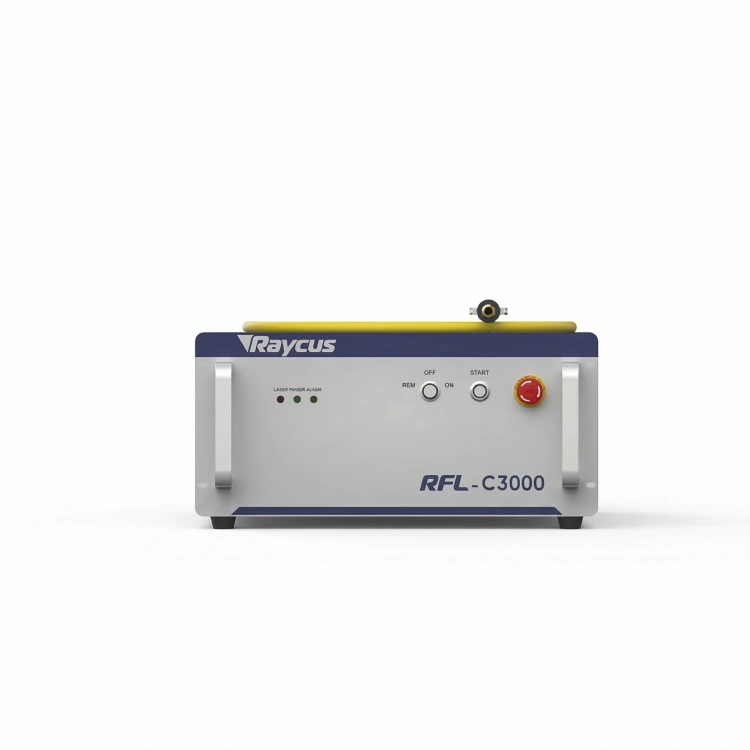
Economic Analysis: ROI and TCO
Procurement managers must weigh Capital Expenditure (CAPEX) against Total Cost of Ownership (TCO).
Efficiency and Operational Cost
The Wall-Plug Efficiency (WPE) is a critical TCO metric.
- Max: ~34% WPE. For a 6kW source running 4000 hours/year, this efficiency delta results in significantly lower electricity consumption and reduced thermal load on the chiller.
- Raycus: ~30% WPE. Requires slightly larger chiller capacity (kW) to dissipate waste heat.
The “Free Power” Proposition
Maxphotonics aggressively prices their units to offer “more power for the dollar.” A common ROI strategy for job shops is to purchase a 12kW Max source for the price of a 10kW Raycus source. This 20% power surplus allows for faster cutting speeds, effectively lowering the cost-per-part.
Compliance and Safety Standards
Both manufacturers adhere to global safety standards, but integrators must verify specific certifications for export.
- Laser Safety: Both Raycus and Max are Class 4 laser products under IEC 60825-1. Proper interlocks and safety enclosures are mandatory.
- PL Rating: Raycus Global Series explicitly lists compliance with Performance Level d (PL-d) for safety-related parts of control systems, crucial for EU CE marking.
Conclusion
- Select Raycus RFL Series if: You are building heavy-duty cutting systems for steel service centers where 24/7 reliability and beam mode stability are the non-negotiable KPIs.
- Select Max MFSC/G6 Series if: You are an OEM or job shop needing versatile processing of reflective metals, higher energy efficiency, and a faster ROI through aggressive price-per-watt ratios.
Frequently Asked Questions (FAQ)
A: Mechanically, yes (QBH connectors are standard). Electrically, you must verify the DB25 pin definitions, specifically the modulation signal voltage and the “Laser On” delay settings in your controller software.
A: The diodes are typically rated for 100,000 hours. However, practical lifespan is often determined by power degradation. Raycus sources typically degrade at ~2.5% per year, which is standard for the industry.
A: Maxphotonics is often preferred for handheld welding due to its lighter weight, higher wall-plug efficiency (critical for single-phase power limits), and wider beam profile M^2 which helps bridge gaps in poor fit-up.