
For utility operations managers, the “last mile” of maintenance often presents the highest risk. Whether it is a nylon kite string tangled in a 500kV transmission line or a tree branch encroaching on a distribution feeder in a deep ravine, the traditional solution has always been physical intervention. This meant rolling a bucket truck, deploying a climbing crew, or scheduling a costly line outage.
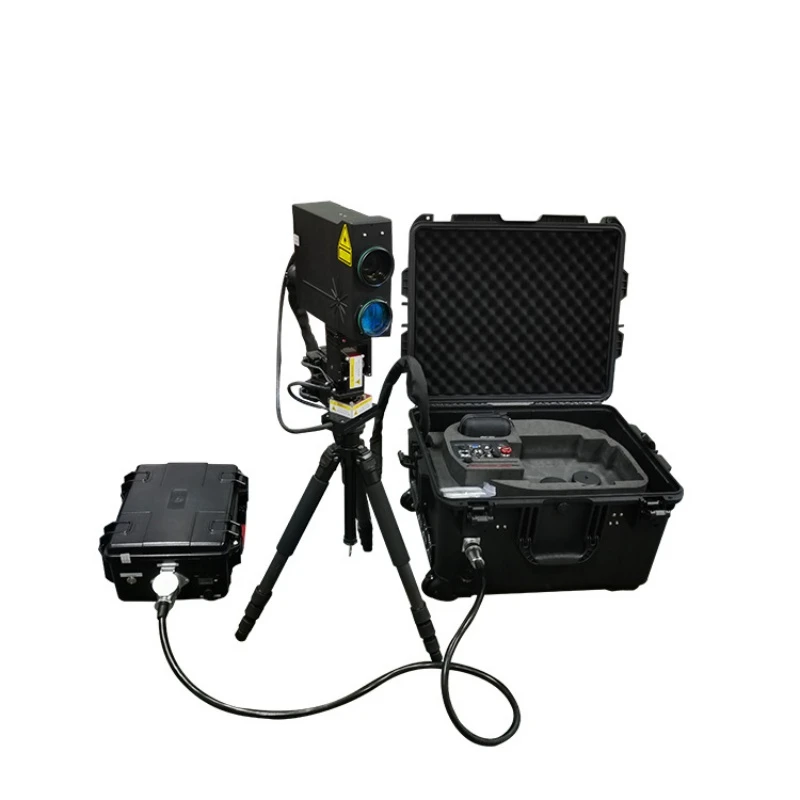
The Laser Obstacle Removal Machine has fundamentally changed this operational calculus. By allowing ground crews to surgically remove debris and vegetation from a safe standoff distance, utilities can now address foreign object debris (FOD) and encroachment issues in minutes rather than hours, all while the line remains energized.
This guide analyzes the applications, technical specifications, and safety protocols of remote laser clearing systems, helping you determine if this technology fits your grid resilience strategy.
How It Works: The Physics of “Action at a Distance”
Unlike mechanical saws or manual hot sticks, a laser tree trimmer or obstacle remover utilizes directed photon energy to ablate target materials.
Thermal Ablation vs. Mechanical Cutting
The system typically employs a fiber laser source (commonly 1064nm–1080nm wavelength) to deliver concentrated heat to a specific target point.
- Precision Targeting: Using a high-definition camera and tablet interface, the operator aims the beam at the “attachment point” of the debris (e.g., the string of a kite or the base of a branch).
- Material Interaction: The laser energy is absorbed by non-metallic materials like wood, plastic, and nylon, causing them to heat up and vaporize (ablate) instantly. Crucially, this wavelength is largely reflected by aluminum and copper conductors, creating a “blind cut” safety factor that protects the power line from damage during the process.
- Effective Range: Standard portable units (500W, 1000W) operate effectively between 50 to 600 meters.
Primary Applications for Grid Reliability
1. Foreign Object Debris (FOD) Removal
FOD is a leading cause of localized flashovers. Lightweight objects like agricultural plastic film, advertising banners, and mylar balloons are frequently blown onto lines.
- The Challenge: A manual removal crew might need 2–4 hours to travel to the site, ground the line, and ascend the tower.
- The Laser Solution: A laser foreign object removal operation takes approximately 15–20 minutes. The crew sets up the tripod, locks onto the target, and severs the tether. Gravity removes the debris.
- Real-World Metric: Field reports indicate that a 500W system can sever a nylon kite string in seconds and burn through thick canvas tarps in under 2 minutes.
2. Remote Vegetation Management
While not a replacement for clear-cutting, the laser tree cutter is a precision tool for “surgical” pruning.
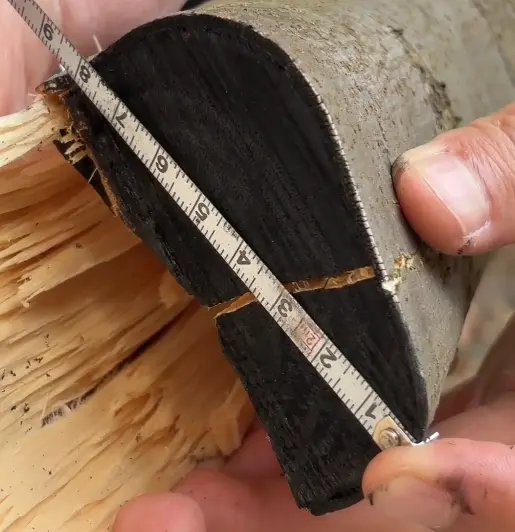
- Blind Spot Clearing: It is ideal for trimming branches extending over lines in backyards, ravines, or river crossings where bucket trucks cannot access.
- Safety Compliance: By keeping the operator on the ground and outside the Minimum Approach Distance (MAD), the system eliminates fall hazards and electrical contact risks—the two biggest dangers for lineworkers.
3. De-Icing and Winter Resilience
Ice accumulation on insulators and conductors creates immense mechanical load, leading to tower collapse or galloping lines.
- Mechanism: The laser can be used to thermally melt ice sheaths on critical components or, in pulsed modes, generate a thermal shockwave that cracks the ice, causing it to shed.
Technical Specifications: What to Look For
When evaluating a remote laser clearing system for your fleet, prioritize these industrial specifications to ensure field readiness.
| Feature | 500W (Standard Utility) | 1000W (High Performance) |
| Primary Use | General FOD (Kites, balloons, strings) & Branch Trimming (<10cm). | Heavy Debris (Thick Tarps), Thick Branches (>10cm), Long-Range Work. |
| Effective Range | 50 – 300 meters | 100 – 600 meters |
| Form Factor | Portable Rugged Case (Tripod Mounted). | Heavy-Duty Split Unit (Tripod/Vehicle Mount). |
| System Weight | ~25 kg (Main Unit) | ~30 kg+ (Main Unit) |
| Cutting Speed | Standard (e.g., 10cm branch in ~3-5 mins) | High Speed (e.g., 10cm branch in ~1-2 mins) |
| Power Source | High-Capacity Lithium Battery | High-Capacity Lithium Battery or Generator |
| Ideal Buyer | Distribution Grid Ops, Municipal Maintenance. | Transmission Grid Ops (High Towers), Railway. |
Operational Safety and Compliance
Deploying Class 4 lasers requires strict adherence to safety protocols to protect personnel, aircraft, and the public. This is High-Risk/High-Reward technology.
1. Eye Safety (NOHD)
The Nominal Ocular Hazard Distance (NOHD) for these lasers can extend for kilometers.
- Requirement: All operators and ground support must wear laser safety eyewear with an Optical Density (OD) rating of 6+ specific to the 1080nm wavelength.
- Control: Operations must establish a controlled zone. Advanced units feature radar or infrared safety sensors that automatically cut the beam if a person or bird enters the field of view.
2. Fire Prevention
A common concern is ground fire from falling burning debris.
- Mitigation: The laser acts as a cauterizing agent. The system should include “debris temperature monitoring” or protocols to target the attachment point so the debris falls cold, not burning. Ground spotters with fire suppression equipment are standard operating procedure.
3. Regulatory Approvals
- Aviation: In the US, outdoor laser operations near flight zones require notification to the FAA (Form 7140-1). Systems with terminated beams (aiming at a tree or ground backstop) are generally safer and easier to permit.
- Occupational Safety: Compliance with ANSI Z136.6 (Safe Use of Lasers Outdoors) and IEC 60825-1 is mandatory for industrial deployment.
ROI Comparison: Laser vs. Traditional Methods
Is the investment justified? For most utilities, avoiding a single outage or high-risk climb covers the CAPEX.
| Method | Crew Size | Setup Time | Line Status | Risk Profile |
| Manual Climb | 3-4 | 2+ Hours | De-energized (often) | High (Falls, Electrocution) |
| Bucket Truck | 2-3 | 1 Hour | Live (Hot Stick) | Medium (Traffic, Positioning) |
| Laser Machine | 2 | 10-15 Mins | Live (Non-Contact) | Low (Ground-based) |
Data supported by field efficiency reports.
Conclusion: The Future of Grid Obstacle Clearing
The Laser Obstacle Removal Machine is no longer an experimental novelty; it is a proven tool for modern grid obstacle clearing. By decoupling the operator from the hazard, utilities can achieve faster response times, lower insurance liabilities, and higher system reliability metrics (SAIDI/SAIFI).
For vegetation management teams and grid operators, the transition to laser technology represents a move from brute force to surgical precision.
Next Steps for Your Team
- Awareness: Review your current outage data. How many hours were lost to “foreign object” or “vegetation” faults last year?
- Consideration: to see how Class 4 lasers are managed in urban environments.
- Decision: Ready to see the range in action? from a certified supplier to evaluate the cutting speed on your specific vegetation types.、
FAQs
A: No, when operated correctly. The 1064nm-1080nm wavelength used in these systems is absorbed by non-metallic materials (wood, plastic) but is largely reflected by aluminum and copper conductors. This “blind cut” property protects the grid infrastructure from thermal damage during debris removal.
A: Heavy rain, dense fog, and smoke can scatter the laser beam, significantly reducing its effective range and cutting power. While industrial units (IP65/IP67) can withstand light rain, operations are most efficient in clear weather conditions.
A: Yes, laser ablation generates heat. To mitigate this, operators are trained to use pulsed “stop-and-scan” cutting methods rather than a continuous beam, and ground crews must always have fire suppression equipment on hand to manage any falling debris.