
In 2026, the average cost of an industrial laser obstacle remover ranges from $15,000 to over $30,000. The exact price depends on the fiber laser’s wattage (typically 300W, 500W, or 1000W), battery capacity, and advanced targeting optics like LiDAR and motorized PTZ mounts.
While you may see $2,000 marketplace kits online, those underpowered units are a massive liability for overhead line maintenance and dielectric breakdown prevention. Below is a complete breakdown of what commercial laser obstacle removers actually cost, what drives that price, and how quickly they pay for themselves.
Laser Obstacle Remover Price Tiers: 300W vs. 500W vs. 1000W
Buyers usually shop by wattage. An industrial laser cannon for tree cutting with a 1000W output costs more than a 300W unit because it cuts faster and from further away. Here is a baseline pricing table for your 2026 CapEx budget:
| Wattage | Estimated 2026 Price Range | Best Use Case | Effective Range |
|---|---|---|---|
| 300W | $15,000 – $18,000 | Light branch clearing, removing kites/debris | 50m – 100m |
| 500W | $18,000 – $24,000 | Standard remote tree trimming and grid maintenance | 100m – 150m |
| 1000W+ | $25,000 – $35,000+ | Heavy industrial forestry and thick tree limbs | 150m – 200m+ |
Need exact numbers for your next procurement meeting? View our Portable Fiber Laser Obstacle Remover series or contact us for a custom B2B quote.
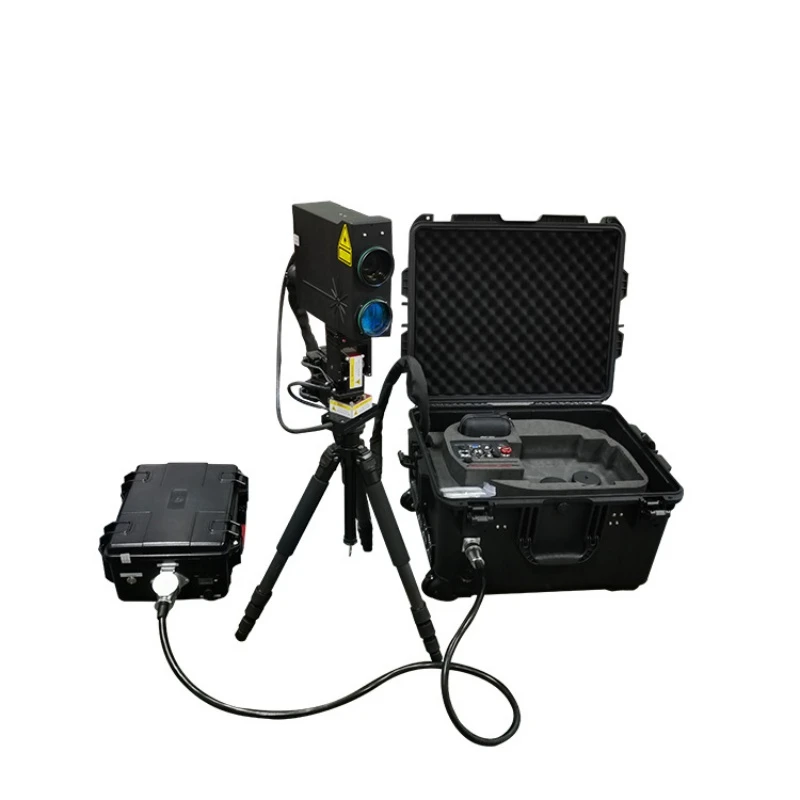
What Factors Affect a Power Grid Laser Cleaner Cost?
When you look at a quote for a 500W laser obstacle remover, the price tag breaks down into four main hardware categories.
1. The Fiber Laser Generator & Cooling System
The continuous wave laser source is the heart of the machine. It makes up roughly 40% to 50% of the total unit cost. Because high wattage generates extreme heat, moving to a 1000W unit requires expensive, active cooling systems so the equipment does not overheat in the field.
2. Targeting Hardware (LiDAR & Optics)
Burning through a thick branch from 150 meters away requires pinpoint accuracy. Enterprise units use motorized Pan/Tilt/Zoom (PTZ) mounts, adjustable optical focal lengths, and LiDAR aiming. This advanced targeting hardware usually accounts for 15% to 20% of the overall price.
3. High-Capacity Battery Packs
Utility crews need equipment that can run for a full 8-hour shift. Rugged, high-capacity ternary lithium battery systems are expensive to manufacture but are absolutely necessary for remote, non-contact vegetation management.
4. Build Quality and Portability
The remaining cost comes down to the chassis. Carbon fiber casing, IP65-rated NEMA enclosures, and all-terrain transport cases protect the delicate optics during transit to rugged maintenance sites.
Industrial vs. Marketplace Laser Tree Cutting Machine Prices
It is tempting to look at a $2,500 bare-bones kit online and wonder why you should pay $20,000+ for an enterprise unit. The difference is operational safety.
Cheap, imported models often lack active cooling, meaning their laser diodes burn out after just a few uses. Furthermore, they rarely carry CE marks or FDA safety certifications, and they lack post-sale technical support.
Safety Warning: Operating uncertified, unbranded Class 4 laser equipment will fail utility safety audits. The liability of an accidental fire, grid damage, or eye injury far outweighs the initial cost savings of a cheap model. Always ensure your equipment complies with OSHA’s laser safety guidelines.

ROI Comparison: Laser Removers vs. Manual Trimming Costs
A $20,000 capital expense is a heavy investment. However, most utility managers achieve a full return on investment (ROI) within a single line-clearing season by eliminating the costs of traditional maintenance.
Consider the traditional way of clearing overhead lines. It requires bucket truck rentals, heavy equipment fuel, traffic control crews, and highly-paid manual arborists. It also frequently requires temporarily shutting down the power grid.
Real-World ROI Example:
In Q3 2025, a regional utility provider in the Pacific Northwest replaced their bucket-truck operations with a remote laser tree trimmer unit. They reduced their average per-line clearing cost from $1,500 to $300 and achieved full ROI in just 14 operating days.
The laser allows a two-person crew to clear the line safely from the ground, without grid downtime, eliminating the safety risk of an arborist working near live wires. Read more about laser solutions for grid safety.
Frequently Asked Questions
How much does a 500w vs. 1000w laser obstacle remover cost?
A commercial 500W laser obstacle remover typically costs between $18,000 and $24,000, while a 1000W unit ranges from $25,000 to over $35,000 due to the upgraded continuous wave laser generator and advanced cooling requirements.
Are remote laser tree cutters cheaper than manual arborist services?
Yes, in the long run. While the upfront equipment cost is high ($15,000+), laser tree cutters eliminate recurring costs like bucket truck rentals, specialized arborist hourly rates, and expensive grid downtime.
How long does a power grid laser cleaner last?
The core fiber laser generator has an operational lifespan of up to 100,000 hours. The lithium batteries and optical lenses will need replacement long before the actual laser diode fails.
What is the effective working distance for an industrial laser obstacle remover?
Depending on the wattage and targeting optics, commercial units have an effective working range of 50 meters up to 200 meters or more.
Ready to build your business case? Contact the Riselaser team today to request a custom ROI calculation for your grid.