
An XRF gold analyzer usually costs from several thousand dollars to $20,000–$30,000+. The final price depends on the analyzer type, detector, software, calibration, testable elements, warranty, and service support.
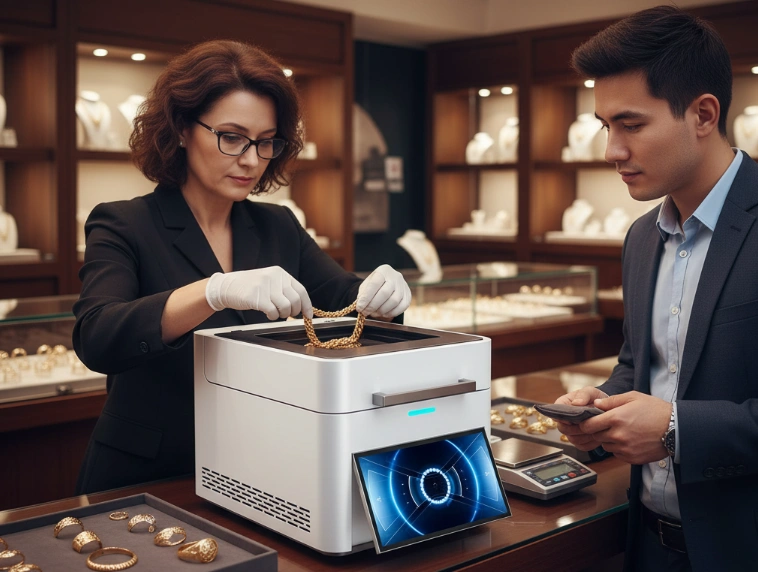
For most jewelry stores, pawn shops, and gold buyers, a professional desktop XRF gold analyzer is often the most practical choice. It gives fast, non-destructive gold testing at the counter and helps reduce the risk of buying plated or fake gold.
But the lowest price is not always the best deal. If you test gold, silver, platinum, palladium, coins, or scrap jewelry every day, the better question is not only:
“How much does an XRF gold analyzer cost?”
The better question is:
“Which XRF gold analyzer gives reliable results for my samples, testing volume, and business risk?”
A small jewelry shop may not need the most advanced lab system. But a pawn shop or gold-buying business should not choose a machine only because it is cheap. One wrong purchase of plated or fake gold can cost more than the price difference between a basic tester and a reliable professional analyzer.
Quick Answer: XRF Gold Analyzer Cost Range
The cost of an XRF gold analyzer depends on the machine class. Entry-level models may start from several thousand dollars, while professional precious metal analyzers often cost much more because they include better calibration, safer structure, more stable testing, and stronger support.
| XRF Gold Analyzer Type | Estimated Price Range | Best For | What to Check Before Buying |
|---|---|---|---|
| Basic XRF gold tester | $5,000–$10,000 | Light testing, small shops, basic gold checks | Calibration, repeatability, supported metals, warranty |
| Standard desktop XRF gold analyzer | $10,000–$20,000 | Jewelry stores, pawn shops, gold counters | Precious metal calibration, chamber size, report function |
| Professional precious metal analyzer | $20,000–$30,000+ | Gold buyers, bullion dealers, recyclers | Plating detection, wider element range, software, support |
| Advanced lab or industrial XRF system | $30,000+ | Refineries, assay labs, high-volume testing | Precision, element range, data export, service plan |
These ranges are for budget planning. The final XRF gold tester price may change based on your country, shipping, taxes, accessories, software options, and after-sales service.
Featured snippet answer: An XRF gold analyzer usually costs from $5,000 to $30,000+. Basic models are cheaper, while professional desktop and handheld XRF gold testers cost more because they include better calibration, safety design, precious metal software, and support.
If you want to compare models for jewelry and pawn shop use, see our XRF gold testing machines and precious metal analyzers.
Why Does XRF Gold Analyzer Cost Vary So Much?
Two XRF gold analyzers can look similar but have very different prices. The difference is usually inside the machine: detector quality, X-ray tube, calibration, software, and service support.
The main cost drivers include:
- Detector type and sensitivity
- X-ray tube and measurement system
- Precious metal calibration
- Gold-plating detection function
- Number of testable elements
- Desktop or handheld design
- Software and report functions
- Sample chamber size
- Safety structure
- Warranty, training, and service support
A low-cost XRF gold testing machine may be enough for simple screening. But if you buy high-value gold every day, test mixed jewelry, or need to detect plated items, the cheapest machine may create more risk than savings.
Detector and Measurement Capability
The detector is one of the most important parts of an XRF analyzer. It affects how well the machine reads the elements in the sample.
A better detector can usually provide stronger sensitivity, better repeatability, and more stable results for complex precious metal alloys.
This matters because jewelry is rarely pure gold. It may contain gold, silver, copper, zinc, nickel, platinum, palladium, rhodium, or other elements. A reliable XRF precious metal analyzer should help you understand the full metal composition, not only show a simple “gold” result.
Thermo Fisher explains that XRF precious metal analysis can be used for gold, silver, platinum, palladium, rhodium, iridium, ruthenium, and alloying elements such as copper, zinc, and nickel. You can read more in its guide to precious metal and gold testing solutions.
Software, Reports, and User Interface
Software also affects the XRF gold analyzer price.
A jewelry store may only need simple results:
- Gold percentage
- Karat value
- Silver content
- Platinum or palladium content
- Possible plating warning
- Basic customer report
A refinery or assay lab may need more advanced reports, wider element detection, data export, and stronger quality control.
If your staff will use the machine at the counter, the interface matters. A cheaper system that is hard to use can slow down testing and increase mistakes.
Calibration and Long-Term Accuracy
Calibration affects whether you can trust the result.
A professional XRF gold analyzer should be calibrated for precious metals. If calibration is poor, the screen may still show a number, but that number may not be reliable enough for buying decisions.
Before buying, ask:
- Is the machine calibrated for gold and precious metals?
- Which elements are included?
- Can it test gold, silver, platinum, and palladium?
- Can it test mixed jewelry and scrap gold?
- Does it support plating detection?
- Does the supplier provide calibration support?
- Are reference samples or standards included?
- How often should the machine be checked?
For business use, repeatability is very important. If the same ring gives very different results after several tests, that is a warning sign.
Can an XRF Gold Analyzer Detect Fake Gold or Gold Plating?
Yes, an XRF gold analyzer can help detect fake gold and gold plating, but the result depends on the machine, sample, and testing method.
This is one of the biggest reasons pawn shops and gold buyers invest in professional XRF testing.
An XRF analyzer can help identify:
- Gold-plated jewelry
- Suspicious surface composition
- Mixed precious metal alloys
- Unusual alloy content
- Items that need further testing
Evident states that its Vanta GX precious metal analyzer can measure precious metals in seconds and includes a gold-plating alert to help identify fake jewelry. You can see this example on the Evident Vanta GX precious metal analyzer page.
However, XRF is not magic. It mainly analyzes the material near the surface.
Results can be affected by:
- Thick plating
- Layered materials
- Coatings
- Dirty surfaces
- Curved or irregular shapes
- Poor sample placement
- Incorrect calibration
For suspicious or high-value items, test multiple spots and use more than one verification method when needed.
Important: Do not promise customers that XRF can detect every fake item in every condition. A better and more accurate message is: XRF improves screening speed and confidence when it is calibrated and used correctly.
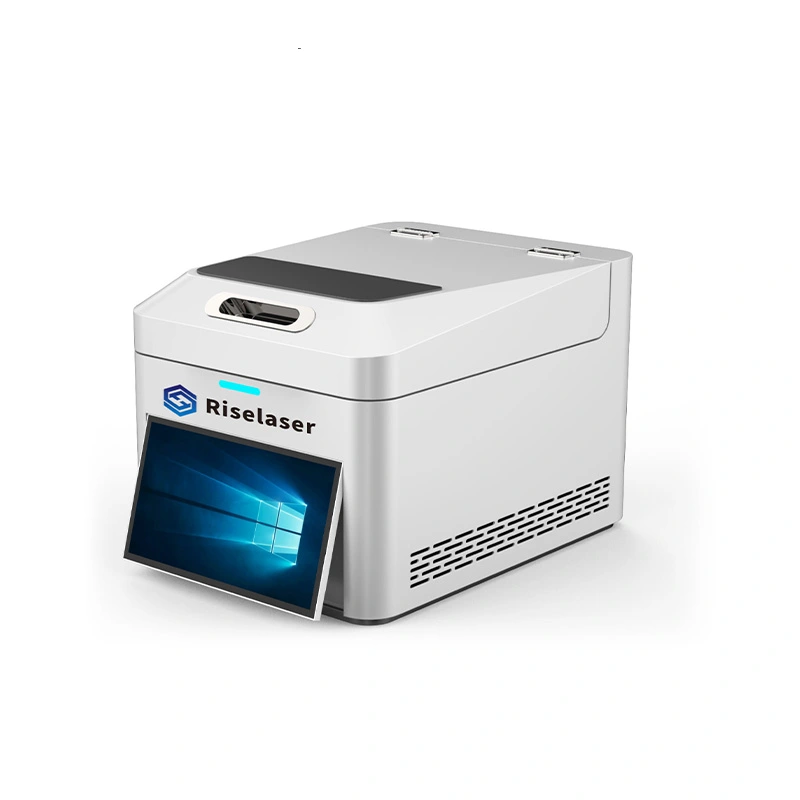
For a practical product example, view the Riselaser XRF Gold Analyzer, which is designed for fast, non-destructive precious metal testing.
XRF Gold Tester Price by Buyer Type
The right XRF gold tester price depends on how you use the machine. A jewelry store, pawn shop, refinery, and mobile gold buyer do not always need the same configuration.
| Buyer Type | What They Usually Need | Recommended Buying Logic |
|---|---|---|
| Jewelry store | Fast, clean, non-destructive gold purity testing | A desktop XRF gold analyzer is often practical |
| Pawn shop | Gold, silver, coins, mixed jewelry, plating risk | Choose reliable fake-gold and plating detection |
| Gold buyer | Fast transaction decisions | Accuracy and speed matter more than the lowest price |
| Bullion dealer | Gold, silver, platinum, palladium verification | Look for stable, repeatable results |
| Recycler or refinery | Mixed precious metals and higher test volume | Consider wider element range and stronger calibration |
| Assay lab | Technical analysis and reporting | Higher-end or lab-grade equipment may be needed |
For a jewelry store, a desktop XRF gold analyzer is often the best fit. It sits on the counter, keeps the sample in a fixed chamber, and is easier for staff to use.
For a mobile gold buyer or recycler, a handheld XRF analyzer may be more useful because it can test larger items or materials outside the shop.
For a refinery, the machine must handle more complex samples and higher testing volume. A basic counter model may not be enough.
If you are comparing models, this guide on how to choose the best XRF gold testing machine can help you decide between desktop and handheld options.
Desktop vs Handheld XRF Gold Analyzer Cost
One common question is whether to choose a desktop or handheld XRF gold analyzer. The answer depends on your testing environment.
| Type | Advantages | Limitations | Best Fit |
|---|---|---|---|
| Desktop XRF gold analyzer | Stable testing, easy sample control, professional counter display | Not portable | Jewelry stores, pawn shops, gold counters |
| Handheld XRF analyzer | Portable, flexible, useful for large items | Requires stronger safety control and training | Mobile buyers, recyclers, field testing |
| Lab or benchtop XRF system | More controlled testing and advanced analysis | Higher cost, more technical operation | Labs, refineries, high-volume testing |
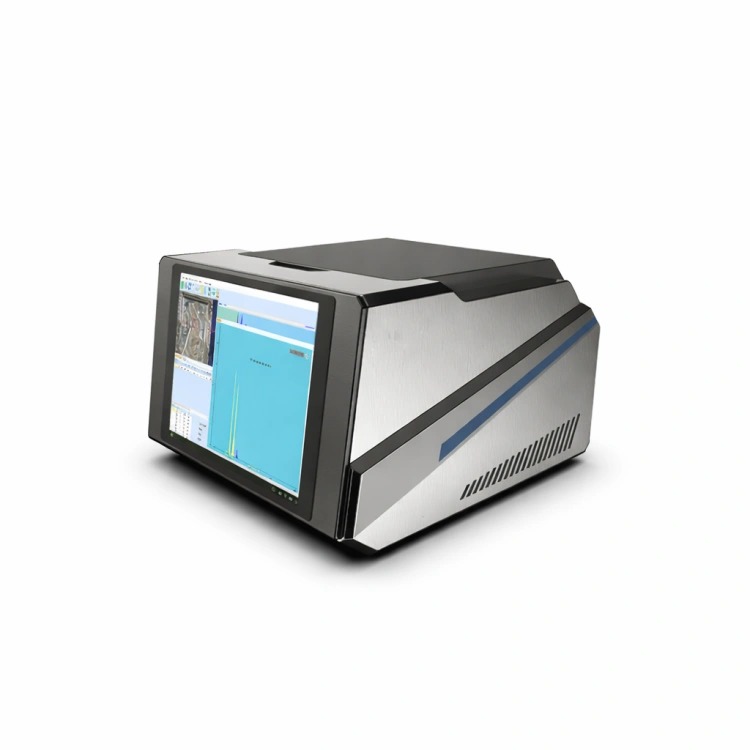
A desktop XRF gold tester is usually better for shop use. It is stable, clean, and easier for employees to operate.
A handheld XRF analyzer is better if you test large items, inspect scrap lots, visit suppliers, or need mobile testing. But handheld units require careful safety training because the operator controls where the analyzer points.
For most jewelry stores and pawn shops, desktop is the more practical choice.
New vs Used vs Rental XRF Gold Analyzer
Some buyers compare new, used, rental, and financing options before buying.
| Option | Best For | Main Advantage | Main Risk |
|---|---|---|---|
| New XRF analyzer | Long-term daily use | Warranty, training, updated software, supplier support | Higher upfront cost |
| Used XRF analyzer | Buyers with limited budget | Lower purchase price | Unknown condition, calibration, software, and repair history |
| Rental XRF analyzer | Short-term projects or events | Lower short-term commitment | Expensive for long-term daily use |
| Financing | Growing businesses | Preserves cash flow | Total paid may be higher over time |
Buying a New XRF Gold Analyzer
Buying new is usually safer for businesses that test every day. You get current software, warranty, training, and clearer service support.
This matters if the analyzer is part of your daily buying process.
Buying a Used XRF Gold Analyzer
A used machine may reduce upfront cost, but it can carry hidden risks.
Before buying used, check:
- Detector condition
- Calibration status
- Software license
- Warranty
- Repair history
- Battery health for handheld units
- Included accessories
- Service availability
- Radiation safety documents, if required
A used analyzer with no support can become expensive if the detector, tube, software, or calibration needs repair.
Renting an XRF Gold Analyzer
Rental can work for short-term testing projects, gold-buying events, or market testing before purchase.
But if you test precious metals every day, rental may cost more than buying over time.
XRF Gold Analyzer Cost vs Acid Testing: Which Is Worth It?
Acid testing is cheaper upfront. An XRF gold analyzer costs more. But they solve different problems.
Acid testing can work for simple checks, but it can damage the sample surface, uses chemicals, and gives limited information. XRF testing is fast, non-destructive, and can show the elemental composition of the sample.
Thermo Fisher notes that XRF has a higher initial purchase cost than acid testing kits, but it can reduce repeated acid purchases and reduce losses from inaccurate readings. You can read more in its article on why XRF outshines traditional gold testing methods.
| Testing Method | Upfront Cost | Sample Damage Risk | Speed | Best Use |
|---|---|---|---|---|
| Acid test | Low | Can damage the surface | Fast but limited | Basic gold checks |
| Electronic gold tester | Low to medium | Low | Fast | Simple screening |
| XRF gold analyzer | High | Non-destructive | Usually seconds | Professional gold buying and selling |
| Fire assay | Higher process cost | Destructive | Slow | Lab-level confirmation |
For a business, the value of XRF is not only speed. It is risk control.
For example, if a pawn shop buys many gold items every week, one wrong purchase of plated or fake gold can create a large loss. In that case, the cost of a reliable XRF analyzer may be easier to justify.
Hidden Costs in XRF Gold Testing Machine Price
The machine price is only one part of the total cost.
Before buying an XRF gold testing machine, check what is included in the quotation.
Common extra costs include:
- Shipping
- Import duties and taxes
- Training
- Calibration standards
- Software options
- Report function
- Replacement measurement window
- Test stand for handheld units
- Warranty extension
- Spare parts
- Service visits
- Remote support
- Financing cost
- Downtime if repair is needed
| Question | Why It Matters |
|---|---|
| What is included in the quoted price? | Avoid surprise costs |
| Is the analyzer calibrated for precious metals? | Gold testing needs proper calibration |
| Which elements can it test? | Some buyers need Au, Ag, Pt, Pd, Cu, Zn, Ni, and more |
| Can it help detect plating or fake gold? | Important for pawn shops and gold buyers |
| Is training included? | Reduces operator mistakes |
| What is the warranty period? | Protects your investment |
| Are spare parts available? | Reduces downtime |
| Can the supplier provide sample testing? | Helps confirm the machine fits your samples |
| What is the delivery time? | Important for business planning |
| Is local compliance or registration needed? | Rules may vary by country or region |
If a supplier only gives a low price but cannot explain calibration, service, warranty, or testing limits, be careful.
Is an XRF Gold Analyzer Worth the Cost?
An XRF gold analyzer is worth the cost when it helps your business test faster, reduce risk, and make better buying decisions.
It is usually a strong investment for businesses that:
- Test gold or precious metals every day
- Buy jewelry from the public
- Handle high-value items
- Test silver, platinum, or palladium
- Want to reduce acid testing
- Need customer-facing test results
- Want better protection against plated or fake items
- Need a more consistent staff testing process
It may not be worth the cost if you only test a few low-value items per month. In that case, outsourcing tests or using lower-cost screening methods may be enough.
Simple ROI Example for a Pawn Shop
Assume a pawn shop tests 30 gold items per day. If XRF saves only 1–2 minutes per test, it can save hours of staff time each month.
More importantly, if the shop avoids just one bad purchase of a plated or fake high-value item, the saved loss may cover a meaningful part of the analyzer cost.
The ROI is not only from faster testing. It also comes from fewer buying mistakes, better customer trust, and more consistent staff decisions.
To judge ROI, ask:
- How many items do we test each month?
- What is the average value of each item?
- How often do we see suspicious or plated items?
- How much time does our current testing process take?
- How much would one wrong purchase cost?
- Would customer-facing results help us build trust?
For professional gold buyers, the value of XRF is the combination of speed, non-destructive testing, multi-metal analysis, and better decision control.
How to Choose the Right XRF Gold Analyzer for Your Budget
Do not start by asking only for the cheapest XRF gold tester price. Start with your testing needs.
Choose by Sample Type
| Sample Type | What to Consider |
|---|---|
| Jewelry | Small shapes, stones, plating risk, mixed alloys |
| Coins | Surface condition, authenticity, repeatability |
| Bullion | High-value verification and trust |
| Scrap gold | Dirty surfaces, mixed lots, varied alloys |
| Plated items | Plating alert and careful test method |
| Large items | Handheld testing may be useful |
| Powder or irregular materials | May need special sample preparation |
If most testing happens at a sales counter, a desktop XRF gold analyzer is usually easier to control.
If you test large items or visit customer sites, handheld may be more practical.
Choose by Daily Test Volume
| Test Volume | Suggested Buying Logic |
|---|---|
| A few tests per week | Consider whether rental, outsourcing, or basic screening is enough |
| 10–30 tests per day | A professional desktop analyzer may improve speed and trust |
| 30–100+ tests per day | Focus on speed, durability, reports, and service |
| High-volume refinery or recycling use | Consider stronger configuration and long-term support |
A higher testing volume usually justifies a better machine because small errors and delays repeat many times.
Choose by Metals Tested
Many buyers search for a “gold tester,” but they also need to test other precious metals.
Check whether you need to test:
- Gold
- Silver
- Platinum
- Palladium
- Rhodium
- Copper
- Zinc
- Nickel
- Lead
- Cadmium
This matters because the machine configuration and calibration should match your real samples.
Choose by Support Needs
First-time XRF buyers should care about support as much as price.
Ask the supplier:
- Can you help us set up the machine?
- Do you provide operation training?
- Can you explain how to test plated jewelry?
- Can we send sample photos or videos before buying?
- Do you provide remote support?
- What happens if the machine needs repair?
- Do you have spare parts?
A cheaper machine with no support may cost more in the long run if your staff cannot use it correctly.
What to Check Before Buying an XRF Gold Analyzer
Before you compare quotations, make sure you are comparing the same level of machine and support. A low price may not include the same detector, software, calibration, warranty, or service package.
- Precious metal calibration: The analyzer should be set up for gold, silver, platinum, palladium, and related alloying elements.
- Supported elements: Confirm the full element list before purchase.
- Plating detection: Important for pawn shops, gold buyers, and second-hand jewelry testing.
- Test speed: Daily testing volume matters. A slow machine can affect customer service.
- Sample chamber: Check whether it fits rings, necklaces, coins, bullion, and irregular pieces.
- Software language: Make sure your staff can use the interface easily.
- Reports: Ask if the machine can save, export, or print results.
- Training: First-time users need clear operation guidance.
- Warranty: Ask what parts are covered and for how long.
- Spare parts: Confirm availability of key parts and consumables.
- Remote support: Useful for international buyers.
- Sample testing: A supplier should help confirm whether the machine fits your real samples.
XRF Gold Analyzer Safety: What Buyers Should Know
An XRF analyzer uses X-rays during measurement. This does not mean it is unsafe when used correctly, but operators need proper training.
For handheld XRF analyzers, safety is especially important because the operator controls where the device points.
Basic safety rules include:
- Train all operators before use
- Do not aim the analyzer at yourself or others
- Do not hold samples by hand during testing
- Watch the X-ray indicator lights
- Keep the sample in contact with the measurement window
- Store the analyzer securely
- Follow local rules for registration or use
Desktop XRF gold analyzers are often easier for jewelry stores and pawn shops because the sample is placed inside a chamber. This can reduce handling risk and make testing more consistent.
Still, every user should follow the manufacturer’s manual and local regulations.
Questions to Ask Before Requesting an XRF Gold Analyzer Price
Before asking for a final quote, prepare your testing details. This helps the supplier recommend the right model instead of giving a random price.
| Question | Example Answer |
|---|---|
| What materials do you test? | Gold jewelry, silver, platinum, scrap gold |
| What sample types do you handle? | Rings, coins, bullion, mixed jewelry |
| Do you need plating detection? | Yes, we buy second-hand jewelry |
| How many samples do you test per day? | Around 20–50 pieces |
| Do you need desktop or handheld? | Desktop for shop counter |
| What country will the machine ship to? | United States, UAE, Portugal, etc. |
| Do you need training? | Yes, for counter staff |
| Do you need reports? | Yes, for customer records |
| What is your budget range? | $10,000–$20,000, or not sure |
A good supplier should use this information to recommend a suitable configuration, not simply push the most expensive model.
FAQ About XRF Gold Analyzer Cost
How much does an XRF gold analyzer cost?
An XRF gold analyzer usually costs from $5,000 to $30,000+. Basic models are cheaper, while professional desktop and handheld XRF gold analyzers cost more because they include better calibration, safety design, precious metal software, and support.
Why are XRF gold analyzers expensive?
XRF gold analyzers are expensive because they include an X-ray tube, detector, safety structure, precious metal calibration, software, and reporting functions. The price also reflects warranty, training, service support, and long-term stability.
Is a cheap XRF gold tester accurate enough?
A cheap XRF gold tester may be enough for basic checks, but it may not be reliable enough for professional buying decisions. Always check calibration, repeatability, supported elements, warranty, and service support.
Should I buy a desktop or handheld XRF gold analyzer?
Choose a desktop XRF gold analyzer if you mainly test jewelry, coins, and small precious metal items at a shop counter. Choose a handheld XRF analyzer if you need mobile testing, field testing, or testing of larger objects.
Can XRF detect gold plating?
Yes, some XRF gold analyzers can help detect gold plating or fake jewelry. However, results depend on plating thickness, sample structure, surface condition, calibration, and correct operation.
Is XRF better than acid testing?
For professional gold buying, XRF is usually better for speed, non-destructive testing, multi-metal analysis, and customer trust. Acid testing is cheaper, but it is more limited and can damage the sample surface.
Final Buying Advice: Do Not Choose Only by Price
If you only test gold occasionally, a high-end XRF analyzer may not be necessary.
But if you run a jewelry store, pawn shop, gold-buying counter, bullion business, or precious metal recycling operation, an XRF gold analyzer can be a strong investment.
It can help you:
- Test faster
- Reduce sample damage
- Improve customer confidence
- Check more precious metals
- Reduce acid testing
- Lower the risk of buying plated or fake gold
- Make staff testing more consistent
The best choice is not always the cheapest machine. It is also not always the most expensive machine.
The best choice is the XRF gold analyzer that matches your samples, testing volume, accuracy needs, support requirements, and budget.
Get an XRF Gold Analyzer Price for Your Application
Not sure which XRF gold analyzer fits your business?
Send us your sample type, daily testing volume, required metals, and destination country. We can recommend a suitable configuration and provide a practical price range for your jewelry store, pawn shop, gold-buying counter, or precious metal recycling business.