
Weld spatter is the spray of small molten metal droplets that eject from the weld zone and stick to the workpiece surface. It is most common in MIG, Stick, and FCAW welding, and usually happens when the arc becomes unstable because of incorrect settings, poor shielding gas coverage, excessive arc length, bad technique, or dirty material.
For welders, welding engineers, fabrication professionals, and production managers, spatter is more than a cosmetic issue. In most cases, weld spatter does not ruin weld strength by itself, but it does increase cleanup time, post-weld grinding, consumable wear, and safety risk. If spatter is heavy, it often signals that the welding process is not running in a stable window, so controlling it improves weld quality, productivity, and cost.
The fastest way to reduce spatter is to stabilize the process: clean the base metal, use the correct shielding gas, match voltage/current with wire feed speed, and keep a short, consistent arc length. When low spatter and minimal post-processing are critical, laser welding can also be a strong option because it offers more precise heat input and a more controlled weld zone.
In this guide, you will learn what welding spatter is, what causes it, how to reduce it in practical shop conditions, how to remove stubborn spatter safely, why some spatter sticks harder, how to prevent spatter from adhering in the first place, why laser welding is often chosen for cleaner, lower-spatter results, and where lower-spatter welding fits into current industry use and future trends.
What Is Welding Spatter?
Welding spatter is the small droplets of molten metal that are ejected from the weld pool and stick to the workpiece surface during welding. It usually doesn’t reduce weld strength, but it harms surface finish, increases cleanup time, and often signals unstable welding parameters.
Quick facts about weld spatter:
- Most common in: MIG/GMAW, Stick/SMAW, and FCAW (due to arc instability and metal transfer).
- Typical causes: incorrect voltage/current or wire feed speed, long arc length, wrong shielding gas/flow, poor torch angle, and surface contamination (oil, rust, paint, moisture).
- Why it matters: extra grinding/rewelding, higher consumable wear, and safety risks from hot metal droplets.
- Not the same as: porosity (gas holes inside the weld) or slag inclusions (non-metallic trapped material).
For a formal definition and examples, TWI has a concise overview of weld spatter.
Next, we’ll break down the root causes by process and show proven fixes you can apply immediately.
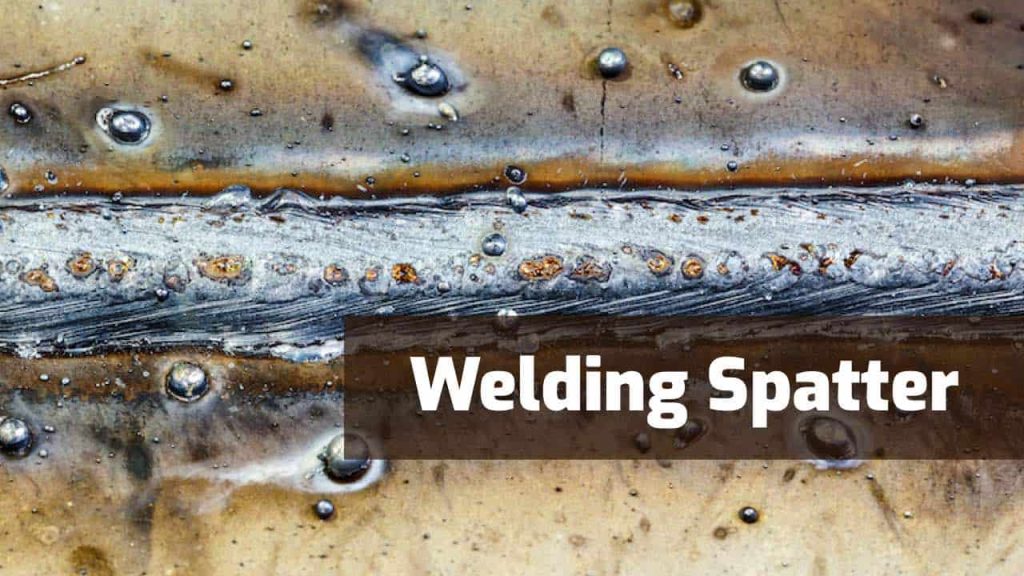
What Causes Spatter in Welding? (And Why It Matters)
Weld spatter is mainly caused by arc instability or unstable metal transfer, usually triggered by mismatched settings (voltage/current/WFS), incorrect shielding gas or flow, excessive arc length, poor torch angle/travel speed, or surface contamination (oil, rust, paint, moisture).
How Weld Spatter Forms: The Basics
Spatter forms when the weld zone becomes unstable and molten metal is expelled from the pool.
In arc welding (MIG/Stick/FCAW), spatter usually comes from unstable metal transfer and a fluctuating arc. Long arc length, incorrect settings, or poor shielding makes the transfer “violent,” so droplets break away and stick to the workpiece.
In laser welding, spatter is linked to an unstable keyhole (the vapor cavity created by the beam). If keyhole pressure fluctuates or the vapor/plasma plume becomes unstable, molten metal can be pushed out of the melt pool.
Next: the sections below break down the most common causes (and fast fixes) for arc welding and laser welding.
Top Causes of MIG Welding Spatter (and Fast Fixes)
Shielding gas problems → Fix: Use the right gas mix for the material; argon-rich blends produce less spatter than high-CO2 mixes, while 100% CO2 is more cost effective but creates a more volatile arc with higher arc energy and more spatter. Eliminate leaks/drafts, and keep a stable flow rate.
Poor shielding gas coverage or the wrong mix can create spatter issues and hurt weld quality in day-to-day welding operations.
Settings mismatch → Fix: Tune voltage/current with wire feed speed as a set—avoid running “too hot” or “too cold.”
Technique issues → Fix: Keep a consistent torch angle, steady travel speed, and a short, stable arc length/stickout.
Dirty or coated material → Fix: Remove oil/rust/paint/moisture; mill scale on steel can interfere with electrical current and increase spatter. For galvanized steel, manage zinc (prep + correct parameters) to reduce spatter.
f you’re troubleshooting MIG spatter on the shop floor, Lincoln Electric’s MIG problems guide is a handy checklist.
What Causes Spatter in Laser Welding
Laser welding produces less spatter than arc welding, but it can still happen when the keyhole becomes unstable or the process is run at extremes.
Most common laser spatter triggers:
- Unstable keyhole from fluctuating vapor pressure
- Incorrect power/speed (too high or too low for the joint)
- Wrong focus position or inconsistent standoff
- Reflective metals (aluminum, copper) causing energy instability
- Coatings like zinc creating violent vaporization if not managed
Quick fix direction: stabilize the keyhole by balancing power + travel speed, controlling focus, and improving shielding/plume control.
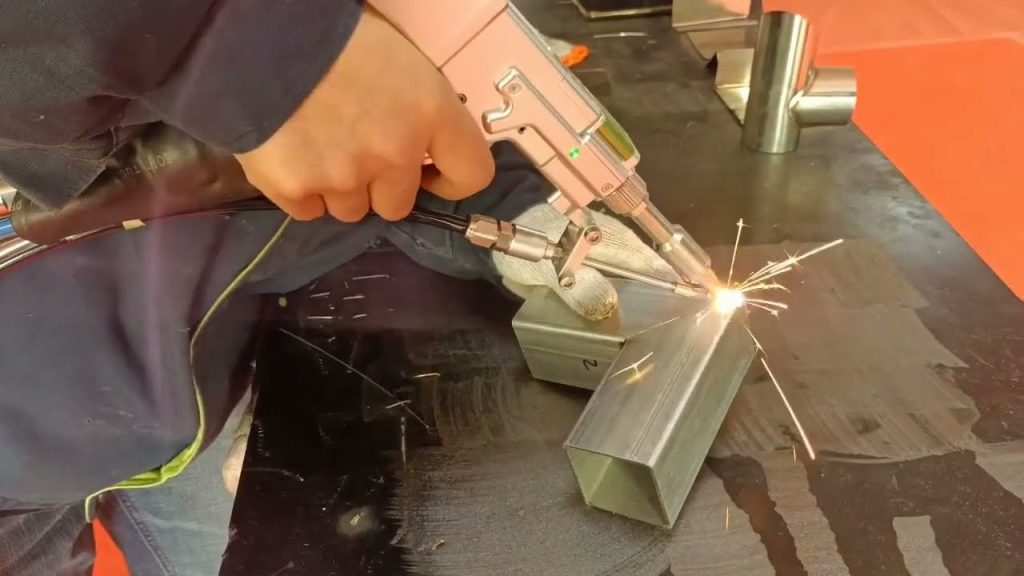
The Real Costs of Uncontrolled Spatter
Spatter isn’t just a cosmetic issue—it increases rework, downtime, and safety risk.
- More cleanup and rework: extra grinding and surface finishing can become a meaningful share of total welding time on production jobs.
- Quality risk: spatter can lead to surface defects and, in some cases, contribute to inclusions or porosity if it re-enters the weld pool.
- Equipment wear: it clogs tips/nozzles in arc welding and contaminates lenses/protective windows in laser welding, and wire selection also affects cleanup and rework costs, since metal-cored wires generally produce less spatter than solid wire.
- Safety hazards: hot droplets can burn operators and create fire risk; fumes and particulates also require proper ventilation and PPE.
6 Ways to Prevent Weld Spatter
The fastest way to reduce spatter is to stabilize the process: clean material, stable shielding, matched settings, and consistent technique. Start with these six fixes—most spatter problems improve dramatically before you ever touch “advanced” methods.
1) Start with clean base metal
Remove oil, rust, paint, moisture, and heavy oxidation from the base material, and strip protective coatings when needed. Contamination doesn’t just “burn off”—it boils, disrupts the weld pool, and throws droplets everywhere, while mill scale on steel can block electrical current and increase spatter. If contamination or coatings are stubborn, clean the surface with a flap wheel before welding.
2) Get shielding gas right (and keep it steady)
Use the correct gas mix for the material, and make sure the flow is stable. Leaks, drafts, or a damaged nozzle can ruin shielding and make the arc harsh and splattery.
3) Match your settings as a system, not one knob at a time
Voltage settings, amperage, and wire feed speed work together on a mig welder. When they’re out of balance, metal transfer becomes erratic. A smaller wire diameter can help reduce spatter. Make small changes, test, then lock in the optimal settings that produce a smooth, consistent arc sound. Larger diameter wires run at low voltage tend to create more spatter, so the ideal settings need to match wire size.
4) Control arc length and stickout
A long arc (or excessive stickout) is a common spatter trigger. Keep your distance consistent so the arc stays stable and the transfer stays controlled.
5) Keep technique consistent—angle, speed, and travel
Spatter often spikes when the torch angle changes mid-weld or travel speed varies, so this welding technique usually works best with a consistent 5° to 15° torch angle. A push angle greater than 15 degrees can raise the risk of excessive spatter. Focus on steady motion and repeatable positioning, especially on thin material and out-of-position welds, to support more even heat distribution.
6) Use anti-spatter as a helper, not a crutch
Anti-spatter spray won’t stop spatter from forming, but it can prevent sticking and make it easier to clean weld spatter after welding. Apply a light, even coat—too much can cause its own problems, and cleanup is often time consuming when preventive steps are skipped.
Common spatter traps: Welding over galvanized coatings, rushing travel speed, and trying to “power through” dirty material are three of the fastest ways to create spatter. If you fix those first, the rest usually becomes fine-tuning.
Weld Spatter Removal: How to Remove It Safely
Even with good settings, a little spatter can still happen—especially on coated or dirty steel, and this is common in mig welding and stick welding. The goal is to remove it without gouging the base metal or damaging the weld bead.
Start with the least aggressive method.For light spatter, a chipping hammer, scraper, or stiff wire brush is usually enough. If it pops off cleanly, stop there—no need to overwork the surface.
Move up to grinding only when needed.For stubborn spatter, use an angle grinder carefully and keep it moving to avoid digging into the workpiece. A quick touch is often better than trying to “erase everything” in one pass.
Consider chemical removers in the right situations.Spatter-removal gels or chemicals can help on certain materials and finishes, but always check compatibility first and work with proper ventilation. Some welders use them to clean weld spatter when grinding could mark the surface. If the part has coatings, paint, or sensitive surfaces, test on a small area before committing.
Protect yourself and the workspace.Wear eye/face protection, gloves, and appropriate respiratory protection if you’re grinding or using chemicals. Keep flammables away—spatter and sparks travel further than most people expect.
If you’re removing spatter constantly, treat it as a process problem.Frequent spatter usually means something upstream needs adjusting (cleanliness, gas shielding, arc length, or parameter balance). A small tweak there often saves hours of cleanup later.
But not all weld spatter is equally easy to remove. Some spatter becomes harder, more firmly attached, and more likely to damage the surface during cleanup.
What Makes Some Weld Spatter Hard?
Not all weld spatter comes off the same way. Some breaks loose with a wire brush, while some sticks tightly and takes much more effort to remove. That usually happens when the droplets hit the surface very hot, flatten on contact, and cool into a stronger bond.
Surface condition also plays a big role. Rough, dirty, oxidized, or coated material gives spatter more places to grab onto. Rust, paint, oil, and mill scale can all make the cleanup worse—not just because they increase spatter, but because they can make the droplets stick more firmly once they land.
Process stability matters too. When the welding arc is harsh or unstable, the droplets are often hotter, more forceful, and more likely to bond to the surrounding surface. Unstable settings can also create more spatter and make those droplets harder to remove later. Excessive heat input, poor shielding, incorrect settings, and inconsistent technique can all make spatter harder to remove later.
The key point is simple: hard spatter is usually a process warning, not just a cleanup problem. If weld spatter keeps sticking hard, it is worth checking the surface condition and the welding setup before spending more time on grinding and rework.
Once you understand why some weld spatter becomes harder to remove, the next step is to stop it from sticking so firmly in the first place.
How to Keep Weld Spatter from Sticking
Keeping weld spatter from sticking starts with the same basics that reduce spatter overall: clean material, stable shielding, balanced settings, and consistent technique. When the process is stable, fewer droplets reach the surface, and the ones that do are less likely to bond tightly.
Start with clean base metal. Oil, rust, paint, moisture, and heavy oxidation make the weld area less predictable and often make stuck spatter harder to remove. A cleaner surface usually means less adhesion and faster cleanup.
Next, focus on process control. A short, stable arc length, correct shielding gas coverage, and matched parameters help keep metal transfer smooth, while a sound contact tip condition and proper tip-to-work distance also help reduce sticking. Even with good settings, poor welding wire condition can still upset transfer and increase adhesion. When the process becomes violent or erratic, spatter tends to hit the workpiece hotter and stick more aggressively.
Anti-spatter products can help, but they should be used as a helper—not a fix for poor welding conditions. A light, even coat can reduce sticking and make post-weld cleanup easier, especially on repetitive jobs. But if the arc is unstable or the material is dirty, anti-spatter spray will only reduce the symptom, not the cause.
On appearance-sensitive parts or jobs where grinding is limited, preventing adhesion is especially important. In those cases, it is often better to stop spatter from sticking at the source than to deal with extra cleanup after the weld is finished.
How Laser Welding Reduces Spatter (and When It Still Happens)
Laser welding typically produces far less spatter because it concentrates heat precisely and keeps the melt pool more stable than most arc processes. That said, spatter can still appear if the keyhole becomes unstable—usually from extreme settings, poor focus control, or difficult materials like reflective metals and zinc coatings.
1) Stable energy input (power, speed, and focus)
When power, travel speed, and focus are balanced, the keyhole stays steady and molten metal is less likely to eject. Most “laser spatter problems” improve quickly once the process is brought back into a stable window.
2) Beam shaping and wobble to stabilize the keyhole
Modern beam profiles (such as ring-shaped or dual-beam setups) distribute heat more evenly and can reduce sudden pressure spikes in the keyhole. Beam oscillation (“wobble”) also helps by widening the process window and giving vapor a cleaner path to escape.
3) Ultrafast pulsed lasers for micro-welding
For very small, high-precision welds, ultrafast pulsed lasers can minimize heat input and reduce material ejection. This approach is mainly used in micro-scale applications rather than general fabrication.
4) Hybrid laser–arc welding to tame the arc
In hybrid laser–arc welding (HLAW), the laser stabilizes the weld zone while the arc supports gap bridging and deposition. The result is often less spatter than an arc-only process, especially when parameters are tuned as a combined system.
5) Better shielding and plume control
Nozzle design and shielding gas selection help protect the melt pool and control the vapor/plasma plume. In practice, stable shielding (often Argon or Helium depending on the application) reduces spatter and keeps optics cleaner over long runs.
Takeaway: laser welding reduces spatter mainly by keeping the keyhole and melt pool stable—not by “magic.” If you still see spatter, the fastest fixes are usually focus control, power/speed balance, and better plume shielding.
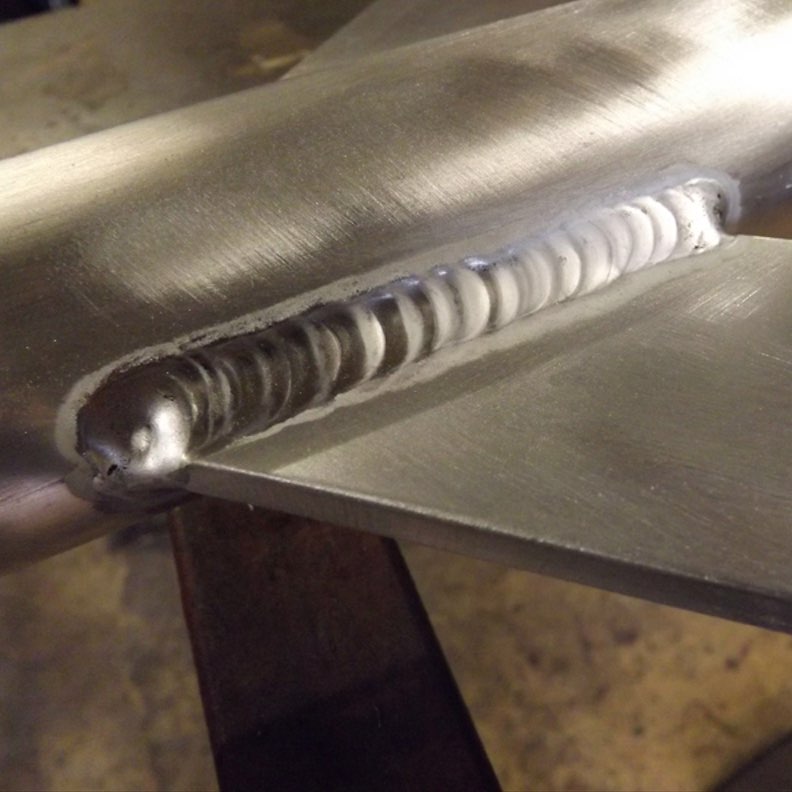
Why Top Industries Rely on Laser Welding
Laser welding isn’t just “cleaner.” In many production environments, low spatter is valuable because it means less rework, fewer cosmetic defects, and more consistent quality at scale. Here’s why industries that care about throughput and reliability keep moving toward laser processes.
Automotive Manufacturing
Car bodies and brackets often involve coated steels (especially galvanized). Those coatings can make traditional welding messy and inconsistent. Laser welding helps reduce surface cleanup and post-weld finishing—especially when the process is tuned to control vapor and keep the weld zone stable.
Medical Device Production
Medical parts are often small, thin, and appearance-sensitive. Even tiny spatter can create contamination risk or require manual polishing that’s hard to validate. Laser welding is favored because it can produce controlled, repeatable seams with minimal surface disturbance—important for both aesthetics and cleanliness.
Electronics and Battery Industries
Battery tabs and thin foils don’t tolerate stray droplets well. Spatter can cause contamination, short-circuit risk, or unreliable electrical contact. That’s why these industries lean toward laser welding methods that prioritize precision and minimal ejection—especially on micro-scale joints.
Aerospace
Aerospace alloys are expensive and the quality standards are unforgiving. Spatter and surface defects can become fatigue or corrosion initiation points over time. Laser welding’s tight process control helps maintain consistent weld geometry and surface quality, reducing the need for aggressive post-processing.
Bottom line: when spatter leads to polishing, rework, or inspection failures, industries tend to choose processes that reduce spatter at the source—not just clean it up later.
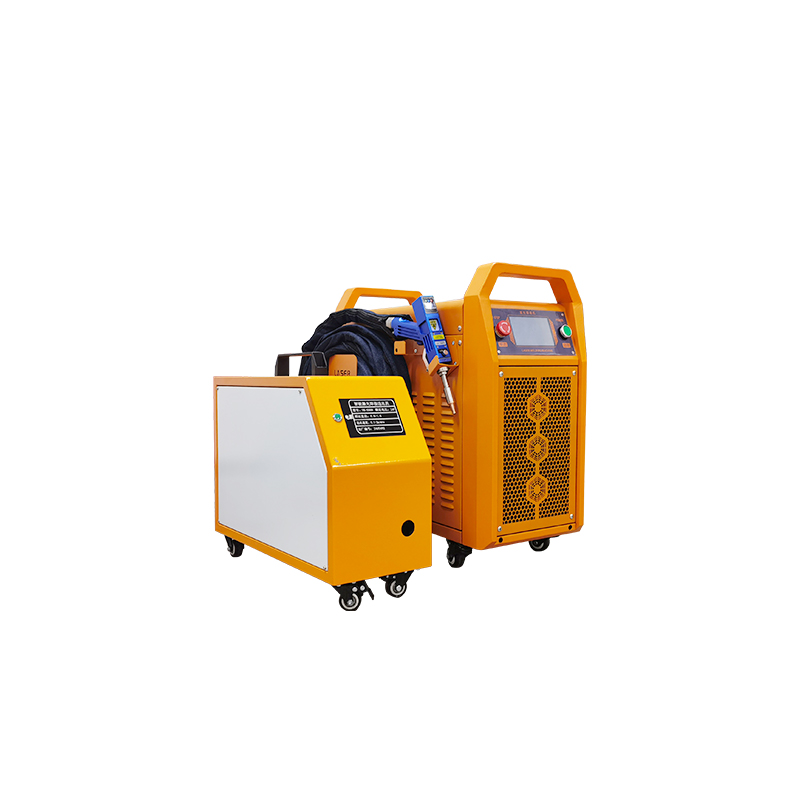
The Future of Spatter-Free Welding
Spatter control is moving from “clean it up later” to “prevent it before it starts.” The next improvements won’t come from one magic setting—but from better monitoring, smarter control, and more predictable processes.
Smarter systems that adjust in real time
More welding systems are adding sensors (vision, acoustic signals, or process monitoring) to detect early signs of instability. When the system sees the weld pool or keyhole starting to fluctuate, it can automatically fine-tune parameters to bring the process back into a stable window—reducing spatter before it becomes visible.
Better simulation and setup before you strike an arc
Process simulation tools are getting easier to use and more accurate. Instead of trial-and-error on real parts, teams can test parameter windows digitally, reduce scrap, and start production closer to “first-time-right.”
Materials and coatings designed to weld cleaner
Spatter isn’t only a machine problem—materials matter. New surface treatments and coating approaches aim to reduce violent vaporization (especially on coated steels) and improve energy absorption on reflective metals, making weld behavior more predictable.
More efficient shielding and cleaner workplaces
Shielding gas delivery is also improving through better nozzle design and flow control. The goal is not only fewer defects, but also lower gas waste, less fume generation, and a safer, cleaner shop environment.
What this means in practice: the shops that get the cleanest results will be the ones that combine solid fundamentals (clean surfaces + stable parameters + consistent technique) with tools that keep the process stable automatically.
Conclusion: Achieving Cleaner Welds with Modern Solutions
Weld spatter isn’t just a cosmetic annoyance—it affects productivity, finishing time, consumable life, and shop safety. The good news is that most spatter problems improve quickly once the fundamentals are stable: clean material, reliable shielding, balanced settings, and consistent technique.
When low spatter and minimal cleanup are critical—especially on appearance-sensitive parts or high-volume work—laser welding can be a strong option because it delivers tighter process control and more consistent results. The right choice comes down to your material, joint design, and production needs.
If you’d like, the Riselaser team can recommend a setup based on your application. Share your material type, thickness range, and weld type (butt/fillet/overlap), and we’ll suggest a practical solution and parameters to start with.
FAQs
1. How to avoid spatter when welding?
Start by stabilizing the process: clean the metal, use stable shielding gas, and balance your settings (voltage/current/WFS, with amperage and voltage matched to wire size) with a short, consistent arc length. Most spatter drops sharply once those basics are right. Anti-spatter spray can help with cleanup, but it won’t fix an unstable arc.
2. How can weld spatter be controlled?
Spatter is controlled by keeping the arc and metal transfer smooth and consistent. Focus on gas coverage (no leaks or drafts), matched parameters, and steady torch technique. If you have the option, pulsed MIG with solid wire often reduces spatter compared to short arc, while globular transfer mode tends to throw larger droplets and create more spatter.
3. What causes spatter in welding?
Spatter happens when the weld zone becomes unstable and molten metal is expelled from the pool. In arc welding, common triggers are mismatched settings, shielding gas issues, long arc length/stickout, poor technique, and dirty material, and contaminated rods or MIG wire can also make spatter worse in some welding operations. In TIG, keeping the arc length equal to the electrode diameter or metallic core helps avoid instability. In laser welding, spatter is usually linked to an unstable keyhole caused by extreme settings, incorrect focus, or challenging materials/coatings.
4. How to reduce spatter in laser welding?
To reduce laser spatter, aim for a stable keyhole by balancing power + travel speed and keeping focus control consistent. Beam wobble/oscillation can widen the stable window, and good shielding helps control the vapor/plasma plume. Reflective metals (aluminum/copper) and zinc coatings often need extra tuning to prevent instability.