
Rust (iron oxide) compromises structural integrity and halts production lines. For industrial operations, the question of how to clean rust off metal is not just about aesthetics—it is about restoring asset value without damaging the substrate or creating hazardous waste.
While abrasive blasting and chemical pickling have been the standard for decades, laser ablation has emerged as the superior solution for precision and sustainability. This guide compares modern photonic cleaning against traditional mechanical and chemical methods, helping you select the right process for your facility.
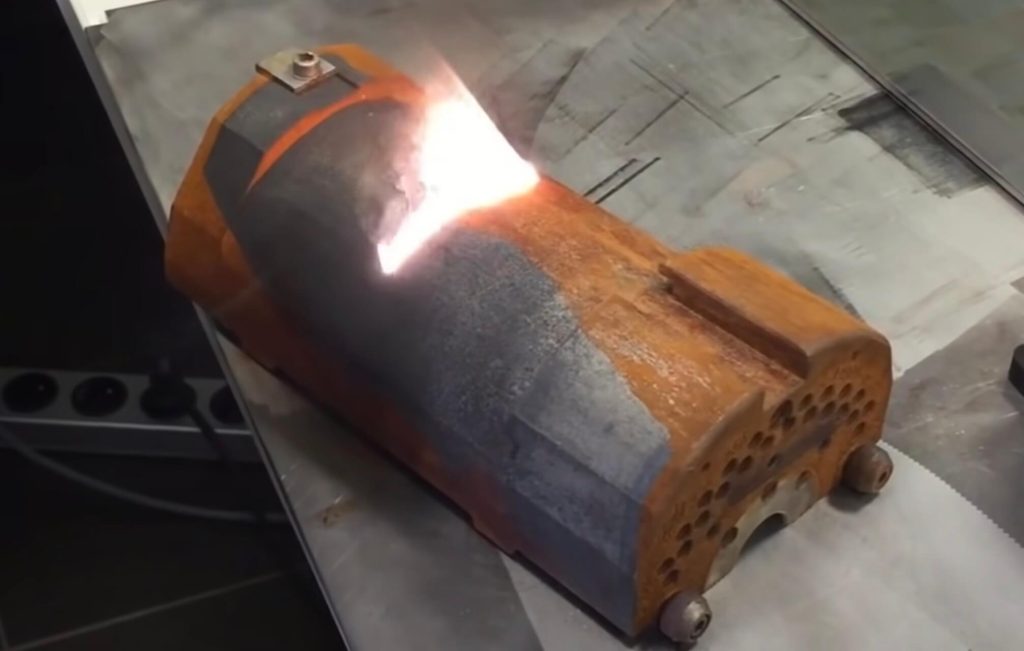
The Modern Standard: Laser Rust Removal (Photonic Ablation)
Laser cleaning uses high-intensity pulses of light to vaporize rust layers instantly. It is the preferred method for high-value assets where preserving the base metal dimensions is critical, such as injection molds, aerospace components, and automotive restoration.
How It Works: The Physics of Ablation
The process relies on sublimation. A fiber laser source directs a beam onto the surface. The rust layer absorbs the energy and turns into gas (plasma) and fine dust. The underlying metal reflects the laser energy, remaining cool and untouched. This “self-limiting” property prevents over-cleaning or surface erosion.
Key Technology Types
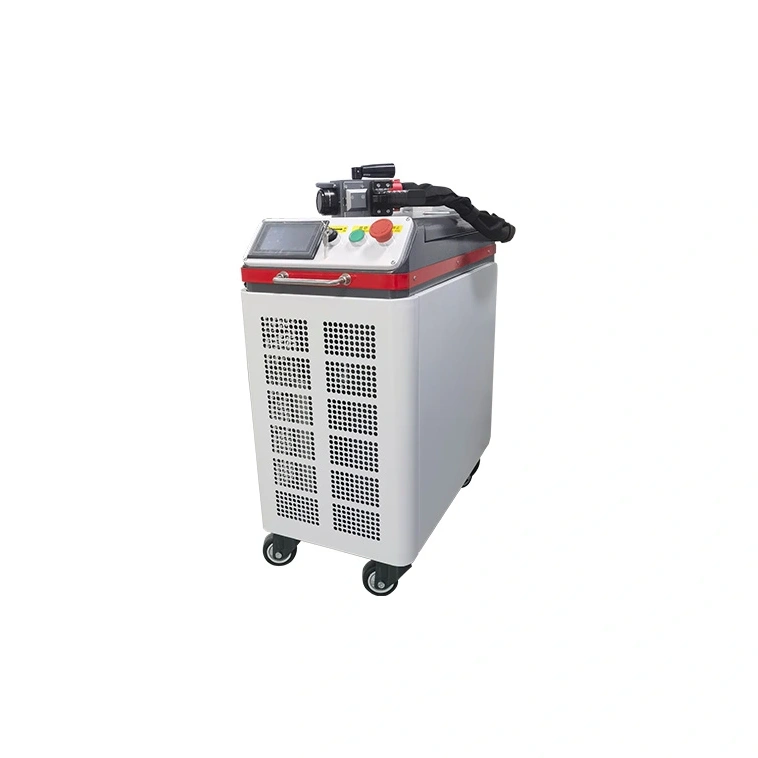
- Pulsed Fiber Lasers : Best for precision. These systems emit short pulses (nanoseconds) with high peak power (up to 500kW) but low average power (50W–1000W). They remove rust layer-by-layer without heating the part. Ideal for cleaning molds or preparing weld seams on thin 304 stainless steel.
- Continuous Wave (CW) Lasers: Best for speed. These high-power units (1500W–6000W) deliver a steady beam. They are faster (cleaning up to 50 m²/hr) but generate significant heat. Use these for heavy structural steel or pipelines where thermal buildup is acceptable.
Industrial Benefits
- Zero Secondary Waste: Unlike sandblasting, which generates tons of contaminated grit, laser cleaning produces only a small amount of vaporized dust.
- Low Operating Cost (Opex): Once purchased, the running cost is essentially just electricity—often less than $1/hour.
- Safety Compliance: Eliminates exposure to silica dust and hazardous chemicals. However, proper fume extraction (HEPA H13/H14) is required to capture airborne nanoparticles.
Operational Note: For effective rust removal, a laser cleaning setup requires a Class 4 safety enclosure or defined hazard zone, and operators must wear OD 6+ safety glasses rated for 1064nm wavelengths.
The Traditional Heavy Hitter: Abrasive Blasting
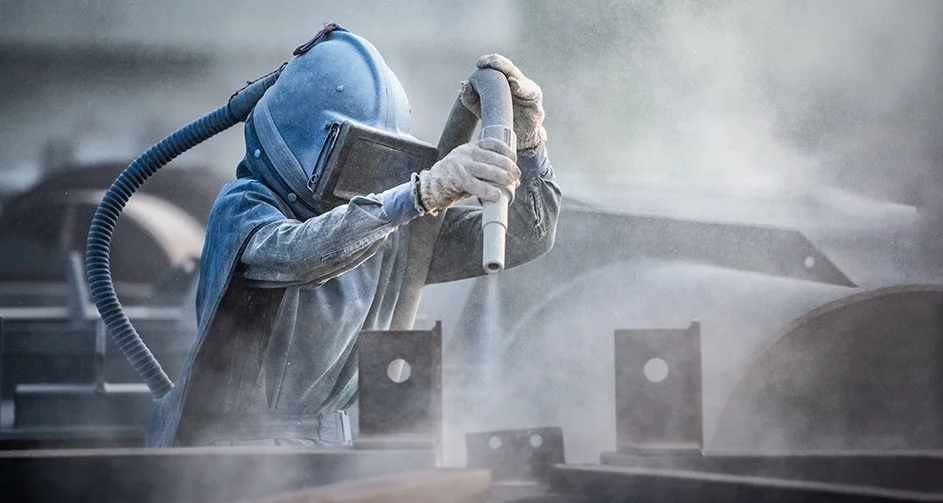
For massive surface areas where a rough surface profile (anchor pattern) is required for paint adhesion, abrasive blasting (sandblasting) remains the dominant method.
Comparison to Laser Cleaning
- Speed: Blasting is incredibly fast on heavy rust, capable of stripping 20–50+ m²/hr on large flat surfaces like ship hulls.
- Surface Finish: It creates a mechanical “tooth” or anchor profile (as defined by ISO 8503). Laser cleaning leaves a smooth surface, which is excellent for welding or inspection but may require secondary texturing for certain heavy-duty coatings.
- Hidden Costs: The “true cost” of blasting includes media consumption, containment (tents), and hazardous waste disposal. Disposal of spent media mixed with lead paint or heavy metals can cost 5–10x more than the blasting itself.
Safety Warning: Blasting generates respirable crystalline silica. OSHA strictly regulates exposure limits to prevent silicosis, requiring expensive air-fed respiratory systems for operators.
Chemical Rust Removal (Pickling & Chelation)
Chemical methods involve immersing parts in acidic or chelating solutions. This is scalable for batch processing small parts but impractical for large, fixed structures.
The Risks of Acid Cleaning
- Hydrogen Embrittlement: Strong acids (Hydrochloric, Sulfuric) release atomic hydrogen during the cleaning process. This hydrogen can diffuse into the metal lattice of high-strength steels (Grade 10.9 bolts, springs), causing them to crack under stress. Parts must often be baked immediately after cleaning to release the hydrogen.
- Flash Rust: Acid-cleaned steel is highly reactive. Unless immediately neutralized (often with an alkaline rinse like sodium bicarbonate) and coated, it will “flash rust” within minutes of exposure to air.
Chelating Agents
Solutions like liquid chelators are selective—they remove iron oxide without attacking the base metal, plastic, or rubber seals. They are safe for complex assemblies but are slow (requiring 12–24 hour soak times) and expensive per gallon.
Technical Comparison Matrix
Use this table to evaluate the Total Cost of Ownership (TCO) and operational fit for your facility.
| Feature | Laser Cleaning (Pulsed) | Sandblasting | Chemical Pickling |
| Primary Mechanism | Photonic Ablation (Sublimation) | Kinetic Impact (Abrasion) | Chemical Dissolution |
| Throughput Speed | Medium (5–15 m²/hr) | High (20–50 m²/hr) | Slow (Batch soak 12+ hrs) |
| Base Metal Impact | Non-destructive (Cool) | Erosive (Removes material) | Corrosive (Risk of pitting) |
| Consumables Cost | Zero (Electricity only) | High (Grit + Nozzles) | High (Chemicals + Disposal) |
| Safety Hazards | Optical (Class 4), Fumes | Silica Dust, High Pressure | Acid Burns, Toxic Fumes |
| Ideal Application | Molds, Precision Parts, Weld Prep | Bridges, Ships, Tanks | Batch Small Parts |
(Data Sources: OSHA )
ROI & Decision Framework
When justifying the capital expenditure (Capex) of a laser system versus the operational expenditure (Opex) of blasting, consider the ISO 8501-1 cleanliness requirements.
- Select Laser Cleaning If:
- You need to clean high-value parts (molds, tools) without altering dimensions.
- You are working indoors and cannot tolerate dust or grit contamination.
- You are preparing surfaces for Non-Destructive Testing (NDT) or welding (e.g., laser welding 304 stainless).
- ROI: Typical payback is 12–18 months due to labor and waste disposal savings.
- Select Sandblasting If:
- You are stripping a bridge, ship hull, or large tank exterior.
- You specifically need a deep anchor profile (>50 microns) for heavy epoxy coatings.
- The substrate is low-value mild steel where minor material loss is acceptable.
- Select Chemical/Electrolysis If:
- You have thousands of small, intricate parts (screws, brackets) that can be dumped into a tank.
- You are restoring antique hardware where non-destructive conservation is the priority.
FAQ: Industrial Rust Removal
No cleaning method “prevents” flash rust; they only remove the oxide. Laser cleaning leaves a dry, reactive surface. You must apply a rust inhibitor, primer, or conversion coating immediately after cleaning. However, unlike acid, laser cleaning does not leave corrosive residues that accelerate flash rust.
You must use laser safety glasses with an Optical Density (OD) rating of 6 or 7 for the specific wavelength (usually 1064nm). A fume extractor with a HEPA H13 or H14 filter is mandatory to capture metal oxide nanoparticles.
Yes. High-power CW lasers (1500W+) are very effective at removing the hard, blue-black mill scale from hot-rolled steel.