
The industrial lasers market is a growing multi-billion-dollar market driven by laser cutting, laser welding, laser marking, laser cleaning, factory automation, EV battery production, electronics, and precision manufacturing. Market-size estimates vary widely because some reports count only laser sources, while others include complete laser systems or broader laser processing equipment.
For manufacturers, the key takeaway is simple: industrial lasers are moving from specialized tools to mainstream production equipment. Factories use them to improve cutting speed, weld quality, traceability, repeatability, and automation.
But the real question is not only, “How big is the industrial lasers market?” A better question is: Which industrial laser system fits your material, process, production volume, safety requirements, and return on investment?
Industrial Lasers Market Size and Forecast
The industrial lasers market size depends on how the market is defined. Some market reports focus on laser sources. Others measure complete industrial laser systems, such as fiber laser cutting machines, laser welding systems, laser marking machines, and laser cleaning equipment.
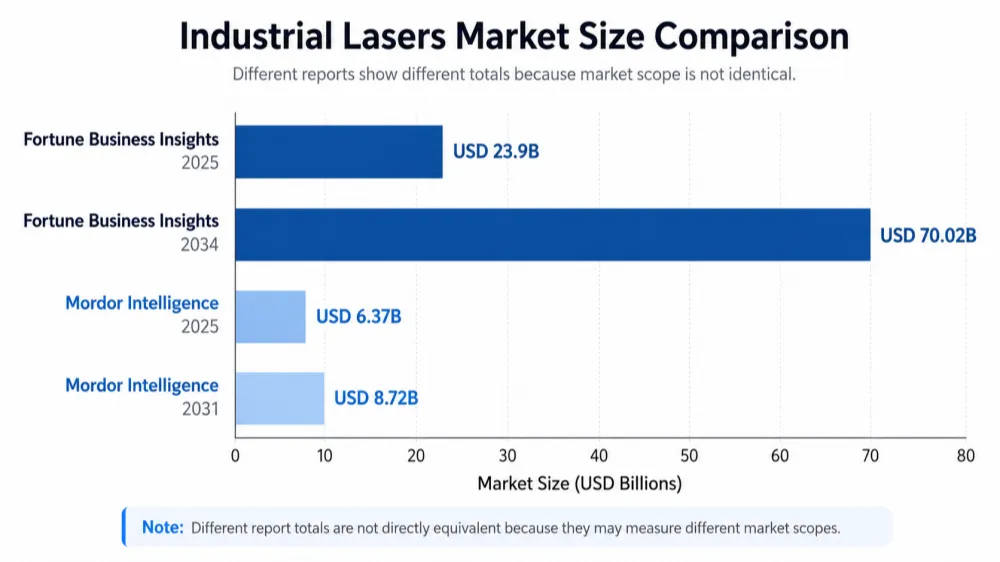
For example, Fortune Business Insights estimates the global industrial lasers market at USD 23.9 billion in 2025 and projects it to reach USD 70.02 billion by 2034. Mordor Intelligence gives a more conservative view of the industrial laser system market, estimating it at USD 6.37 billion in 2025 and forecasting USD 8.72 billion by 2031.
| Source | Market Scope | Base Estimate | Forecast | CAGR |
|---|---|---|---|---|
| Fortune Business Insights | Industrial lasers market | USD 23.9B in 2025 | USD 70.02B by 2034 | 12.70% |
| Mordor Intelligence | Industrial laser system market | USD 6.37B in 2025 | USD 8.72B by 2031 | 5.38% |
These figures should not be compared as exact equivalents. A lower estimate may focus on narrower system categories, while a higher estimate may include more complete laser equipment, automation, software, safety systems, and production-line integration. For this reason, the most useful conclusion is not one exact market size, but the consistent growth direction across multiple reports.
Why Industrial Lasers Market Size Estimates Vary by Report
One reason the industrial laser market forecast looks confusing is that reports do not always measure the same thing.
A laser source is not the same as a complete industrial laser machine. A complete machine may include the laser source, motion control, software, chiller, cutting head, welding head, safety enclosure, fume extraction, automation, and after-sales support.
| Term | What It Usually Includes | Why It Matters |
|---|---|---|
| Industrial laser source | The laser generator only | Smaller market scope |
| Industrial laser system | A complete machine or workstation | Larger than source-only data |
| Laser processing equipment | Machine, software, automation, safety, integration | Often much larger |
| Application-specific market | Cutting, welding, marking, cleaning, drilling, and other processes | Depends on industry demand |
For example, a fiber laser source supplier may count only the laser generator. A machine manufacturer may count the full laser cutting or welding system. A production-line integrator may also include robots, safety enclosures, loading systems, software, installation, and process support. These are all connected to industrial lasers, but they are not the same market scope.
Industrial Lasers Market Trends Driving Growth
The strongest industrial laser market trends are driven by automation, precision processing, fiber laser adoption, EV battery production, traceability, and advanced manufacturing. These trends affect real buying decisions in factories.
| Market Trend | Manufacturing Impact | Buyer Takeaway |
|---|---|---|
| Factory automation | More stable and repeatable production | Choose systems that can support automation |
| Fiber laser adoption | Faster metal cutting, welding, and marking | Match laser power to material and thickness |
| EV battery growth | More demand for precision welding | Test real battery materials before buying |
| Traceability | More demand for permanent marking | Choose the right marking method by material |
| Advanced manufacturing | More high-value laser applications | Check process control and post-processing needs |
Automation Is Increasing Industrial Laser Adoption
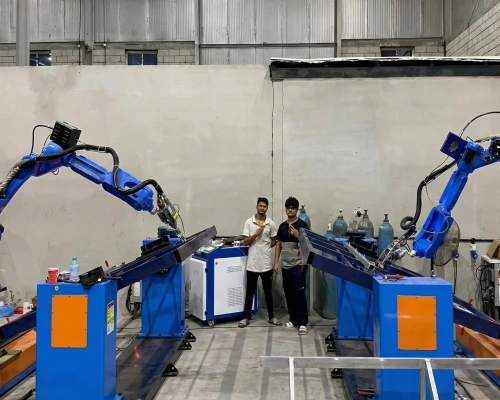
Manufacturers are using industrial lasers because they can be integrated into repeatable production systems. Common examples include CNC fiber laser cutting machines, robotic laser welding cells, conveyor laser marking systems, enclosed laser cleaning workstations, and automatic loading and unloading systems.
Automation helps factories reduce manual variation. This matters when parts need consistent cuts, welds, marks, or surface preparation.
Buyer takeaway: If production volume is increasing, choose laser systems that can support fixtures, vision alignment, loading systems, or robotic integration instead of buying a machine that only solves today’s manual process.
Precision Manufacturing Is Driving Laser Demand
Industrial lasers are useful when factories need narrow cuts, clean edges, low heat input, accurate welds, small holes, or permanent marks. This is why lasers are widely used in automotive parts, aerospace components, electronics, medical devices, metal fabrication, battery components, machinery parts, and precision tools.
For buyers, the main value is not only speed. It is process control. A laser cutting machine can reduce secondary finishing when the edge quality is good. A laser marking machine can create permanent codes without ink or labels. A laser welding system can reduce distortion on thin metal parts when parameters are set correctly.
Fiber Lasers Are a Major Growth Segment
Fiber lasers are one of the most important laser types in the industrial laser industry. They are widely used for metal cutting, metal welding, laser marking, and selected laser cleaning applications.
For many metal processing buyers, fiber laser technology is usually the first option to compare. However, fiber laser is not always the best choice for every material. CO2 lasers may still be better for many non-metal materials, such as wood, acrylic, fabric, leather, and packaging materials. Ultrafast lasers may be better for micro-processing and heat-sensitive parts.
Buyer takeaway: If your main work is metal processing, start by comparing fiber laser options. Then match the laser power, machine structure, cooling system, and automation level to your real material and thickness.
For sheet metal production, you can also compare fiber laser cutting machines for sheet metal fabrication.
EV Battery and Electronics Manufacturing Are Expanding Laser Use
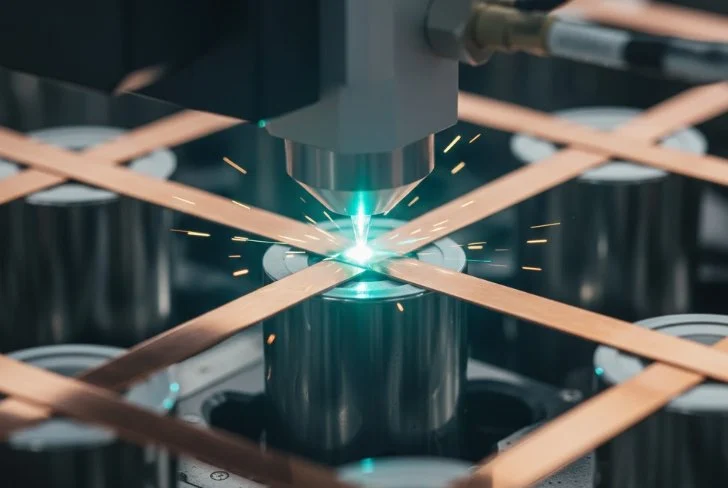
EV batteries and electronics are important growth areas for industrial laser systems. Battery production may use lasers for tab welding, busbar welding, aluminum and copper joining, battery housing welding, surface preparation before welding, and marking for traceability.
Electronics manufacturing may use lasers for fine marking, cutting thin materials, drilling small holes, micromachining, and surface texturing.
Buyer takeaway: Do not assume one laser setup works for every battery or electronics part. Copper, aluminum, coatings, part geometry, and heat control can all affect the result. Sample testing is especially important before buying a laser system for these applications.
Laser Marking Demand Is Stable Because of Traceability
Laser marking remains a strong industrial application because many products need permanent identification. Common marking content includes serial numbers, QR codes, barcodes, batch numbers, logos, safety information, and product specifications.
Laser marking is widely used in automotive parts, tools, electronics, medical devices, machinery parts, and packaging. For many factories, laser marking is also easier to adopt than high-power laser cutting or welding because the process is usually simpler and easier to integrate.
Buyer takeaway: If your product needs permanent traceability, choose the laser type by material first. Fiber, CO2, and UV laser markers serve different materials and marking results.
For product identification and traceability, see Riselaser’s laser marking machines for permanent product marking.
Industrial Laser Market Segmentation by Laser Type
Different industrial laser types serve different production needs. Buyers should not choose based on power alone. They should first match the laser type to the material and application.
| Laser Type | Common Applications | Buyer Notes |
|---|---|---|
| Fiber laser | Metal cutting, welding, marking, cleaning | Strong choice for many metal applications |
| CO2 laser | Wood, acrylic, fabric, packaging, engraving | Often better for non-metal materials |
| Solid-state laser | Precision welding and specialty processing | Depends on the process |
| Diode laser | Plastic welding, heating, surface treatment | Application-specific |
| Ultrafast laser | Micromachining, electronics, medical devices | High precision, usually higher cost |
Fiber Lasers
Fiber lasers are widely used in industrial metal processing. They are common in sheet metal cutting, tube cutting, laser welding, laser marking, and selected laser cleaning applications.
A metal fabrication shop cutting stainless steel, carbon steel, or aluminum will usually compare fiber laser systems first.
CO2 Lasers
CO2 lasers are still useful for many non-metal materials, including wood, acrylic, leather, fabric, paper, packaging materials, and some plastics.
A buyer cutting acrylic signs, engraving wood products, or marking packaging materials may not need a fiber laser. A CO2 laser may be the better choice.
Ultrafast Lasers
Ultrafast lasers are used when heat damage must be very low. They are common in electronics, medical devices, semiconductors, and micromachining.
They are usually not the first choice for general metal fabrication, but they are valuable for high-precision work.
Industrial Laser Market Segmentation by Application
The industrial lasers market is easier to understand when it is divided by application. A buyer looking for laser cutting has different needs from a buyer looking for laser welding, marking, cleaning, drilling, or additive manufacturing.
| Application | Best Fit | Main Buyer Benefit | Key Limitation |
|---|---|---|---|
| Laser cutting | Sheet metal, tubes, fabrication parts | Speed, accuracy, clean edges | Must match power to material thickness |
| Laser welding | Thin metal, precision parts, battery components | Low distortion, repeatability | Requires parameter testing |
| Laser marking | QR codes, serial numbers, logos | Permanent, clean marking | Setup depends on material |
| Laser cleaning | Rust, paint, oxide, coating removal | Less consumable waste | Not ideal for every surface |
| Laser drilling and micromachining | Small holes and fine features | High precision | Higher technical complexity |
| Additive manufacturing | Complex metal parts and repair | Design freedom | Higher cost and post-processing needs |
Laser Cutting
Laser cutting is one of the most mature industrial laser applications. It is widely used in sheet metal fabrication, machinery manufacturing, automotive parts, cabinets, enclosures, kitchenware, elevator parts, and general metal processing.
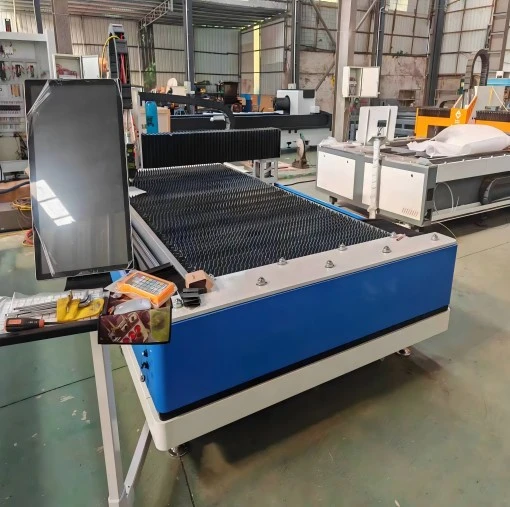
Before buying a laser cutting machine, a factory should confirm the material type, maximum cutting thickness, sheet or tube size, edge quality requirement, daily production volume, automation needs, and available workshop space.
A shop cutting thin stainless steel does not need the same setup as a factory cutting thick carbon steel plates every day. For a deeper selection guide, read Riselaser’s article on how to choose a fiber laser cutting machine.
Laser Welding
Laser welding is growing because it can produce narrow welds, reduce heat distortion, and support automation. Common applications include stainless steel cabinets, aluminum parts, battery tabs and busbars, automotive components, thin sheet metal assemblies, appliance parts, and machinery parts.
Laser welding can be manual, semi-automatic, or robotic. The right setup depends on the material, thickness, joint design, weld strength requirement, weld appearance, and production volume.
However, laser welding is not suitable for every job. Joint fit-up, gap control, shielding gas, material reflectivity, and operator training all affect the final weld.
For industrial metal joining, explore Riselaser’s laser welding machines.
Laser Marking and Engraving
Laser marking is used for traceability, branding, and product identification. It can mark QR codes, barcodes, serial numbers, batch codes, logos, model numbers, and safety labels.
Laser marking is widely used because it is clean, permanent, and easy to integrate into production lines.
For buyers, the key questions are simple: What material needs to be marked? What content needs to be marked? Is the mark decorative or functional? Does it need to survive wear, heat, or cleaning? Is the part static or moving on a conveyor?
Laser Cleaning
Laser cleaning is a growing application, but it is more application-sensitive than laser cutting or laser marking.
It can work well for rust removal, paint removal, oxide removal, mold cleaning, weld pre-treatment, and surface preparation. However, laser cleaning is not a universal replacement for sandblasting, grinding, or chemical cleaning.
Laser cleaning is usually easier to justify when the buyer needs selective cleaning, lower consumable use, less media waste, or cleaner surface preparation before welding or coating. It may be harder to justify for very large-area paint removal if speed and cost per square meter are the only priorities.
For rust, paint, and oxide removal, compare Riselaser’s laser cleaning machines.
Laser Drilling and Micromachining
Laser drilling and micromachining are used when parts need very small holes, fine features, or tight tolerances. These applications are common in electronics, aerospace, medical devices, and precision components.
They usually require more process control than general laser cutting or marking.
Additive Manufacturing and Cladding
Laser-based additive manufacturing and laser cladding are used for complex metal parts, repair, coating, and high-value components.
These applications can offer design freedom, but buyers must also consider metal powder, part design, heat treatment, surface finishing, inspection, and post-processing cost. This segment is promising, but it is more specialized than cutting, welding, or marking.
Industrial Lasers Market by Region: Asia-Pacific, North America, and Europe
Asia-Pacific is a leading region in the industrial lasers market. Demand is supported by electronics, automotive production, EV batteries, metal fabrication, and export manufacturing.
| Region | Main Demand Drivers | Likely Laser Applications |
|---|---|---|
| Asia-Pacific | Electronics, EVs, metal fabrication, export manufacturing | Cutting, welding, marking |
| North America | Automation, aerospace, medical devices, reshoring | Welding, marking, micromachining |
| Europe | Automotive, machinery, precision engineering, battery production | Cutting, welding, additive manufacturing |
| Emerging markets | Fabrication, repair, infrastructure, shipbuilding | Cutting, welding, cleaning |
Asia-Pacific
Asia-Pacific has strong demand from China, Japan, South Korea, India, and Southeast Asia. China has large-scale manufacturing and a strong laser equipment supply chain. Japan and South Korea have strong electronics, automotive, and battery industries. India and Southeast Asia are seeing more demand from fabrication, infrastructure, and industrial expansion.
North America
North American demand is linked to automation, aerospace, medical devices, semiconductor manufacturing, automotive production, and reshoring. Buyers in this region often care about process stability, safety compliance, automation, and after-sales support.
Europe
Europe has strong demand from automotive, machinery, precision manufacturing, EV battery production, and high-end equipment manufacturing. European buyers often focus on safety, energy efficiency, quality control, and long-term equipment reliability.
Emerging Markets
Emerging markets often adopt industrial lasers for practical production needs, such as faster cutting, cleaner welding, better marking, and less manual labor. Laser cutting, handheld laser welding, and laser cleaning can be attractive for small and medium manufacturers, but supplier training and after-sales service are especially important.
Major Industrial Laser Manufacturers and Market Players
The industrial laser market includes laser source manufacturers, machine builders, system integrators, and application-specific equipment suppliers.
Commonly mentioned global players include TRUMPF, IPG Photonics, Coherent, Han’s Laser, Jenoptik, Mitsubishi Electric, MKS / Newport, Lumibird, and NKT Photonics.
However, buyers should not choose a laser system by brand name alone. A strong supplier should also provide application testing, machine configuration advice, installation support, operator training, spare parts, software support, safety guidance, after-sales service, and process troubleshooting.
For many factories, service quality and application experience matter as much as the machine nameplate.
What Industrial Lasers Market Trends Mean for Equipment Buyers
Market growth is useful only when it helps buyers make better decisions. The most important lesson is simple: choose the industrial laser system by application, not by trend.
Fiber Lasers Are Often the First Choice for Metal Processing
For metal cutting, many welding jobs, metal marking, and some cleaning tasks, fiber lasers are often the first option to compare. But material still matters.
Stainless steel, carbon steel, aluminum, copper, brass, coated metal, and reflective materials do not behave the same way. Buyers should match the laser type, power, beam quality, and process settings to the real workpiece.
Automation-Ready Laser Systems Are Becoming More Important
More buyers now ask whether a laser machine can connect with robots, loading systems, conveyors, vision systems, barcode systems, production software, safety enclosures, and fume extraction systems.
A machine that works well today but cannot scale tomorrow may limit future production growth.
Sample Testing Is More Important Than Market Hype
Before buying, test real samples whenever possible. Sample testing is especially important for reflective metals, coated materials, dissimilar metals, painted surfaces, thin parts, heat-sensitive materials, high-precision welds, and unknown surface contamination.
A reliable supplier should explain what was tested, which settings were used, and what result can be expected in production.
Service and Training Affect ROI
A lower machine price can become expensive if the machine is hard to run, often stops production, or has poor support.
Ask how operators will be trained, whether spare parts are available, what maintenance is required, whether remote support is available, and how fast the service response is.
Industrial Laser Buyer Decision Guide
| Buyer Question | Why It Matters | What to Check |
|---|---|---|
| What material do I process? | Laser choice depends on material | Steel, stainless steel, aluminum, copper, plastic, coating |
| What thickness or part size? | Determines power and working area | Maximum thickness, sheet size, tube size, part size |
| Manual or automated process? | Affects system design | Handheld, CNC, robotic, enclosed |
| What is the production volume? | Affects ROI | Daily workload, cycle time, labor cost |
| What safety setup is needed? | Industrial lasers need controls | Laser class, enclosure, eyewear, training |
| What support is available? | Reduces downtime | Installation, warranty, spare parts, service |
Industrial Laser Safety, Compliance, and Operating Risks
Industrial lasers are powerful tools. Safety should be part of the buying decision, not something handled after installation. OSHA provides guidance on laser hazards, including biological effects, hazard classifications, control measures, warning signs, and safety programs.
| Application | Main Safety Concern | Buyer Checkpoint |
|---|---|---|
| Laser cutting | Fumes, fire risk, high-power beam exposure | Check enclosure, extraction, and fire protection |
| Laser welding | Reflected light, fumes, operator exposure | Check eyewear, shielding, and training |
| Laser marking | Beam exposure and material fumes | Check enclosure and extraction |
| Laser cleaning | Reflection, dust, coating fumes | Test the actual surface and contaminant |
High-power laser systems may require laser safety eyewear matched to wavelength, safety enclosures, interlocks, warning signs, fume extraction, restricted work areas, operator training, fire protection, and written safety procedures.
Safety is also part of ROI. Poor safety planning can lead to injuries, downtime, part damage, compliance problems, and production delays.
Industrial Laser ROI: How Buyers Should Evaluate Investment
A good industrial laser ROI calculation should include both cost and value. Do not judge the investment only by machine price.
Cost Factors to Include
- Machine price
- Laser source power
- Cutting head, welding head, or marking head
- Software
- Chiller
- Safety enclosure
- Fume extraction
- Automation options
- Installation
- Training
- Shipping and customs
- Electricity
- Assist gas or shielding gas
- Maintenance
- Spare parts
Value Factors to Include
- Faster processing
- Better repeatability
- Lower rework
- Cleaner edges or welds
- Less manual labor
- Lower consumable use in some processes
- Ability to take higher-value jobs
- Better product traceability
- More stable production quality
| ROI Factor | Question to Ask |
|---|---|
| Labor savings | How many manual hours can be reduced each week? |
| Throughput | How many more parts can be processed per day? |
| Rework | How much scrap, repair, or polishing can be reduced? |
| Job value | Can the machine open higher-margin work? |
| Downtime | How quickly can service and spare parts be provided? |
| Quality | Will the process improve consistency or reduce defects? |
For example, a metal fabrication shop comparing a fiber laser cutting machine should not only ask about machine price. It should compare how many sheets can be cut per day, how much edge finishing is reduced, how much material can be saved through better nesting, and how quickly the supplier can provide service if the machine stops.
A laser welding buyer should check joint design, material thickness, fit-up tolerance, weld strength, distortion, shielding gas, and sample results.
Challenges and Limits of Industrial Laser Systems
The industrial lasers market is growing, but lasers are not the best answer for every job.
| Challenge | Why It Matters | How Buyers Can Reduce Risk |
|---|---|---|
| High upfront cost | Payback may take time | Calculate ROI before purchase |
| Setup complexity | Poor parameters can cause bad results | Request sample testing |
| Safety risks | Eye, skin, fire, and fume hazards | Use proper safety controls |
| Material limits | Not all materials respond the same way | Test real parts |
| Service needs | Downtime hurts production | Choose supplier support carefully |
| Integration difficulty | Automation needs planning | Confirm software, robot, and fixture compatibility |
High Upfront Cost
High-power cutting systems, robotic welding cells, and enclosed automated systems can require a large investment. This does not mean the investment is wrong. It means the buyer needs a clear production case.
Application-Specific Setup
Laser results depend on material, thickness, coating, joint gap, surface condition, speed, focus, power, pulse settings, gas, and fixture design. A system that works well for one factory may need different settings for another factory.
Training Requirements
Operators need to understand machine operation, focusing, parameter settings, maintenance, safety, and troubleshooting. Training is especially important for laser welding and laser cleaning, where the operator often controls the process directly.
Lasers Should Not Replace Every Process
Some jobs are still better handled by mechanical cutting, TIG welding, MIG welding, chemical cleaning, blasting, or grinding. A good supplier should be honest about when laser processing is suitable and when it is not.
Industrial Lasers Market Forecast: What to Expect Next
The industrial lasers market is expected to keep growing, but growth will not be equal across every application.
Laser cutting is mature and stable. Laser welding is growing where automation, low distortion, and precision joining matter. Laser marking remains steady because traceability is important in many industries. Laser cleaning is promising but still application-specific. Laser additive manufacturing is high-value but more specialized.
In the next few years, buyers should expect more automation-ready laser systems, wider use of fiber lasers in metal processing, stronger demand from EV batteries and electronics, more robotic laser welding, more traceability marking, gradual growth in laser cleaning, better process monitoring, smarter control software, and more focus on safety and operator training.
For buyers, the best strategy is not to chase the newest trend. The best strategy is to match the laser process to the real production problem.
How to Choose an Industrial Laser System for Your Application
The market is moving toward precision, automation, and process control. But the right machine still depends on your application.
If You Need Laser Cutting
- Material type
- Maximum thickness
- Sheet or tube size
- Required cutting quality
- Daily production volume
- Workshop space
- Automation needs
- Budget range
If You Need Laser Welding
- Welding material
- Material thickness
- Joint type
- Weld strength requirement
- Manual or robotic welding need
- Weld appearance requirement
- Distortion limits
- Sample parts for testing
If You Need Laser Marking
- Material type
- Marking content
- Logo, text, QR code, barcode, or serial number
- Required marking depth
- Production speed
- Static or conveyor marking
- Part size and shape
If You Need Laser Cleaning
- Base material
- Contaminant type
- Rust, paint, oil, oxide, coating, or residue
- Surface sensitivity
- Cleaning area size
- Required speed
- Handheld or automated setup
- Photos or videos of the workpiece
Need Help Choosing an Industrial Laser System?
Market trends can show where the industry is going, but the right machine still depends on your real production task.
Share your material, thickness, application, production volume, and automation needs. Our team can help you compare laser cutting, welding, marking, or cleaning options and recommend a suitable configuration for your factory.
FAQs About the Industrial Lasers Market
How big is the industrial lasers market?
The industrial lasers market is estimated in the multi-billion-dollar range. Some reports place it around USD 6–7 billion, while others estimate it above USD 20 billion. The difference usually comes from whether the report counts laser sources, complete laser systems, or broader laser processing equipment.
What is the forecast for the industrial laser market?
Most major reports expect the industrial laser market to grow through 2030 and beyond. Growth is driven by automation, fiber laser adoption, EV batteries, electronics, precision manufacturing, and product traceability.
Why do industrial laser market estimates differ?
Industrial laser market estimates differ because reports measure different things. Some count only laser sources. Others include complete laser systems. Broader reports may also include motion control, automation, software, safety systems, and production-line integration.
What is the difference between industrial lasers and industrial laser systems?
An industrial laser usually refers to the laser source or laser technology used in manufacturing. An industrial laser system usually means a complete machine, such as a laser cutting machine, laser welding system, laser marking machine, or laser cleaning workstation. This difference is one reason market-size estimates vary.
Which industrial laser type is most important for metal processing?
Fiber lasers are one of the most important laser types for metal processing. They are widely used in laser cutting, laser welding, laser marking, and some laser cleaning applications. However, the best laser type still depends on the material, thickness, process, and production goal.
Which industries use industrial lasers the most?
Industrial lasers are widely used in metal fabrication, automotive manufacturing, electronics, aerospace, medical devices, machinery, battery manufacturing, and precision engineering. Common applications include cutting, welding, marking, drilling, cleaning, micromachining, and additive manufacturing.