
Laser welding vs argon arc welding comes down to speed, heat control, weld appearance, cost, and application. Laser welding is usually better for fast, clean, low-distortion welding on thin to medium metal parts. Argon arc welding, often called TIG welding or GTAW, is still better for repair work, small batches, flexible manual welding, and lower-budget jobs.
In this article, “argon arc welding” mainly refers to TIG welding or GTAW, because TIG commonly uses argon shielding gas. Many buyers also compare this topic as laser welding vs TIG welding.
For factories that weld stainless steel cabinets, sheet metal boxes, kitchen equipment, metal doors, aluminum frames, or visible seams, laser welding can often reduce welding time and polishing work. For repair shops, custom fabrication, and low-volume jobs, argon arc welding may still be the more practical choice.
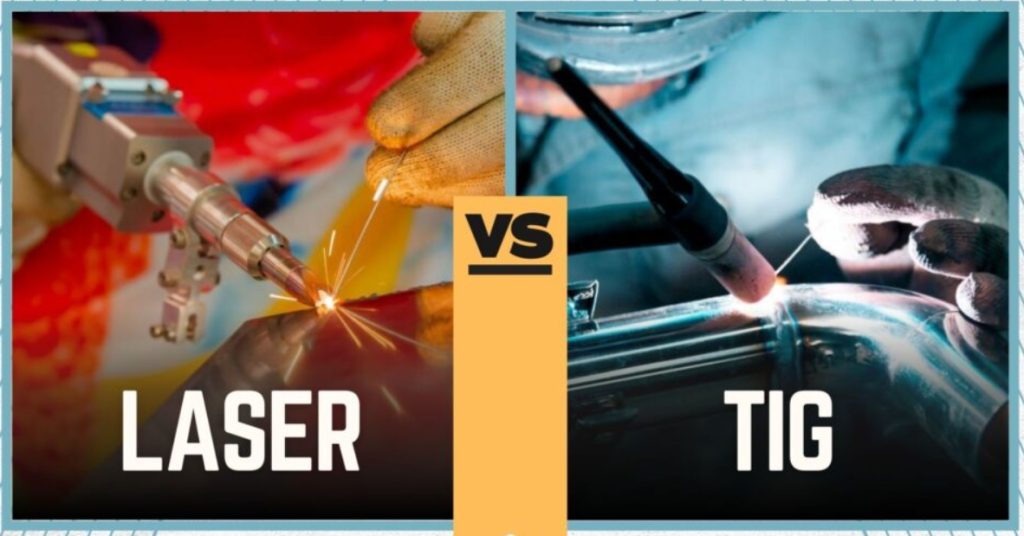
Quick answer: Laser welding is usually better for thin to medium sheet metal, fast production, clean visible seams, and low heat distortion. Argon arc welding, or TIG welding, is better for repair work, small batches, lower equipment budgets, and jobs that need flexible manual control.
Laser Welding vs Argon Arc Welding: Quick Comparison
| Factor | Laser Welding | Argon Arc Welding / TIG Welding |
|---|---|---|
| Heat source | Focused laser beam | Electric arc |
| Shielding gas | Argon, nitrogen, or other gas depending on the material | Usually argon |
| Welding speed | Faster in suitable applications | Slower |
| Heat-affected zone | Smaller | Larger |
| Distortion | Lower | Higher, especially on thin sheet metal |
| Weld seam | Narrow, clean, and smooth | Clean but usually wider |
| Filler wire | Often not needed for tight joints | Often used depending on the joint |
| Skill requirement | Easier for many sheet metal jobs, but training is still needed | Higher manual skill requirement |
| Equipment cost | Higher | Lower |
| Best for | Thin to medium sheet metal, visible seams, repeat production | Repairs, small batches, flexible manual welding |
| Main limitation | Higher cost, laser safety, better joint fit-up required | Slower speed, more heat, more polishing |
Simple decision: choose laser welding if you need speed, clean seams, and less deformation. Choose argon arc welding if you need lower starting cost, repair flexibility, or strong manual control.
Need a practical recommendation? Send your welding material, thickness, and weld photos. Our team can help check whether a handheld laser welding machine is suitable for your work.
What Is Laser Welding?
Laser welding uses a focused laser beam to melt and join metal parts. The laser energy is concentrated in a small area, so the weld can be narrow, clean, and deep. According to TWI’s laser welding explanation, laser welding can offer deep narrow welds, low distortion, and low heat input when used correctly.
In many applications, laser welding also uses shielding gas to protect the weld area from oxidation. Argon and nitrogen are common choices, depending on the material and welding result required.
Laser welding is often used for:
- Stainless steel sheet metal
- Carbon steel parts
- Aluminum parts
- Metal cabinets and enclosures
- Kitchen equipment
- Metal doors and frames
- Automotive sheet metal parts
- Precision components
- Jewelry and small metal parts
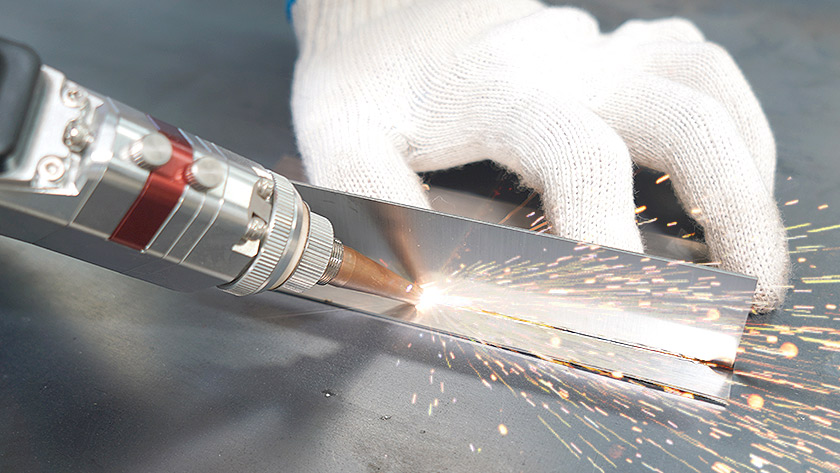
Main Advantages of Laser Welding
Laser welding is popular because it can improve both weld quality and production efficiency.
- Faster welding speed: useful for long seams and repeat production.
- Smaller heat-affected zone: less heat spreads into the surrounding metal.
- Less deformation: especially helpful for thin stainless steel and sheet metal parts.
- Cleaner weld seam: useful for visible products that need a neat finish.
- Less grinding and polishing: can reduce post-weld labor.
- More consistent weld quality: helpful when the same parts are welded every day.
- Easier operation for many sheet metal jobs: but training is still required.
For example, a stainless steel cabinet factory may choose laser welding because the weld seam is cleaner and needs less polishing. The benefit is not only faster welding. It also saves time after welding.
Main Limitations of Laser Welding
Laser welding is not the best choice for every job. Its main limitations include:
- Higher machine cost
- Laser safety requirements
- Need for correct power and speed settings
- Need for better joint fit-up
- Not always ideal for very thick metal
- Reflective metals such as aluminum need careful setup
- Operators still need safety and process training
Laser welding should not be described as “no-skill welding.” It may be easier to learn than TIG welding for many sheet metal jobs, but the operator still needs to understand focus position, power, speed, shielding gas, joint preparation, and laser safety.
What Is Argon Arc Welding?
Argon arc welding usually refers to TIG welding, also called GTAW. It uses an electric arc between a tungsten electrode and the workpiece. Argon gas protects the weld pool from air. The American Welding Society explains GTAW as a process where shielding gas is a core variable, with argon commonly used for a stable arc.
Argon arc welding is known for clean, high-quality welds. It gives the welder strong control over the heat, weld pool, and filler wire. This makes it useful for repair work, custom fabrication, and jobs where each part is different.
Argon arc welding is commonly used for:
- Stainless steel
- Aluminum
- Carbon steel
- Copper alloys
- Titanium
- Repair welding
- Custom metal work
- Low-volume production
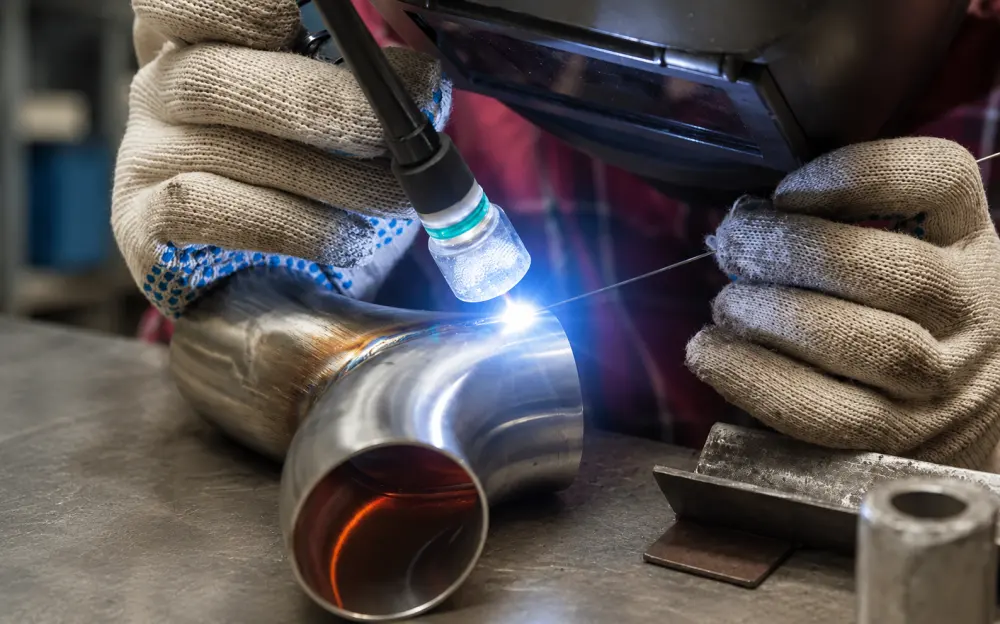
Main Advantages of Argon Arc Welding
- Lower equipment cost: easier for small shops to start.
- Strong manual control: useful for complex shapes and repair work.
- Clean weld quality: especially with a skilled welder.
- Wide material compatibility: suitable for many metals and alloys.
- Good for small batches: practical when every job is different.
- Easy to adopt: many workshops already understand TIG welding.
For example, a repair shop may still prefer argon arc welding because each job can be different. The welder can adjust the torch angle, heat input, filler wire, and travel speed by hand.
Main Limitations of Argon Arc Welding
The main weakness of argon arc welding is efficiency. Compared with laser welding, argon arc welding is usually:
- Slower
- More dependent on welder skill
- More likely to cause heat distortion
- More likely to need polishing
- Less efficient for long, repeat welds
- Harder to scale when skilled welders are limited
For thin stainless steel sheet, too much heat can cause warping, discoloration, or extra finishing work. This is one reason many factories compare laser welding vs TIG welding before upgrading their production process.
Key Differences Between Laser Welding and Argon Arc Welding
1. Welding Speed
Laser welding is usually faster than argon arc welding when the application is suitable. This advantage is most obvious in repeat production, long seams, and sheet metal parts.
Argon arc welding is slower because the welder must control the arc, weld pool, filler wire, torch angle, and travel speed manually. That level of control is useful, but it takes time.
For example, if a factory welds stainless steel cabinets every day, laser welding may reduce both welding time and polishing time. But if a workshop only repairs a few different parts each week, the speed advantage may not justify the higher machine cost.
2. Heat Input and Distortion
Laser welding uses a focused heat source. This usually creates a smaller heat-affected zone and reduces the risk of warping on thin metal.
That means laser welding can help with:
- Less warping
- Less discoloration
- Less damage around the weld
- Better control on thin sheet metal
Argon arc welding puts more heat into the workpiece. This can be useful in some cases, but it also increases the risk of deformation, especially on thin stainless steel or aluminum sheet.
3. Weld Appearance and Post-Processing
Laser welding often produces a narrow, smooth weld seam. In many visible seam applications, this can reduce grinding and polishing.
This matters for products such as:
- Stainless steel cabinets
- Kitchen equipment
- Metal boxes
- Display racks
- Elevator panels
- Metal furniture
- Decorative stainless steel parts
Argon arc welding can also produce clean welds, especially with a skilled welder. But the weld bead is usually wider, and the part may need more post-processing if appearance is important.
4. Weld Strength
Laser welding and argon arc welding can both produce strong welds. Weld strength does not depend only on the welding method.
It also depends on:
- Material type
- Material thickness
- Joint design
- Weld penetration
- Welding parameters
- Shielding gas
- Operator skill
- Part fit-up
Laser welding can create strong, narrow welds when the setup is correct. Argon arc welding can also create strong welds when performed by a skilled welder.
So it is not accurate to say “laser welding is always stronger” or “TIG welding is always stronger.” For structural or load-bearing parts, sample testing is recommended before mass production.
5. Material Compatibility
Both laser welding and argon arc welding can weld many common metals. But each material needs the right setup.
| Material | Laser Welding | Argon Arc Welding |
|---|---|---|
| Stainless steel | Very suitable | Very suitable |
| Carbon steel | Suitable | Suitable |
| Aluminum | Suitable with correct setup | Suitable with skilled operation |
| Copper / brass | More challenging; needs correct laser setup | Possible but requires skill |
| Thin sheet metal | Very suitable | Possible, but distortion risk is higher |
| Thick sections | Depends on laser power and process | Often more flexible |
Stainless steel is one of the most common materials for handheld laser welding because it responds well and is often used in visible products.
Aluminum can also be laser welded, but it needs correct power, speed, focus, and shielding gas. Aluminum reflects more energy and conducts heat quickly, so testing is important before production.
6. Operator Skill and Training
Argon arc welding requires strong hand control. A good TIG welder must control the arc length, torch angle, filler wire, travel speed, and heat input at the same time. This takes time to learn.
Handheld laser welding can be easier for many straight or simple sheet metal welds. Operators may learn basic production welding faster than TIG welding.
However, laser welding still requires training. Operators need to know:
- How to set power and speed
- How to adjust focus
- How to use shielding gas
- How to prepare the joint
- How to avoid poor fit-up
- How to use laser safety protection
A balanced way to say it is: laser welding can reduce dependence on highly skilled TIG welders for many sheet metal jobs, but it does not remove the need for training.
7. Equipment Cost and Operating Cost
Argon arc welding has a lower starting cost. TIG welding machines are usually much cheaper than laser welding machines.
Laser welding has a higher upfront cost, but it may reduce total production cost in the right situation. For buyers comparing machine prices, this laser welder cost guide can help you understand how machine type, power, and configuration affect price.
| Cost Factor | Laser Welding | Argon Arc Welding |
|---|---|---|
| Machine cost | Higher | Lower |
| Labor time | Lower in repeat production | Higher |
| Finishing time | Often lower | Often higher |
| Rework risk | Lower when setup is correct | Depends heavily on welder skill |
| Training | Laser safety and parameter setup | Manual welding skill |
| Best ROI case | Batch production | Low-volume or repair work |
If you only weld occasionally, argon arc welding may be the better financial choice. If you weld every day and spend a lot of time on polishing or rework, laser welding may give better long-term value.
Which Welding Method Should You Choose by Application?
The best welding method is the one that fits your real production problem. The table below gives a practical starting point.
| Application | Better Choice | Why |
|---|---|---|
| Stainless steel cabinets | Laser welding | Clean seams and less polishing |
| Kitchen equipment | Laser welding | Better appearance and faster welding |
| Sheet metal boxes | Laser welding | Low heat distortion |
| Elevator panels | Laser welding | Smooth visible seams |
| Metal furniture | Laser welding | Clean welds on visible parts |
| Aluminum doors and frames | Depends | Laser is fast for repeat parts; TIG is flexible for repair work |
| Repair welding | Argon arc welding | Better for one-off work and variable part shapes |
| Thick structural parts | Depends | Needs process review and sample testing |
| Decorative metal products | Laser welding | Better visible finish |
| Small workshop mixed jobs | Depends | Budget, job type, and production volume matter |
| Custom metal fabrication | Argon arc welding | More flexible for varied work |
The word “depends” is important. For example, aluminum frames may be suitable for laser welding in repeat production. But for irregular repair jobs, TIG welding may be easier to control.
The best choice is not based only on material. It also depends on part shape, thickness, joint design, weld position, finish requirement, and daily production volume.
What Laser Welding Machine Power Do You Need?
If you are comparing laser welding vs argon arc welding because you want to upgrade equipment, machine power is one of the most important questions.
The right laser welder power depends on material, thickness, joint type, welding speed, and required penetration. The table below is only a general buying reference. Always test your sample material before final purchase.
| Power Level | Typical Use | Buyer Note |
|---|---|---|
| 1000W | Thin sheet metal and light-duty welding | Good for lighter work, but may be limited on thicker materials |
| 1500W | Common choice for stainless steel and carbon steel sheet work | Often suitable for workshops moving from TIG to handheld laser welding |
| 2000W | Thicker materials or faster production | Useful when speed and penetration requirements are higher |
| 3000W | Heavier welding needs and higher productivity | Not always necessary; choose based on real material thickness and workload |
Do not choose laser power only by price. A machine that is too small may not provide enough penetration. A machine that is too powerful may increase cost without improving your real production result.
If you are still comparing options, you can also read this guide to the best handheld laser welders for more buyer-focused selection tips.
Laser Welding vs Argon Arc Welding Safety
Both welding methods require safety protection. The risks are different, but neither process should be used casually.
Laser Welding Safety
Handheld laser welding normally uses a high-power laser source, so eye protection, reflected-beam control, training, and a controlled work area are essential. OSHA notes that Class 4 laser exposure can create immediate skin and eye hazards from direct or reflected beams, and may also present fire hazards. You can review OSHA’s laser hazard guidance here: OSHA Laser Hazards.
Important laser welding safety measures include:
- Laser-rated safety glasses
- Protective clothing and gloves
- Controlled welding area
- Warning signs
- Laser safety training
- Proper grounding
- Fume extraction
- Fire prevention
- Careful control of reflective materials
Argon Arc Welding Safety
Argon arc welding also has serious safety risks. Common risks include:
- Arc flash
- Heat and sparks
- Welding fumes
- Electric shock
- Burns
- Gas cylinder handling
- UV light exposure
| Safety Area | Laser Welding | Argon Arc Welding |
|---|---|---|
| Eye protection | Laser-rated glasses required | Welding helmet required |
| Light hazard | Direct and reflected laser risk | Arc flash risk |
| Heat and sparks | Lower heat input, but still risky | High heat and sparks |
| Fume control | Needed | Needed |
| Training | Laser safety and welding setup | Welding skill and arc safety |
| Work area | Controlled laser-safe area recommended | Standard welding-safe area required |
Laser welding can be safe when used with the right protection, training, and work area setup. Safety should be part of the buying decision, not an afterthought.
Laser Welding Cost and ROI: Is It Worth Replacing Argon Arc Welding?
Laser welding is worth considering when the savings in labor, speed, finishing, and rework are greater than the higher machine cost.
It is usually more attractive for factories with repeat production. It is less attractive for occasional repair work or very low-volume jobs.
Laser welding ROI depends on:
- Material type
- Material thickness
- Weld length per part
- Number of parts per day
- Current welding speed
- Labor cost per hour
- Polishing time per part
- Rework rate
- Machine power and price
- Operator training cost
| Your Situation | Better ROI Choice |
|---|---|
| High-volume sheet metal production | Laser welding |
| Low-volume repair shop | Argon arc welding |
| Visible seams needing polishing | Laser welding |
| Occasional welding work | Argon arc welding |
| Labor shortage or limited TIG skill | Laser welding may help |
| Very tight starting budget | Argon arc welding |
| Daily stainless steel production | Laser welding |
| Mixed one-off jobs | Argon arc welding may be better |
A simple way to judge ROI is to ask: how much time do you spend welding, polishing, and fixing weld defects every day?
If the answer is “a lot,” laser welding may be worth testing. If welding is only a small part of your work, argon arc welding may still be enough.
What to Prepare Before Asking for a Laser Welder Quote
If you want a useful quotation, do not only ask for “the price of a laser welding machine.” A good supplier needs to understand your application first.
Prepare this information before asking for a quote:
- Welding material, such as stainless steel, carbon steel, aluminum, or galvanized steel
- Material thickness
- Product type or application
- Weld length and joint type
- Whether the weld is visible
- Current welding method
- Current polishing or grinding time
- Daily production volume
- Photos or videos of the weld area
- Country or region for shipping and quotation support
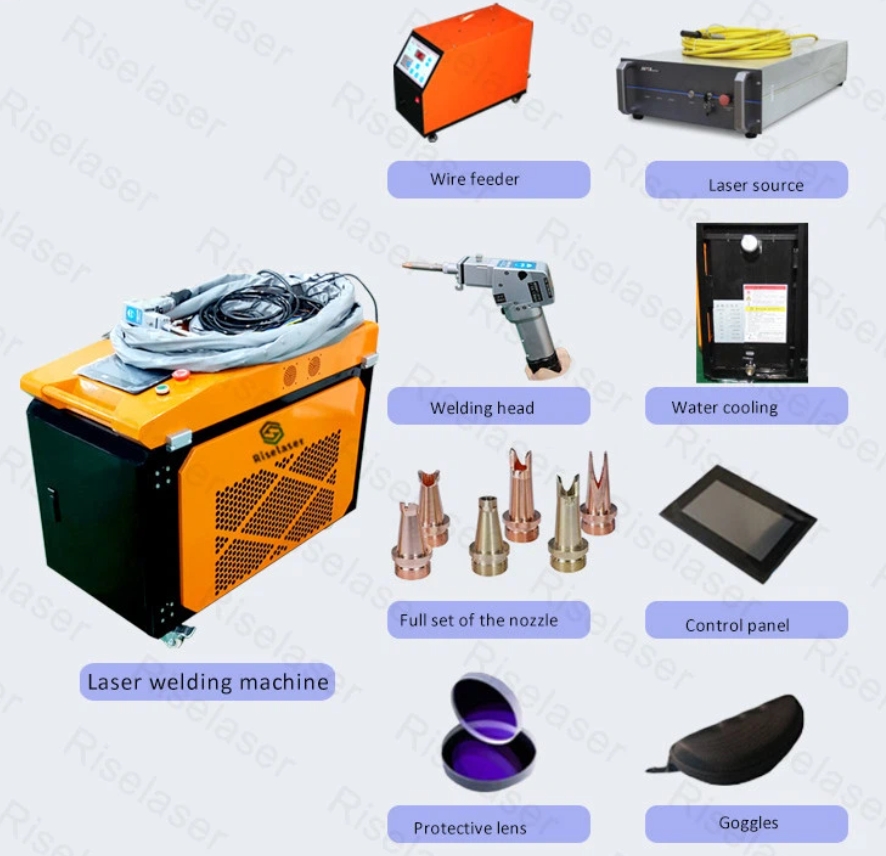
This information helps the supplier recommend the right machine power, cooling type, welding gun, wire feeder, and safety setup.
Need help choosing? Send us your welding material, thickness, weld photos, and daily production volume. Riselaser can help check the right machine power and whether laser welding is suitable for your application.
FAQ: Laser Welding vs Argon Arc Welding
Is laser welding better than argon arc welding?
Laser welding is better for speed, low heat distortion, clean seams, and repeat production. Argon arc welding is better for lower starting cost, repair work, and flexible manual welding.
Can laser welding replace TIG welding?
Laser welding can replace TIG welding in some sheet metal and production jobs. But it cannot replace every TIG welding job. Thick parts, poor fit-up, complex repair work, and low-volume jobs may still be better for TIG welding.
Which is stronger, laser welding or TIG welding?
Both methods can produce strong welds. Strength depends on the material, thickness, penetration, joint design, welding parameters, and operator skill. For structural parts, sample testing is recommended.
Is laser welding good for aluminum?
Yes, laser welding can be used for aluminum, but the setup must be correct. Aluminum reflects more energy and conducts heat quickly, so laser power, speed, focus, and shielding gas are important.
Is laser welding cheaper than argon arc welding?
Laser welding is usually more expensive at the machine purchase stage. Argon arc welding has a lower starting cost. However, laser welding may reduce labor, polishing, and rework costs in repeat production.
What thickness can a handheld laser welder weld?
The weldable thickness depends on laser power, material, joint type, welding speed, and required penetration. A 1000W laser welder is usually used for thinner sheet metal, while 1500W, 2000W, and 3000W systems are used for higher thickness or higher production needs. Always test your actual material before final purchase.
Conclusion: Which Welding Method Should You Choose?
Choose laser welding if you need faster welding, cleaner seams, less heat distortion, and better efficiency in repeat production.
Choose argon arc welding if you need lower starting cost, flexible repair welding, or maximum manual control for different types of jobs.
For industrial buyers, the best choice should be based on:
- Material
- Thickness
- Weld length
- Production volume
- Appearance requirement
- Current labor cost
- Polishing time
- Safety setup
- Budget
Laser welding is not always the cheapest choice at the start. But for the right application, it can reduce welding time, finishing work, and production cost.
Not sure whether laser welding can replace your current argon arc welding process? Send us your material, thickness, weld photos, and daily production volume. Riselaser can help recommend a suitable laser welding solution for your application.