
Handheld laser welders represent a major leap in joining technology. For professionals in welding, these tools offer new levels of precision, speed, and versatility. As 2026 unfolds, the market showcases increasingly sophisticated and accessible systems. This guide explores top handheld laser welders, offering reviews to help you choose the best fit for your enterprise or small to medium-sized (SME) operations. Understanding these systems empowers better fabrication outcomes.
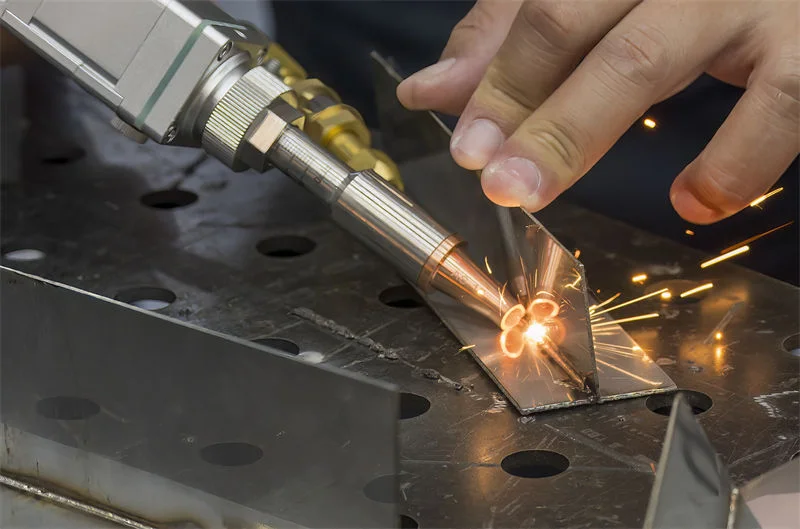
Why Choose Handheld Laser Welding? Key Advantages
Handheld laser welding systems provide significant benefits over traditional methods like TIG or MIG welding. These advantages drive their adoption across diverse industries.
- Superior Precision & Weld Quality: Laser welders concentrate heat intensely. This focused energy minimizes the heat-affected zone (HAZ). Reduced HAZ means less material distortion. Welds are strong and clean. The technology capably welds dissimilar materials.
- Increased Efficiency & Productivity: Welding speeds see substantial increases. Lasers often weld two to ten times faster than TIG or MIG systems, particularly on thinner materials. Many applications require no filler material. This simplifies operations. Post-weld cleaning is minimal due to reduced spatter.
- Improved Operational & Environmental Aspects: The laser process is cleaner. It produces fewer fumes and less spatter, though effective fume extraction remains critical. Basic operation is often easier to learn than complex traditional techniques. This allows faster operator proficiency. Systems can also offer energy savings.
Now that you understand the advantages of handheld laser welding, you may want to know how to choose the right machine for your specific needs. For a detailed guide on selecting the perfect handheld laser welder, check out our article: How to Choose the Right Handheld Laser Welder for Your Needs
Enterprise-Grade Handheld Laser Welders: Top Picks & Reviews 2026
Large-scale industrial operations require robust, high-duty-cycle handheld laser welders. These systems emphasize advanced process control, data capabilities, and comprehensive support. Integration with existing manufacturing environments is often a key requirement.
Common Enterprise Needs: Durability for multi-shift use; precise parameter control; data logging for quality assurance; IIoT connectivity; strong global service networks.
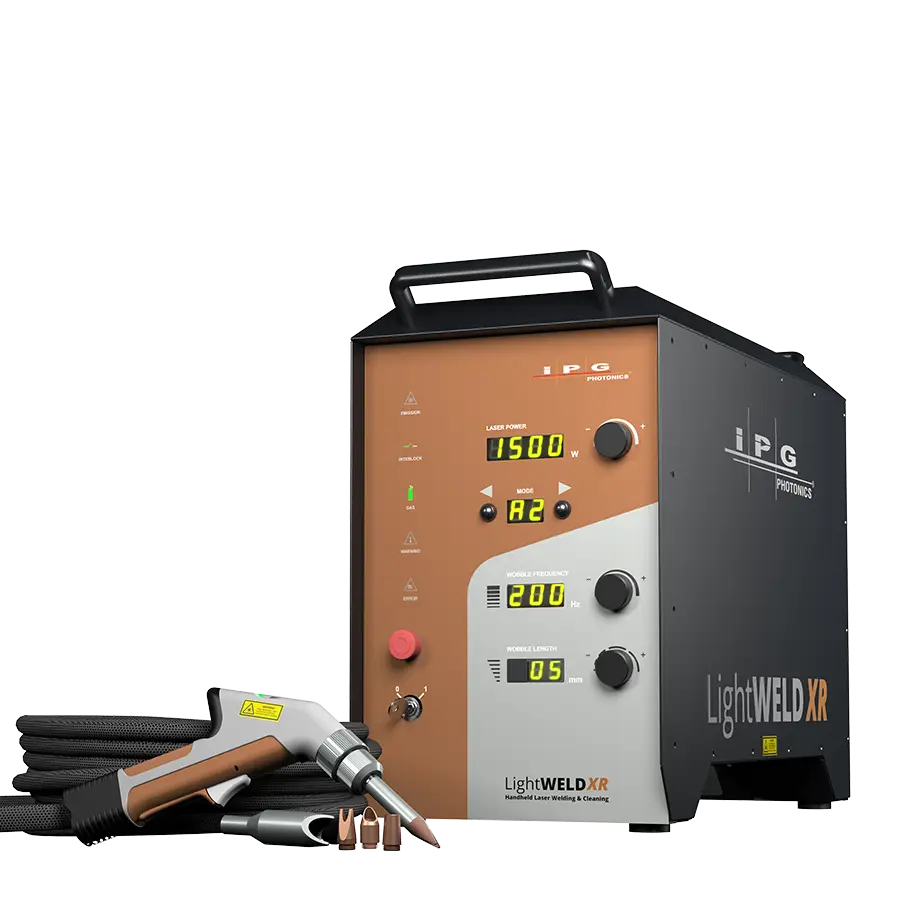
IPG Photonics Laser Welding Machine : LightWELD Series
Overview: IPG Photonics, a US-based leader, designs the LightWELD series for industrial excellence. These systems are known for reliability.
Features: The LightWELD 1500 (1500W) and XR (up to 2500W peak power) handle various metals like steel, aluminum, and copper. Integrated pre-weld and post-weld cleaning modes enhance surface preparation and finish. Wobble welding improves performance on parts with imperfect fit-up.
Strengths: Advanced safety interlocks. Enterprise-focused design balances ease of use with sophisticated engineering controls. IPG’s strong reputation in fiber laser technology underpins its performance.
Best for: Demanding industrial settings requiring top-tier performance, quality, and reliable support. A strong pick for aerospace, automotive, and critical manufacturing applications.
Han’s Laser Welding Machine : HWL Series
- Overview: Han’s Laser, a major global manufacturer, offers the HWL series, often highlighting multi-functionality.
- Features: Many HWL models provide 3-in-1 capabilities: laser welding, surface cleaning (rust/paint removal), and thin material cutting. Wobble welding and adjustable focal length offer process flexibility. Integrated automatic wire feeders are common.
- Strengths: The 3-in-1 functionality offers broad utility from a single machine. Scalability for larger operations is a design consideration.
- Best for: Enterprises needing a versatile tool for welding, cleaning, and light cutting, optimizing equipment investment. Suitable for varied fabrication shops.
BodorLaser Welding Machine : Pro 1500 Self-Cooling System
- Overview: Bodor Laser is recognized for innovative designs, including advanced cooling technologies in models like the Pro 1500.
- Features: A patented intelligent circulating constant temperature system ensures stable operation. A key highlight is environmental resilience, with some models specified for operation from -20°C to 60°C. The self-cooling design can reduce reliance on external chillers.
- Strengths: Wide operating temperature range makes it suitable for challenging industrial environments without strict climate control. User-friendly interfaces aim for operational simplicity.
- Best for: Facilities with fluctuating ambient temperatures or where simplified cooling solutions are preferred.
SME Handheld Laser Welders: Top Picks & Reviews 2026
Small to medium-sized enterprises (SMEs) seek a balance of performance, affordability, and ease of use. Compact design, portability, and reliable local support are crucial factors.
Common SME Needs: Good performance-to-cost ratio; intuitive operation; space-saving designs; accessible technical support and parts.
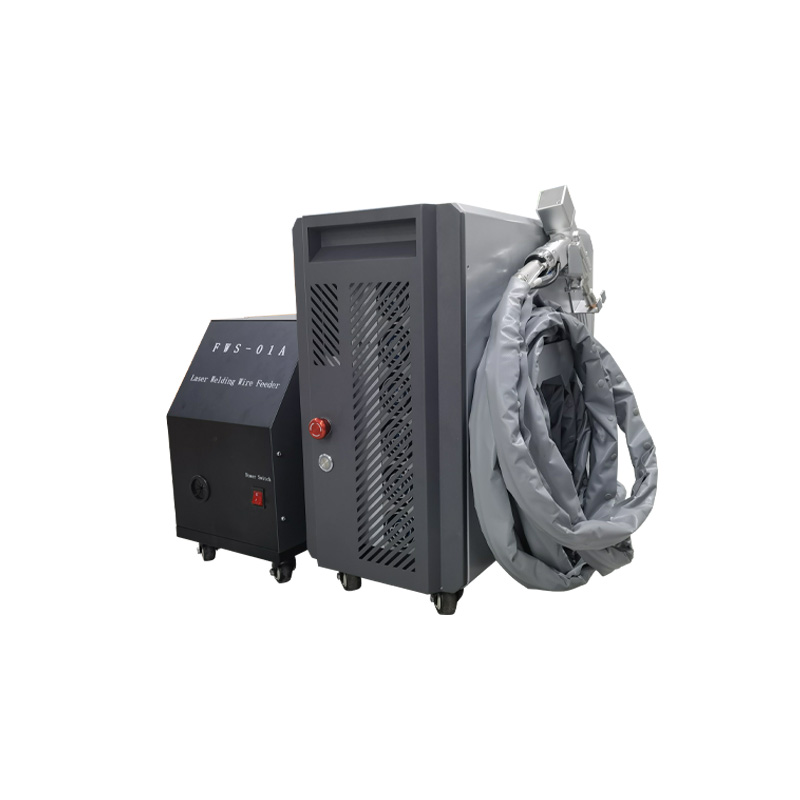
Riselaser Laser Welding Machine : Comprehensive SME Choice
- Overview: Riselaser offers handheld laser welders with a range of features targeting SME requirements.
- Features: Common power configurations (1500W, 2000W, 3000W) suit various material thicknesses. They weld stainless steel, carbon steel, and aluminum. Wobble functionality helps manage fit-up imperfections.
- Strengths: Focus on ease of setup and user-friendly interfaces with pre-set parameters. Aims for a quick return on investment through efficiency gains.
- Best for: SMEs seeking a versatile, easy-to-operate machine for varied sheet metal tasks and general fabrication.
DP Laser Welding Machine: Established Reliability Focus
- Overview: DP Laser (or similar brand variations) often emphasizes reliability and core functionality for the SME market.
- Features: Compact designs are typical. Simplified start-up and touch screen controls enhance user-friendliness. Some models offer dual-motor welding heads for wobble control.
- Strengths: Delivers essential laser welding capabilities with a focus on space efficiency and straightforward operation.
- Best for: Workshops needing a reliable, no-frills laser welder for common applications where space and simplicity are priorities.
Dowell Laser Welding Machine: Portable Efficiency
- Overview: Dowell Laser frequently highlights the portability of its handheld laser welding solutions.
- Features: Machines are often lightweight with integrated, caster-mounted designs for easy movement. Power options generally range from 1000W to 2000W+. Intuitive control panels with presets simplify use.
- Strengths: Excellent portability for moving the welder to the job. Ergonomic torch design aids operator comfort.
- Best for: Businesses requiring high mobility within a workshop or for light field repairs; job shops handling diverse projects.
Kaihuan Laser Welding Machine: Specialized Innovations
- Overview: Kaihuan Laser sometimes incorporates specialized features into its handheld systems.
- Features: Some models boast double wire feeding capabilities, offering advantages for specific gap-bridging or alloying applications. Multi-functional (3-in-1) processing is also common. Built-in cooling and ample fiber optic cable reach are standard.
- Strengths: Potential for advanced gap filling with double wire feeders. Versatility through multi-process options.
- Best for: SMEs with specific needs like larger gap filling or those valuing unique features alongside standard welding, cleaning, and cutting.
Making Your Selection & The Future Outlook
Picking the best handheld laser welders in 2026 means looking at your specific jobs, materials, how much you make, your budget, and what skills you have. Big companies need tough systems with advanced controls and good support. Small and medium businesses usually want a mix of low cost, easy use, and the ability to do many different jobs.
Always put safety training and proper equipment first. You should compare the upfront cost to what it will cost to own and run over time, plus the big returns you can get from working faster, wasting less, and making better quality finishes.
The future of handheld laser welding looks really good. We can expect new improvements in computer-helped settings that make systems even easier to use. Making them smaller will make them easier to carry around. Better safety features and improved beam control will let people use them for more jobs, making handheld laser welding a must-have technology for metalworking professionals around the world.
FAQs
Handheld laser welders offer superior precision with minimal heat-affected zones (HAZ), reducing material distortion. They also work faster, especially on thinner materials, and often don’t require filler material, simplifying the process and reducing post-weld cleanup. This makes them ideal for high-quality, fast-paced applications.
Proper maintenance includes regularly cleaning the lenses and checking the laser source for any wear or damage. Ensure that cooling systems are functioning correctly and check the fiber optic cables for signs of wear. Routine maintenance can extend the lifespan of your machine and ensure optimal performance.
Yes, handheld laser welders are highly effective on materials like aluminum, steel, and copper, especially when welding thin materials. The concentrated heat and fast welding speeds make them ideal for delicate, thin sheets, preventing warping and distortion.
Prices for handheld laser welders vary depending on power and features. A basic 1500W model might start around USD 3,000–5,000, while more advanced systems, especially those with higher power or multi-functionality, can cost upwards of USD 10,000.
Like all laser equipment, proper safety precautions are essential. Always wear appropriate protective eyewear to shield against intense light and reflections. Ensure the work area is properly ventilated, and consider using fume extraction systems to minimize exposure to welding fumes.