
Knowing why laser welding machines need wire feeding is very important for metal shops. It helps them deal with the messy realities of real-world manufacturing. A pure, wire-free (autogenous) laser weld is incredibly fast and precise. However, it requires parts to fit together perfectly, with almost zero space between them. In the real world of heavy manufacturing, a focused laser beam will simply shoot through the gaps of imperfectly cut sheet metal.
Feeding a filler wire into the weld pool gives you the extra material needed to bridge these gaps. It also changes the chemical makeup of the weld on the fly, which stops cracks and holes from forming. By adding an automated wire feeder, shops can turn a highly sensitive process into a versatile powerhouse. This setup can easily replace traditional Gas Metal Arc Welding (GMAW/MIG) and Gas Tungsten Arc Welding (GTAW/TIG) systems.
This guide breaks down the engineering rules, metal benefits, equipment details, and return on investment (ROI) of wire-fed laser welding .
The Core Problem with Pure Laser Welding
Laser welding uses a highly focused beam of light to melt metal. When the laser power is high enough—usually around 1.5 MW/cm2 for steel—it vaporizes the metal. This creates a deep, narrow hole called a “keyhole.”
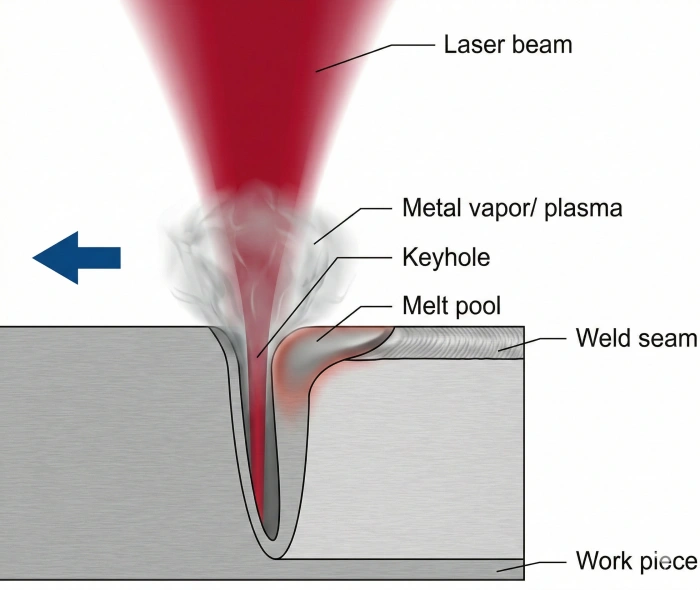
Without filler wire, keeping this keyhole stable is a delicate balancing act. If the keyhole collapses during welding, it traps bubbles of vaporized metal and argon shielding gas. This collapse causes severe internal holes (called porosity) and structural weakness. Adding a continuous filler wire acts as a mechanical and thermal stabilizer. It absorbs some of the laser energy, calms down violent fluid movement in the weld pool, and replaces material lost to vaporization.
Verifiable Impact: In recent metallurgical tests on AZ31B magnesium alloys, using a wire-free weld resulted in a massive hole volume of 0.63 mm3. By introducing a filler wire at a feed rate of 130 cm/min, the hole volume dropped to a tiny 0.06 mm3. The joint’s average strength also increased from 154 MPa to 220 MPa.
Overcoming Imperfect Fit-Ups
For Fabrication Shop Owners and Production Managers, getting a “perfect fit” is rarely possible or affordable. Parts coming off a press brake or stamping line frequently have small shape differences.
A general rule in sheet metal fabrication is that pure laser welding fails when the gap width is larger than 10% of the material’s thickness. Filler metal acts as physical padding to span these gaps. The wire feeder supplies continuous extra material, ensuring a complete and strong weld even when parts don’t line up perfectly.
Beyond just spanning gaps, the wire allows operators to control the shape of the weld. A well-calibrated wire feed creates a smooth, rounded weld top. This smooth shape reduces stress on the joint and practically eliminates the need for post-weld grinding and cleanup.
Preventing Cracks in Tough Alloys
For Manufacturing and Process Engineers, rapid cooling is the primary enemy. Laser welding cools extremely fast. This causes massive thermal shrinking that can tear the metal apart before it fully hardens—a defect known as hot cracking.
Wire feeding allows engineers to actively change the chemistry of the weld puddle on the fly to prevent this.
- Aluminum Alloys: High-strength aluminum (like the 6000 and 7000 series) shrinks a lot and will almost certainly crack if welded without wire. According to research on aluminum laser welding, feeding a silicon-rich cold wire (such as AWS A5.10 ER4043) lowers the freezing point of the metal. This creates a highly fluid liquid that flows into and “heals” micro-cracks as the surrounding metal shrinks.
- Stainless Steel: Austenitic stainless steels (like 304 and 316) are prone to hot cracking if impurities like sulfur get pushed to the edges during cooling. A study on solidification cracking in austenitic stainless steels shows that introducing a specific filler wire (like a duplex 2209) forces the metal to solidify in a way that safely traps impurities and prevents fractures.
- Pipeline Steels: When welding high-strength X80 pipeline steel, the rapid cooling of a laser makes the metal too hard and brittle, exceeding the safe limit of 275 HV for sour gas pipes. A recent metallurgical study on X80 pipeline steel demonstrates that feeding a pure iron wire chemically waters down the carbon and manganese in the pool. This drops the hardness by 30 HV and brings the weld into strict API compliance.
Handheld Laser Welder vs. Robotic Systems
Physically delivering the wire into a microscopic laser focal point requires exact precision. Systems are generally used in two ways:
1. Handheld Laser Welders
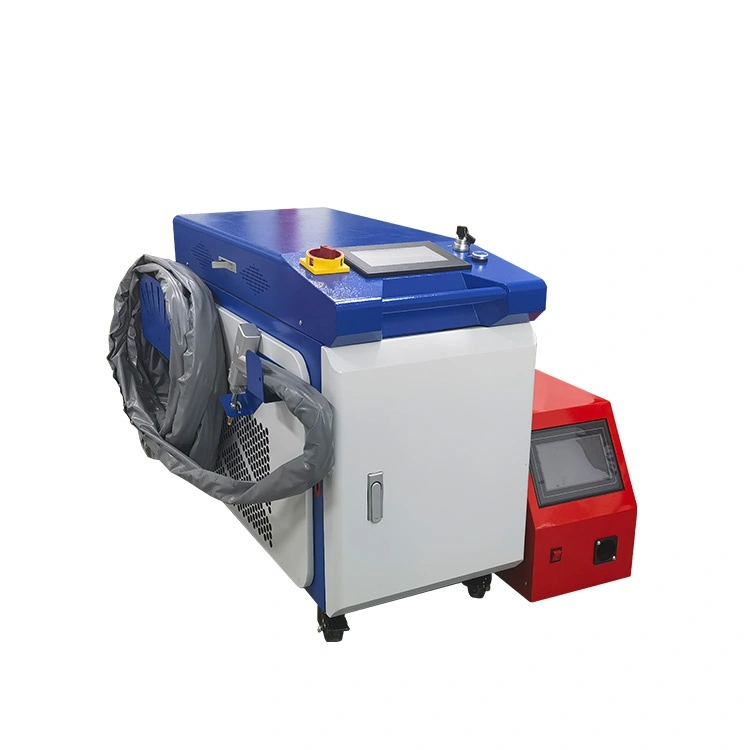
Modern handheld systems are designed for busy job shops that work on many different projects. They use a “4-in-1” setup that combines the laser source, water cooling, gas control, and a smart wire feeder into a single mobile machine.
- Functionality: The wire is pushed through a flexible tube directly into the welding gun. A wobble head (which rapidly shakes the laser beam) is often paired with the wire feed to widen the weld and better handle gaps.
- Setup: Operators can set up the machine for 1-4 mm stainless steel in 5 to 10 minutes using simple touchscreen menus, without needing complex computer programming.
2. Robotic Automated Cells
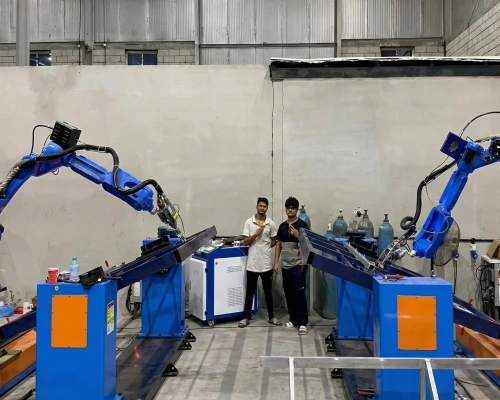
For continuous, high-volume production, 6-axis robotic arms use advanced digital computers to match the wire feed speed with the robot’s moving speed in real-time.
- Functionality: If the robot slows down to go around a corner, the wire feeder instantly slows down to prevent the wire from crashing into the metal.
- Hardware: Because robotic cells often cover large areas, they use synchronized “Push-Push” drive systems to force the wire smoothly through tubes up to 25 meters long without jamming.
Operating Costs and ROI Comparison
While buying a laser welding machine costs more upfront than older arc welding tools, the Total Cost of Ownership (TCO) heavily favors the laser in busy shops.
A standard 1500W handheld laser welder can easily process steel and stainless steel up to 4 mm thick at speeds of 2 to 4 m/min. Because the process is incredibly fast and produces almost no messy spatter, the cost of post-weld grinding and cleanup is basically zero.
| Cost Factor | Handheld Fiber Laser (1500W) | Traditional TIG Setup | Traditional MIG Setup |
| Hourly OpEx (Energy + Gas) | $2.00 | $3.40 | $3.10 |
| Consumables per 1 m bead | $0.00 | $0.45 (Rod) | $0.38 (Wire) |
| Grinding & Cleanup Cost | $0.00 | $0.30 | $0.25 |
| Total Cost per Meter Welded | $2.00 | $4.15 | $3.73 |
Overall, the running cost for a laser welder is roughly $3 to $6 per hour, including electricity, argon shielding gas, and minor parts like protective cover slides. Because the laser operates up to four times faster than TIG, the cost per part drops dramatically, paying off the investment much sooner.
YMYL Safety and Compliance Standards
Laser welding uses Class 4 laser sources. These pose severe risks to eyesight and skin if used incorrectly. Safety must be treated as a strict facility rule, not an afterthought.
B2B buyers and Operations Managers must ensure equipment and shop environments follow these standards:
- ISO 11553-1 and ISO 11553-2: Sets the general safety rules for laser machines and handheld devices. This includes mandatory two-step triggers, workpiece contact safety locks, and key switches to stop unauthorized use.
- ANSI Z136.1: Requires the assignment of a Laser Safety Officer (LSO) and the setup of a Laser Controlled Area (LCA).
- Personal Protective Equipment (PPE): Operators must wear laser safety glasses rated at OD6+ (Optical Density) for the specific wavelength of the laser (usually 1064 nm to 1080 nm for fiber lasers). They must also wear heat-resistant gloves, long sleeves, and a specialized laser welding helmet.
Ready to Upgrade Your Fabrication Capabilities?
Wire feeding is what makes industrial laser welding a practical, scalable reality. Whether you are dealing with gaps in stamped car parts, struggling with cracking in aluminum alloys, or looking to eliminate the grinding bottleneck in your sheet metal shop, a wire-fed laser system provides the ultimate solution.
Next Step: Stop losing money to slow welding speeds and heavy rework. Run your own numbers through a TCO/ROI Calculator to see exactly how fast a 1500W wire-fed laser system will pay for itself based on your current labor rates and materials. Contact a certified integration specialist today to schedule a sample weld trial on your specific parts.
FAQs
Wire feeding is often needed in laser welding to fill gaps between parts that don’t fit perfectly. It also improves weld quality by controlling the metal makeup. This helps join different metals that might form weak bonds if welded directly. Wire feeding can stop cracks in sensitive alloys. It also lets you control the shape and strength of the final weld bead.
The key advantages include better weld quality and consistency. It also handles gaps between parts very well. Wire feeding makes it easier to join different or hard-to-weld materials. It works great with automated and robotic systems. Plus, it can weld thicker parts using multiple layers.
Yes, joining different metals like steel to stainless steel is a big benefit of using wire feed. The right filler wire acts as a bridge between the metals. It stops brittle compounds that can form when metals are fused directly. This helps create a strong and reliable bond.