
Restoring furniture presents a major challenge: removing paint, varnish, or other coatings without damaging the delicate wood or finish. Traditional methods—chemical stripping or mechanical sanding—often compromise either effectiveness or preservation. Chemicals can weaken fibers over time, while sanding removes patina and flattens intricate details that give antique pieces their character.
Laser cleaning furniture offers a modern, non-contact solution. Using focused light, a laser cleaner vaporizes unwanted layers like paint, rust, or varnish with microscopic precision, leaving the surface intact. Sometimes called a laser sander by users searching online, this technology achieves damage-free restoration that was previously impossible. This guide explains the science, practical applications, safety protocols, and costs for safely revitalizing your furniture with lasers.

Best Laser System for Furniture Restoration: Fiber Pulsed Lasers
Using a laser on wood or antiques may seem counterintuitive, but the underlying principle is one of controlled, non-contact precision. The technology does not burn or scrape; it uses light to cleanly vaporize contaminants, ensuring the substrate remains pristine. The core concepts involve laser ablation and a choice between distinct laser systems.
The Principle of Laser Ablation
The process is scientifically known as laser ablation. A specialized machine directs extremely short, high-energy pulses of light onto the furniture’s surface. The contaminant layer—be it paint, rust, or grime—absorbs this intense energy and is instantly vaporized into a microscopic plume of dust and gas. This plume is immediately captured by an integrated fume extraction system, ensuring a clean and safe process.
The genius of this method lies in selective energy absorption. The underlying material, such as wood or metal, has a different light absorption threshold. The laser’s parameters (power, pulse duration, and frequency) are precisely calibrated so that once the unwanted layer is gone, the beam has no effect on the substrate.
Types of Laser Systems for Furniture
Choosing the correct laser system is critical for a successful outcome. The two primary types used in surface cleaning have vastly different applications.
Pulsed Laser Cleaning Machine (50W – 500W)
Pulsed fiber lasers are the best choice for laser cleaning furniture. Often called the “scalpels” of the industry, they deliver energy in short, high-intensity bursts, offering maximum precision with minimal heat buildup. While high-power pulsed lasers, even up to 1000W, exist, they are generally too aggressive for wood and can easily scorch delicate finishes. For most furniture restoration projects, a pulsed laser around 200W provides the optimal balance—fast enough for efficiency, yet gentle enough to avoid burning or damaging the wood surface.
Continuous Wave (CW) Laser Cleaning Machine (1,500W+)
These are industrial powerhouses. They emit an uninterrupted, high-power beam that works great for heavy-duty jobs like stripping thick rust from large steel structures. However, their constant heat output makes them completely wrong for fine furniture. They would instantly burn wood and warp metalwork, ruining valuable pieces.
Furniture Restoration Applications: From Antiques to Modern Pieces
The versatility of laser cleaning allows for its use across many different restoration projects. This shows how well it adapts to different situations and delivers better results than traditional methods.
Wood and Veneer
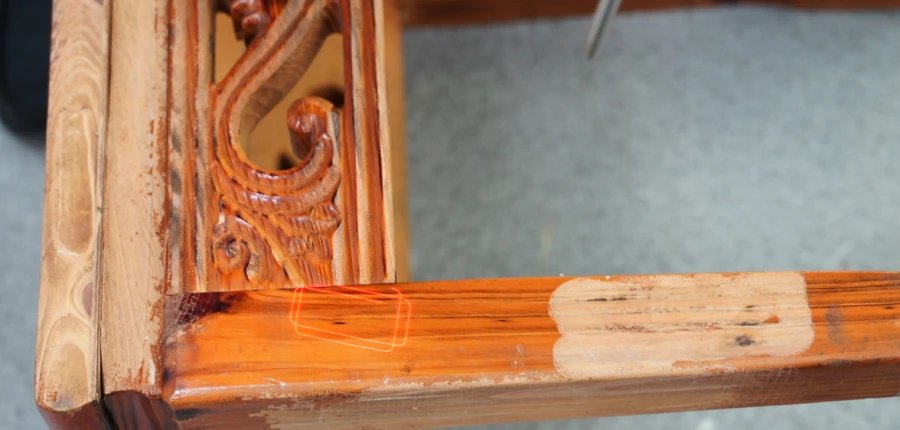
Laser cleaning transforms wooden furniture completely. It carefully removes old varnish or paint without affecting the delicate wood grain, aging marks, or decorative details that make pieces special. The non-contact nature is crucial for protecting decorative carvings. Sanding would flatten these details and ruin their original beauty.
Metal Furniture
This technology excels at stripping rust and multiple paint layers from steel, wrought iron, and other metals. The process creates a perfectly clean surface, which studies from the coating industry show leads to much better sticking power and longer life for new finishes.
Antiques and Historic Conservation
For priceless artifacts, laser cleaning is the best choice available. Its non-contact, chemical-free process matches modern conservation values perfectly. It introduces no foreign substances that could cause long-term damage. It also applies no physical force, keeping the object’s historical and money value intact. Museums worldwide now use this method for cleaning everything from ancient statues to historic building fronts.
Equipment and Costs: Analyzing the Investment
The primary barrier to entry for laser cleaning furniture is the initial financial outlay. However, understanding the full cost-benefit analysis reveals a compelling long-term value proposition.
Initial Equipment Investment and Pricing
The necessary equipment for furniture restoration is a handheld, low-power pulsed fiber laser system. This includes the laser source, a flexible fiber optic cable, a handheld cleaning head (or “gun”), and the control unit. Acquiring this technology requires a significant investment. Based on current 2025 market data from major B2B platforms like Alibaba, direct suppliers, and specialized listings, the pricing is as follows:
- Entry-Level Systems (50W-200W): A quality entry-level pulsed laser suitable for furniture restoration typically ranges from $3,000 to $8,000.
- Professional-Grade Systems (200W+): For higher wattage, faster cleaning speeds, and more advanced features, professional systems can easily exceed $10,000.
Operating Costs vs. Long-Term Value
While the initial investment is high, the return is calculated in savings on consumables and labor.
- No Consumables: There are zero recurring costs for chemical strippers, solvents, sandpaper, or blasting media. The only operational cost is electricity, which Riselaser estimates at just a few dollars per hour.
- Reduced Labor: The process minimizes time spent on masking, setup, and, most significantly, cleanup of hazardous materials.
- Value Proposition: For a professional restorer, the investment pays for itself through material savings, increased efficiency, and the ability to offer a premium, damage-free service.
Safety Protocols and Critical Limitations
The power involved in laser cleaning furniture demands unwavering respect and adherence to strict safety protocols. Understanding its limitations provides a realistic perspective on the technology.
Critical Safety Requirements
All professional cleaning lasers are Class 4 lasers, the highest hazard class. Direct or reflected exposure can cause permanent, instant eye damage and severe skin burns.
- Eye Protection: Mandatory use of specialized safety glasses rated for the specific wavelength of the laser is required.
- Controlled Environment: The work area must be restricted and marked, using laser-blocking screens to protect bystanders.
- Fume Extraction: A high-quality ventilation and fume extraction system is essential to capture the vaporized particles. Regulatory bodies like OSHA in the United States provide strict guidelines for operating Class 4 laser systems.
Limitations to Consider
- High Initial Cost: This remains the primary barrier for hobbyists and small businesses.
- Technical Skill: Effective operation requires training to master the settings for different materials and avoid surface damage.
- Speed and Materials: On large, flat surfaces, traditional methods can be faster. Highly reflective surfaces may also pose a challenge, reflecting the beam instead of absorbing its energy.

Laser Cleaning vs. Traditional Methods: A Head-to-Head Comparison
To make an informed decision, it’s crucial to compare laser cleaning directly against its conventional counterparts.
| Feature | Laser Cleaning | Chemical Stripping | Mechanical Sanding |
| Surface Integrity | Excellent: Non-contact, preserves every detail. | Poor: Can soak into wood, loosen joints, etch surfaces. | Poor: Abrasive, removes original material, flattens details. |
| Environmental Impact | Excellent: No chemicals, minimal waste. | Poor: Creates toxic fumes and hazardous liquid waste. | Fair: Creates fine airborne dust, which can be hazardous. |
| Operator Safety | Good (with PPE): Requires strict protocols for eye/skin safety. | Poor: High risk of chemical burns and respiratory issues. | Fair: Risk of respiratory issues from dust inhalation. |
| Precision | Excellent: Can selectively remove single layers. | Poor: Uncontrolled soaking and wicking action. | Poor: Difficult to control on intricate or carved areas. |
| Consumables Cost | None | High | Moderate |
Conclusion: The Future of Restoration is Here
Laser cleaning furniture is more than just a new technique. It represents a better way of working that puts preservation, safety, and caring for the environment first. While the upfront cost is high, the long-term benefits make it worth it. These benefits include perfect results, no need for supplies that run out, and keeping materials in their original condition—all strong reasons for professionals and serious restorers to consider this method.
By removing the old without harming what’s underneath, laser technology ensures that the beauty and history of our most treasured pieces can be safely revealed. This means future generations can enjoy them too. This technology doesn’t just clean furniture. It protects our heritage using nothing but the clean power of light. Ready to bring your furniture back to life without the damage? Contact our experts today for a free consultation and see how laser cleaning can transform your restoration project.
FAQs
Yes. Pulsed lasers are specifically designed for this. By calibrating the laser’s settings, the energy is absorbed only by the paint or varnish, leaving the wood grain and patina underneath completely unharmed.
Extremely. Laser rust removal is one of the technology’s primary applications. It vaporizes the iron oxide (rust) layer without abrading or thinning the underlying metal, creating a perfectly clean surface for refinishing.
The cost varies significantly. While the machine investment is high (entry-level pulsed systems start around $3,500 – $8,000), the operating cost is low. For professional services, prices are project-based but reflect savings on labor and consumables compared to traditional methods.
Yes. Pulsed fiber lasers, often called laser cleaners or laser sanders in searches, remove coatings without touching or scratching the wood surface. Proper calibration ensures the finish and grain are preserved.
Laser cleaning preserves details, carvings, and patina, making it superior for antique or delicate pieces. Sanding removes material and may damage fine surfaces.
Wood, veneer, and antique furniture benefit the most, especially when fine detail preservation and non-contact cleaning are priorities.