
Sheet metal laser cutting has transformed modern manufacturing by replacing rigid, tooling-heavy mechanical processes with flexible, high-precision digital fabrication. By utilizing fiber laser sources and Computer Numerical Control (CNC) architectures, industrial facilities can now process materials ranging from 0.5mm shim stock to 50mm plate with micron-level accuracy. This technology minimizes material waste, reduces secondary finishing requirements, and enables the production of complex 2D geometries that are impossible to achieve with traditional shearing or punching.
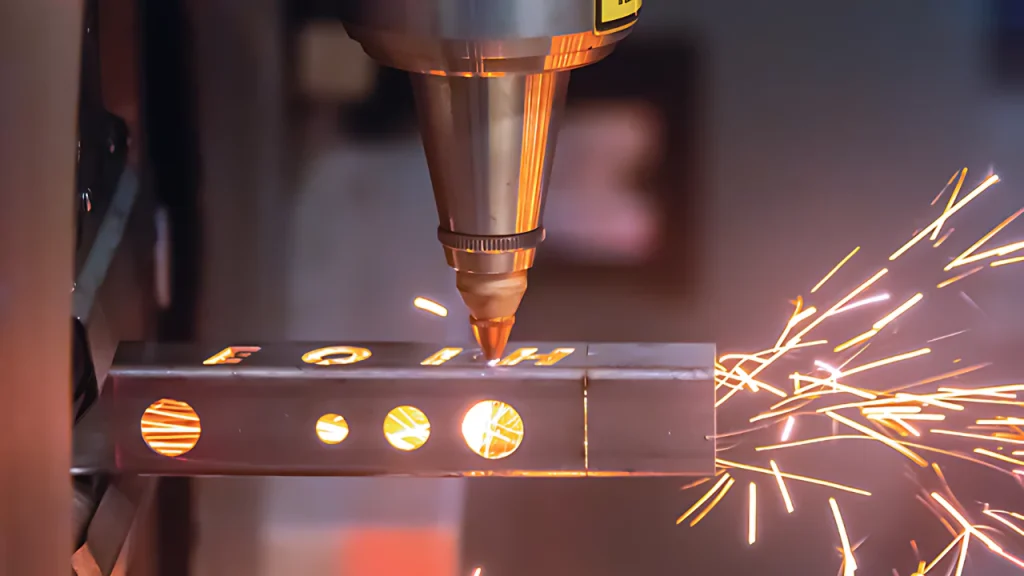
Fiber vs. CO2 Laser Architectures
For most fabrication environments, the decision to invest in laser technology centers on the transition from older CO2 gas lasers to modern solid-state fiber lasers.
- Wavelength and Absorption: Fiber lasers operate at a wavelength of approximately 1.06 μm—ten times shorter than the 10.6 μm of CO2 lasers. This shorter wavelength is significantly better absorbed by metals, particularly reflective “yellow” metals like copper and brass.
- Efficiency and Maintenance: Fiber lasers offer wall-plug efficiencies exceeding 30%, whereas CO2 systems typically hover around 10%. Because fiber lasers deliver the beam through a flexible fiber-optic cable, they eliminate the need for complex, mirror-based “bellows” systems that require frequent alignment and cleaning.
- Precision: The fiber beam can be focused into a spot diameter roughly 1/10th that of a CO2 beam, providing the extreme power density needed for high-speed cutting in thin gauges.
Process Comparison: Laser, Plasma, and Waterjet
Choosing the right machine depends on the specific thickness and material requirements of your production line.
| Feature | Fiber Laser Cutting | Plasma Cutting | Waterjet Cutting |
| Typical Speed | Up to 20 m/min | 10-15 m/min | 5-10 m/min |
| Tolerance | 0.02mm to 0.05mm | 0.5mm | 0.1mm to 0.2mm |
| Edge Quality | Smooth, minimal burr | Rough, more dross | Sandblasted finish |
| Heat Affected Zone | Minimal (HAZ) | Significant | Zero (Cold Process) |
Design for Manufacturability (DFM) and ISO 9013 Standards
Engineers must adhere to specific design rules to ensure part integrity and prevent machine downtime.
- Hole Diameter Ratio: As a “Golden Rule,” the minimum hole diameter should be at least equal to the material thickness (1:1 ratio). For example, a 5mm hole in 5mm plate is standard; going smaller risks “blowing out” the hole due to heat buildup.
- Minimum Bridges: The distance between two cut lines (the bridge) should be at least 1× material thickness to prevent warping or burning away the material.
- ISO 9013 Compliance: This international standard governs thermal cut quality. For high-precision laser cutting, stakeholders typically aim for Tolerance Class 1, which requires perpendicularity deviations (μ) as low as $0.05mm$ for thin sheets.
- File Hygiene: Designs must be 1:1 scale in millimeters (mm). All text must be converted to outlines or “stencil” fonts to prevent floating centers from falling out.
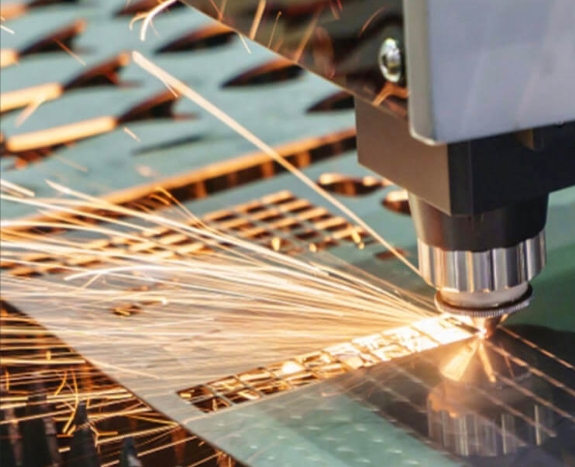
Thickness and Power Capability Chart
The maximum cutting thickness is governed by the laser source wattage (e.g., IPG, Raycus, or Max Photonics) and the assist gas used.
| Laser Power | Mild Steel (Max) | Stainless Steel (Max) | Aluminum (Max) | Brass/Copper (Max) |
| 1.5 kW | 15 mm | 6 mm | 4 mm | 3 mm |
| 3 kW | 20 mm | 10 mm | 8 mm | 6 mm |
| 6 kW | 25 mm | 20 mm | 16 mm | 12 mm |
| 12 kW | 40 mm | 30 mm | 30 mm | 15 mm |
| 60 kW | 50 mm+ | 50 mm | 50 mm | 20 mm+ |
The Impact of Assist Gases: Oxygen vs. Nitrogen vs. Air
The choice of assist gas dictates the chemical reaction at the cut edge and the final operating cost.
- Oxygen (O2): Acts as an exothermic accelerator. It reacts with the iron in carbon steel to add heat, allowing thicker plates to be cut with less laser power. However, it leaves a brittle oxide layer that must be removed before painting.
- Nitrogen (N2): An inert shielding gas that prevents oxidation. It produces a “White Cut” (clean, bright edge) essential for stainless steel and high-end aesthetics. It consumes more gas due to the high pressures (15-25 Bar) required to shear the melt.
- Compressed Air: A cost-effective hybrid (78% Nitrogen). Using high-pressure shop air (up to 16 Bar) for thin aluminum or galvanized steel can reduce gas costs by 50-90% while maintaining acceptable edge quality.
Economic Modeling: Calculating Cost Per Part
In procurement, pricing is typically a function of machine time and material utilization.
The Machine Hourly Rate Formula:
Cost = (Time × Hourly Rate) + Material Cost + Gas Surcharge
- Nesting Optimization: Advanced “True-Shape” nesting software arranges parts like a puzzle to maximize sheet yield. Efficient nesting can achieve 80%+ material utilization, significantly lowering the per-part cost.
- Piercing Strategy: For thick plates, the “3-Stage Step Pierce” (Pilot, Drill, Penetrate) is used to prevent “The Pop”—a loud explosion of molten metal that can damage the protective lens.
Operational Maintenance and Safety
To maintain ROI, fabrication shops must follow strict maintenance intervals.
- Daily: Inspect the nozzle for spatter, clean the protective lens (cover glass) with denatured alcohol, and check assist gas levels.
- Weekly: Deep-clean linear guide rails and lubricate the Z-axis screw. Check the water chiller’s filtration and coolant clarity to prevent algae growth.
- Safety Standards: Most industrial fiber lasers are Class 1 (fully enclosed) to protect operators from stray reflections. Open-bed systems (Class 4) require specialized laser safety glasses (OD values specified by the manufacturer) and high-volume fume extraction systems to remove harmful nano-particle dust.
FAQ About Sheet Metal Laser Cutting
Fiber laser cutting machines use a solid-state laser that generates the beam through optical fibers, while CO2 lasers use a gas mixture. Fiber lasers offer advantages including higher efficiency (30-40% vs. 10-15%), better performance on reflective metals, lower maintenance requirements, and reduced operating costs. CO2 lasers may still provide better edge quality on thick materials and non-metals.
Most metals can be cut with laser technology, but with varying degrees of success. Mild steel, stainless steel, and aluminum are ideal for laser metal cutting. Highly reflective materials like copper, brass, and some aluminum alloys present challenges but can be cut with proper laser types (typically fiber) and parameters. Some exotic metals like titanium and Inconel require specialized settings but can achieve excellent results.
Modern high-power fiber laser cutting machines can typically cut:
Mild steel: up to 25mm
Stainless steel: up to 20mm
Aluminum: up to 15mm
Copper: up to 8mm The exact capabilities depend on the laser power, with 10kW+ systems achieving the greatest thickness capacities.