
The best jewelry laser welder in 2026 depends on your daily workload, metal type, repair style, and budget. For most professional jewelry repair shops, the LaserStar 993 iWeld is the best all-around choice because of its proven reliability and strong performance on precious metals. For high-volume jewelry manufacturing, the Orotig Revo X² is the stronger option because it offers higher power and better support for continuous production.
If you need a jewelry laser welding machine for repair work, custom jewelry, silver welding, platinum welding, chain repair, or small workshop production, this guide compares five popular options by power, cooling system, portability, ease of use, and best-fit application.
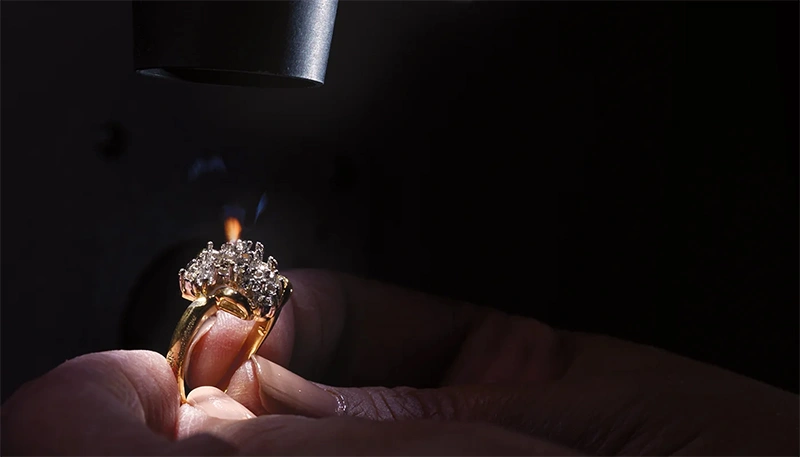
Quick Answer: What Is the Best Jewelry Laser Welder?
For most jewelers, the best jewelry laser welder is the machine that matches the real work done at the bench. A small repair shop does not need the same machine as a high-volume factory. A mobile jeweler also has very different needs from a studio that welds silver, platinum, and thick ring shanks every day.
- Best overall jewelry laser welder: LaserStar 993 iWeld
- Best for high-volume production: Orotig Revo X²
- Best for user experience: Orotig Evo X
- Best value 150W jewelry laser welder: Han’s Laser W150G
- Best portable laser welder for jewelry: Riselaser RL-Y40
Below, we compare each laser welder for jewelry by real workshop use, not just by brand name or machine power.
Jewelry Laser Welder Comparison Table
Here is a quick comparison of the top jewelry laser welders in 2026, based on workshop type, key strength, and buyer profile.
| Model | Best For | Key Strength | Best Buyer Type | Price Tier |
|---|---|---|---|---|
| Orotig Revo X² | High-volume jewelry production | Strong peak power and water cooling for long daily use | Manufacturers and busy repair centers | Premium |
| LaserStar 993 iWeld | All-around professional jewelry repair | Reliable performance on gold, silver, platinum, and fine repair work | Professional jewelers and repair studios | Upper-mid |
| Orotig Evo X | User experience and workflow efficiency | Touchscreen control, preset programs, and premium microscope setup | High-end custom jewelry studios | Premium |
| Han’s Laser W150G | High-power value | 150W class power at a more competitive price point | Small to mid-size workshops needing more power | Value |
| Riselaser RL-Y40 | Portable jewelry welding | Compact 13.5 kg body for mobile repair and small workspaces | Mobile jewelers, beginners, and compact studios | Entry-level |
2026 Jewelry Laser Welder Reviews
Orotig Revo X²: Best for High-Volume Jewelry Production
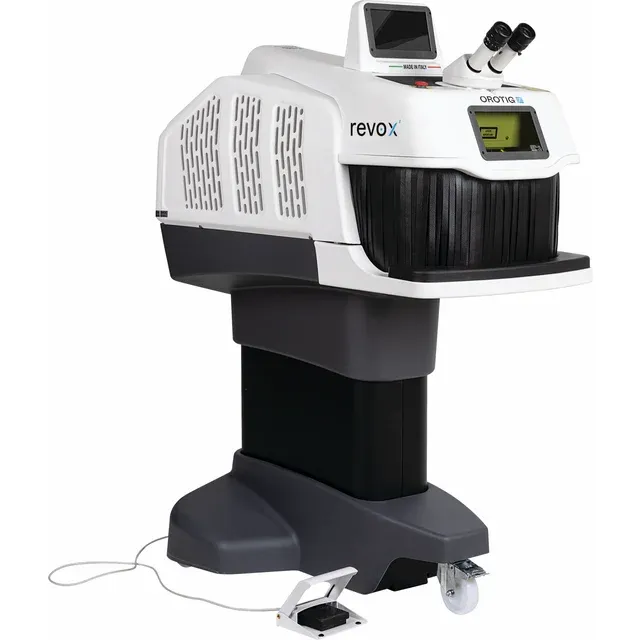
The Italian-made Orotig Revo X² is engineered for the most demanding production environments. It is the top choice for high-volume manufacturers and trade shops where machine uptime and throughput are critical business metrics.
- Key Specifications: This machine leads its class with 150W average power, a massive 280J of pulse energy, and 12kW of peak power. Its 10-liter water-cooling system is built for a continuous 8+ hour duty cycle, ensuring stable performance during all-day operation.
- Best For: Large-scale jewelry manufacturers and high-volume repair centers.
- Price Point: Premium Tier (>$29,995).
LaserStar 993 iWeld: The Professional’s Workhorse
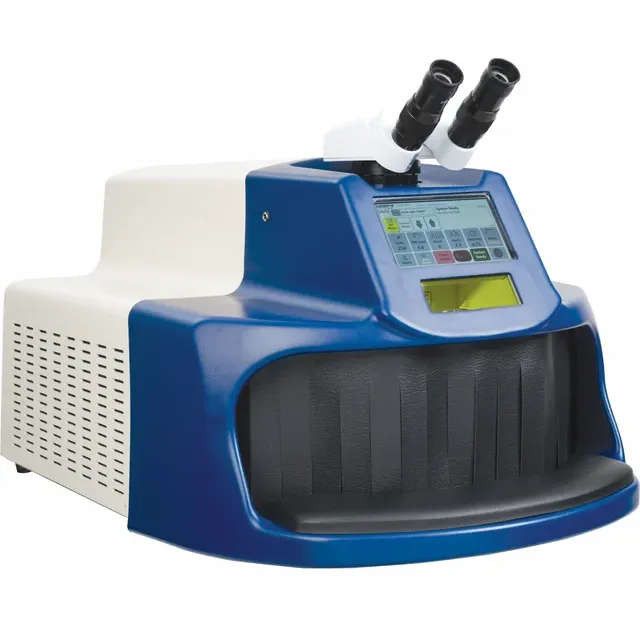
Manufactured in the USA, the LaserStar 993 iWeld is renowned in the industry as an exceptionally durable and reliable “workhorse”. It is designed to solve the real-world challenges bench jewelers face daily.
- Key Specifications: While rated at 60W average power, its standout feature is a class-leading 11kW of peak power. This high peak power makes it one of the best laser welders for jewelry professionals working with highly reflective metals like silver. It also offers a high 50 Hz pulse frequency for rapid seam welding.
- Best For: Professional custom and repair studios that require versatility, proven reliability, and strong performance across all precious metals.
- Price Point: Upper-Mid Tier ($17,500 – $20,050).
Orotig Evo X: The Versatile All-Rounder
The Orotig Evo X combines high performance with a sophisticated and user-friendly experience. It is a versatile desktop unit rated for 5-8 hours of daily use, making it ideal for busy professional shops that prioritize workflow efficiency.
- Key Specifications: It features a well-balanced profile with 90W average power, 225J of pulse energy, and 9kW of peak power. Its 7-inch touchscreen, extensive library of preset programs, and premium Leica microscope make it highly accessible, even for less experienced operators.
- Best For: High-end custom design studios and retail repair shops that value both top-tier performance and ease of use.
- Price Point: Premium (~$22,000).
Han’s Laser W150G: The High-Value Contender
As a dominant global manufacturer, Han’s Laser delivers industrial-grade power at a highly competitive price point. The W150G is a robust, freestanding unit that brings high-power capabilities within reach of small to medium-sized workshops.
- Key Specifications: It boasts a strong 150W of average power, 80J of pulse energy, and a potent 9kW of peak power. Cooled by an integrated water chiller, it is well-suited for extended use on a full spectrum of metals, including gold, silver, platinum, and titanium.
- Best For: Budget-conscious professional shops seeking production-level power without the premium price tag of US or European brands.
- Price Point: Value Tier ($4,500 – $10,000).
Riselaser RL-Y40: The Hyper-Portable Specialist
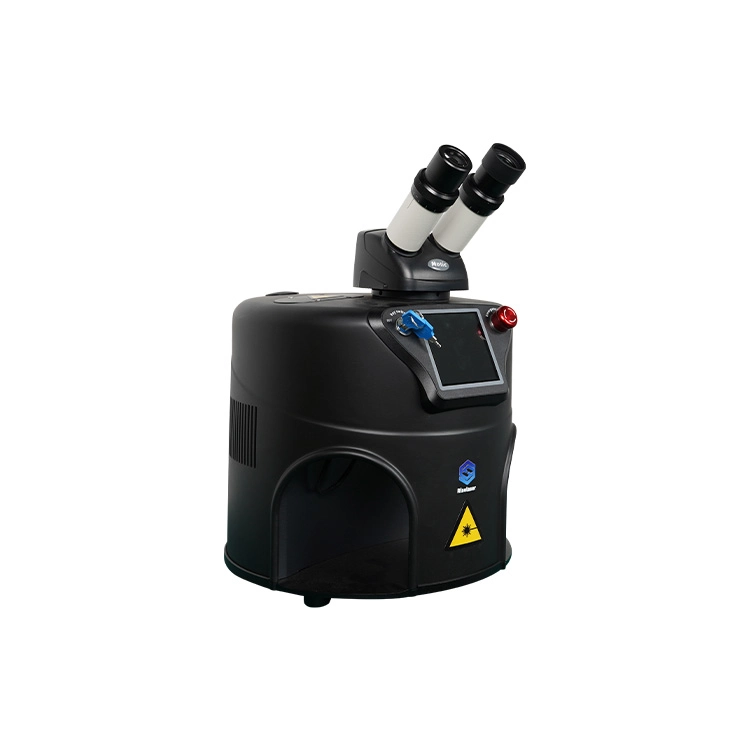
The Riselaser RL-Y40, or “Magic Box,” is designed for ultimate portability. Its ultra-compact and lightweight design makes it a unique solution for jewelers with limited space or those who need a machine for mobile work at events and pop-ups.
- Key Specifications: This air-cooled unit delivers 40J of pulse energy, sufficient for delicate tasks like fine chain repair and closing jump rings. Its key feature is its size and weight—at only 13.5 kg (under 30 lbs), it is by far the most portable machine in this guide.
- Best For: Mobile jewelers, permanent jewelry artists, and micro-workshops with severe space constraints.
Best Jewelry Laser Welder by Use Case
The best jewelry laser welder is not always the most powerful machine. A small repair shop, a high-volume factory, and a mobile jeweler all need different features. Use the table below to match each machine to the right workshop situation.
| Use Case | Recommended Model | Why It Fits |
|---|---|---|
| Best overall jewelry laser welder | LaserStar 993 iWeld | Reliable performance for daily repair, custom jewelry work, and precious metal welding. |
| Best for high-volume jewelry production | Orotig Revo X² | High power and strong cooling make it suitable for long production shifts. |
| Best laser welder for jewelry repair | LaserStar 993 iWeld | A strong choice for prong repair, ring resizing, chain repair, and fine bench work. |
| Best for user-friendly operation | Orotig Evo X | Preset programs, touchscreen control, and a premium microscope help improve workflow. |
| Best value 150W jewelry laser welder | Han’s Laser W150G | Good for workshops that want higher power without paying premium European or US prices. |
| Best portable laser welder for jewelry | Riselaser RL-Y40 | Compact and lightweight, making it suitable for mobile jewelers, small studios, and limited workspaces. |
| Best entry-level jewelry laser welder | Riselaser RL-Y40 | A practical starting option for light repair, permanent jewelry, and small workshop tasks. |
If you are choosing your first jewelry laser welding machine, start with your real workload. For occasional chain repair and small jobs, portability may matter more than maximum power. For silver, platinum, thick ring shanks, or all-day repair work, peak power, cooling stability, and support become much more important.
How to Choose the Right Jewelry Laser Welder for Your Shop
Making the right investment requires understanding the key technical specifications and how they apply to your daily work.
Decoding the Specs: What Jewelers Actually Need to Know
- Average Power (W) vs. Pulse Energy (J) vs. Peak Power (kW): This is the most important trio of specs.
- Average Power (Watts): Indicates the machine’s capacity for sustained work. 50-100W is fine for light repairs, while 150W+ is for heavy-duty, all-day production.
- Pulse Energy (Joules): Determines weld penetration. Higher joules (180J+) are needed for deeper welds.
- Peak Power (Kilowatts): This is the critical factor for welding reflective metals. A high peak power (9kW or more) is essential to overcome the reflectivity of silver before the heat dissipates.
- Pulse Frequency (Hz) & Duration (ms):
- Frequency is the number of pulses per second. A high frequency (20-50 Hz) allows for fast, “stitching” seams, increasing productivity.
- Duration is the length of each pulse. Short pulses are for precise tacking, while longer pulses create wider, smoother welds for filling gaps.
- Spot Size (mm): This is the diameter of the laser beam. A versatile machine should offer an adjustable range, from as small as 0.1 mm for prong work up to 2.0 mm for assembling shanks.
- Cooling System (Air vs. Water):
- Air-cooled systems are found in lower-power, portable machines suitable for lighter workloads.
- Water-cooled systems are essential for higher-power machines (100W+) and any shop planning for continuous, all-day operation, as they provide superior thermal stability.
Calculating the Total Cost of Ownership (TCO)
The initial jewelry laser welder price is only part of the story. A strategic investment considers the Total Cost of Ownership (TCO).
- Consumables: The primary consumable is the xenon flash lamp, which requires periodic replacement. Water filters and protective lens shields are other minor costs.
- Warranty & Support: Downtime is lost revenue. Brands like LaserStar and Orotig have strong domestic support networks that can provide fast service. Ensure the manufacturer you choose offers a comprehensive warranty and accessible technical support.
Jewelry Laser Welder vs Pulse Arc Welder vs Soldering Machine
Jewelry laser welders, pulse arc welders, and soldering machines can all join metal parts, but they are not the same tool. The right choice depends on the repair type, metal, precision level, and how much heat the jewelry can safely handle.
| Tool | Best For | Heat-Affected Zone | Precision | Main Limitation |
|---|---|---|---|---|
| Jewelry laser welder | Fine jewelry repair, prong repair, silver, platinum, chain repair, custom work | Very small | Very high | Higher machine cost |
| Pulse arc welder / PUK welder | Permanent jewelry, small tack welds, simple repair jobs | Medium | Medium to high | Slower and less versatile than a true laser welder |
| Soldering torch | Traditional goldsmith work, basic joining, low-cost workshop setup | Large | Lower near delicate areas | More heat spread and higher risk near stones or thin parts |
When to Choose a Jewelry Laser Welder
Choose a jewelry laser welder if you need high precision, clean welds, and better control near delicate areas. It is especially useful for prong repair, ring resizing, chain repair, silver welding, platinum welding, and custom jewelry work where excess heat can damage the piece.
A laser welder is usually the better choice for professional repair shops because it creates a focused weld with a small heat-affected zone. This helps protect nearby gemstones, thin parts, and polished surfaces.
When a Pulse Arc Welder May Be Enough
A pulse arc welder can be a practical option for simple tack welds and permanent jewelry work. It is often more affordable than a professional jewelry laser welding machine and can be easier for small businesses to start with.
However, a pulse arc welder is not always the best choice for complex jewelry repair. It is usually slower, has a larger heat zone, and offers less flexibility for silver, platinum, thick ring shanks, and detailed repair work.
When Soldering Still Makes Sense
Soldering is still useful for many traditional jewelry tasks, especially when cost is the main concern. Many jewelers still use soldering for basic joining, assembly, and repair work.
The main drawback is heat control. A torch spreads heat across a larger area, which can increase the risk of stone damage, oxidation, warping, or extra finishing work. For delicate repair jobs, a jewelry laser welder gives more control.
In short, a soldering torch is the lowest-cost option, a pulse arc welder is useful for simple tack welds, and a jewelry laser welder is the best choice for professional repair work that needs precision, speed, and clean results.
Frequently Asked Questions (FAQ)
The primary advantage is precision due to a minimal Heat-Affected Zone (HAZ). This allows you to weld directly next to heat-sensitive gemstones without causing damage and prevents the warping of delicate metal parts.
No. Welding highly reflective metals like silver requires a machine with high peak power, typically 9kW or more, to overcome the metal’s initial reflectivity. Models like the LaserStar 993 iWeld and Orotig Revo X² are specifically engineered for this challenge.
A true laser welder is a non-contact tool that uses a focused beam of light for maximum precision and speed (up to 50 pulses per second). A pulse-arc welder creates a plasma arc between an electrode and the workpiece, requiring physical proximity. It is slower (1-2 pulses per second) and has a larger heat zone, making it popular for the “permanent jewelry” trend but less versatile for comprehensive jewelry repair.
Prices for professional-grade machines vary widely. Entry-level desktop models start around $3,800, mid-range workhorses are in the $17,000-$22,000 range, and high-end production machines can exceed $30,000.
Our Final Recommendations
The best jewelry laser welding machine depends entirely on your workshop’s specific needs.
- For High-Volume Production: Orotig Revo X². Its unmatched power and robust cooling system are built for continuous, industrial-scale operation.
- For the All-Around Professional: LaserStar 993 iWeld. Its proven reliability and outstanding peak power make it a versatile and safe long-term investment for any professional repair or custom studio.
- For the Tech-Focused Studio: Orotig Evo X. It offers comparable power to other top-tier machines but with a superior user interface that can accelerate workflow and training.
- For Maximum Power on a Budget: Han’s Laser W150G. This machine provides production-level specifications at a fraction of the cost of premium brands, leveling the playing field for smaller shops.
- For Ultimate Portability: Riselaser RL-Y40. Its ultra-compact, air-cooled design is the definitive choice for mobile jewelers or workshops where space is the primary constraint.