
Choosing the right fiber laser cutting machine manufacturer is not only about brand reputation. For metal fabrication buyers, the best manufacturer depends on your material, cutting thickness, production volume, automation needs, service support, safety requirements, and budget.
The top fiber laser cutting machine manufacturers for metal fabrication include TRUMPF, Bystronic, AMADA, Mazak, Han’s Laser, HSG Laser, Bodor Laser, and Riselaser. Premium brands are often better for large automated factories, while cost-effective Chinese manufacturers can be a better fit for small and medium-sized fabrication shops.
If you need a premium fiber laser cutting machine for advanced sheet metal production, start with TRUMPF, Bystronic, AMADA, or Mazak. If you want a more cost-effective machine with flexible configuration and lower investment pressure, compare Han’s Laser, HSG Laser, Bodor Laser, and Riselaser.
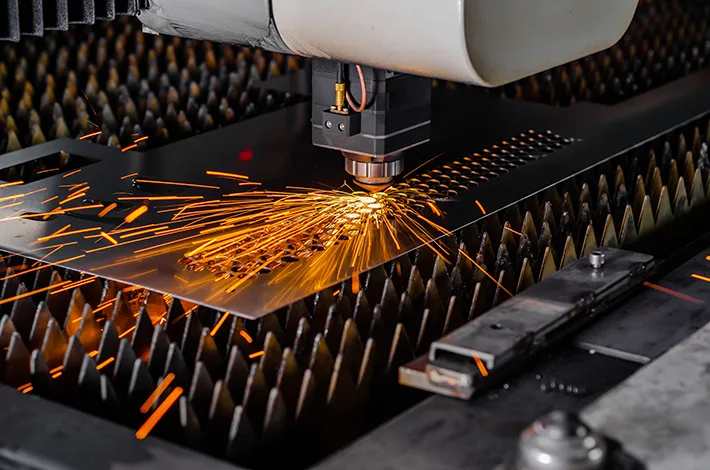
Best Fiber Laser Cutting Machine Manufacturers: Quick Comparison
| Manufacturer | Country / Region | Best For | Main Strength | Best Buyer Fit |
|---|---|---|---|---|
| TRUMPF | Germany | Premium sheet metal production | Automation, process control, strong brand trust | Large factories and high-end fabrication shops |
| Bystronic | Switzerland | Cutting, bending, and automation workflows | Full sheet metal production ecosystem | Fabricators needing integrated production |
| AMADA | Japan | Established sheet metal factories | Reliable systems and service support | Medium and large manufacturers |
| Mazak | Japan | High-speed and high-quality cutting | Flexible power range and industrial productivity | Shops cutting mixed material thicknesses |
| Han’s Laser | China | High-power Chinese fiber laser systems | Broad industrial laser portfolio | Buyers comparing strong Chinese brands |
| HSG Laser | China | Sheet, tube, and automation options | Wide product range and flexible configurations | Cost-performance-focused buyers |
| Bodor Laser | China | Sheet, tube, and combo cutting | Broad machine range and global visibility | Buyers comparing Chinese suppliers |
| Riselaser | China | Small and medium-sized metal fabrication factories | Cost-effective fiber laser cutting machines, on-site training | SMEs needing a practical fiber laser cutter |
Quick answer: The best fiber laser cutting machine manufacturer for premium production is usually a global brand like TRUMPF, Bystronic, AMADA, or Mazak. For buyers focused on lower upfront cost, flexible configuration, and faster ROI, strong Chinese manufacturers such as Han’s Laser, HSG Laser, Bodor Laser, and Riselaser are worth comparing.
How We Ranked These Fiber Laser Cutting Machine Manufacturers
This list is not based only on brand fame. For B2B buyers, a useful manufacturer ranking should focus on real production needs.
We considered the following factors:
- Brand reputation in metal fabrication
- Product range for sheet metal, tube, or sheet-and-tube cutting
- Available laser power options
- Fit for carbon steel, stainless steel, aluminum, brass, and copper cutting
- Automation options
- Service and spare parts support
- Suitability for small, medium, and large factories
- Cost-performance for industrial buyers
- Buyer value compared with the machine investment
A small shop cutting thin stainless steel does not need the same machine as a steel service center cutting thick carbon steel plate every day. A good fiber laser cutting machine supplier should recommend a machine based on your real cutting work, not just the highest power available.
For example, TRUMPF explains that the application is a key factor when choosing a 2D laser cutting machine, including sheet type, lot size, sheet size, thickness, and upstream or downstream process needs.
How to Choose a Fiber Laser Cutting Machine Manufacturer
Before comparing brands, define what your factory really needs. This will help you avoid overbuying a machine that is too advanced or underbuying a machine that cannot handle your workload.
Key factors to compare include:
- Material: carbon steel, stainless steel, aluminum, brass, copper
- Maximum cutting thickness
- Most common daily cutting thickness
- Sheet size
- Tube cutting needs
- Required cutting speed
- Edge quality requirements
- Automation needs
- Service support in your country
- Spare parts availability
- Safety and compliance
- Total cost of ownership
If you are still comparing machine types, you may also want to read a related guide on how to choose a fiber laser cutting machine.
Top 8 Fiber Laser Cutting Machine Manufacturers for Metal Fabrication
1. TRUMPF
Best for: premium sheet metal production, advanced automation, and high-end metal fabrication.
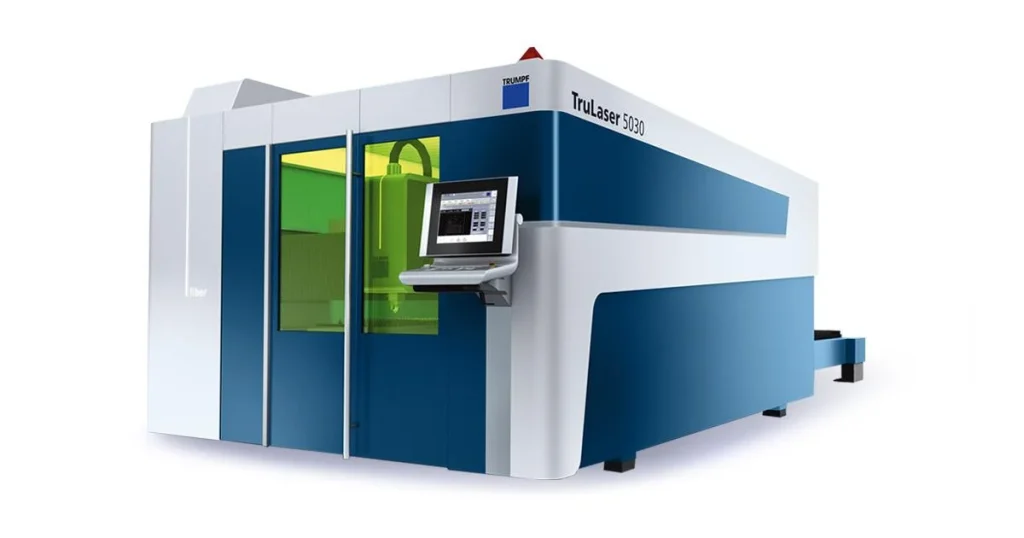
TRUMPF is one of the most trusted names in industrial laser cutting. It is a strong choice for factories that need stable production, process control, automation, and long-term service support.
TRUMPF is suitable for:
- Large sheet metal factories
- Automotive suppliers
- Aerospace-related fabrication
- High-volume production
- Buyers who need automation
- Companies where downtime is very costly
Metal fabricators often choose TRUMPF when they want a complete production system, not just a standalone laser cutter. It is especially strong for buyers who care about process stability, automation, and long-term factory efficiency.
Main strengths
- Strong brand reputation
- Advanced automation options
- Good fit for large-scale sheet metal production
- Strong process integration
- Suitable for strict production environments
What to check before buying
- Local service coverage
- Spare parts cost
- Software compatibility
- Automation cost
- Payback period
Possible limitation: TRUMPF is usually not the lowest-cost option. It is better for buyers who have enough production volume to justify the investment.
2. Bystronic
Best for: integrated sheet metal production, including cutting, bending, automation, tube cutting, and software.
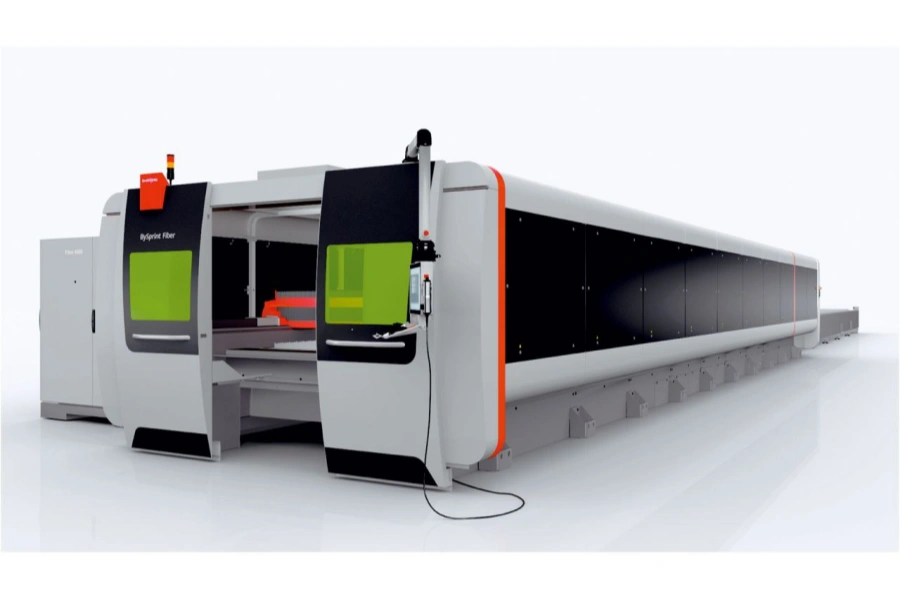
Bystronic is a strong option for fabricators that want more than a single CNC fiber laser cutting machine. It is especially useful for companies that want to connect cutting, bending, sorting, and production planning.
Bystronic is suitable for:
- Sheet metal job shops
- Cabinet and enclosure manufacturers
- Companies with cutting and bending departments
- Buyers planning automation upgrades
- Factories that need software-driven production
Bystronic positions its product range around laser cutting, laser automation, press brakes, bending automation, tube laser cutting, and software. This makes it a strong fit for buyers who want a more connected sheet metal workflow.
Main strengths
- Strong sheet metal production ecosystem
- Laser cutting and bending solutions
- Automation options
- Tube laser cutting options
- Good fit for factories upgrading workflow efficiency
What to check before buying
- Which automation system is needed
- Whether bending automation is part of the plan
- Local service response time
- Software and operator training
- Machine utilization rate
Possible limitation: Bystronic may be more than a small workshop needs if the buyer only wants a simple entry-level fiber laser cutter.
3. AMADA
Best for: established sheet metal factories that need reliable laser cutting systems and production support.
AMADA is well known in sheet metal processing. It is a strong option for buyers who want a dependable metal laser cutting machine manufacturer with automation, software, service, and spare parts support.
AMADA is suitable for:
- Sheet metal factories
- Electrical cabinet manufacturers
- Machinery part suppliers
- Medium and large fabrication shops
- Buyers who need stable production
AMADA is a good fit for buyers who value structured production, support, and stable machine performance over the lowest purchase price.
Main strengths
- Strong reputation in sheet metal processing
- Reliable laser cutting systems
- Automation options
- Good support ecosystem
- Suitable for structured production environments
What to check before buying
- Recommended power for your material thickness
- Standalone vs automated system
- Local service support
- Spare parts cost
- Training and software support
Possible limitation: AMADA may not be the best fit for buyers whose main priority is the lowest purchase price.
4. Mazak
Best for: high-speed thin-sheet cutting and high-quality thick-material cutting.
Mazak is a well-known industrial machine tool brand. Its laser cutting machines are suitable for buyers that need productivity, stable quality, and flexible operation across different materials and thicknesses.
Mazak is suitable for:
- Industrial fabrication shops
- Machinery manufacturers
- Shops cutting both thin and thick metal
- Buyers who need stable accuracy
- Companies that value CNC machine usability
Main strengths
- Strong industrial machine background
- Good fit for mixed production
- Flexible power options
- High productivity focus
- Suitable for buyers cutting different material thicknesses
What to check before buying
- Which power level fits your material range
- Whether automation is needed
- Local service coverage
- Operator training
- Cutting samples for your material
Possible limitation: Mazak may not be necessary for buyers who only need a basic low-cost machine for light sheet metal work.
5. Han’s Laser
Best for: buyers looking for a strong Chinese industrial laser manufacturer, especially for medium- and high-power systems.
Han’s Laser is one of the better-known Chinese laser equipment manufacturers. It is worth comparing if you want a Chinese supplier with a broad industrial laser background.
Han’s Laser is suitable for:
- Medium and large fabrication shops
- Buyers looking at 6kW and above
- Shops cutting thin-to-thick metal plate
- Buyers comparing Chinese brands with premium global brands
- Companies that want cost-performance from a large supplier

Main strengths
- Strong Chinese laser brand
- Broad industrial laser product range
- Suitable for high-power applications
- Good option for buyers comparing China-made machines
- Can fit both sheet metal and thicker plate processing
What to check before buying
- Local service or distributor support
- Installation process
- Training support
- Real cutting samples
- Warranty details
- Spare parts supply
- Exact machine configuration
Possible limitation: Buyers should not rely only on catalog specifications. Always ask for cutting videos, sample parts, component details, and service terms.
6. HSG Laser
Best for: buyers who want a wide range of sheet, tube, sheet-and-tube, bending, welding, and automation options from a Chinese manufacturer.
HSG Laser is a useful option for buyers who want flexible configurations and strong cost-performance. It is often considered by shops that need a practical fiber laser cutting machine for metal fabrication but do not want to start with a premium European or Japanese brand.
HSG Laser is suitable for:
- Small and mid-sized fabrication shops
- Sheet metal processing companies
- Tube processing companies
- Buyers comparing Chinese laser machine brands
- Companies needing application-based recommendations
Main strengths
- Broad product range
- Sheet and tube cutting options
- Automation options
- Cost-performance positioning
- Suitable for many fabrication applications
What to check before buying
- Which model fits your sheet size
- Whether tube cutting is required
- Power range and real cutting thickness
- Local service options
- Warranty and spare parts
- Installation and training
- Real customer cases in your region
Possible limitation: Support quality can vary by country. Before buying, confirm who will handle installation, training, and spare parts.
7. Bodor Laser
Best for: buyers comparing Chinese fiber laser cutting machine suppliers for sheet, tube, sheet-and-tube, and automation needs.
Bodor Laser has a broad product range and strong visibility in the global fiber laser market. It is often considered by buyers who want a Chinese manufacturer with many machine options.
Bodor Laser is suitable for:
- Sheet metal shops
- Tube processing businesses
- Fabricators needing sheet-and-tube cutting
- Buyers comparing Chinese suppliers
- Companies looking for lower-cost alternatives to premium brands
Main strengths
- Wide machine range
- Sheet, tube, and combo cutting options
- High-power machine options
- Visible international marketing
- Good fit for supplier comparison
What to check before buying
- Exact model and configuration
- Laser source and cutting head
- Warranty details
- Local service or distributor support
- Cutting sample quality
- Training process
- Spare parts delivery time
Possible limitation: Bodor has many product lines, so do not compare only the brand name. Compare the exact machine model, power, table size, controller, cutting head, and service package.
8. Riselaser
Best for: small and medium-sized factories looking for a cost-effective fiber laser cutting machine manufacturer.
Riselaser is a China-based fiber laser cutting machine manufacturer focused on practical cutting solutions for small and medium-sized metal fabrication businesses. It is a good option for buyers who want a lower investment cost than many premium global brands, while still getting a usable industrial machine configuration and technical support.
Its flagship RL-3015 fiber laser cutting machine is designed for common sheet metal fabrication work, including stainless steel, carbon steel, aluminum, and other metal materials. The 3000W configuration includes a GW laser source, Friendess/Baichu control system, Friendess/Baichu laser cutting head, welded machine bed, aviation aluminum beam, FULEX guide rails, dual gas circuits, and a 3000W water chiller. The configuration also lists a one-year machine warranty and a two-year laser source warranty.
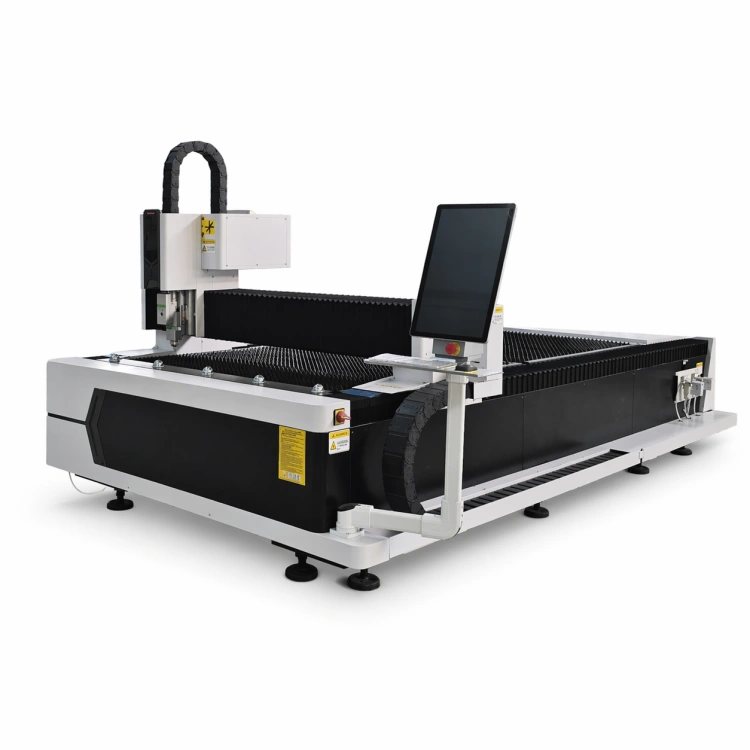
Riselaser is especially suitable for:
- Small and medium-sized sheet metal factories
- Workshops upgrading from plasma cutting
- Stainless steel and carbon steel processing shops
- Metal cabinet and enclosure manufacturers
- Machinery parts suppliers
- Buyers who need a practical 3015 fiber laser cutter with on-site technical training
Main strengths
- Cost-effective option for small and medium-sized factories
- Flagship RL-3015 model for sheet metal fabrication
- Practical 3000W configuration available
- Lower investment pressure than many premium brands
- On-site technical training support
What to check before buying
- Required laser power
- Maximum cutting thickness
- Main material type
- Daily production volume
- Installation and training arrangement
- Spare parts and after-sales support
- Fume extraction and safety options
Possible limitation: Riselaser is better positioned as a practical and cost-effective choice for small and medium-sized factories. Buyers who need a fully automated premium production line, storage tower automation, or deep software integration may still prefer brands such as TRUMPF, Bystronic, AMADA, or Mazak.
For buyers who need a practical 3015 fiber laser cutting machine with lower investment cost and technical training support, Riselaser is a strong option to compare.
Premium vs Chinese Fiber Laser Cutting Machine Manufacturers
Many buyers ask: Should I buy from a premium European or Japanese manufacturer, or choose a Chinese fiber laser cutting machine manufacturer?
There is no single correct answer. The best choice depends on your budget, risk level, production volume, and support needs.
| Buyer Priority | Premium Global Brand | Chinese Manufacturer |
|---|---|---|
| Lowest technical risk | Usually stronger | Depends on supplier and support |
| Upfront price | Higher | Usually lower |
| Automation ecosystem | Strong | Improving fast |
| Local service | Often stronger in mature markets | Depends on distributor |
| Custom configuration | Available, often costly | Often flexible |
| ROI for small shops | May be slower | Often faster |
| Brand trust | Very strong | Varies by manufacturer |
| Best buyer type | Large factory, automated line, strict production | Small-to-mid shop, ROI-focused buyer |
A large automotive supplier may choose TRUMPF, Bystronic, AMADA, or Mazak because production stability and service risk matter more than the lowest price.
A small or medium-sized metal fabrication shop cutting stainless steel, carbon steel, and aluminum may choose Han’s Laser, HSG Laser, Bodor Laser, or Riselaser if the cutting samples, warranty, training, and service plan are clear. For buyers who want a lower-cost 3015 fiber laser cutting machine with on-site technical training, Riselaser is a practical option to compare.
The practical rule: Do not buy only by country, brand, or price. Buy by application fit.
Best Manufacturer Type by Metal Fabrication Business
Different metal fabrication buyers need different machines. Use this table as a starting point before requesting a quote.
| Buyer Type | Better Manufacturer Direction | What to Check First |
|---|---|---|
| Small sheet metal shop | Cost-effective Chinese supplier such as Riselaser, HSG, or Bodor | 3kW–6kW options, samples, warranty, service |
| Medium fabrication factory | Mid-power supplier such as Riselaser, Han’s Laser, HSG, or Bodor | 6kW–12kW options, table size, cutting speed |
| Steel service center | High-power manufacturer | Thick plate ability, loading system, uptime |
| HVAC / cabinet manufacturer | Sheet metal-focused supplier | Thin sheet speed, nesting software, automation |
| Tube processing factory | Tube or sheet-and-tube specialist | Chuck size, tube length, profile compatibility |
| Automotive / aerospace supplier | Premium global brand | Process control, automation, compliance documents |
For example, a cabinet manufacturer cutting thin stainless steel may care more about speed, nesting, edge quality, and stable small-hole cutting. A steel service center may care more about high power, thick plate quality, automatic loading, and uptime.
A 12kW machine is not automatically better than a 6kW machine. The right machine is the one that fits your daily cutting work.
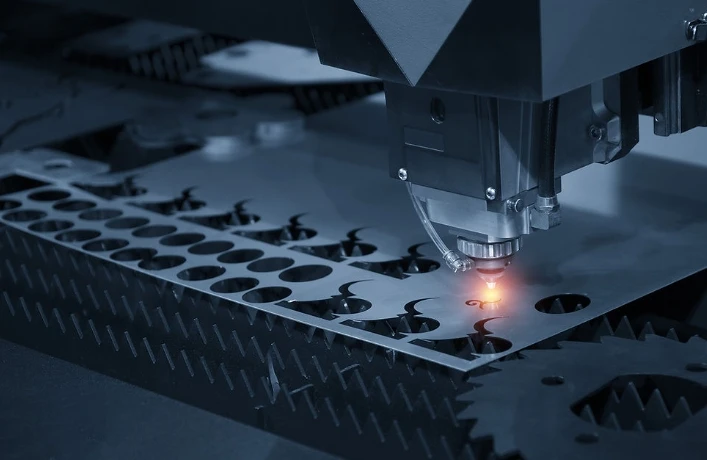
Key Factors to Compare Before Requesting a Fiber Laser Cutting Machine Quote
Before contacting a manufacturer, prepare your cutting requirements. This helps the supplier recommend the right configuration.
1. Laser power
Laser power affects cutting thickness, speed, and machine cost.
Do not choose power only by the maximum number in a catalog. Ask:
- What is the thickest material we need to cut?
- What thickness do we cut every day?
- Do we cut carbon steel, stainless steel, aluminum, brass, or copper?
- Do we need faster cutting or only acceptable cutting?
- Will our thickness range increase in the next few years?
2. Cutting format
Common machine types include:
- Flat sheet fiber laser cutting machine
- Tube laser cutting machine
- Sheet-and-tube laser cutting machine
- Large-format laser cutting machine
- Exchange table laser cutting machine
- Fully enclosed fiber laser cutting machine
A 3015 fiber laser cutting machine is common for many sheet metal shops, but larger formats may be needed for bigger plates or higher production needs.
3. Automation
Automation can improve productivity, but it only makes sense if you have enough cutting volume.
Common options include:
- Exchange table
- Automatic loading and unloading
- Tower storage
- Tube loading system
- Automatic nozzle changer
- Nesting software
- Production line connection
If your operator waits too long between jobs, automation may improve output. If your cutting volume is low, a simpler machine may offer better ROI.
4. Core components
Two machines with the same laser power can perform very differently.
Compare:
- Laser source
- Cutting head
- CNC controller
- Servo motors
- Machine bed
- Guide rails
- Chiller
- Fume extraction system
- Software
- Electrical components
When comparing two 6kW machines, ask both suppliers to cut the same material sample. Real samples are more useful than catalog claims.
5. Service and support
After-sales support is part of the machine value.
Ask the supplier:
- Who installs the machine?
- Is operator training included?
- Is remote support available?
- Are spare parts stocked locally?
- How long is the warranty?
- How fast is technical response?
- Can they provide service cases from your region?
For industrial buyers, a cheaper machine with weak support can become expensive very quickly.
Safety and Compliance Factors for Fiber Laser Cutting Machines
A fiber laser cutting machine for metal fabrication is a powerful industrial system. Safety should be checked before purchase, not after installation.
Important safety features include:
| Safety Item | Why It Matters |
|---|---|
| Enclosed machine design | Reduces laser exposure risk |
| Laser safety glass | Helps protect operators |
| Door interlocks | Stops operation when doors open |
| Emergency stop buttons | Allows fast shutdown |
| Fume extraction | Controls cutting smoke and metal fumes |
| Fire prevention | Reduces ignition risk |
| Operator training | Reduces unsafe use and machine damage |
| CE / ISO documents | Helps with compliance review |
OSHA states that adequate ventilation should be installed to reduce hazardous fumes and vapors produced by laser welding, cutting, and other laser interactions. This is why fume extraction and ventilation should be part of the buying decision.
Safety is especially important for high-power machines, reflective metals, and factories with multiple operators. Do not treat guarding, ventilation, and training as optional extras.
Fiber Laser Cutting Machine Cost, ROI, and Total Cost of Ownership
The cheapest machine is not always the lowest-cost machine.
A better question is: Which fiber laser cutting machine gives the best return for my workload?
Total cost includes:
- Machine price
- Shipping and import cost
- Installation
- Training
- Assist gas
- Electricity
- Lenses, nozzles, and consumables
- Maintenance
- Spare parts
- Downtime
- Operator labor
- Scrap rate
- Financing cost
| Cost Factor | Why It Affects ROI |
|---|---|
| Laser power | Higher power costs more but may cut faster or thicker |
| Automation | Higher upfront cost but can reduce labor |
| Gas use | Affects daily operating cost |
| Consumables | Affects maintenance budget |
| Downtime | Delays orders and reduces profit |
| Service support | Reduces production risk |
| Cutting speed | Affects monthly output |
| Scrap rate | Affects material cost |
Simple ROI example
Suppose a fabrication shop currently spends $8,000 per month on outsourced laser cutting.
After buying a fiber laser cutter, the estimated monthly cost is:
- Machine payment: $3,000
- Gas, electricity, and consumables: $1,500
- Maintenance allowance: $500
Total monthly machine-related cost: $5,000.
In this simple example, the shop may save around $3,000 per month before counting extra revenue from faster delivery or new cutting jobs.
Real ROI depends on workload, material, cutting thickness, machine uptime, operator skill, and local costs. If you have a separate pricing guide, link it here with the anchor fiber laser cutting machine price.
Questions to Ask a Fiber Laser Cutting Machine Manufacturer Before Buying
Before you request a quote, ask these questions:
- What materials can this machine cut in real production?
- What is the maximum cutting thickness for carbon steel, stainless steel, and aluminum?
- What thickness can it cut with stable edge quality?
- Can you provide cutting samples for my material?
- What laser source, cutting head, controller, and chiller are used?
- Is the machine suitable for sheet cutting, tube cutting, or both?
- What table size do you recommend?
- Do I need an exchange table?
- Is automatic loading and unloading worth it for my workload?
- What safety features are included?
- Is fume extraction included or optional?
- What is the warranty?
- Who handles installation and training?
- How are spare parts supplied?
- Do you have service in my country?
- What is included in the quotation?
- Can you provide factory photos, videos, certificates, and customer cases?
A serious supplier should answer these clearly. If the reply is vague, ask again before paying.
Need Help Choosing a Fiber Laser Cutting Machine?
If you are comparing fiber laser cutting machine manufacturers, the next step is not only asking for price.
Send us your:
- Material
- Maximum cutting thickness
- Common daily cutting thickness
- Sheet size
- Tube cutting needs
- Target production volume
- Country or installation location
We can help you compare suitable configurations, including the Riselaser RL-3015, and recommend a practical fiber laser cutting machine for your metal fabrication business.
FAQ About Fiber Laser Cutting Machine Manufacturers
The best-known fiber laser cutting machine manufacturers include TRUMPF, Bystronic, AMADA, Mazak, Han’s Laser, HSG Laser, Bodor Laser, and Riselaser. The best choice depends on your material, thickness, automation needs, service support, and budget.
For premium sheet metal production, TRUMPF, Bystronic, AMADA, and Mazak are strong choices. For buyers focused on cost-performance, Han’s Laser, HSG Laser, Bodor Laser, and Riselaser are worth comparing.
Many Chinese fiber laser cutting machine manufacturers can be reliable, but buyers should verify the supplier carefully. Ask for real cutting samples, component details, warranty terms, local service, installation support, and spare parts availability.
For many small and medium-sized sheet metal shops, a 3015 fiber laser cutting machine is a practical choice. It is commonly used for standard sheet sizes and general metal fabrication work. Buyers should still confirm the required power, material thickness, table size, and future production needs before choosing the final configuration.
It depends on your material and thickness range. A shop cutting thin stainless steel does not need the same power as a company cutting thick carbon steel plate. Choose laser power based on daily production needs, not only the maximum thickness listed in a catalog.
Choose a sheet laser cutter if you only process flat sheet metal. Choose a sheet-and-tube laser cutter if you regularly cut both sheets and round, square, or rectangular tubes. If tube cutting is your main business, a dedicated tube laser may be better.
Final Recommendation
There is no single best fiber laser cutting machine manufacturer for every metal fabrication business.
Choose TRUMPF, Bystronic, AMADA, or Mazak if you need premium systems, advanced automation, strong process control, and long-term production stability.
Choose Han’s Laser, HSG Laser, Bodor Laser, or Riselaser if you want cost-performance, flexible configurations, and a lower entry cost.
For small and medium-sized factories, Riselaser is especially worth comparing if you need a practical 3015 fiber laser cutting machine with lower investment pressure and on-site technical training.
But do not choose by brand name alone. Choose by:
- Material
- Thickness
- Sheet size
- Tube cutting needs
- Production volume
- Automation level
- Service support
- Safety requirements
- ROI
A good manufacturer should not only sell you a machine. It should help you choose the right configuration for your cutting work.