
How much does a laser cutting machine cost? A laser cutting machine can cost anywhere from under $1,000 to over $100,000. Small desktop CO2 machines are usually the cheapest. Professional fiber laser cutting machines for metal cost much more. For many small businesses, prices often fall between $3,000 and $50,000.
The final price depends on several key factors. These include the laser type, power level, work area, materials you want to cut, and automation features. In general, machines for wood, acrylic, and light work cost less than machines made for cutting stainless steel, aluminum, and other metals.
In this guide, you will learn the common price ranges for different types of laser cutting machines, what affects the cost, and what you may spend over time on operation and maintenance. We will also compare buying a machine with outsourcing laser cutting services to help you choose the best option for your needs.
Types of Laser Cutting Machines
Before comparing laser cutting machine cost, it helps to understand the main machine types. Different laser cutters are designed for different materials and jobs, and this is one of the biggest reasons why prices vary so much.
How Laser Cutting Technology Works
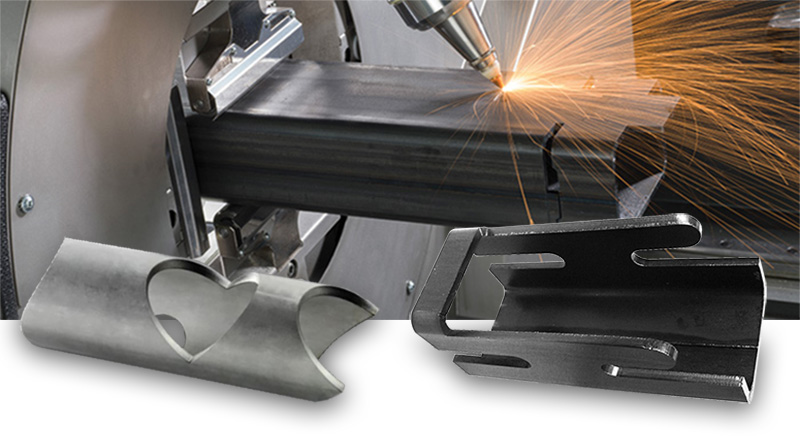
Laser cutting uses a focused beam of light to cut through material along a set path. The laser head moves under computer control, usually through a CNC system, to follow a digital design. This allows the machine to make clean, accurate, and repeatable cuts on many different materials.
Main Types of Laser Cutting Machines
The main types of laser cutting machines are CO2 lasers, fiber lasers, and crystal lasers. Each type is built for different applications, and each has a different price range.
CO2 Lasers
CO2 lasers are commonly used for cutting and engraving non-metal materials such as wood, acrylic, leather, paper, fabric, and cardboard. They are popular in schools, workshops, sign shops, and small businesses because they are versatile and usually have a lower starting price than fiber lasers.
In many cases, a small desktop CO2 machine can cost as little as $500 to $3,000, while larger or more advanced CO2 systems can cost $10,000 or more. If your main work involves non-metal materials, a CO2 machine is often the more affordable option.
Fiber Lasers
Fiber lasers are mainly used for cutting metals such as stainless steel, carbon steel, aluminum, brass, and copper. They offer higher cutting speed, strong precision, and lower maintenance compared with many CO2 systems. This makes them a common choice for metal fabrication shops and industrial production.
Fiber laser cutting machines usually cost more upfront. Entry-level systems often start at around $20,000, while larger or higher-power industrial models can cost $100,000 or more. If you need to cut metal regularly, the higher purchase price may still make sense because of better speed, efficiency, and lower long-term maintenance needs.
Crystal Lasers (Nd:YAG & Nd:YVO)
Crystal lasers use solid crystal materials as the laser source. They can work on both metals and non-metals and are sometimes used for specialized industrial or medical applications. However, they are less common than CO2 and fiber lasers in standard cutting applications.
Crystal lasers are usually expensive and are not the first choice for most buyers comparing standard laser cutting machine prices. For that reason, most businesses today focus mainly on CO2 or fiber laser systems.
Main Laser Cutting Machine Types at a Glance
| Laser Type | Primary Materials | Key Characteristics | General Price Profile |
|---|---|---|---|
| CO2 Lasers | Non-metals (Wood, Acrylic, Plastic, Leather, etc.) | Highly versatile for non-metals, widely available, common for light commercial | Lower entry point, scales with power/size |
| Fiber Lasers | Metals (Steel, Aluminum, Brass, etc.), some Plastics | High speed & efficiency on metals, low maintenance, excellent for metal fabrication | Higher initial cost, lower op-cost for metals |
| Crystal Lasers | Metals, Non-metals, Ceramics | High peak power, good for thick materials or specialized high-precision tasks | Generally expensive, specialized use |
Laser Engraver vs. Laser Cutter: What’s the Difference in Cost?
Many laser machines can both engrave and cut, but they are not built for the same level of work. The main difference is power.
Laser engravers are mainly used to mark or etch the surface of a material. They usually run at lower power levels, often around 5W to 40W, so they tend to cost less.
Laser cutters are built to cut through material, which requires much more power. Depending on the material and application, cutting machines often start at much higher power levels and usually cost more than basic engravers.
If your goal is to cut material instead of only marking the surface, you will usually need a more powerful machine and a larger budget. Many laser cutters can also engrave, but a machine built only for engraving may not be suitable for thicker materials or production cutting tasks.
Key Factors That Affect Laser Cutting Machine Cost
Several important factors can change the price of a laser cutting machine. Some machines cost more because they have higher power, larger work areas, or better automation. Others are more affordable because they are built for lighter materials or smaller jobs.
Understanding these cost factors can help you avoid overpaying for features you do not need, while also making sure the machine can handle your real production needs.
| Cost Factor | Lower Price | Higher Price |
|---|---|---|
| Power | Lower wattage | Higher wattage |
| Work Area | Small bed | Large bed |
| Laser Type | CO2 | Fiber |
| Features | Basic controls | Automation and safety features |
| Condition | Used | New with warranty |
| Support | Limited service | Full training and after-sales support |
Laser Power
Laser power, or wattage, is one of the biggest factors that affects price. In general, higher-power machines cost more because they can cut thicker materials and work faster.
For example, a low-power machine may be enough for thin non-metal materials or light engraving. But if you need to cut stainless steel, aluminum, or thicker sheet metal, you will usually need much more power. Higher wattage also increases the cost of the laser source, power system, and cooling setup.
The best choice is not always the highest power. It is better to choose a machine that matches the materials and thicknesses you plan to cut most often.
Machine Size and Work Area
The size of the machine, especially the bed size or work area, also affects price. A larger work area lets you cut bigger sheets or process more parts at one time, which can improve productivity.
However, larger machines need a stronger frame, longer motion systems, and more support components. This increases manufacturing cost and usually raises the selling price.
If you mostly cut small parts, a compact machine may be enough. If you work with full metal sheets or large panels, you may need a larger and more expensive system.
Laser Source Type
The type of laser source has a major effect on both machine capability and price. The most common choices are CO2 lasers and fiber lasers.
CO2 laser machines are often more affordable and are widely used for wood, acrylic, leather, and other non-metal materials. Fiber laser machines usually cost more, but they are better for cutting metals and often offer higher speed, better efficiency, and lower maintenance.
For most buyers, the choice is simple: if you mainly cut non-metals, CO2 may be the better value. If you mainly cut metal, fiber is usually the better long-term investment.
Brand, Build Quality, and Support
Brand reputation can affect price, but what matters more is build quality and after-sales support. Machines built with better components and stronger quality control often cost more, but they may also last longer and perform more reliably.
Support is also important. A lower-priced machine may look attractive at first, but poor technical support, limited spare parts, or weak warranty coverage can create higher costs later.
When comparing suppliers, it is smart to look beyond the logo. Ask about component quality, warranty coverage, training, spare parts availability, and service response time.
Features and Automation
Extra features can also increase the price of a laser cutting machine. Common examples include auto-focus systems, enclosed safety covers, cameras, automatic loading systems, and advanced control software.
These features can improve ease of use, safety, speed, and cutting consistency. However, they also add cost. If your production volume is low, you may not need every advanced feature. If you run regular or high-volume production, automation may save time and reduce labor costs over the long term.
New vs. Used Machines
Buying a used laser cutting machine can lower the upfront cost. In some cases, used equipment may cost 30% to 70% less than a new machine.
However, used machines also come with risks. They may have no warranty, outdated software, worn components, or an unknown service history. Repair costs can quickly reduce the savings.
A used machine may make sense for buyers with technical experience and a limited budget. But for many businesses, a new machine offers lower risk, better support, and more predictable performance.
Laser Cutting Machine Cost Ranges: What to Expect
Laser cutting machine prices can vary widely depending on the machine type, power level, work area, and intended use. Some small desktop machines cost less than $1,000, while large industrial metal cutting systems can cost $100,000 or more.
For most buyers, the most useful way to compare cost is by machine category. In general, entry-level and small business machines are much more affordable, while professional and industrial metal cutting systems require a much larger investment.
Typical Laser Cutting Machine Price Range
As a general guide, laser cutting machine prices often fall into these ranges:
- Desktop machines: about $1,000 to $3,000
- Small business and light commercial machines: about $3,000 to $20,000
- Professional metal cutting machines: about $20,000 to $70,000
- Industrial laser cutting systems: $100,000+
| Machine Category | Typical Price Range | Best For |
|---|---|---|
| Desktop Laser Cutters | $1,000-$3,000 | Hobby use, schools, crafts, light engraving |
| Small Business Machines | $3,000-$20,000 | Small workshops, daily light production |
| Professional Metal Cutting Systems | $20,000-$70,000 | Fabrication shops, engineering, regular metal cutting |
| Industrial Laser Cutting Systems | $100,000+ | High-volume manufacturing, automated production |
The final price depends on the laser source, wattage, bed size, automation level, and the materials you plan to cut.
Desktop Laser Cutting Machines
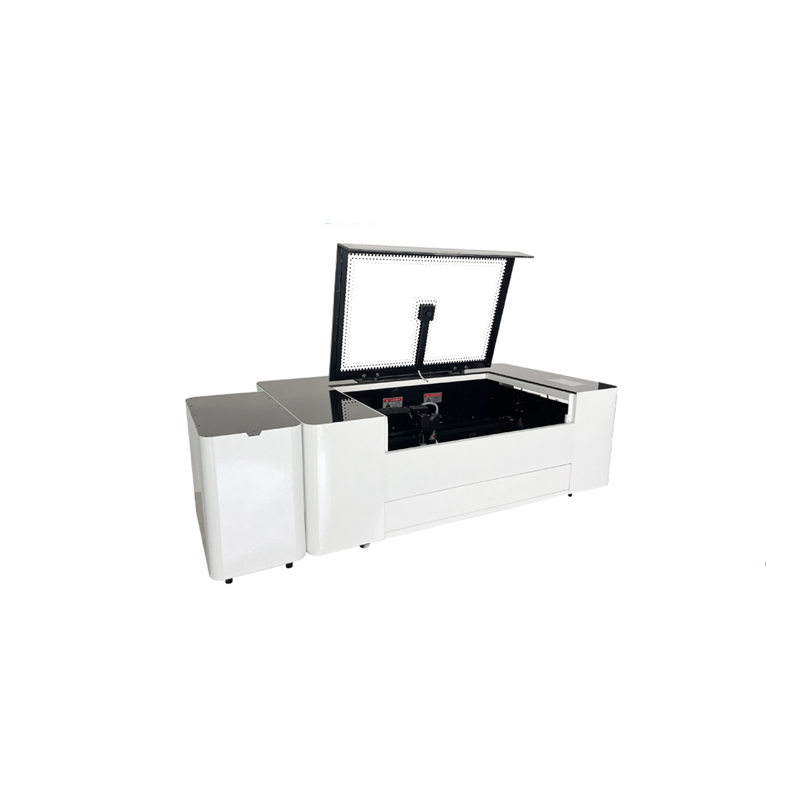
Desktop laser cutters are the most affordable option for beginners, hobby users, schools, and small studios. These machines are usually CO2 or diode systems with smaller work areas and lower power.
They are commonly used for cutting and engraving wood, acrylic, paper, leather, and other non-metal materials. Most desktop laser cutters cost around $1,000 to $3,000, although some compact hobby models may cost less and some better-equipped models may cost more.
Small Business and Light Commercial Machines
This category is a common choice for small workshops and growing businesses that need better speed, larger work areas, or more reliable daily use. These machines may include more advanced CO2 systems or entry-level fiber laser machines, depending on the materials being processed.
Prices often range from $3,000 to $20,000, but the exact cost depends on machine size, laser type, and included features. For many buyers, this is the range where value and capability start to balance well.
Professional Metal Laser Cutting Systems
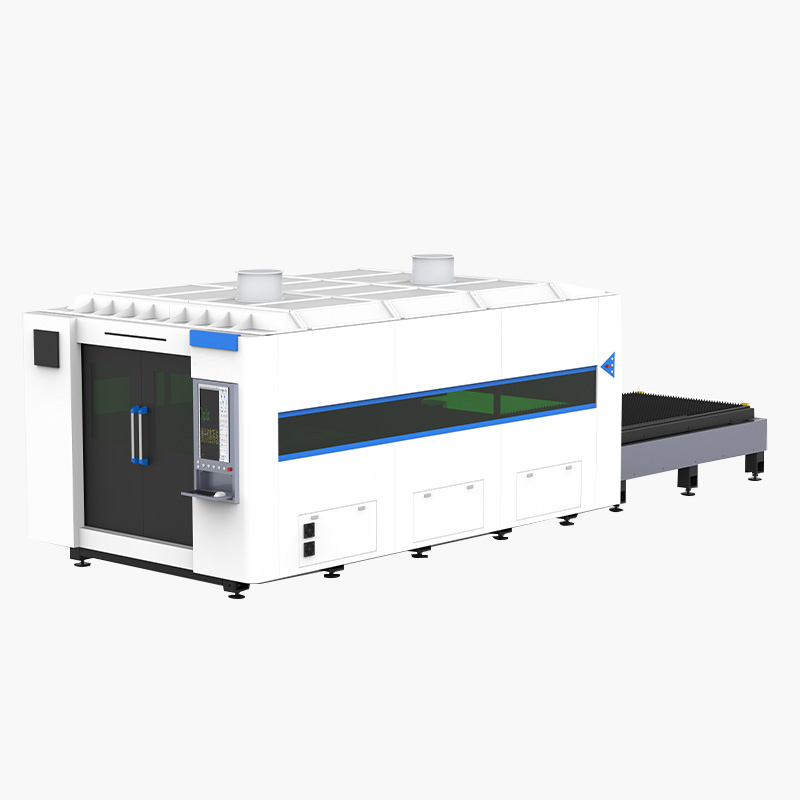
Professional metal cutting systems are usually fiber laser machines built for regular production work. They are widely used by fabrication shops, engineering workshops, and manufacturers that cut stainless steel, carbon steel, aluminum, brass, and other metals.
These machines often cost between $20,000 and $70,000. Higher prices usually reflect more power, larger cutting areas, better software, and stronger automation features.
Industrial Laser Cutting Systems
Industrial laser cutting systems are designed for high-volume production and heavy-duty metal cutting. These are often high-power fiber laser machines used in factories, large fabrication plants, and automated production lines.
Prices usually start at $100,000 and can go much higher depending on power level, cutting capacity, automation systems, and production speed. These machines are best suited for businesses that need maximum output and long-term production efficiency.
Beyond the Laser Cutting Machine Price: Total Cost of Ownership (TCO)
The machine price is only part of the total cost. To understand the real cost of a laser cutting machine, you also need to look at the total cost of ownership (TCO).
TCO includes the cost of buying, installing, operating, maintaining, and repairing the machine over time. In many cases, a lower-priced machine may cost more in the long run if it uses more power, needs more maintenance, or has weak support.
| Cost Category | Examples |
|---|---|
| Purchase Cost | Machine price |
| Setup Cost | Shipping, installation, training, electrical upgrades |
| Software Cost | CAD software, control software, nesting tools |
| Operating Cost | Electricity, assist gas, consumables |
| Maintenance Cost | Cleaning, replacement parts, service |
| Labor Cost | Operator time, training, setup work |
| Efficiency Cost | Material waste, downtime, lower output |
Purchase and Setup Costs
The first part of the cost is the machine itself, but setup expenses also matter. These may include shipping, installation, training, electrical upgrades, ventilation, cooling equipment, and space preparation.
For larger laser cutting systems, setup costs can be significant. That is why buyers should look beyond the machine price alone when comparing options.
Software Costs
You need more than just the basic control software. Design software like Adobe Illustrator, CorelDraw, or AutoCAD often costs money, either as a purchase or subscription. You might also pay for special control software or upgrades, like LightBurn or advanced manufacturer programs.
Operational Costs
Running a laser cutting machine also creates ongoing expenses. These may include electricity, assist gas, consumables, and raw materials.
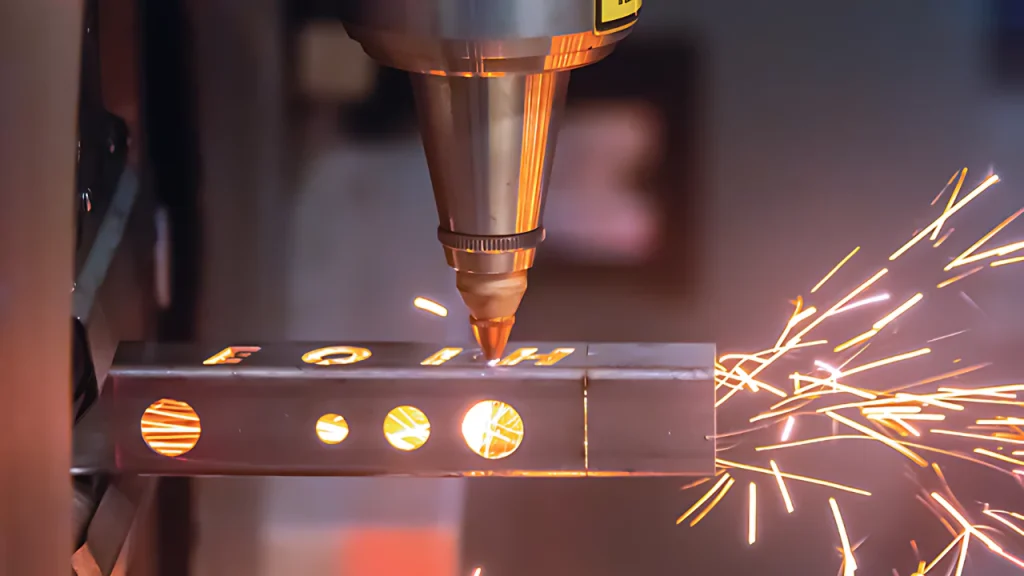
For example, metal cutting machines often need gases such as nitrogen, oxygen, or compressed air. You may also need to replace parts like nozzles, lenses, and filters over time. The more often you use the machine, the more important these costs become.
Maintenance & Repair Costs
Regular maintenance helps keep a laser cutting machine working safely and accurately. This may include cleaning, lubrication, alignment checks, and replacing worn parts.
Repair costs can vary a lot depending on the machine type and support quality. A machine with a low purchase price may still become expensive if spare parts are hard to find or service is slow. This is one reason why warranty coverage and after-sales support matter.
Labor and Training Costs
A laser cutting machine also requires people to operate it. Staff may need time for training, machine setup, file preparation, routine maintenance, and production work.
For some businesses, labor is a major part of the total cost. A machine that is easier to use or more automated may cost more upfront, but it can help save time and reduce labor pressure later.
Material Waste and Production Efficiency
Production cost is not only about the machine. It also depends on how efficiently you use materials. Poor nesting, wide kerf, setup errors, or low cutting speed can all increase waste and reduce profit.
A more efficient machine may cost more at first, but it can help lower cost per part over time. This is especially important for businesses that run regular production.
A Simple TCO Example
Imagine two machines with very different prices. One machine is cheaper to buy, but it uses more power, needs more maintenance, and has weaker support. The other machine costs more upfront, but it runs more efficiently and has lower long-term operating costs.
Over time, the second machine may be the better value. This is why buyers should compare not only the purchase price, but also the total cost of ownership.
Buying a Laser Cutting Machine vs. Outsourcing Laser Cutting
For many businesses, the real decision is not just how much a laser cutting machine costs. It is also whether buying a machine makes more sense than outsourcing laser cutting services.
The right choice depends on your order volume, budget, production speed, available space, and how much control you want over the process. For some businesses, owning a machine offers better long-term value. For others, outsourcing is the more practical and lower-risk option.
Buying a Laser Cutting Machine for In-House Use
Owning a laser cutting machine gives you full control over production. You can cut parts on your own schedule, make design changes quickly, and reduce lead times for custom work or prototyping.
For businesses with steady production needs, owning a machine can also reduce the long-term cost per part. It may help improve workflow, protect design privacy, and create new revenue opportunities if you offer cutting services to customers.
However, buying a machine also means higher upfront cost. You must pay for the machine, installation, software, operation, maintenance, and training. You also need enough space, proper utilities, and staff who can run the equipment.
Outsourcing Laser Cutting Services
Outsourcing laser cutting means you do not need to buy or maintain a machine. This lowers the upfront cost and makes it easier to access professional cutting services without a large investment.
It can be a good choice for businesses with low order volume, irregular projects, or limited budget. Outsourcing also gives you access to advanced equipment and experienced operators without taking on maintenance or repair responsibility.
The main downside is that you have less control over production timing and process changes. Lead times may depend on the supplier’s schedule, and the cost per part may become higher over time if your volume increases.
| Factor | Buying In-House | Outsourcing |
|---|---|---|
| Upfront Cost | High | Low |
| Ongoing Costs | Maintenance, power, labor, consumables | Included in service price |
| Production Control | High | Lower |
| Lead Time | Faster internal turnaround | Depends on supplier schedule |
| Flexibility | Strong for design changes and urgent jobs | Less flexible |
| Access to Equipment | Limited to your machine | Access to supplier capabilities |
| Maintenance Responsibility | Yours | Supplier handles it |
| Best For | Steady production, frequent cutting, long-term use | Low volume, variable demand, limited budget |
Which is Right for You? Factors to Consider
Buying a laser cutting machine is often the better choice if you have regular cutting needs, want faster turnaround, and can justify the total cost of ownership over time. It usually makes more sense for fabrication shops, manufacturers, and businesses with ongoing production.
Outsourcing is often the better choice if your cutting needs are occasional, your budget is limited, or you want to avoid maintenance, staffing, and equipment risk. It can also be a smart starting point before investing in your own machine later.
In simple terms, higher and more consistent production volume usually supports buying, while lower or less predictable demand often supports outsourcing.
ROI and Profitability Considerations
Buying a laser cutting machine is a major investment, so it is important to look beyond the purchase price and ask a simple question: Will this machine help your business save money or make more money over time?
That is where ROI, or return on investment, becomes important. ROI helps you compare the total cost of the machine with the financial value it can bring to your business.
Why Businesses Invest in Laser Cutting Machines
Many businesses buy laser cutting machines because they want to improve speed, quality, and production control. A machine can also reduce outsourcing costs, shorten lead times, and make it easier to handle custom orders or urgent jobs.
For some companies, the value comes from producing parts in-house. For others, it comes from offering new services, entering new markets, or increasing output without adding as much manual labor.
Calculating Potential Return on Investment (ROI)
- Formula: ROI = [(Total Gain – Total Cost) / Total Cost] * 100%
- Total Cost: Purchase Price + Setup + Estimated TCO (over a set period).
- Total Gain (over same period): Quantify benefits like Reduced Outsourcing Costs, Increased Production Value, Labor Savings, New Revenue Generated, Material Savings.
- Calculation: Plug estimates into the formula.
Break-Even Point Analysis
- Concept: How long until accumulated gains equal the total investment cost.
- Calculation: Total Investment Cost / Average Annual (or Monthly) Net Gain.
- Importance: Shows how quickly the machine starts paying for itself. A shorter period (e.g., 1-3 years) is generally more attractive.
Conducting these calculations with realistic data (conservative estimates recommended) provides a solid financial basis for your decision.
Key Considerations Before Buying Laser Cutter
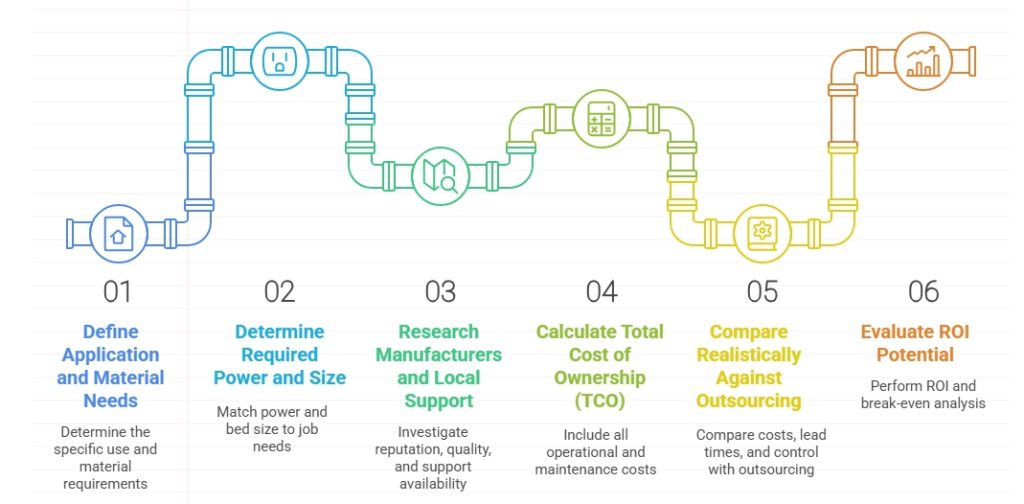
Before committing, run through this final checklist:
- Define Your Application and Material Needs: What exactly will it do? What materials, what thickness?
- Determine Required Power and Size: Match wattage and bed size to your specific jobs.
- Research Manufacturers and Local Support: Investigate reputation, quality, warranty, and critically, support availability in United States.
- Calculate the Total Cost of Ownership (TCO): Look beyond the purchase price – include all operational and maintenance costs.
- Compare Realistically Against Outsourcing: Get current local quotes and make a data-driven comparison of costs, lead times, and control.
- Evaluate ROI Potential: Perform the ROI and break-even analysis to ensure the investment is financially sound.
Conclusion and Recommendations
Determining the true cost of a laser cutter goes beyond the initial price. It requires a clear-eyed look at your production volume, need for control, and long-term operating expenses. As we’ve seen, the right choice—whether to buy in-house or outsource—is a strategic decision unique to your business goals.
If you have a steady workflow and a clear case for ROI, owning a machine offers unmatched speed and flexibility. If your needs are variable or your budget is focused elsewhere, outsourcing provides access to top-tier technology without the commitment.
Ready to see which option is right for you? Contact our expert team today for a no-obligation consultation. We’ll help you analyze your costs and determine if a Riselaser machine is the right investment to grow your business.
FAQs
A: The price varies widely based on type, power, and size. Hobbyist machines can cost under $1,000, while professional metal-cutting systems range from $30,000 to over $100,000. The final cost depends entirely on the machine’s capabilities, with higher power and larger work areas demanding a greater investment.
A: Operating costs include more than just the initial purchase. You must budget for daily electricity consumption, replaceable consumable parts like lenses and nozzles, and assist gases such as nitrogen or oxygen if you are cutting metal. You should also factor in long-term maintenance and potential repair costs to understand the full financial commitment.
A: A 1500 watt (1.5kW) fiber laser cutting machine, which is a common entry-level power for professional metal cutting, typically costs between $20,000 and $30,000 USD. This price can fluctuate based on the manufacturer, included features, and support package.
A: This is a key factor in the total cost of ownership. A typical CO2 laser tube has a lifespan of 3,000 to 10,000 operating hours, depending on its quality and power. A fiber laser source is significantly more durable, often rated for 50,000 to 100,000 hours, making it a lower-maintenance component over the long term.
A: Yes, many businesses are built around laser cutting. Common revenue streams include creating personalized gifts (e.g., engraved tumblers, wood signs), producing custom parts for other businesses, offering architectural model making services, and fabricating custom signage. Profitability depends on managing your costs, finding a niche, and effective marketing.
A: Initially, a plasma cutter is cheaper to buy. However, when comparing the long-term laser cutter vs. plasma cutter cost, a fiber laser often provides a lower cost-per-part on thin to medium-gauge metal. This is due to its higher speed, greater precision (less material waste), and the elimination of secondary finishing processes required to clean up a plasma cut edge.