
Laser paint removal is a major advancement in surface treatment, offering significant benefits to the aviation industry, particularly in maintenance. This method uses focused light for precise coating removal, avoiding the need for harsh chemicals or abrasive materials. The adoption of this technology by key industry leaders like the U.S. Air Force and Boeing highlights its effectiveness. Laser solutions provide a sustainable, safe, and cost-effective maintenance approach that reduces harmful waste and protects workers and the environment, making it a cornerstone of modern aircraft upkeep.
Laser Aviation Depainting: Core Principles and Mechanisms
Laser aviation depainting operates on precise energy delivery. The laser interacts with coated materials on an airframe surface. This interaction, laser ablation, is a multi-stage process. The technology works well. It gets rid of tough aerospace paints like epoxy primers and polyurethane topcoats. You often find these on plane bodies and wings.
Laser Ablation Mechanics Explained
Photon absorption initiates laser ablation. The laser beam, composed of photons, strikes the paint on the structure. The paint layer absorbs this light energy. This absorption causes rapid localized heating. Thermal excitation of paint molecules occurs. Sufficient energy input vaporizes or ejects material. High-power pulsed lasers often create plasma. This plasma forms from ionized ablated material and air. Plasma can further enhance the paint removal. It absorbs subsequent laser energy, transferring it to the surface.
Particulate Containment: An Integral Feature
Modern laser paint removal systems for aviation use integrate particulate containment. Ablation generates microscopic particles and fumes. Advanced systems feature extraction and filtration units. These units operate at the ablation point. They capture contaminants, preventing airborne release. This design ensures a cleaner, safer work environment during airframe depainting. Containment addresses environmental and health concerns proactively.
Key Laser System Configurations in Aviation
Several laser system configurations exist for aviation paint removal. Each system offers distinct characteristics. Fiber lasers gain popularity for aerospace applications. They are available in pulsed and continuous wave (CW) modes. Fiber lasers offer high efficiency and reliability. They provide good beam quality and require minimal maintenance. Pulsed fiber lasers excel at precise ablation on airframe surfaces. They minimize heat transfer to the substrate. CO₂ lasers have a longer history of use in aerospace paint removal. These lasers are powerful and effective. They suit certain coatings and large surface areas on aerial platforms. System choice depends on application, paint type, and the underlying material substrate. Desired removal rate and precision also influence selection.
Advantages: Laser Technology Versus Traditional Aviation Stripping Methods
Traditional aviation paint stripping methods present numerous challenges, from material damage to environmental concerns; laser technology provides effective solutions. Laser paint removal surpasses conventional methods. These methods include chemical stripping and abrasive blasting. Lasers offer operational, environmental, safety, and material benefits crucial for aerospace maintenance.
Enhanced Operational Efficiency with Lasers for Aviation Assets
Operational efficiency is a primary laser advantage in aviation maintenance. Laser cleaning machines allow precise control. Automation or robotic assistance is common. This leads to stripping rates that can be up to 60% faster than traditional manual methods. According to a 2024 report from the Aerospace Industries Association, this efficiency gain can significantly reduce an aircraft’s downtime in MRO hangars by an average of 3-4 days per full-strip cycle. The non-contact process eliminates tool wear and associated replacement downtime. When combined with reduced consumables (chemicals, media), this can lower the overall operational cost of paint stripping by as much as 30%, according to the same report.
Significant Environmental and Safety Profile Improvements in Aviation
Laser technology provides substantial environmental benefits for aviation facilities. Traditional methods involve hazardous chemicals. These chemicals require careful handling and disposal. They can release volatile organic compounds (VOCs). Abrasive blasting can generate over 1,000 kilograms of contaminated waste for a single wide-body aircraft. In contrast, laser paint removal is a much cleaner process. By eliminating harsh chemical solvents, it completely removes the release of harmful volatile organic compounds (VOCs) and reduces the total solid waste volume by more than 95%.
“The captured particulate is a small fraction of the waste from media blasting, and it’s far easier and safer to handle,” notes a lead Environmental, Health, and Safety (EHS) manager for a major European MRO facility. “This isn’t just an efficiency gain; it’s a fundamental improvement in workplace safety by eliminating direct chemical contact for our technicians.”
They reduce airborne dust with effective extraction. This minimizes worker exposure to harmful substances during aviation depainting. The risk of silicosis from blasting media decreases. The process can be quieter than mechanical methods. Laser radiation requires strict safety protocols. However, reduced chemical and particulate hazards improve occupational safety around these large machines.
Superior Material Versatility and Airframe Substrate Protection
Laser technology offers remarkable material versatility for airframes. Systems can be finely tuned. They selectively remove paint layers. Sensitive underlying aviation materials remain undamaged; preserving the airframe’s structural integrity is paramount. Flying machines extensively use composites, aluminum alloys, and titanium. This precision is hard with chemical stripping. Chemicals can etch metals or degrade composites. Abrasive methods can cause surface damage or erosion. Laser parameters (power, frequency, speed) adapt. This allows effective removal from various coatings on diverse aviation platform materials. The clean, precisely prepared surface achieved by laser ablation is ideal for optimal adhesion of new aviation coatings.
Laser Paint Removal Applications on Specific Aerial Platforms
Laser paint removal’s adaptability suits diverse airplane types. It handles military fighters and commercial airliners. Its application demonstrates effectiveness on varied materials and complex geometries inherent to airframe design.
Military Aviation: Precision and Speed for Air Asset Readiness
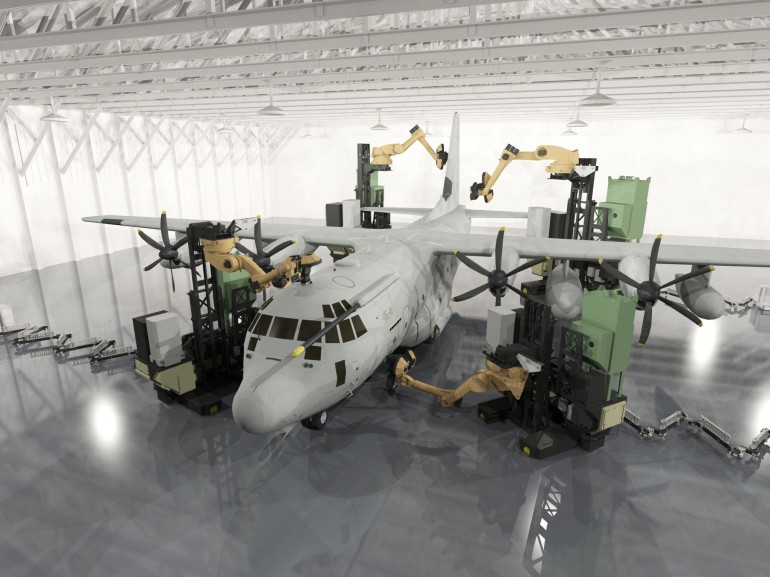
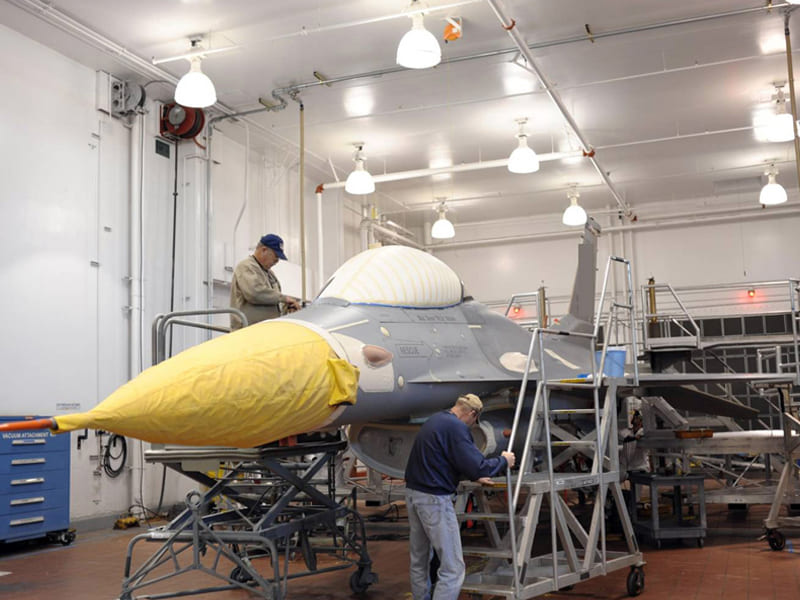
Military aviation increasingly adopts laser paint removal for maintaining high-performance aerial assets. High-performance jets like the F-16 Fighting Falcon benefit. This fighter uses aluminum and composite materials. Lasers remove sophisticated coatings with precision. This maintains the plane’s stealth characteristics and aerodynamic performance. Sensitive structures and sensors remain undamaged. Selective stripping aids depot-level maintenance and modifications, ensuring these units meet demanding MRO schedules. Large military transports like the C-130 Hercules, with their vast surface areas, also benefit significantly. Automated laser systems dramatically reduce stripping time and labor, enhancing maintenance depot throughput and returning the aircraft to service faster. The technology is precise enough to remove paint from complex curvatures and work around fasteners without causing damage.
Commercial Aviation: Protecting Advanced Airplane Materials
The benefits of laser paint removal are also compelling for commercial aviation, especially with the increasing use of advanced lightweight materials. On airliners like the Airbus A320 family, which utilize aluminum and composites, laser stripping gently removes paint for inspections or repainting while preserving the structural integrity of the underlying materials. Issues like hydrogen embrittlement are avoided. Surface peening from blasting is prevented. Precision is helpful around plane windows, doors, and control surfaces. The Boeing 787 Dreamliner, an airliner using extensive carbon-fiber-reinforced polymer (CFRP) composites, is a prime laser technology candidate. CFRPs are particularly sensitive to aggressive stripping methods. Lasers, correctly calibrated, remove paint layer by layer from these composite airframe surfaces. They do not compromise structural integrity. This capability is vital for the long-term maintenance of composite-intensive planes. It ensures effective non-destructive inspection (NDI) on clean surfaces. An aircraft like the 787 particularly benefits from this gentle method.
Key Operational Considerations for Laser Depainting Systems on Airframes
Effective laser paint removal on airframes requires careful operational procedures. Safety and regulatory compliance are crucial when dealing with any aircraft.
Airframe Laser Depainting: Safety and Contaminant Protocols
High-power lasers pose risks if not handled correctly during aviation maintenance. Laser Safety Protocols: Controlled access zones (Laser Controlled Areas – LCAs) must be established when working on these large structures. Personnel in or near LCAs need appropriate laser safety eyewear. Eyewear must match laser wavelength and power. Interlocks, warning signs, and comprehensive training are vital. The beam path needs control to prevent accidental exposure. Contaminant Management Systems: Ablated paint from airframe surfaces generates airborne particulates and fumes. These can include hazardous materials like chromates. Effective contaminant management is integral. Local exhaust ventilation (LEV) systems are used. These systems have HEPA filters and sometimes carbon filters. They capture ablated material at the source. Operators might need personal protective equipment (PPE) like respirators. Air quality monitoring may be necessary in the aviation hangar. These protocols are essential for any aircraft servicing environment.
Importance of Adherence to Aviation Standards
The aerospace industry is highly regulated. Aviation maintenance must comply with stringent standards. These include laser safety standards (e.g., IEC 60825, ANSI Z136). Occupational health and safety regulations apply (e.g., OSHA, COSHH). Environmental regulations for waste disposal are also key. Airplane manufacturers and bodies like the FAA or EASA provide directives. These dictate approved methods for surface treatment. Meeting these criteria is essential for airplane airworthiness and the overall safety of each aircraft.
Laser Depainting for Aviation Assets: Current Impact and Future Outlook
Laser paint removal adoption shows positive impacts on aviation maintenance operations. Its future potential suggests wider, more sophisticated applications for airframes and the broader aircraft industry.
Assessing Positive Operational and Economic Impacts on Aviation MRO
The technology’s benefits drive positive impacts for Aviation MRO. Operational Impacts: Maintenance, Repair, and Overhaul (MRO) facilities see reduced turnaround times for aviation paint stripping. Faster processing and streamlined cleanup contribute. Precision lasers minimize masking needs. Less collateral damage to airframe skins occurs. This means fewer substrate repairs and predictable heavy maintenance schedules. Economic Impacts: While the initial investment in a robotic laser system can be substantial, the long-term economic benefits are compelling. According to case studies published in Aviation Week, fleet operators often see a full return on investment (ROI) within 24-36 months. The savings are multifaceted:
- Labor: Automation can cut labor requirements by up to 75% for the stripping phase.
- Consumables & Waste: Material and hazardous waste disposal expenses can decrease by over 90%.
- Asset Uptime: Faster turnaround times get revenue-generating assets operational sooner, directly impacting the bottom line.
Furthermore, the gentle nature of the process enhances component lifespan, deferring costly structural repairs. This makes the technology appealing for modern aircraft fleets.
Future Advancements and Technological Potential for Aviation Surface Treatment
The future of laser technology for cleaning airplane surfaces looks very bright. Researchers are making lasers smarter than ever before. They are building on current tools like laser cleaning robots. These new systems will use advanced sensors and artificial intelligence (AI) to work better. They could give real-time feedback while cleaning. This means the laser can adjust itself automatically for different paints and materials. It might even figure out paint layers and the surface underneath on its own.
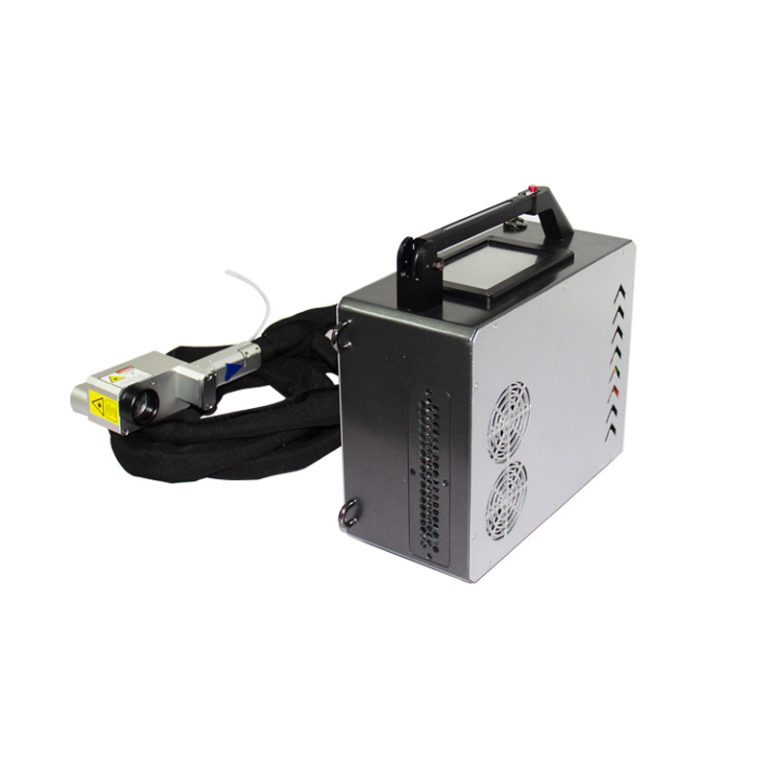
People also want smaller, portable laser cleaners. These handheld lasers are great for quick repairs on the flight line. Advances in fiber lasers are making these devices easier to use on small planes or specific parts of bigger planes. Scientists are also improving laser settings to work well with new materials used in future aircraft.
Soon, laser systems will connect closely with digital maintenance tools. This could link cleaning data directly to an airplane’s maintenance records. Automated reports and scheduling might become normal. Environmental safety will get better too. New lasers will have improved ways to capture and filter fumes and dust. This is very important for keeping modern airplanes safe and clean.
Conclusion: Laser Paint Removal Forging a New Aviation Industry Standard
Laser paint removal is a transformative force in aerospace maintenance. Its core benefits—enhanced efficiency, environmental responsibility, improved safety, and material versatility—are clear and significant. The technology’s precision protects sensitive substrates, and its success across both military and commercial sectors demonstrates its value. Far from experimental, this mature technology is becoming an industry standard by addressing the core economic, environmental, and operational needs of modern fleets. As the industry continues to prioritize sustainability and the preservation of complex structures, laser paint removal is set to become an integral part of global MRO practices, shaping the future of surface care.
FAQs
Laser paint removal works through a process called laser ablation. A high-energy, focused beam of light is aimed at the painted surface. The paint layer absorbs this light energy, causing it to heat up instantly and vaporize or turn into a fine powder. This process is so precise that it can remove paint layer by layer without harming the underlying material.
Yes, significantly. Automated laser systems can be up to 60% faster than manual sanding or chemical stripping, especially on large surface areas. The total time saved is even greater because laser technology requires minimal masking and a much simpler, faster cleanup process, dramatically reducing an aircraft’s overall downtime in the MRO hangar.
No, when calibrated correctly, it is one of the safest methods for an airframe’s structural integrity. Unlike chemical stripping that can etch metal or abrasive blasting that erodes the surface, laser systems are precisely tuned to target only the paint. The energy is absorbed by the coating and does not transfer enough heat to damage sensitive substrates like carbon fiber composites or aluminum alloys.
While the initial capital investment for a laser system is higher than traditional equipment, the long-term operational costs are significantly lower. The final price depends on factors like laser power and the level of automation (robotic vs. handheld). However, the return on investment is strong due to:
Near-zero cost for consumables (no chemicals or blasting media).
Reduced labor hours due to automation.
Drastically lower fees for hazardous waste disposal.
Yes, it represents a major improvement in safety and environmental responsibility. For workers, it eliminates direct exposure to hazardous chemicals and drastically reduces airborne dust found in abrasive blasting. For the environment, it reduces hazardous waste volume by over 95% and eliminates the release of Volatile Organic Compounds (VOCs), as modern systems use advanced extraction units to capture all ablated particles at the source.