
The best fiber laser tube cutting machine for aluminum tube cutting is a dedicated tube laser cutter that matches your aluminum grade, tube diameter, wall thickness, tube length, cut type, and production volume.
For 6061-T6 or 6082-T6 aluminum tubes, buyers should focus on laser power, auto-focus cutting head, chuck accuracy, tube support, anti-scratch handling, software, and optional 5D bevel or saddle cutting.
For regular 6-meter aluminum tube production, a dedicated tube cutting machine is usually a better choice than a sheet-and-tube combo machine. It gives better tube support, more stable feeding, higher repeatability, and better productivity for repeated tube jobs.
This guide explains how to choose the right aluminum tube laser cutting machine before you ask for a quote.
Need a machine recommendation? Send your tube material, diameter, wall thickness, length, drawings, and required cut type. Riselaser can help recommend a suitable metal tube fiber laser cutting machine configuration.
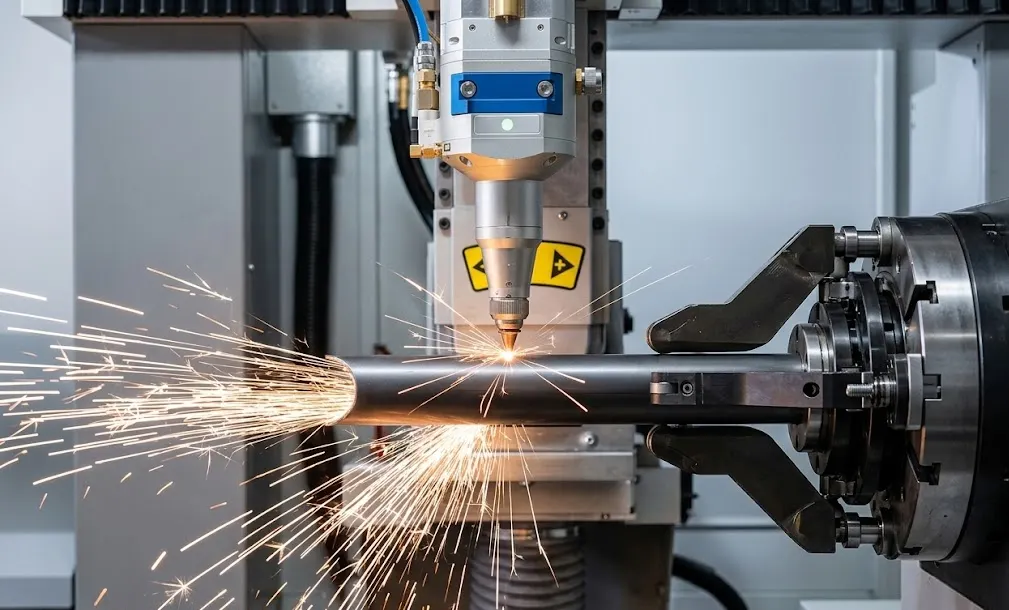
Quick Answer: How Do You Choose a Fiber Laser Tube Cutting Machine for Aluminum?
To choose a fiber laser tube cutting machine for aluminum, start with your aluminum grade, tube diameter, wall thickness, tube length, and required cut type. For regular 6-meter aluminum tube production, a dedicated tube laser cutting machine with accurate chucks, auto-focus cutting head, stable tube support, and anti-scratch loading is usually the best choice. If your parts need bevel or saddle cuts, check whether a 5D cutting head is available.
| Buyer Requirement | Recommended Machine Feature |
|---|---|
| 6061-T6 or 6082-T6 aluminum tubes | Fiber laser tube cutting system with stable cutting parameters |
| 6-meter tube length | Long tube support and feeding system |
| 1.5–4 mm wall thickness | Laser power selected by thickness, speed, and edge quality |
| Visible aluminum surface | Anti-scratch loading, support, and unloading |
| Repeated tube production | Semi-automatic or automatic loading |
| Bevel or saddle cuts | Optional 5D cutting head |
| Accurate welded structures | Good chuck accuracy, software, and calibration |
Do not choose the machine only by laser power. A high-power laser cannot fix poor clamping, weak tube support, bad software, or surface scratches.
Why Aluminum Tube Cutting Needs the Right Fiber Laser Machine
Aluminum is not the same as carbon steel. Aluminum alloys have high thermal conductivity and can be more challenging to cut if the machine, cutting head, gas, and parameters are not matched correctly. The Aluminum Association provides alloy designation data for wrought aluminum alloys, which is useful when confirming material grades such as 6061 and 6082.
If the machine is not suitable for aluminum tube cutting, you may face:
- unstable cutting
- burrs on tube edges
- rough holes
- tube vibration
- heat distortion
- poor welding fit-up
- scratches on visible aluminum surfaces
This matters for stage trusses, aluminum frames, railings, furniture, machinery structures, and OEM aluminum tube parts.
| Aluminum Cutting Challenge | Why It Matters | Machine Feature to Check |
|---|---|---|
| High heat transfer | Can affect edge quality and cutting stability | Correct power, gas, and focus control |
| Thin-wall tube | Can deform or vibrate during cutting | Stable chuck and tube support |
| Visible surface | Scratches reduce product value | Anti-scratch handling system |
| Welded joints | Poor cuts increase grinding and fitting work | Accurate cutting head and software |
| Long tubes | Sagging can affect accuracy | Front and rear tube support |
A good aluminum tube laser cutting machine should not only cut through the tube. It should produce parts that are ready for welding, assembly, finishing, or delivery.
For more background on this material, see our guide to laser cutting aluminum.
Start With Your Aluminum Tube Specifications
Before choosing a machine, start with the tube itself. Your tube data decides the machine configuration.
Prepare these details first:
- aluminum grade
- tube shape
- tube diameter or side length
- wall thickness
- tube length
- required cut type
- production volume
- surface finish requirement
For example, a stage truss factory may need to cut 6061-T6 or 6082-T6 aluminum tubes with a diameter of 16–50 mm, wall thickness of 1.5–4 mm, and tube length up to 6 meters. This is very different from cutting short carbon steel tubes or mixed sheet metal parts.
Aluminum Grade: 6061-T6, 6082-T6, and Other Alloys
Do not only tell the supplier “aluminum tube.” Give the exact grade if possible.
A better inquiry would be:
We need to cut 6061-T6 aluminum round tubes, 30 mm diameter, 2 mm wall thickness, 6 meters long.
This helps the supplier recommend the right laser power, cutting head, gas setup, chuck range, and tube support system.
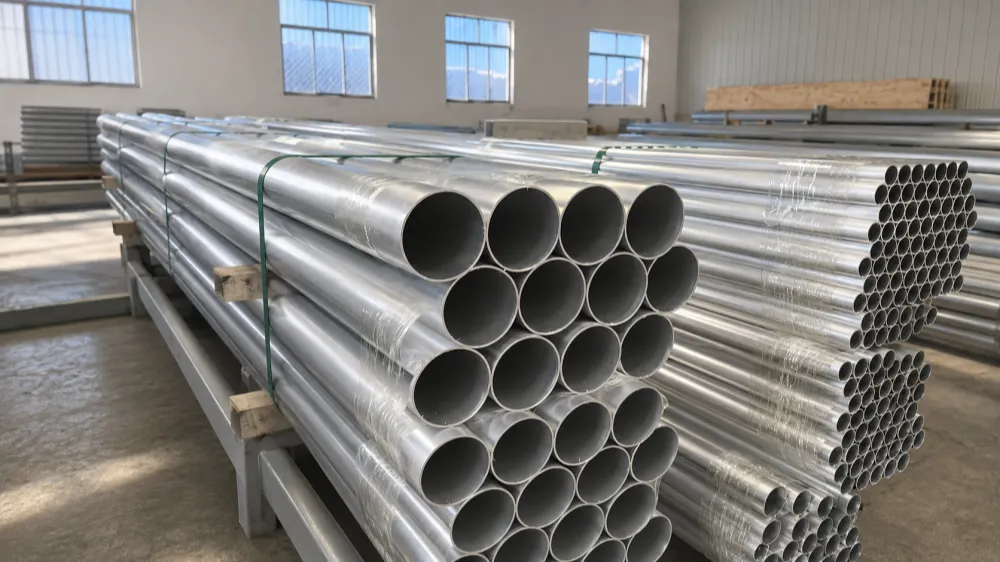
Tube Diameter and Wall Thickness
Tube diameter and wall thickness affect both chuck selection and cutting performance.
Small thin-wall aluminum tubes need careful clamping. Too much chuck pressure may deform the tube. Too little pressure may allow the tube to move during cutting.
Thicker aluminum tubes need stronger cutting performance and more stable process control.
Tube Length: Why 6-Meter Aluminum Tubes Need Better Support
Six-meter tubes require more than a basic cutting area. The machine needs:
- enough feeding length
- stable front and rear support
- accurate tube rotation
- safe loading and unloading
- enough workshop space
- a suitable production layout
This is one reason a dedicated tube laser cutting machine is usually better for serious tube production.
How to Choose Laser Power for Aluminum Tube Cutting
Laser power matters, but it should not be the only selection factor.
The right power depends on:
- wall thickness
- aluminum alloy
- cutting speed target
- edge quality requirement
- assist gas
- straight cut or bevel cut
- daily production volume
For some thin-wall aluminum tubes, 1.5kW can be a starting point. But for 3–4 mm wall thickness, faster production, or stricter edge quality, the supplier should confirm the result with cutting parameters or sample testing.
Is 1.5kW Enough for Aluminum Tube Cutting?
1.5kW may be enough for some thin-wall aluminum tube cutting, but it depends on the tube size, alloy, required speed, and edge quality.
For example:
- A 1.5 mm aluminum tube wall is easier to cut than a 4 mm wall.
- A straight end cut is easier than a bevel or saddle cut.
- Low-volume production has different needs from high-volume production.
- A clean welding edge may require better process control than a rough separation cut.
So the better question is not only “Is 1.5kW enough?” The better question is: Can this machine cut my aluminum tube thickness at the speed and edge quality I need?
Power Selection Logic for Aluminum Tubes
| Aluminum Tube Requirement | Selection Advice |
|---|---|
| 1–2 mm wall thickness | Lower power may be suitable if production speed is not very high |
| 2–3 mm wall thickness | Confirm cutting speed, edge quality, and gas settings |
| 3–4 mm wall thickness | Ask for sample cutting or video proof before confirming |
| Bevel or saddle cuts | Confirm cutting head capability and real cutting result |
| High-volume production | Consider higher power for better throughput |
When comparing quotations, compare power together with machine structure, chuck accuracy, cutting head, software, and support.
Check the Cutting Head, Auto-Focus, and 5D Capability
The cutting head controls how the laser beam reaches the tube surface. For aluminum tube cutting, this is a key part of the machine.
An auto-focus cutting head helps adjust the focus position for different materials, wall thicknesses, and cutting paths. This can reduce manual adjustment and improve cutting consistency.
Auto-focus is useful when the machine needs to cut:
- different wall thicknesses
- holes
- angles
- repeated tube parts
- small features
- complex tube profiles
Why Auto-Focus Matters for Aluminum Tubes
Focus position affects cutting quality. If the focus is wrong, the cut may become rough, slow, or unstable.
For aluminum tubes, stable focus control helps improve:
- cut edge quality
- hole quality
- cutting consistency
- repeatability between batches
- operator efficiency
When a Standard Cutting Head Is Not Enough
A standard tube cutting head can handle many straight cuts, holes, and simple angles.
But if your parts need bevels, saddle cuts, or complex tube-to-tube joints, check whether the machine can be equipped with a 5D cutting head. Also ask for matching sample videos before confirming the configuration.
Example: A factory cutting straight tube ends for simple aluminum frames may not need 5D cutting. A stage truss manufacturer cutting diagonal braces that connect to main chords may need bevel or saddle cuts. In that case, 5D cutting should be evaluated.
Dedicated Tube Laser Cutting Machine vs Sheet-and-Tube Combo Machine
Many buyers compare a dedicated tube laser cutter with a sheet-and-tube combo machine. Both can be useful, but they fit different production needs.
A dedicated tube laser cutting machine is usually better when most of your work is tube cutting. It is designed for tube feeding, rotation, support, and repeated tube processing.
A sheet-and-tube combo machine is better when you need flexibility for both sheet metal and tube work, but tube cutting is not your main production task.
| Factor | Dedicated Tube Laser Cutting Machine | Sheet-and-Tube Combo Machine |
|---|---|---|
| Best for | Regular tube production | Mixed sheet and tube jobs |
| Tube length support | Usually stronger | Depends on model |
| Tube feeding | More specialized | More limited |
| Productivity | Better for repeated tube jobs | Better for small mixed batches |
| Complex tube cuts | Better if configured correctly | Depends on machine design |
| Best buyer | Tube fabrication factory | Job shop with mixed work |
If most of your orders are aluminum tubes, a dedicated machine is usually the safer choice. This is especially true for 6-meter tubes, repeated jobs, and complex tube cuts.
For buyers comparing different equipment types, this fiber laser cutting machines for metal fabrication page can help you review broader machine options.
Evaluate Chuck Accuracy, Tube Support, and Loading System
The chuck and support system affect cutting accuracy as much as the laser source does.
A good tube laser cutting machine must hold the tube firmly, rotate it accurately, and support it during cutting. This is important for long aluminum tubes because they can sag, vibrate, or shift if support is weak.
Chuck System and Clamping Accuracy
The chuck must hold the tube without damaging it. For thin-wall aluminum tubes, too much clamping force can deform the tube. Too little clamping force can cause movement during cutting.
Ask the supplier:
- What tube shapes can the chuck hold?
- What is the minimum and maximum tube size?
- Can clamping pressure be adjusted?
- How does the chuck protect aluminum surfaces?
- What are the positioning accuracy and repeatability?
Manual Loading vs Automatic Loading
Manual loading can work for low-volume production. But if your factory cuts many 6-meter aluminum tubes every day, automatic loading can save labor and improve consistency.
| Loading Method | Best For | Advantages | Limits |
|---|---|---|---|
| Manual loading | Low-volume or flexible jobs | Lower initial cost | Slower and more labor-intensive |
| Semi-automatic loading | Medium production | Better efficiency | Still needs operator handling |
| Automatic loading/unloading | Repeated 6-meter tube production | Faster and more consistent | Higher cost and more floor space |
If your production volume is high, do not only compare machine price. Compare labor time, handling time, output, and rework.
How to Prevent Scratches on Aluminum Tubes
Aluminum surfaces are easier to mark than steel. This is important when the final product is visible, such as stage trusses, aluminum furniture, railings, frames, or architectural parts.
Scratches can happen during:
- loading
- clamping
- feeding
- tube rotation
- support contact
- unloading
- finished part collection
Machine Features That Help Reduce Scratches
Ask about:
- soft-contact support surfaces
- smooth roller design
- adjustable clamping pressure
- controlled feeding
- non-damaging unloading
- proper tube support
- operator handling process
Before ordering, ask these questions:
- How does the loader contact the aluminum tube?
- Are support rollers designed to reduce surface marks?
- Can clamping pressure be adjusted?
- How are finished tubes unloaded?
- Can you provide a video of aluminum tube loading and cutting?
This is especially important if the tube will be anodized, polished, painted, or used as a visible product.
Example: Choosing a Machine for 6-Meter Aluminum Stage Truss Tubes
Here is a practical example.
A stage truss manufacturer may need to cut 6061-T6 or 6082-T6 aluminum tubes with 16–50 mm diameter, 1.5–4 mm wall thickness, and 6-meter length. The tubes may be used for main chords, braces, diagonal tubes, and connection structures.
In this case, the buyer should not only ask about laser power. The more important checklist is:
- Can the machine support 6-meter tubes?
- Can the chuck hold small and medium aluminum tubes without deformation?
- Can the machine prevent visible surface scratches?
- Does the cutting head support auto-focus?
- Are bevel or saddle cuts required?
- Can the supplier provide a cutting video for similar aluminum tubes?
- Is automatic loading needed for production efficiency?
If the truss design requires diagonal tubes to fit against main tubes, a standard straight-cut configuration may not be enough. The buyer should check whether a 5D tube cutting configuration is available and ask for bevel or saddle cut samples.
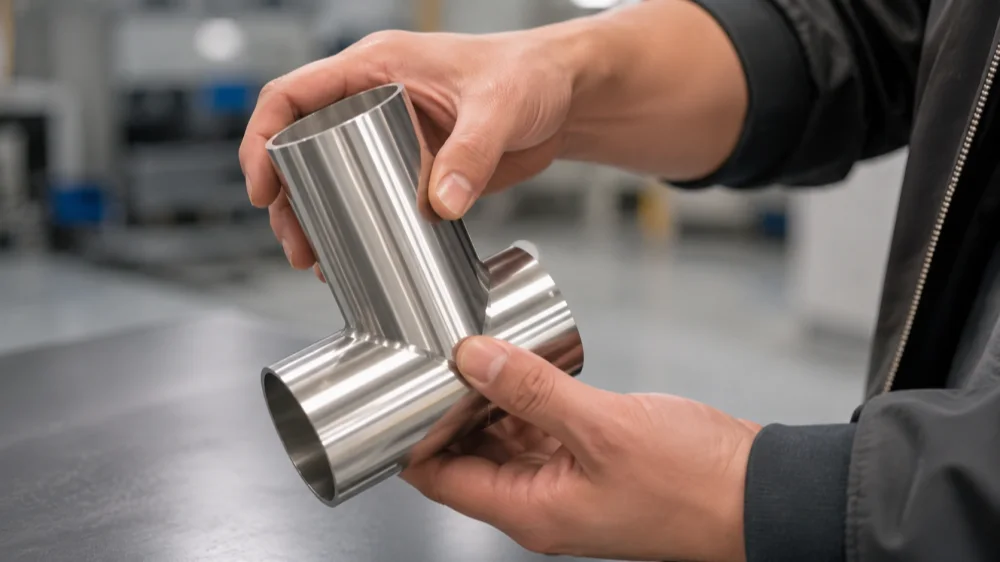
When Do You Need a 5D Laser Tube Cutting Machine?
Not every buyer needs 5D cutting. But for complex aluminum tube fabrication, it can be a major advantage.
Standard tube cutting is enough for:
- straight cuts
- simple holes
- basic angle cuts
- simple tube lengths
A 5D laser tube cutting machine is useful for:
- bevel cuts
- saddle cuts
- angled tube joints
- tube-to-tube connections
- welded truss structures
- complex aluminum frames
What Is a Bevel Cut?
A bevel cut is an angled cut on the tube edge. It helps prepare the tube for welding or fitting against another part. Bevel cutting can reduce manual grinding and improve weld preparation.
What Is a Saddle Cut?
A saddle cut is a curved cut that helps one tube fit against another tube. It is common in tube-to-tube connections.
For example, a diagonal tube may need to fit against a round main tube. A saddle cut helps create a better joint shape before welding.
Why 5D Cutting Matters for Stage Truss Production
Stage truss production often uses aluminum tubes for main chords, braces, diagonal tubes, and connection structures.
If these tubes need accurate joints, a simple straight cut may not be enough. A 5D cutting head can help cut complex angles and saddle shapes. This can reduce secondary grinding and improve fit-up before welding.
Have bevel or saddle cut drawings? Send them to Riselaser so we can help confirm whether a standard or 5D tube cutting configuration is better.
Check the Software, CAD Support, and Cutting Path Control
Software is part of the machine selection. Do not ignore it.
The tube cutting software should support your drawing workflow, tube shapes, nesting needs, and cutting paths.
Ask whether the software can handle:
- tube drawing import
- round tubes
- square tubes
- rectangular tubes
- hole cutting
- angle cutting
- nesting
- bevel or saddle cutting
- cutting path simulation
- operator training
For 5D cutting, software becomes even more important because the cutting path is more complex.
What File Types Should the Machine Support?
Most buyers work from CAD drawings. Before ordering, ask your supplier what file formats the control software supports and whether your drawings can be tested before delivery.
Do not assume every machine can handle your tube drawings smoothly. Send sample files before purchase if possible.
Why Software Training Matters
A good machine still needs trained operators. Training should include drawing import, nesting, cutting parameter setup, focus adjustment, calibration, daily maintenance, troubleshooting, and safe operation.
Confirm Safety and Installation Requirements Before Buying
A fiber laser tube cutting machine is not only a machine purchase. It is also an installation project.
Before ordering, confirm the workshop requirements:
- machine footprint
- power supply
- grounding
- assist gas
- compressed air
- fume extraction
- laser protection
- operator safety
- loading and unloading area
- spare parts access
OSHA notes that exposure to certain lasers can damage the eye and skin, and industrial buyers should treat laser safety as part of the installation plan, not as an afterthought. You can review OSHA’s laser hazard overview here: OSHA Laser Hazards.
Workshop Layout and Utility Requirements
Ask the supplier for a preliminary layout drawing. It should show the machine dimensions, loading area, unloading area, electrical cabinet, gas connections, and maintenance space.
| Item to Confirm | Why It Matters |
|---|---|
| Machine layout | Helps plan factory space |
| Power requirement | Prevents installation delays |
| Gas supply | Affects cutting quality |
| Air pressure | Needed for machine operation |
| Fume extraction | Improves safety and cleanliness |
| Laser protection | Reduces operator risk |
| Training | Reduces mistakes after installation |
| Spare parts | Reduces downtime |
Calculate ROI Before Choosing an Aluminum Tube Laser Cutter
ROI is not only about the machine price.
For aluminum tube production, ROI depends on how much the machine can reduce labor, rework, and secondary processing.
Compare the machine against your current process:
- manual sawing
- drilling
- grinding
- punching
- measuring
- manual beveling
- fitting before welding
A tube laser cutting machine can combine several steps into one process. Depending on the configuration, it can cut tube length, holes, angles, bevels, and some joint shapes in one setup.
Cost Factors Beyond Machine Price
When comparing quotations, check what is included.
- laser power
- laser source brand
- cutting head type
- chuck system
- loading system
- software
- 5D cutting option
- installation
- training
- spare parts
- shipping term
- warranty
- after-sales support
A cheaper machine may cost more later if it has weak support, poor software, or limited tube handling.
| ROI Factor | What to Check |
|---|---|
| Labor reduction | Can it replace sawing, drilling, and grinding? |
| Production speed | How many tubes can it process per shift? |
| Secondary processing | Can it cut holes, bevels, or saddle shapes? |
| Material waste | What is the tailing length? |
| Rework | Does it improve fit-up and reduce burrs? |
| Downtime | Are spare parts and remote support available? |
| Loading time | Manual, semi-automatic, or automatic loading? |
If you are comparing budget levels, this guide on laser cutting machine cost can support the buying decision.
Recommended Riselaser Solution for Aluminum Tube Cutting
For aluminum tube fabrication, Riselaser can help buyers evaluate a dedicated tube fiber laser cutting machine based on tube size, wall thickness, length, drawings, and production volume.
A suitable configuration may include:
- dedicated fiber laser tube cutting machine
- support for round, square, rectangular, and selected profile tubes
- fiber laser power selected by aluminum wall thickness and production speed
- auto-focus cutting head
- accurate chuck system
- tube support for long materials
- manual, semi-automatic, or automatic loading options
- anti-scratch handling for aluminum tubes
- software for tube cutting and nesting
- optional configuration for bevel or saddle cutting if required
The final model should be confirmed based on your tube diameter, wall thickness, tube length, and drawing requirements. If your parts require bevel cuts, saddle cuts, or 5D cutting, send the drawings first so the configuration can be checked correctly.
| Requirement | Recommended Feature |
|---|---|
| 6061/6082 aluminum tube | Fiber laser tube cutting system |
| 16–50 mm diameter | Chuck matched to small and medium tubes |
| 1.5–4 mm wall thickness | Power selected by thickness and speed target |
| 6-meter length | Long tube support and feeding system |
| Clean visible surface | Anti-scratch loading and unloading |
| Bevel or saddle cuts | Confirm optional 5D cutting capability |
| Higher production volume | Automatic loading/unloading |
CTA: Send your aluminum tube drawings, material grade, diameter, wall thickness, tube length, and required cut type. Riselaser will help recommend a suitable fiber laser tube cutting machine configuration.
What Proof Should You Ask the Supplier For?
Before buying an aluminum tube laser cutting machine, ask for proof. A serious supplier should be able to provide technical details and application support.
Do not rely only on product photos.
- technical datasheet
- maximum tube diameter
- maximum tube length
- positioning accuracy
- repeatability
- laser source brand
- cutting head type
- machine layout drawing
- power, gas, and air requirements
- aluminum tube cutting video
- sample cutting test if needed
- warranty details
- installation and training plan
- spare parts and support policy
Ask for Aluminum Tube Cutting Videos
If your project involves aluminum, ask for videos that match your needs as closely as possible.
Useful video proof includes:
- 2–3 mm aluminum tube wall cutting
- 6-meter tube handling
- hole cutting
- angle cutting
- bevel cutting
- saddle cutting
- loading and unloading process
- finished edge close-up
Supplier Quotation Checklist for Aluminum Tube Laser Cutting Machines
A good quotation should be based on real production details. If you give vague information, the supplier can only give a vague recommendation.
Information to Send to the Supplier
- aluminum grade
- tube shape
- tube diameter or side length
- wall thickness
- tube length
- drawing files
- required cut type
- tolerance requirement
- surface protection requirement
- daily or monthly production volume
- destination country
- preferred delivery term
Information the Supplier Should Provide
- recommended machine model
- technical datasheet
- laser source brand
- cutting head configuration
- chuck and support details
- loading system option
- software details
- machine layout drawing
- utility requirements
- installation plan
- training plan
- warranty
- delivery term
- optional items
| Buyer Should Provide | Supplier Should Provide |
|---|---|
| Tube material | Machine model |
| Diameter and thickness | Technical datasheet |
| Tube length | Layout drawing |
| Drawing files | Cutting head details |
| Cut type | Laser source brand |
| Production volume | Loading system option |
| Surface requirement | Anti-scratch handling plan |
| Destination | Delivery term and support |
Common Mistakes When Choosing an Aluminum Tube Laser Cutting Machine
Many buying mistakes happen because the buyer compares only price or laser power.
| Mistake | Result |
|---|---|
| Choosing only by laser power | You may overpay or still get poor cut quality |
| Ignoring tube length | The machine may not handle 6-meter tubes well |
| Ignoring tube support | Long tubes may sag or vibrate |
| Buying a combo machine for heavy tube work | Productivity may be too low |
| Forgetting anti-scratch design | Visible aluminum surfaces may be damaged |
| Ignoring 5D cutting needs | Bevel and saddle cuts may require manual work |
| Not checking software | Operators may struggle with real drawings |
| Not asking for cutting proof | The machine may not match your application |
| Comparing price without configuration | The cheaper offer may remove key options |
A good buying decision should compare the full system: machine body, laser source, cutting head, chuck, support, loading, software, service, and proof.
FAQ About Fiber Laser Tube Cutting Machines for Aluminum
Yes. A fiber laser cutting machine can cut aluminum tubes when the laser power, cutting head, assist gas, and machine configuration are matched to the aluminum grade and wall thickness. For better results, buyers should provide the tube material, diameter, wall thickness, and required cut type before choosing a machine.
The required laser power depends on the tube wall thickness, aluminum alloy, cutting speed, edge quality, and cut type. Thin-wall aluminum tubes may need less power, while thicker tubes, faster production, or bevel cutting may require a higher-power configuration. For 1.5–4 mm aluminum tube walls, ask the supplier to confirm cutting performance with parameters, samples, or videos.
For regular 6-meter aluminum tube production, a dedicated fiber laser tube cutting machine is usually the best choice. It should include accurate chucks, stable front and rear tube support, smooth feeding, and a loading system that protects the aluminum surface from scratches.
A 5D laser tube cutting machine uses a cutting head that can move at different angles to make complex cuts, such as bevel cuts, angle cuts, and saddle cuts. It is useful for aluminum tube structures that need better tube-to-tube fit-up, such as stage trusses, frames, and welded tube assemblies.
Send your aluminum grade, tube shape, tube diameter, wall thickness, tube length, drawing files, required cut type, production volume, and surface finish requirements. With these details, Riselaser can recommend a more suitable fiber laser tube cutting machine configuration for your production needs.
Conclusion: Choose the Right Fiber Laser Tube Cutting Machine for Your Aluminum Tubes
The best fiber laser tube cutting machine for aluminum is the one that fits your real tube production needs.
Do not choose only by price or laser power. Start with your aluminum grade, tube diameter, wall thickness, tube length, cut type, and daily production volume. Then check the cutting head, chuck, support system, loading method, software, safety, proof, and after-sales support.
For regular 6-meter aluminum tube production, a dedicated tube laser cutting machine is usually the best direction. If your parts need bevels, saddle cuts, or complex tube-to-tube joints, evaluate a 5D cutting configuration and ask for real cutting proof.
Need help choosing a machine configuration?
Send your aluminum tube drawings, material grade, diameter, wall thickness, tube length, and required cut type. Riselaser can recommend a suitable fiber laser tube cutting machine for your production needs.