
Making a jewelry laser welder investment is often the single biggest capital expenditure a small workshop will face, yet the data shows it yields the fastest return on investment (ROI) for benches performing regular repairs. If your shop processes more than five repairs a week or handles custom fabrication, the question is no longer if you should buy one, but which class of machine fits your business model. Before making the investment decision, many workshop owners also compare the typical jewelry laser welder price range to understand how different machine classes fit their budget.
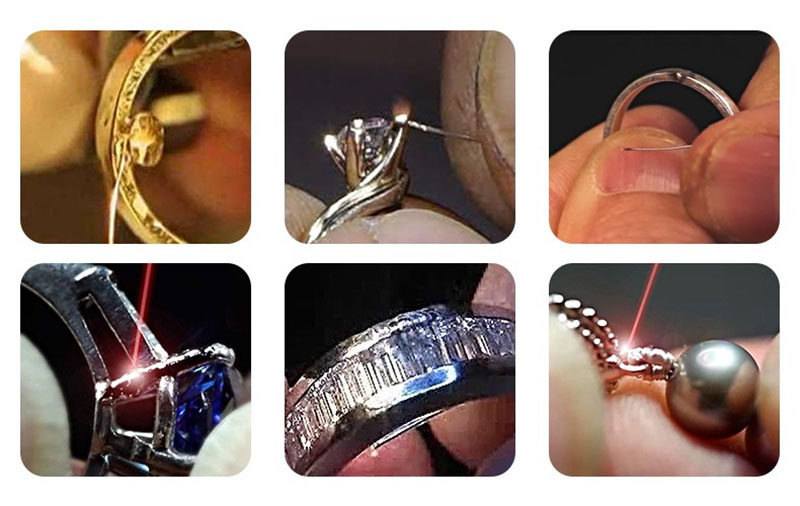
This analysis moves beyond generic sales pitches to provide a technical, financial, and operational breakdown for workshop owners in the consideration stage of the buying journey.
The Verdict: Yes, But Volume is Key
For a small workshop, the “break-even” point for a laser welder is lower than most jewelers realize. Industry data suggests that a bench jeweler performing just five standard repairs per week—such as ring sizings or chain solders—can cover the lease cost of a premium machine through labor savings alone.
- The Efficiency Gain: Laser welding reduces bench time for standard tasks by 30% to 70%.
- The Capability Gain: It allows you to keep 100% of repairs in-house, eliminating outsourcing costs and quality control risks.
- The Quality Gain: It replaces weak solder joints with fusion bonds that are 260% stronger than traditional solder.
Buyer Decision Metric: If you currently outsource more than $500/month in repairs or spend 10+ hours a week on torch-based sizing and cleanup, the machine pays for itself immediately.
How the Laser Pays for Itself
To justify the CAPEX (Capital Expenditure), you must look at the Labor Multiplier Effect. A laser welder does not just solder metal; it removes the time-consuming prep and cleanup steps required by a torch.
1. The Labor Multiplier
Traditional torch soldering requires pickling to remove oxidation (firescale) and heavy polishing to blend seams. Laser welding uses a focused beam of light to fuse metal in an inert argon atmosphere, eliminating oxidation entirely.
Table 1: Time & Cost Comparison (Standard Shop Workload)
| Repair Task | Torch Method Time | Laser Method Time | Time Saved | Annual Savings* |
| Ring Sizing | 45 mins (Heat shield, pickle, polish) | 20 mins (Cut, fuse, light polish) | 25 mins | $4,160 |
| Chain Repair | 20 mins (Clean, setup, solder) | 5 mins (Zap link closed) | 15 mins | $2,500 |
| Stone Retipping | 60 mins (Unmount stone, solder, reset) | 10 mins (Weld tip directly) | 50 mins | $8,320 |
*Assumptions: 1 of each repair type per day, 250 working days/year, labor rate calculated at $40/hour.
2. Capturing “Unfixable” Revenue Streams
The laser allows you to monetize jobs that are impossible with a torch.
- Costume Jewelry: You can weld pot metal and zinc alloys using low-voltage settings, tapping into the high-margin “sentimental value” market.
- Titanium & Eyeglasses: With argon shielding, you can repair titanium frames, a service most competitors decline.
- Watch Case Restoration: Fill deep dents in stainless steel Rolex or Omega cases without unsetting the crystal or movement.
3. Premium Pricing Strategies (The Geller Method)
Because a laser accomplishes a seamless, heat-free weld that eliminates risks to fragile stones, industry standards suggest charging a premium. According to the widely referenced Geller Blue Book, a standard torch ring downsize might retail for $90, but the exact same sizing performed with a laser commands $135. Applying strategic markups for laser labor—or adding a $1-per-minute surcharge while the laser is active—rapidly accelerates your machine’s ROI and turns efficiency directly into profit.
The Sterling Silver Dilemma: A Technical Warning
Before investing, it is crucial to understand that sterling silver is notoriously difficult to laser weld due to its high optical reflectivity and extreme thermal conductivity. The metal often reflects the 1064nm wavelength and dissipates heat too quickly for a deep weld pool to form.
To successfully work with silver, technicians must rough up the surface with an emery board or a Scotch Brite wheel to reduce reflection. On the machine side, utilizing a “ramp-down” or “trapezoid” pulse shape allows the highly conductive metal to cool slowly, preventing micro-cracking and internal porosity. Additionally, operators should use a specialized sterling silver wire containing 5% platinum, which breaks the surface tension and yields beautiful, crack-free joints at lower voltage settings.
Laser Welding vs. Torch Soldering: A Technical Comparison
Understanding the physics differences helps explain the price tag.
Precision and the Heat Affected Zone (HAZ)
The defining advantage of laser technology is the control of the Heat Affected Zone (HAZ). A torch heats a large area, risking damage to heat-sensitive stones like emeralds, opals, and pearls.
- Torch: High thermal transfer; requires heat shielding gels or stone removal.
- Laser: Energy is delivered in milliseconds (ms). The metal melts and solidifies before heat can travel to the stone. You can safely retip a prong on an emerald without removing it, reducing liability risk to near zero.
Fusion vs. Adhesion
- Torch Soldering: A brazing process where a filler metal (solder) with a lower melting point adheres to the base metal. This often leaves a visible color seam.
- Laser Welding: An autogenous fusion process. The parent metals are melted together. A platinum ring resized with a laser has no solder line and creates a bond that is metallurgically identical to the original casting.
Insert a macro photo comparison here showing a sized ring shank. Left side: Torch solder line visible after polishing. Right side: Laser weld with no visible seam.
Navigating the Market: Brand Tiers & Value Proposition
The market is currently bifurcated by brand strategy and support models rather than technology. It is important to note that Nd:YAG (Flashlamp) technology remains the gold standard for desktop jewelry welding across both tiers due to its high peak pulse energy, which is ideal for spot welding reflective metals like silver and gold.
The Premium Tier (Legacy Western Brands)
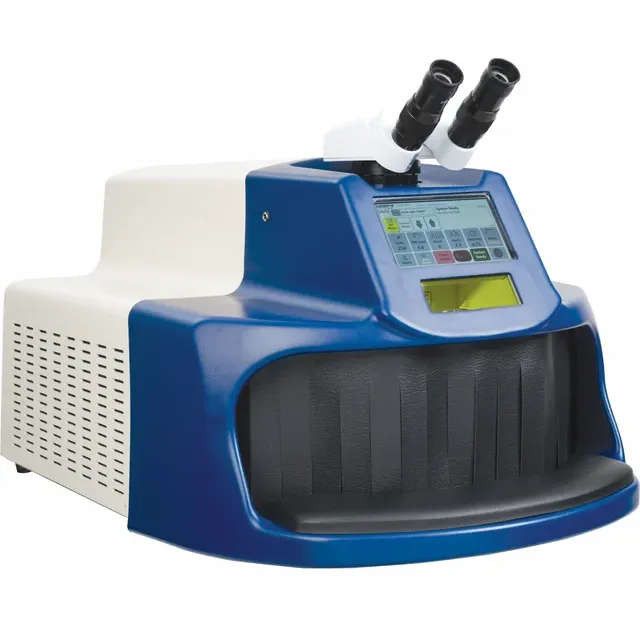
- Brands: LaserStar (iWeld), Orotig (Revo), Sunstone (Orion).
- Price Range: $15,000 – $30,000+.
- Value Proposition: These brands focus on “100% duty cycle” environments. The premium price largely covers domestic on-site support, loaner machine programs, and advanced user interfaces.
- Key Tech: Often feature patented beam homogenization (“Sweet Spot” resonators) that ensures the first shot and the millionth shot have identical energy profiles.
The Value Tier (Direct-to-Consumer & Import Brands)
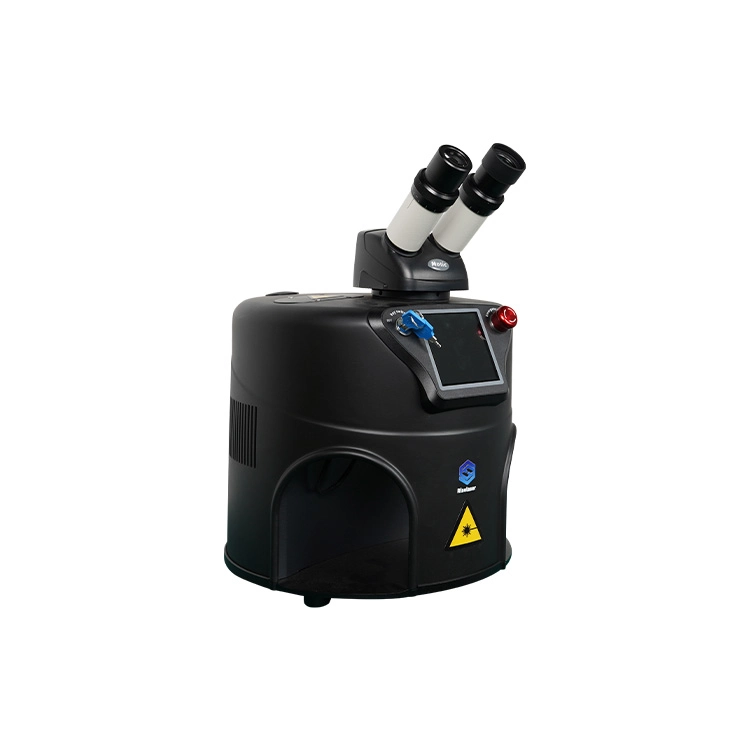
- Brands: Riselaser and other direct manufacturers.
- Price Range: $3,200 – $8,000.
- Technology: These machines utilize the same fundamental Nd:YAG technology (1064nm wavelength) as the premium tier, offering comparable welding capabilities for silver, gold, and platinum.
- Value Proposition: The lower barrier to entry is achieved by streamlining the supply chain—often selling directly from the factory to the user.
- Pros: Rapid ROI. A $4,500 machine pays for itself in months, not years. Models like the Riselaser RL-Y series offer professional specs (60J-100J energy) capable of handling heavy silver work.
- Considerations: Support is typically remote (video/chat) rather than local on-site technicians. Buyers should verify safety certifications (FDA/CDRH) and be comfortable with a “factory-direct” communication model for maintenance.
The Pulse Arc (Micro-TIG) Alternative
If your shop primarily works with highly conductive metals like sterling silver, brass, or copper, or if a laser is outside your budget, a Pulse Arc (Micro-TIG) welder is a highly viable alternative. Priced between $2,500 and $5,000, these machines use an electrical arc rather than light, completely bypassing silver’s reflectivity issues. While they cannot weld inside deep crevices or safely work directly next to emeralds like a laser, they provide excellent penetration and a rapid ROI for basic tacking and jump-ring closures.
Hidden Costs and Operational Requirements
Don’t calculate ROI based on the sticker price alone. Factor in the Total Cost of Ownership (TCO).
- Argon Gas: Essential for preventing oxidation and brittle welds. The upfront cost for a tank and regulator is $150–$300, and refills typically cost between $20 and $50 depending on your region and tank size.
- Optical Consumables & Maintenance: Nd:YAG flashlamps degrade over time and must be replaced every 1 to 3 million pulses, costing between $325 and $600. Additionally, budget $350 to $500 annually for routine maintenance, including protective lenses, copper nozzles, and water filters.
- Fume Extraction: Vaporized metal particulates—known as Laser-Generated Air Contaminants (LGACs)—are hazardous. A dedicated fume extractor with HEPA and carbon filtration is required to prevent respiratory issues and toxicity.
- OSHA Safety Compliance & Liability: Laser welders are Class 4 high-power devices. Operating them safely and legally requires designating a Laser Controlled Area (LCA) and appointing a trained Laser Safety Officer (LSO). Anyone in the vicinity must wear safety glasses appropriately rated (e.g., OD7+ at 1064nm) to prevent instantaneous, permanent retinal damage from scattered light. Adhering to these strict safety and ventilation protocols is also mandatory to maintain active commercial liability insurance.
Conclusion: Making the Right Choice for Your Shop
If your workshop is drowning in repairs or turning away complex jobs, a jewelry laser welder investment is not a luxury—it is an operational necessity.
- For Solo Repair Shops: A value-tier Nd:YAG unit (like the Riselaser RL-Y series) is often the smartest financial move. It provides the necessary power (100J+) to weld silver rings and minimizes the initial debt load, allowing for immediate profitability.
- For High-Volume Manufacturing: If you run a production line requiring 24/7 uptime, the premium tier’s domestic service contracts may be worth the extra capital.
Ready to see how different models compare? Check out our in-depth guide on the best 5 jewelry laser welding machines to see why the Riselaser RL-Y series is the smart choice for high-ROI workshops.