
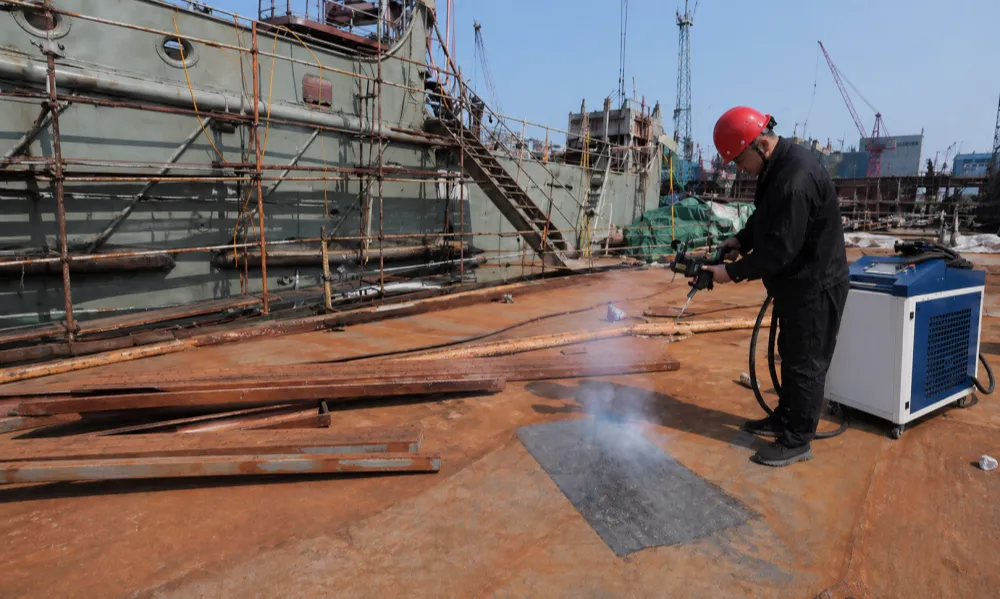
Laser cleaning for ship rust removal uses focused laser energy to remove rust, oxide layers, paint residue, oil, and surface contamination from marine steel. It is especially useful for localized rust repair, weld seam cleaning, steel plate preparation, pipe cleaning, deck maintenance, anchor chains, and coating repair areas.
For shipyards, dry docks, marine repair contractors, and vessel maintenance teams, laser cleaning offers a cleaner and more controlled alternative to grinding, chemical stripping, and abrasive blasting in suitable applications.
However, laser cleaning is not always a full replacement for sandblasting. For full-hull coating removal, very thick marine coatings, or projects where area speed is the only priority, abrasive blasting may still be faster or more economical. The best choice depends on rust thickness, coating type, cleaning area, surface quality requirements, and safety setup.
Quick Answer
Laser cleaning is best for ship rust removal when the job requires precise, low-waste, non-contact cleaning on steel plates, weld seams, decks, pipes, machinery parts, and local repair zones. For heavy rust on large steel structures, a high-power continuous-wave laser cleaner is often the better choice. For precision parts or sensitive surfaces, pulsed laser cleaning may be more suitable.
If you are comparing cleaning options, you can also review Riselaser’s industrial laser cleaning machines to understand the available CW and pulsed systems.
Best Uses and Limits of Laser Cleaning in Shipyards
Before looking at the details, here is the practical answer most buyers need first.
| Laser Cleaning Is Best For | Laser Cleaning May Not Be Best For |
|---|---|
| Localized ship rust removal | Full-hull coating removal where speed is the only priority |
| Weld seam cleaning before or after welding | Very thick multi-layer coatings without testing |
| Steel plate and pipe preparation | Projects requiring a specific abrasive anchor profile |
| Deck rust repair and coating repair zones | Unknown hazardous coatings without containment |
| Anchor chains, parts, and marine hardware | One-time jobs where outsourcing blasting is cheaper |
| Surface preparation before repainting or welding | Work areas where laser safety cannot be controlled |
What Is Laser Cleaning for Ship Rust Removal?
Laser cleaning uses focused light energy to remove unwanted material from a surface. On ships and marine steel structures, this may include rust, oxide layers, primer, old paint, oil, salt residue, welding discoloration, and surface dirt.
The laser beam heats and breaks down the unwanted layer. With the correct settings, the laser can remove rust or coating residue while helping preserve the base metal underneath.
Unlike grinding or sandblasting, laser cleaning does not use abrasive media or chemical baths. It is a non-contact process, which makes it useful for controlled maintenance work in workshops, repair zones, tanks, steel structures, and local coating repair areas.
For example, a shipyard worker can use a handheld laser cleaner to remove rust around a welded steel plate before repainting. Instead of blasting a large surrounding area, the operator can clean only the damaged zone.
For a deeper explanation of the technology, see this guide to the laser rust removal process.
Why Ship Rust Needs More Than Basic Rust Removal
Ship rust is more complex than normal workshop rust. Marine steel is exposed to saltwater, humidity, oxygen, fuel, oil, old coatings, and constant weather changes. A rusty ship surface may contain more than visible red rust.
It may also include:
- Salt residue
- Black oxide
- Primer layers
- Old marine paint
- Oil or grease
- Weld contamination
- Dust and surface dirt
This matters because a surface can look clean but still contain hidden contaminants. If salt, oil, loose oxide, or coating residue remains on the steel, the new coating may not bond well. That can lead to early coating failure, re-rusting, and repeat repair work.
For this reason, ship rust removal should not only focus on appearance. It should support surface preparation for painting, coating, welding, inspection, or repair.
Key Benefits of Laser Cleaning for Ship Surface Maintenance
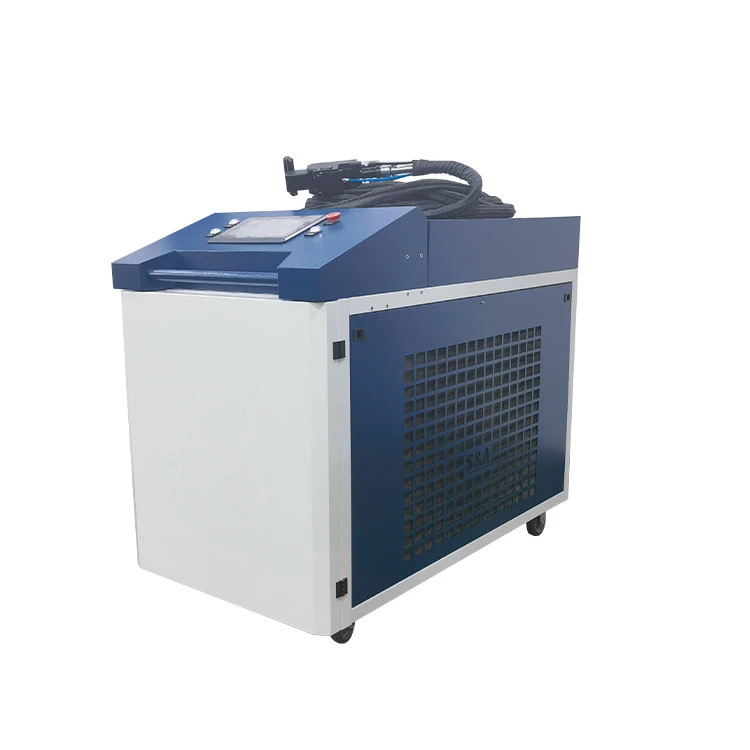
Laser cleaning gives shipyards a practical option for many surface maintenance tasks. It is not the right choice for every job, but it has clear benefits when used in the right application.
| Benefit | Why It Matters in Shipyards | Practical Example |
|---|---|---|
| No abrasive media | Reduces grit, dust, and spent media cleanup | Cleaning weld seams before repair |
| Localized cleaning | Removes rust only where needed | Deck rust spot repair |
| Non-contact process | Helps reduce mechanical wear on the base metal | Cleaning steel plates or pipes |
| Less secondary waste | Reduces blasting media waste in suitable jobs | Maintenance inside workshops or tanks |
| Better process control | Supports coating, welding, and inspection preparation | Cleaning before primer or welding |
| Flexible operation | Works on plates, pipes, seams, parts, and complex shapes | Cleaning anchor chains or machinery parts |
Removes Rust Without Blasting Media
Traditional ship rust removal often uses sandblasting, grinding, or chemical stripping. These methods can work, but they also create dust, noise, residue, and cleanup work.
Laser cleaning removes rust without adding sand, grit, or chemicals to the job site. This is useful in repair zones, workshops, tanks, machinery areas, and places where abrasive residue is difficult to manage.
Reduces Cleanup After Local Repairs
Many ship maintenance jobs are not full-surface projects. Rust may appear around a weld seam, pipe connection, deck fitting, or coating-damaged area.
With sandblasting, the team may need masking, dust control, abrasive collection, and extra cleanup. Laser cleaning can target the damaged area more directly, which may reduce surrounding disruption.
Helps Prepare Steel for Coating and Welding
Good coating and welding work starts with good surface preparation. Laser cleaning can remove rust, oxide, primer residue, oil, and surface contamination before repainting or welding.
A shipbuilding-focused study has also examined fiber laser cleaning for removing primer and oxide layers from steel used before painting and welding. You can review the study here: application of laser cleaning in shipbuilding industries.
Even so, the final surface should still be checked according to the coating or welding requirement. Laser cleaning supports surface preparation, but inspection is still important.
Laser Cleaning Applications in Shipbuilding and Ship Maintenance
Laser cleaning can be used in both new shipbuilding and repair work. It is not only for old, rusted vessels. In shipyards, it can support steel preparation, welding, coating repair, and part maintenance.
New Shipbuilding Steel Plate Preparation
During shipbuilding, steel plates may need cleaning before welding, painting, or assembly. Laser cleaning can remove shop primer, light rust, oxide layers, oil stains, cutting residue, and surface contamination.
A common example is weld seam preparation. Before welding, the operator can clean the area around the joint to remove primer, oxide, or oil. This helps create a cleaner welding zone.
Ship Repair and Maintenance
During vessel repair, laser cleaning can be used for local rust removal, paint removal around damaged coating areas, deck surface repair, pipe rust cleaning, tank maintenance, anchor chain cleaning, weld seam cleaning, and machinery part cleaning.
This is especially useful when the maintenance team wants to repair a smaller area without blasting a much larger surface.
Steel Plates, Pipes, and Marine Parts
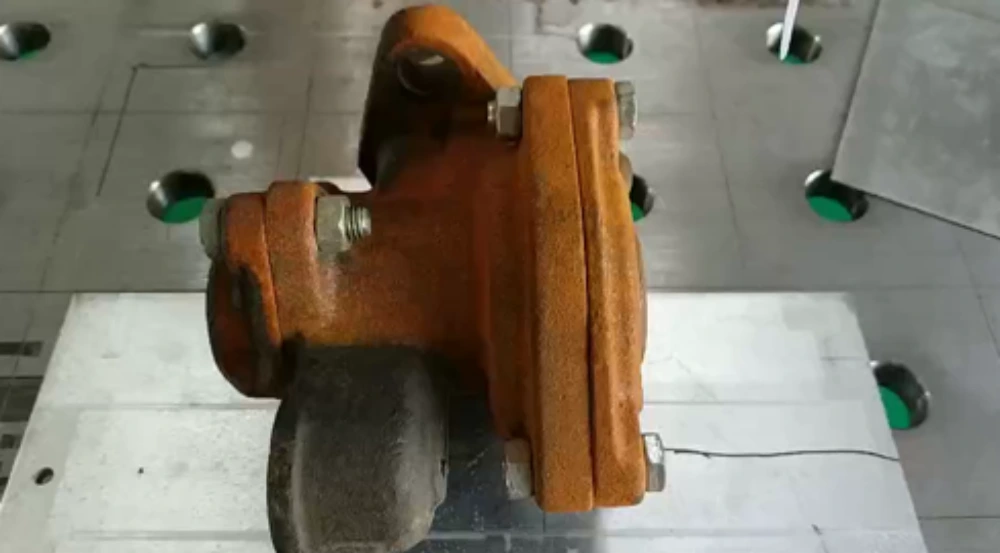
Many shipyard cleaning jobs involve parts, pipes, and fabricated structures rather than full hull surfaces.
| Shipyard Area | Common Problem | Laser Cleaning Use |
|---|---|---|
| Steel plates | Rust, primer, oxide layer | Surface preparation before welding or coating |
| Steel pipes | Rust, oil, oxidation | Local cleaning before repair or repainting |
| Weld seams | Oxide, primer, contamination | Pre-weld and post-weld cleaning |
| Anchor chains | Heavy rust and salt exposure | Rust removal and maintenance cleaning |
| Small components | Rust and surface dirt | Cleaning before inspection or reuse |
| Coated panels | Old paint or coating failure | Local paint removal before recoating |
Laser Cleaning vs Sandblasting for Ship Rust Removal
Laser cleaning and sandblasting are both useful, but they are not the same. Sandblasting is widely used because it can process large areas quickly. It is often suitable for full-surface preparation when a ship is in dry dock.
Laser cleaning is stronger when the job needs more control, less abrasive waste, and less surrounding disruption. For a broader comparison, you can read Riselaser’s guide to laser rust removal vs sandblasting.
| Factor | Laser Cleaning | Sandblasting |
|---|---|---|
| Cleaning method | Non-contact laser ablation | Abrasive impact |
| Media use | No blasting media | Requires abrasive media |
| Secondary waste | Lower for local work | Higher due to spent media |
| Surface control | High control with correct settings | Can be aggressive |
| Best use | Local rust, weld prep, parts, repair zones | Large-area coating removal |
| Cleanup | Less residue in suitable jobs | More media and dust cleanup |
| Safety needs | Laser PPE, barriers, fume extraction | Respirators, dust control, containment |
| Surface profile | Depends on settings and material | Can create anchor profile for coating |
When Laser Cleaning Is a Better Choice
Laser cleaning is often a better fit for localized rust removal, weld seam cleaning, steel plates, pipes, repair zones, machinery parts, anchor chains, areas where grit residue is a problem, and coating repair instead of full coating removal.
For example, if rust appears around a welded deck structure, laser cleaning can remove the rust from that area without blasting a wide section around it.
When Sandblasting May Still Be Better
Sandblasting may still be better for full hull surface preparation, very large coating removal jobs, thick multi-layer coating removal, projects where area speed is the main goal, or work that requires a specific abrasive surface profile.
Important coating note: Abrasive blasting can create an anchor profile that some marine coating systems require. Laser cleaning can create a clean surface, but the final roughness and coating suitability must be checked against the coating specification. For repainting work, always confirm cleanliness, salt level, and surface profile before applying primer.
The practical takeaway is simple: laser cleaning is often best as a controlled alternative or supplement to blasting, not as a universal replacement for every shipyard job.
CW vs Pulsed Laser Cleaning for Ship Rust Removal
Not all laser cleaners work the same way. For ship rust removal, the two main options are continuous-wave laser cleaning and pulsed laser cleaning.

Continuous-Wave Laser Cleaning for Heavy Ship Rust
Continuous-wave laser cleaning, often called CW laser cleaning, delivers laser energy continuously. It is usually better for heavy rust on steel, large steel plates, shipyard structural parts, thick oxide layers, faster industrial rust removal, and high-volume maintenance work.
For heavy ship rust, a continuous laser cleaning machine is often the more practical choice because it can remove rust faster over larger steel areas.
Pulsed Laser Cleaning for Precision Parts
Pulsed laser cleaning delivers laser energy in short bursts. It is usually better for precision cleaning, sensitive parts, thin materials, fine surface control, lower heat input applications, and parts where surface quality is more important than speed.
For smaller marine components, precision parts, tools, or surfaces that require careful control, a pulsed laser cleaning machine may be more suitable.
Which Laser Type Should You Choose?
| Buyer Situation | Suggested Direction | Reason |
|---|---|---|
| Heavy rust on thick steel plates | High-power CW laser cleaner | Better for faster bulk rust removal |
| Local deck rust repair | CW laser cleaner | Good for localized heavy rust |
| Weld seam cleaning before welding | CW or pulsed laser cleaner | Depends on surface condition and precision need |
| Thin parts or precision components | Pulsed laser cleaner | Lower heat buildup and better control |
| Mixed rust, oil, and paint residue | Test first | Contaminants may respond differently |
| Large shipyard production work | High-power CW or automated setup | Better for repeated industrial cleaning |
Simple rule: Use CW laser cleaning for heavy rust and larger steel structures. Use pulsed laser cleaning for precision cleaning and sensitive surfaces.
How Laser Cleaning Supports Painting, Coating, and Welding Preparation
Ship maintenance is not only about removing visible rust. In many cases, the real goal is to prepare the surface for the next step, such as repainting, recoating, welding, inspection, assembly, or structural repair.
Surface Preparation Before Repainting
Before primer or marine coating is applied, the steel surface must be clean enough for the coating system. Laser cleaning can remove rust, oxide, old coating residue, oil, and surface contamination from the repair area.
For example, before repainting a corroded deck section, the team can laser clean the rusted zone, inspect the surface, remove any remaining contamination, and then apply primer according to the coating specification.
Pre-Weld Cleaning
Weld areas often contain primer, rust, oil, or oxide. These contaminants can affect weld quality. Laser cleaning can be used before welding to clean the joint area on steel plates, pipes, and fabricated ship structures.
Post-Weld Cleaning
After welding, the surface may contain oxide, discoloration, spatter residue, or contamination. Laser cleaning can help clean the weld area before inspection, coating, or further assembly.
What Surface Quality Can Laser Cleaning Achieve?
Surface quality depends on the material, rust thickness, coating type, laser power, scanning speed, and operator settings.
In suitable applications, laser cleaning can create a very clean metallic surface. A study on severely corroded steel reported that laser cleaning achieved rust removal levels comparable to Sa2.5 or Sa3 under tested conditions, while also avoiding abrasive residue. You can review the research here: laser cleaning on severely corroded steel members.
However, this should not be assumed for every job. For marine coating work, the cleaned surface may still need visual inspection, salt contamination testing, surface profile checks, adhesion testing, or coating specification approval.
A safe way to think about it is this: laser cleaning can support high-quality surface preparation, but the final result must match the project’s coating, welding, or inspection standard.
Typical Laser Cleaning Workflow for Ship Rust Repair
A clear workflow helps shipyards use laser cleaning safely and consistently. A practical process may include the following steps:
- Inspect the steel surface and identify rust, paint, oil, salt, oxide, or coating layers.
- Confirm whether the coating contains hazardous materials.
- Choose the laser type and test settings on a small area.
- Set up laser safety barriers, eyewear, warning signs, and fume extraction.
- Clean the target area in controlled passes.
- Inspect the surface for remaining rust, salt, oil, coating residue, or heat effects.
- Apply primer, coating, welding, or further repair according to the project requirement.
This workflow is especially useful for shipyards that handle many different repair tasks each day.
Environmental and Workflow Benefits in Shipyards
Shipyards often need to manage dust, waste, water runoff, noise, and worker safety. Laser cleaning can help reduce some of these issues in suitable jobs.
Less Abrasive Media Waste
Laser cleaning does not use sand, grit, or other blasting media. This can reduce secondary waste in localized maintenance jobs, especially in workshops, tanks, repair areas, and parts cleaning where collecting spent media would be difficult or time-consuming.
Less Cleanup After Local Maintenance
For small rust areas, laser cleaning can reduce surrounding cleanup. Instead of blasting a wide area around a rust spot, the team can clean the affected zone, inspect the surface, and move to coating or repair.
Easier Integration Into Repair Workflows
Because laser cleaning can be used on steel plates, pipes, weld seams, parts, and coating repair areas, one machine may support several maintenance tasks in the same shipyard.
Safety Requirements for Shipyard Laser Cleaning
Laser cleaning can reduce abrasive dust and media waste, but it is not risk-free. Most industrial laser cleaning systems are high-power machines. They require trained operators, laser protection, controlled work areas, and proper fume extraction.
OSHA notes that Class IV lasers are hazardous to view under direct or scattered exposure and can also present fire and skin hazards. You can review OSHA’s guidance here: OSHA Technical Manual on laser hazards.
Basic Safety Checklist
- Use laser safety eyewear matched to the laser wavelength.
- Set up a controlled work area.
- Use warning signs and barriers.
- Keep untrained people away from the beam area.
- Control reflective surfaces.
- Use local fume extraction.
- Test settings before full cleaning.
- Train operators before use.
Fume Extraction Is Required for Rust, Paint, and Coatings
Laser cleaning removes rust, paint, oil, primer, and coatings by heating or breaking down the surface layer. This can create fumes and particles.
Fume extraction is especially important when cleaning paint, primer, oil-contaminated surfaces, rusted steel, unknown coatings, marine anti-fouling coatings, lead-based paint, or other hazardous materials.
For more details, read Riselaser’s guide to laser cleaning safety and fume extraction.
Cost and ROI: Where Laser Cleaning Can Save Money
Laser cleaning machines require upfront investment. For many buyers, that is the main concern. But the better question is not only, “How much does the machine cost?” The better question is, “Where can laser cleaning reduce total maintenance cost?”
| Cost Area | Traditional Method | Laser Cleaning Impact |
|---|---|---|
| Consumables | Abrasive media, chemicals, grinding discs | Lower consumable use |
| Cleanup | Spent media, dust, residue | Less residue in local jobs |
| Labor | Masking, blasting, cleanup | May reduce total process steps |
| Waste handling | Media and contaminated waste | Can reduce secondary waste |
| Downtime | Surface prep may require more setup | Useful for faster local repair |
| Rework | Poor prep can cause coating problems | Cleaner controlled prep may help |
Where ROI Is Stronger
Laser cleaning often makes more sense when rust removal is frequent, repair areas are localized, cleanup cost is high, blasting media is hard to manage, parts need repeated cleaning, the shipyard wants to reduce abrasive or chemical use, or one machine can be used across many applications.
Where ROI Is Weaker
ROI may be weaker when the job is a one-time project, the area is very large, sandblasting is already cheap and efficient, coating removal speed is the only priority, the team lacks trained operators, or safety setup is not available.
Need help estimating the right setup? Send photos or videos of your ship rust, coating, or steel surface. Riselaser can help recommend the right laser type, power range, and cleaning process for your application.
Limitations of Laser Cleaning for Ship Rust Removal
Laser cleaning has strong benefits, but it is not the right answer for every shipyard job.
Full-Hull Coating Removal
For full-hull paint removal or large dry dock projects, sandblasting may still be faster and more economical. Laser cleaning can work on large steel surfaces, especially with high-power systems, but productivity should be tested against the job requirement.
Very Thick Multi-Layer Coatings
Marine coatings can be thick, hard, and layered. Some coatings may require several passes or pre-treatment before laser cleaning is efficient. Testing the real coating is the best way to choose the right machine.
Hazardous Paint or Unknown Coatings
Old ships may contain hazardous paint or special marine coatings. Laser cleaning these surfaces without proper fume extraction and containment can be dangerous. Before cleaning, the coating type should be checked.
Poor Access or Unsafe Work Areas
Shipyards have complex work environments. Some areas may be hard to isolate or protect from laser exposure. Laser cleaning should only be used where the operator can control the beam, protect nearby workers, and manage fumes safely.
Do Not Choose by Wattage Alone
Higher power does not automatically mean better results. The right machine depends on rust thickness, coating type, base material, cleaning speed, surface quality requirement, safety setup, operator skill, and work environment.
How to Choose a Shipyard Laser Cleaning Machine for Rust Removal
Before choosing a shipyard laser cleaning machine, answer these questions.
1. What Material Are You Cleaning?
Most ship rust cleaning involves carbon steel, but some parts may be stainless steel, aluminum, or coated metal. The base material affects laser settings and process choice.
2. What Do You Need to Remove?
Identify the surface layer first. It may be rust, paint, primer, oil, salt, oxide, grease, marine coating, or welding residue. Different contaminants need different settings.
3. How Thick Is the Rust or Coating?
Light rust and heavy rust are not the same job. A thin oxide layer may be cleaned quickly. Thick rust or old coating may need higher power, slower scanning, or multiple passes.
4. How Large Is the Cleaning Area?
For small repair areas, a handheld laser cleaner may be enough. For large steel plates or repeated shipyard production work, a higher-power system or automated setup may be better.
5. What Is the Cleaning Goal?
The cleaning goal affects the process. Are you cleaning for repainting, welding, inspection, assembly, general maintenance, coating repair, or rust prevention? A surface prepared for painting may need stricter control than a surface cleaned for visual inspection.
6. Should You Choose CW or Pulsed Laser Cleaning?
For heavy ship rust and larger steel structures, CW laser cleaning is usually the better choice. For precision parts, thin materials, or sensitive surfaces, pulsed laser cleaning may be better.
7. What Safety Setup Is Available?
Before buying a machine, plan for laser safety eyewear, operator training, barriers, warning signs, fume extraction, fire safety, and work area control.
A laser cleaner is not only a machine purchase. It is also a process setup.
Shipyard Laser Cleaning Buyer Checklist
Use this checklist before requesting a quote or machine recommendation.
| Question | Why It Matters |
|---|---|
| What material are you cleaning? | Affects laser settings and safety |
| What do you need to remove? | Rust, paint, oil, oxide, and salt behave differently |
| How thick is the rust or coating? | Affects power and cleaning speed |
| How large is the area? | Determines handheld, high-power, or automated setup |
| Is the job onboard, outdoor, or in a workshop? | Affects safety and fume extraction |
| Do you need repainting or welding afterward? | Affects surface quality requirements |
| What cleaning speed do you need? | Helps choose power level |
| Is the coating hazardous? | Determines containment and filtration needs |
| Do you have trained operators? | Critical for safe use |
FAQ: Laser Cleaning for Ship Rust and Surface Maintenance
Can laser cleaning remove rust from ship hulls?
Yes. Laser cleaning can remove rust from ship hull sections and other marine steel surfaces. It is especially useful for localized rust, repair zones, weld seams, decks, tanks, steel plates, pipes, and parts. For full-hull coating removal, compare laser cleaning with blasting based on surface area, coating thickness, required speed, and project cost.
Can laser cleaning replace sandblasting in shipyards?
Laser cleaning can replace sandblasting in some localized shipyard maintenance tasks, such as weld seam cleaning, deck rust repair, pipe cleaning, and coating repair zones. However, sandblasting may still be better for full-hull preparation, very large areas, thick multi-layer coatings, or jobs requiring a specific abrasive surface profile.
What is the best laser cleaning machine for ship rust removal?
For heavy rust on ship steel, a high-power continuous-wave laser cleaner is usually the better choice. For precision parts, thin materials, or sensitive surfaces, a pulsed laser cleaner may be more suitable. The best machine depends on rust thickness, coating type, cleaning area, required speed, and safety setup.
Can laser cleaning prepare ship steel for painting?
Yes. Laser cleaning can remove rust, oxide, primer residue, oil, and contamination before painting. However, the cleaned surface must still meet the coating project’s requirements. Inspection, salt testing, surface profile checks, or adhesion testing may be needed before primer is applied.
Does laser cleaning create enough surface profile for coating?
Not always. Laser cleaning can create a clean surface, but it may not create the same anchor profile as abrasive blasting. For marine coating work, always check the cleaned surface against the coating specification, including cleanliness, salt level, and surface profile requirements.
Is fume extraction required for shipyard laser cleaning?
Yes. Fume extraction is strongly recommended, especially when removing rust, paint, primer, oil, or unknown coatings. Hazardous coatings, anti-fouling coatings, and lead-based paint require proper containment and filtration.
Final Thoughts: Is Laser Cleaning Worth It for Ship Rust Removal?
Laser cleaning is worth considering if your shipyard, repair team, or marine service business needs a cleaner and more controlled way to remove rust, paint residue, oxide, and surface contamination from steel.
It works especially well for localized ship rust removal, steel plate preparation, weld seam cleaning, pipe and part cleaning, deck repair, coating repair zones, pre-paint surface preparation, and pre-weld or post-weld cleaning.
It is not always the fastest method for full-hull coating removal. But for many shipyard maintenance tasks, it can reduce abrasive media use, cleanup time, and process complexity.
The best approach is to test the real surface condition first.
Need help choosing a laser cleaning machine for ship rust removal? Send us photos or videos of your rusted steel, coating layer, pipe, weld seam, deck surface, or marine parts. Tell us the base material, rust or coating thickness, cleaning area, and required speed. Riselaser can recommend the suitable CW or pulsed laser cleaning solution for your application.