
Industrial maintenance managers and restoration specialists face the same dilemma: how to remove corrosion without destroying the budget or the asset. The choice between Laser Rust Removal vs. Sandblasting isn’t just about “new tech vs. old tech.” It is a strategic decision between precision and brute force.
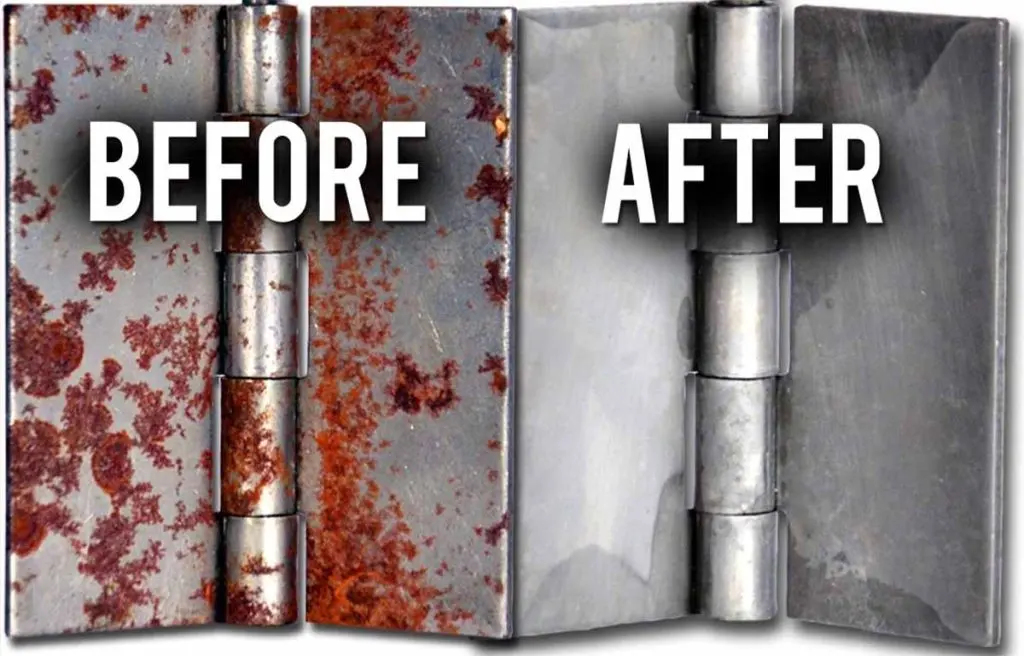
This guide breaks down the operational speeds, costs, and safety standards (ISO 8501) to help you decide which method fits your production line or restoration project.
The Quick Verdict: Laser Rust Removal vs. Sandblasting
If you are in the decision stage of purchasing equipment or hiring a service, here is your cheat sheet:
- Choose Sandblasting if: You need to strip heavy rust from massive infrastructure (bridges, ship hulls, large tanks) where creating a rough “anchor profile” for repainting is required. It remains the king of low-cost, high-speed bulk removal.
- Choose Laser Cleaning if: You are maintaining high-value assets (injection molds, aerospace parts, classic cars) where preserving the substrate tolerances is critical. It is the superior choice for operations demanding zero secondary waste and low noise.
The Rule of Thumb: Sandblasting is the sledgehammer; Laser cleaning is the scalpel.
How Laser Rust Removal vs. Sandblasting Works
What is Sandblasting (Abrasive Blasting)?
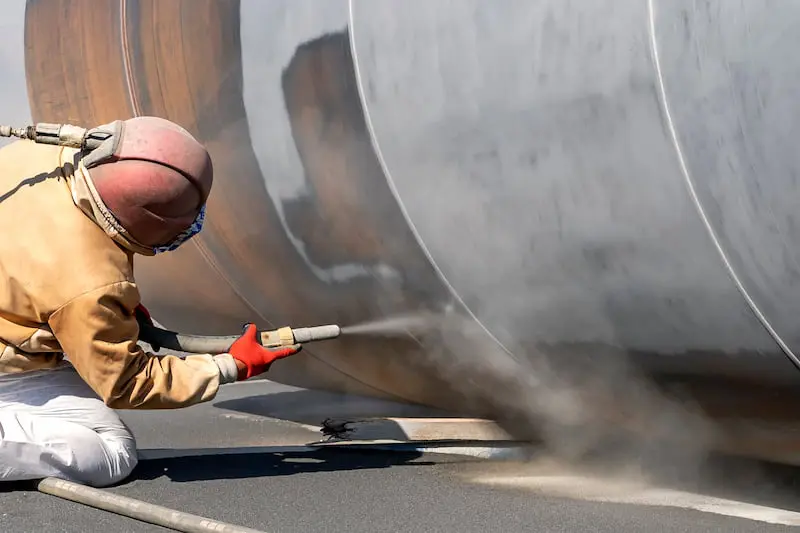
Sandblasting relies on Kinetic Energy. Compressed air propels abrasive media—such as steel grit, glass beads, or aluminum oxide—at high velocity to physically chip away contaminants.
- The Result: It removes rust but also removes a layer of base metal, creating a rough surface profile (Ra 20–50 µm) known as an “anchor pattern.” This is excellent for coating adhesion but destructive to precision parts.
What is Laser Rust Removal (Laser Ablation)?
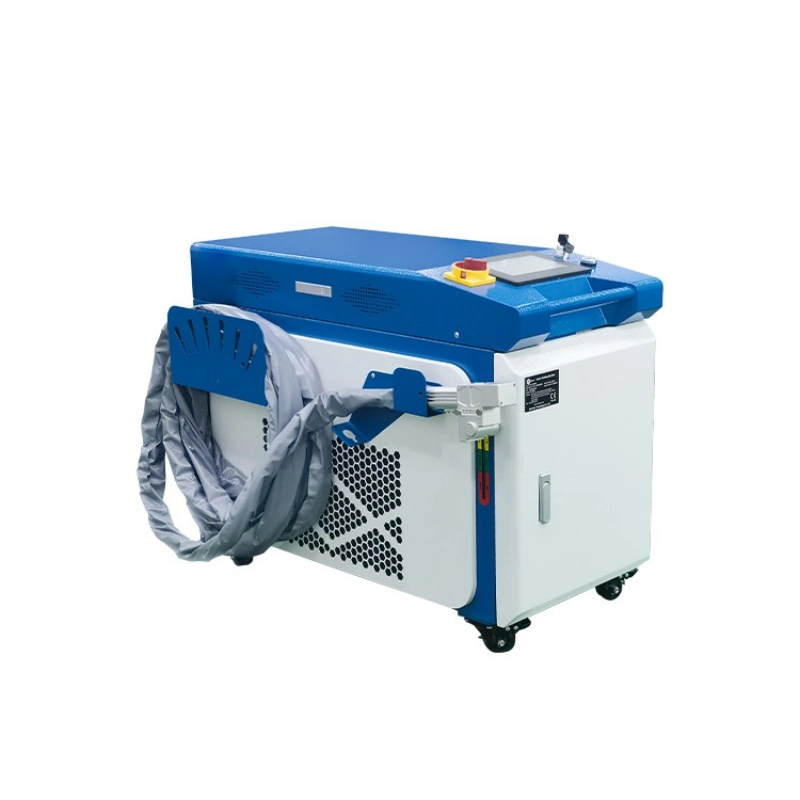
Laser cleaning uses Thermal Energy. A focused light beam (typically 1064nm wavelength) strikes the surface. The rust absorbs the energy and vaporizes (sublimates) instantly into gas/dust, while the reflective base metal remains cool and untouched.
- Pulsed Laser Cleaning Machines: Deliver high-peak energy pulses. Ideal for delicate cleaning (molds, restoration) without heat buildup.
- Continuous Wave (CW) Laser Cleaning Machines: Deliver a steady beam. More aggressive and faster, often used for heavy industrial steel where minor heat input is acceptable.
Performance Comparison: Laser Rust Removal vs. Sandblasting
1. Cleaning Speed and Efficiency
For decades, sandblasting was the undisputed leader in speed. While laser technology has narrowed the gap, physics still dictates the winner for “bulk” removal.
| Method | Typical Cleaning Rate | Best For |
| Sandblasting | 15–30 m²/hr | Large tanks, bridges, pipelines. |
| Standard Laser (Pulsed) | 2–10 m²/hr | Molds, engine parts, spot repairs. |
| Industrial Laser (6kW CW) | 20–90 m²/hr | Large-format steel plates, shipyards. |
Analysis: For heavy Class C or D rust on structural steel, sandblasting is generally faster per dollar invested. However, high-power 6kW Continuous Wave (CW) lasers are now available that can match or exceed sandblasting speeds for specific flat-surface applications, though they carry a higher price tag and heat risk.
2. Surface Damage and Integrity
- Sandblasting: Is a subtractive process. It erodes the material. On thin sheet metal (like vintage car hoods), the friction and kinetic impact can cause heat warping and “oil canning”.
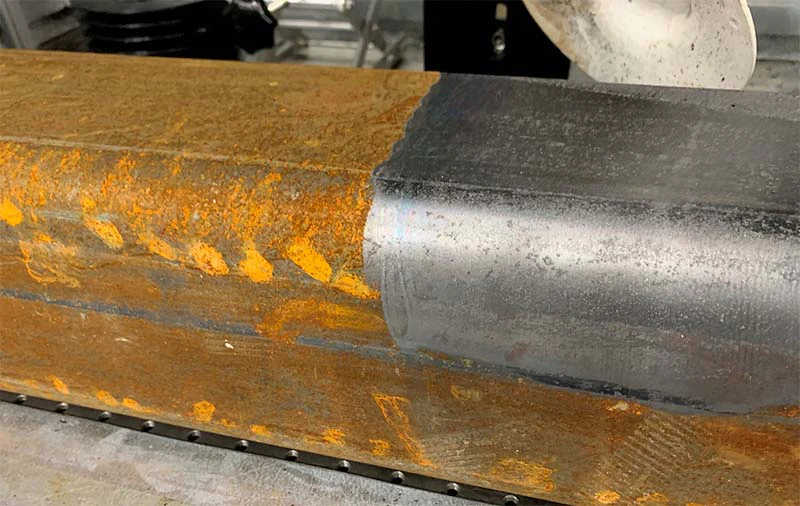
- Laser Cleaning: Is a non-contact process. A pulsed laser can remove 100 microns of paint without altering the steel substrate’s texture or dimensions. It can achieve ISO 8501-1 cleanliness grades (Sa 2.5 or Sa 3) without pitting the metal.
Is Laser Rust Removal Worth It?
The economic comparison comes down to Capital Expenditure (CAPEX) vs. Operational Expenditure (OPEX).
Upfront Equipment Costs
- Sandblasting: Low barrier to entry. A professional setup ranges from $1,000 to $20,000 depending on the compressor and pot size.
- Laser Cleaning: High barrier to entry. Entry-level units start around $3,000, while high-speed 6kW industrial units can range from $5,000 to $25,000+.
Operational Cost: Laser Rust Removal vs. Sandblasting
This is where the laser provides its Return on Investment (ROI).
| Cost Factor | Sandblasting (High OPEX) | Laser Cleaning (Low OPEX) |
| Consumables | Media: $1.50 – $7.00 per sq. ft. depending on abrasive type. | Electricity: $0.05 – $0.30 per sq. ft. |
| Maintenance Parts | Nozzles & Hoses: Frequent replacement due to abrasive wear. | Protective Lenses: Approx. $5 per lens. Typically replaced once a month (or as needed based on back-splatter intensity). |
| Support Equipment | Containment: Requires tenting/blast rooms. | Fume Extraction: Mandatory to capture vaporized toxins. Filters require periodic replacement. |
| Labor | High: Setup, tenting, and massive post-job media cleanup. | Low: “Plug and play.” No sweeping sand or disposing of hazardous waste. |
Safety and Environmental Impact
The Silica Dust Hazard
Sandblasting generates massive dust clouds. Even with “silica-free” media, pulverizing paint can release lead and toxins.
- Risk: Silicosis and respiratory damage.
- Compliance: OSHA standards require strict PPE, respirators, and containment, costing US industries an estimated $657 million annually in compliance.
The Eco-Friendly Alternative
Laser cleaning is a green technology.
- Waste: It vaporizes rust into a small amount of fume/dust that is captured by a vacuum extraction unit. There is zero secondary waste.
- Safety Requirements: Operators must wear OD 7+ safety glasses (specifically rated for 1064nm wavelengths) to prevent retinal damage. A fume extractor with HEPA or ULPA filtration is standard to handle the vaporized particles.
Real-World Applications
| Industry | Recommended Method | Why? |
| Automotive Restoration | Laser (Pulsed) | Removes paint/rust without warping thin body panels. |
| Heavy Infrastructure | Sandblasting | Fastest for cleaning bridges or concrete where surface profiling is needed. |
| Manufacturing Molds | Laser (Pulsed) | Cleans rubber/plastic residue from molds without wearing down critical tolerances. |
| Shipbuilding | Laser (High-Power CW) | Emerging use of 6kW lasers to strip large steel plates quickly without media cleanup. |
Conclusion
The “best” method depends entirely on your project’s constraints:
- Budget: If upfront cash is tight, Sandblasting wins.
- Substrate: If the part is delicate or high-value, Laser Cleaning is mandatory.
- Volume: If you are cleaning miles of pipeline, sandblasting (or a 6kW automated laser) is required.
Call to Action:
Stop guessing and start calculating. If you are spending more than $2,000/month on abrasive media and disposal fees, it is time to audit your process. Contact us today to schedule a sample cleaning test on your specific parts and see the ROI numbers for yourself.
Frequently Asked Questions (FAQ)
A: Yes, but with caution. Wood is combustible. Low-power pulsed lasers can remove varnish or soot, but incorrect settings will char the wood. Sandblasting with walnut shells is often safer for beginners.
A: Yes. Lasers are excellent for paint stripping. They can even remove topcoats while leaving the primer intact (selective ablation) by adjusting the frequency.
A: The cost lies in the fiber laser source (the engine) and the galvanometer scanning system (the optics). These components contain rare earth elements and precision optics that are costly to manufacture, though prices are dropping annually.
A: generally, no. A 6kW Continuous Wave (CW) laser puts massive heat into the part. For thin automotive sheet metal, you should use a Pulsed Laser (100W–500W) to avoid heat warping.