
Laser cutting in manufacturing is no longer just a fabrication tool; it’s a cornerstone of modern industry, driving innovation with unparalleled precision, speed, and versatility. At its core, laser cutting is a non-contact, thermal process that uses a focused beam of light, guided by a computer, to cut, etch, or engrave materials with incredible accuracy. This technology enables the creation of complex parts, accelerates product development, reduces material waste, and makes advanced production models like mass customization economically viable.
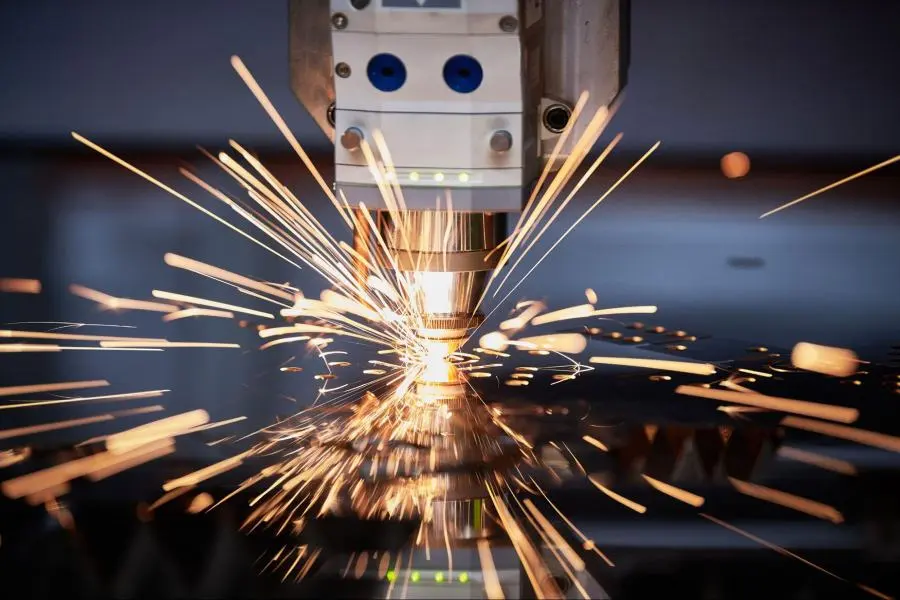
In this guide, we’ll cover how laser cutting works, its key advantages, its applications across major industries, and how it compares to other manufacturing methods.
What is Laser Cutting and How Does It Work?
Laser cutting is a high-precision manufacturing process that uses a powerful, focused laser beam to shape materials. The process is controlled by a computer, allowing for intricate and repeatable results.
The Basic Principle: From a Beam of Light to a Precise Cut
The process works in a few simple steps:
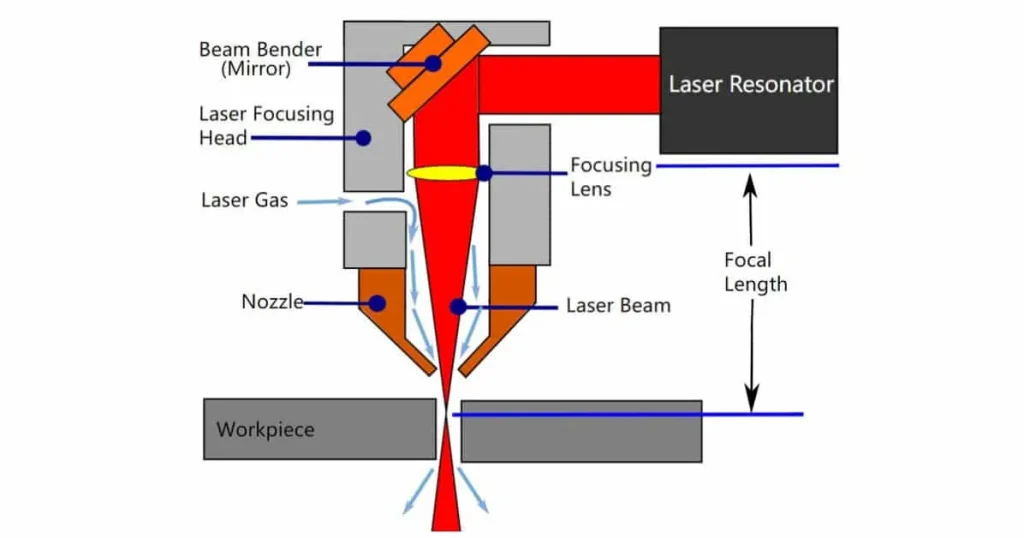
- A high-power laser beam is generated inside a closed container and directed through a series of mirrors or fiber optics.
- The beam travels to a cutting head where a lens focuses it onto a tiny, powerful point on the material’s surface.
- The intense energy from the laser melts, burns, or vaporizes the material in its path.
- A jet of assist gas, such as nitrogen or oxygen, blows the molten material and vapor away, leaving a clean, smooth edge.
- The entire process is guided by a Computer Numerical Control (CNC) system, which reads a digital design file (like a CAD file) and directs the cutting head’s movement with extreme precision.
The Core Advantages of Laser Cutting Technology
Engineers and manufacturers choose laser cutting for a powerful combination of benefits that directly impact quality, speed, and cost.
Unmatched Precision and Complexity
- High Accuracy: Laser cutting routinely achieves tight tolerances, often within ±0.1 mm, ensuring parts fit together perfectly.
- Intricate Designs: The focused laser beam can create complex geometries, sharp corners, and delicate features that are impossible with many mechanical methods.
- Perfect Repeatability: Because the laser beam doesn’t wear down like a physical blade, the first part is identical to the thousandth, guaranteeing consistent quality across large production runs.
Superior Speed and Throughput
- Fast Cutting: Laser cutters are significantly faster than many traditional cutting methods, with some machines reaching speeds of over 1000 inches per minute on thin metals.
- High Automation: Modern systems can operate with minimal human intervention, including “lights-out” manufacturing where machines run overnight, maximizing productivity.
- No Tooling Delays: Switching between jobs is as simple as loading a new digital file. This eliminates the time and cost associated with creating and changing physical tools, making it ideal for custom orders and prototypes.
High-Quality Finish and Versatility
- Clean Edges: The process produces smooth, burr-free edges that often require no secondary finishing, saving time and labor costs. For synthetic fabrics, the laser also seals the edge to prevent fraying.
- Broad Material Compatibility: Laser cutting works on a vast range of materials, including steel, aluminum, titanium, plastics, wood, leather, and textiles.
- Non-Contact Process: Only the laser beam touches the material, which prevents contamination and reduces the risk of distorting thin or delicate parts.
Types of Lasers: Choosing the Right Tool for the Job
The type of laser determines which materials it can cut effectively. The three main types used in manufacturing are CO2, fiber, and crystal lasers.
CO2 Lasers: The Workhorse for Non-Metals
CO2 lasers use an electrically stimulated gas mixture to produce the beam. They are the go-to choice for cutting and engraving organic materials like wood, acrylic, plastics, leather, and textiles.
Fiber Lasers: The New Standard for Metal Processing
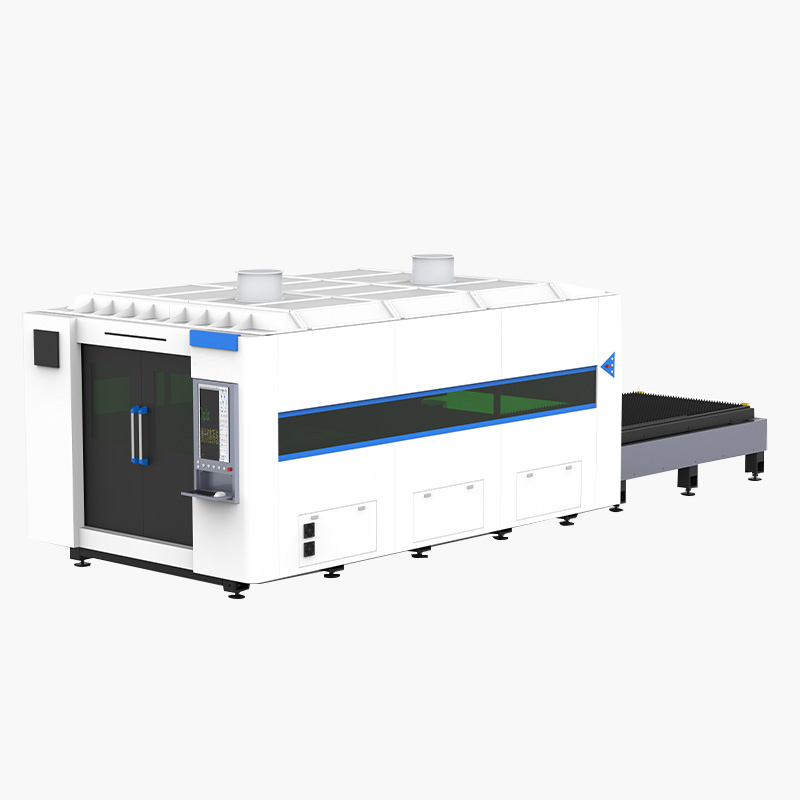
Fiber lasers are solid-state lasers that have become the industry standard for cutting metals. Their wavelength is absorbed more efficiently by metals, allowing them to cut steel, aluminum, brass, and copper faster and with less energy than CO2 lasers. They also require less maintenance, making their total cost of ownership lower.
Crystal Lasers (Nd:YAG): For High-Power Niche Applications
These solid-state lasers use a crystal (like Neodymium-doped Yttrium Aluminum Garnet, or Nd:YAG) to generate the beam. They can produce very high power, making them suitable for cutting very thick metals and ceramics or for deep engraving applications.
Laser Cutting in Action: Key Industrial Applications
From cars to medical implants, laser cutting is an essential technology in today’s most demanding industries.
- Automotive: Used to produce body panels, frame parts, and interior components. It is especially critical for cutting airbag fabrics, as the laser’s heat seals the edges to prevent fraying and ensure life-saving reliability.
- Aerospace & Defense: Essential for cutting high-strength, heat-resistant alloys like titanium and Inconel for jet engine parts and structural components where precision and material integrity are non-negotiable.
- Electronics: Perfect for fabricating miniaturized components, flexible circuit boards, and device housings with micron-level accuracy. The non-contact process avoids damaging delicate electronic parts.
- Medical Devices: The standard for producing intricate parts like coronary stents, surgical instruments, and catheters. The non-contact process is vital for maintaining a sterile environment and preventing contamination.
The Economic Impact: Is Investing in Laser Cutting Worth It?
For any business, the decision to adopt a new technology comes down to the return on investment (ROI). While laser cutting machines have a significant upfront cost, they deliver a rapid and compelling ROI.
Calculating the Return on Investment (ROI)
The ROI for a laser cutter is driven by major gains in efficiency and reductions in operational costs. For a high-production shop bringing previously outsourced work in-house, the payback period can be as short as six months. A smaller business might see a return in under two years.
How Laser Cutting Saves Money
- Reduced Material Waste: Advanced “nesting” software arranges parts on a sheet to maximize material use, often achieving over 90% utilization and drastically cutting raw material costs.
- Lower Labor Costs: High automation and the elimination of secondary finishing steps (like deburring) reduce the need for manual labor.
- No Tooling Costs: Laser cutting is a “tool-less” process, which eliminates the significant expense and lead time required to create and maintain custom dies and punches for mechanical cutting.
- Energy Efficiency: Modern fiber lasers are highly energy-efficient, with some shops reporting a 20-30% drop in energy bills compared to older CO2 systems.
How Laser Cutting Enables Modern Production Models
Laser cutting’s digital, tool-less nature is a key enabler of agile manufacturing philosophies that give companies a competitive edge.
- Rapid Prototyping: Engineers can go from a CAD design to a physical, high-precision prototype in hours instead of weeks. This accelerates testing and iteration, allowing for faster innovation and a quicker time-to-market.
- Just-in-Time (JIT) Manufacturing & Mass Customization: Because there is no tooling to change, a laser cutter can produce parts on-demand or create thousands of unique, customized products in a single run. This makes it possible to offer personalized goods at scale and supports lean inventory strategies.
Laser Cutting vs. The Alternatives
Choosing the right cutting technology depends on your project’s specific needs for material, thickness, precision, and budget.
| Feature | Laser Cutting | Plasma Cutting | Waterjet Cutting | Mechanical Punching |
| Mechanism | Thermal (Focused Light) | Thermal (Ionized Gas) | Mechanical (Erosion) | Mechanical (Shear) |
| Precision | Excellent (±0.1 mm) | Fair (±0.5 mm) | Good (±0.15 mm) | Good (±0.1 mm) |
| Max Thickness | ~25 mm (1″) | ~50 mm (2″) | ~300 mm (12″) | ~6 mm (0.25″) |
| Heat Affected Zone | Minimal | Moderate to Large | None | None |
| Best For | Intricate designs, thin-to-medium metals, non-metals | Thick conductive metals | Heat-sensitive materials, very thick materials, reflective metals | High-volume, simple repetitive shapes |
| Limitation | High initial cost, limited on very thick or reflective metals | Conductive metals only, rougher edge quality | Slower speed, high operational cost (abrasives) | Limited to simple shapes, requires expensive tooling |
Safety Considerations for Industrial Laser Cutting
Industrial laser cutters are powerful tools that require strict safety protocols. The high-power beams can cause severe eye and skin damage, and the process can generate hazardous fumes and fire risks.
- System Enclosure: Most industrial machines are Class 1 laser products, meaning the hazardous laser is fully contained within a protective enclosure with safety interlocks that shut the system down if a door is opened.
- Ventilation: A robust fume extraction system is mandatory to remove potentially toxic fumes and particulates generated during cutting, especially with plastics like PVC.
- Personal Protective Equipment (PPE): When servicing the machine or if the beam is exposed, operators must wear laser safety goggles specifically rated for the laser’s wavelength. Flame-resistant clothing and gloves are also recommended.
- Fire Safety: The work area must be kept free of combustible materials, and a properly rated fire extinguisher (typically CO2) must be readily accessible.
- Standards and Training: Safe operation relies on comprehensive operator training and adherence to established standards, such as ANSI Z136.1, which is the benchmark for laser safety in the U.S. and referenced by OSHA.
The Future of Laser Cutting
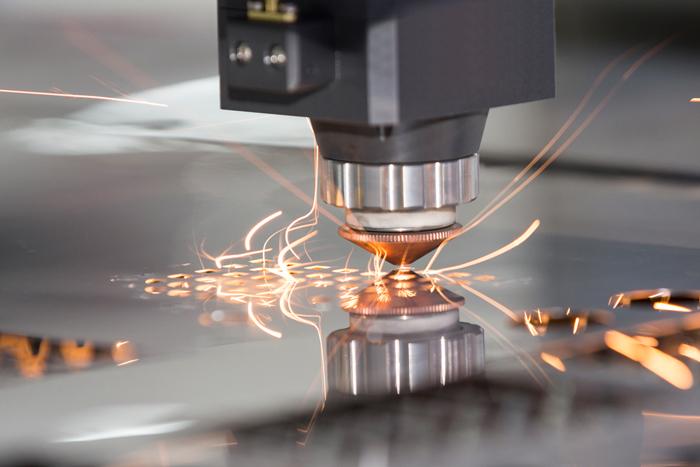
Laser cutting technology continues to evolve, driven by advancements in automation and data.
- Smarter Systems with AI: Future machines will use Artificial Intelligence (AI) to self-optimize cutting parameters in real-time for perfect quality and to predict maintenance needs before a failure occurs, reducing downtime.
- New Laser Sources and Hybrid Machines: The use of ultrafast lasers for “cold cutting” with no heat damage will become more common. Hybrid machines that combine laser cutting with other processes, like punching, will offer even greater flexibility in a single setup.
Conclusion
Laser cutting is a transformative technology defined by its precision, speed, and flexibility. For engineers, designers, and manufacturers, it is a powerful tool that reduces costs, accelerates innovation, and enables the agile production models required to compete in today’s market. Investing in laser cutting isn’t just about buying a machine; it’s about adopting a more efficient, flexible, and competitive way to manufacture.
Ready to see how laser cutting can elevate your next project? Get an instant quote on your parts today.
Frequently Asked Questions (FAQ)
A: Its primary advantage is the unique combination of high precision, fast speed, and the flexibility to create complex designs on a wide variety of materials without needing custom tools.
A: A huge range of materials can be laser cut, including metals (steel, aluminum), plastics (acrylic), wood, leather, textiles, paper, and more.
A: While the initial machine cost is high, the per-part cost is often lower than other methods due to reduced waste, less labor, and no tooling costs. It is especially cost-effective for prototypes and small-to-medium production runs.
A: This depends on the laser type and power. Industrial fiber lasers can typically cut steel up to 25 mm (1 inch) thick. For cutting materials several inches thick, waterjet or plasma cutting are better alternatives.