
You’re ready to tap into the booming permanent jewelry market or elevate your repair services, but a crucial decision stands in your way: Do you invest in a dedicated permanent jewelry welder or a far more expensive laser jewelry welder? This guide will eliminate the confusion, break down the real-world costs and benefits, and help you choose the perfect tool for your goals and budget.
At a Glance: Key Differences in 60 Seconds
| Feature | Permanent Jewelry Welder (Pulse Arc) | Laser Jewelry Welder |
| Primary Use | Permanent Jewelry, Simple Repairs | Intricate Repairs, All Jewelry Work |
| Upfront Cost | $1,000 – $3,000 | $3,000 – $20,000+ |
| Best For | Startups, Mobile Businesses, Boutiques | Established Jewelers, Repair Shops |
| Portability | Excellent | Limited to Poor |
| Precision | Good | Exceptional |
| Learning Curve | Low to Moderate | Moderate to High |
Who is This Guide For?
This guide is for you if you’re standing at a crossroads, trying to match the right welding technology to your specific ambition. We’re speaking directly to:
- The Aspiring Permanent Jewelry Entrepreneur: You need a low-cost, portable solution to start your business at pop-ups, markets, and events.
- The Boutique or Salon Owner: You want to add a trendy, high-profit service to your existing offerings without a massive upfront investment.
- The Established Jeweler: You’re looking to expand your repair capabilities, work on delicate pieces near heat-sensitive stones, and increase efficiency in your workshop.
- The Serious Jewelry Hobbyist: You’re deciding whether to upgrade your tools for more professional-level work.
Understanding the Technology: How Do They Actually Work?
To make the right choice, it helps to understand what’s happening on a microscopic level. While both tools join metal with heat, how they generate that heat is fundamentally different.
What is a Permanent Jewelry Welder? (Pulse Arc Technology)
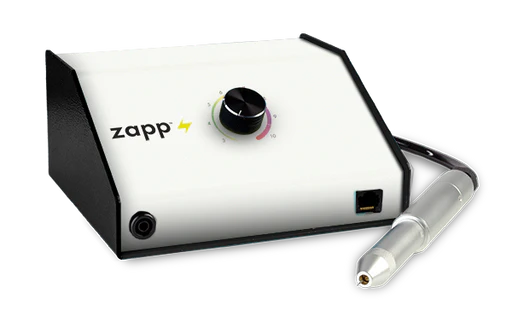
A pulse arc welder (the technology behind most “permanent jewelry welders”) uses a controlled electrical arc to create a weld.
- Analogy: It’s like creating a tiny, controlled bolt of lightning. An electric spark jumps from a sharp tungsten electrode to the metal piece you want to weld (like a chain link), melting a very small spot instantly.
- Key Points:
- It’s a contact process; the machine requires a grounding clip to be attached to the workpiece to complete the electrical circuit.
- It uses a puff of inert Argon gas to shield the weld point from oxygen in the air, preventing oxidation and creating a clean, strong bond.
- It is ideal for electrically conductive metals like gold, silver, and platinum.
What is a Jewelry Laser Welder? (Focused Light Technology)
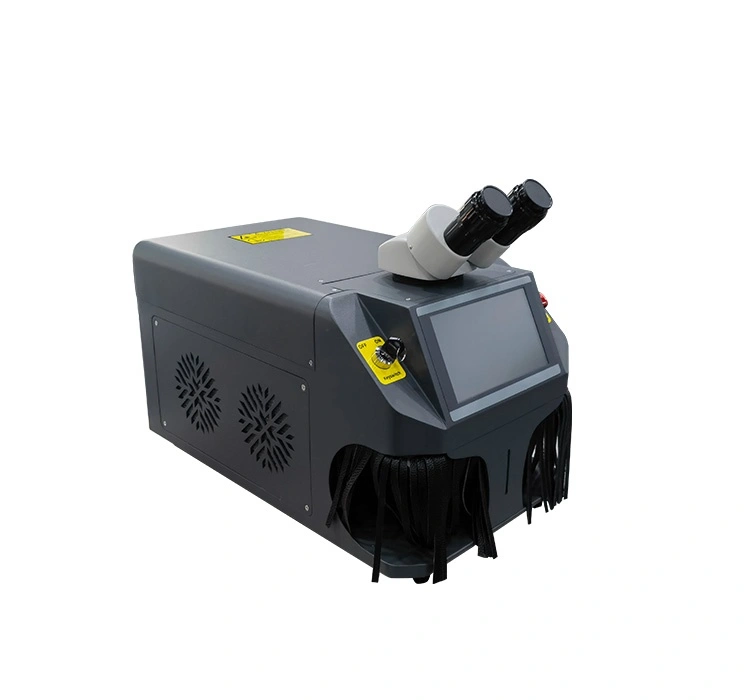
A laser welder uses a highly concentrated beam of light to melt the metal.
- Analogy: It’s like using a magnifying glass to focus sunlight into a powerful point of heat, but on a much more precise and powerful scale.
- Key Points:
- It’s a non-contact process; nothing physically touches the jewelry except a beam of light.
- This creates a very small heat-affected zone (HAZ), making it incredibly safe for working near heat-sensitive gemstones and on delicate antique pieces.
- The focused beam of light provides unparalleled precision for microscopic jobs.
The Head-to-Head Battle: A Deep Dive Comparison
Now let’s move beyond the spec sheets. How do these differences play out in terms of your wallet, your capabilities, and your daily workflow?
Investment & ROI: The True Cost of Ownership
The sticker price is only the beginning of the story. Understanding the full financial picture is crucial for your business plan.
- Upfront Cost: This is the most significant difference. A top-tier permanent jewelry welder like the Orion mPulse costs around $2,800. In contrast, a budget-friendly, entry-level laser welder starts around $3,000, with high-end production models from brands like Orotig or Best Built easily exceeding $15,000 – $20,000.For a complete breakdown, see our guide on what determines a laser jewelry welder’s price.
- Ongoing Costs & Consumables (The Hidden Part!):
- Pulse Arc: Your primary recurring costs will be consumables. Tungsten electrodes are the sharp points that create the arc; they need frequent sharpening and eventual replacement. More significantly, you will use Argon gas to shield every weld. A cylinder can last for hundreds of welds, but refills represent a consistent operational expense that depends on your volume and local supplier costs.
- Laser: Lasers have fewer day-to-day consumables but more expensive periodic maintenance parts. The internal flash lamps that power the laser have a very long life (often rated for millions of pulses) but are expensive to replace, typically costing between $300 – $500+. Some models may also require periodic replacement of water filters or deionizing cartridges for the cooling system.
Precision & Versatility: What Can You Actually Do With It?
- Permanent Jewelry Welder (Pulse Arc): This is the master of one trade. It is designed and optimized for one job: welding chain links quickly and effectively. It’s perfect for permanent jewelry. It can also handle simple, common repairs like closing jump rings and attaching earring posts. However, it struggles with extremely fine, delicate work or pieces that can’t be easily grounded with a clip. It is particularly effective and forgiving on silver, which is known to be tricky to weld.
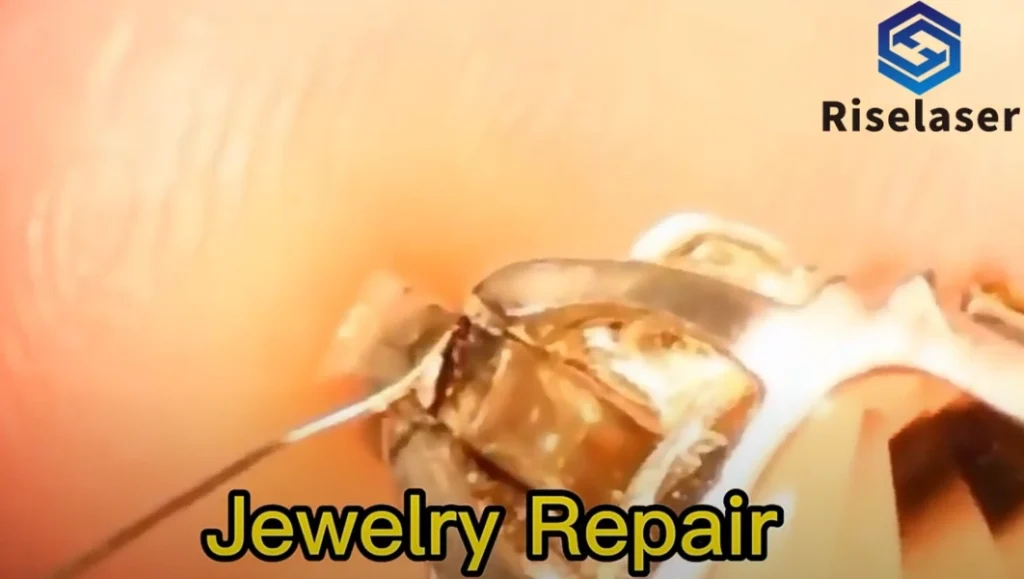
- Laser Welder: This is the jack-of-all-trades and master of precision. A laser welder opens up a whole new world of repair services. It excels at tasks that are difficult or impossible for other tools: retipping prongs with heat-sensitive stones still set, repairing antique filigree without a trace, seamlessly filling porosity, and even fixing titanium eyeglass frames. Its pinpoint accuracy allows you to weld metal right next to a pearl or emerald with minimal risk. The one caveat: highly reflective metals like pure silver can be challenging for lower-power lasers, sometimes requiring special techniques or coatings to weld effectively.
Ease of Use & Learning Curve: How Fast Can You Make Money?
- Permanent Jewelry Welder (Pulse Arc): This machine has a steeper initial learning curve to achieve consistent, professional results. It requires hands-on practice to master the interplay between power settings, pulse duration, and the physical distance of the electrode from the workpiece. A wrong setting can result in a weak, brittle weld or, worse, blowing a hole right through a delicate chain link.
- Laser Welder: For basic operations, a laser welder has a surprisingly short learning curve. The process is highly visual; you look through a microscope, aim the crosshairs at your target, and press a foot pedal. This point-and-shoot nature is very intuitive, allowing new users to perform high-quality welds almost immediately. However, mastering advanced repairs, like building up material on a worn-out prong, is a true skill that still requires significant practice and expertise.
Safety Considerations: Protecting Yourself and Your Clients
This is a critical, non-negotiable differentiator.
- Pulse Arc: The primary risks involve a bright arc flash and potential for minor burns from spatter. Proper eye protection (specialized shaded glasses, not sunglasses) is essential to prevent eye strain and damage from the intense UV light. You must also follow safety protocols for handling and storing compressed Argon gas cylinders.
- Laser: CRITICAL DANGER. A laser welder poses a severe and permanent risk of eye damage. The focused beam of light, which is often in the invisible spectrum, can instantly burn a retina, causing blindness. This is not a minor risk; it’s the single most important safety consideration. Specialized safety glasses rated for the specific wavelength of your laser are mandatory for EVERYONE in the room, not just the operator. A dedicated, controlled workspace is highly recommended to prevent accidental exposure.
Which Welder is Right for YOU?
By now, the right path for your business should be coming into focus. Let’s make the decision crystal clear by matching the tool to your specific situation.
Choose a Permanent Jewelry Welder IF…
- ✅ Your primary, or only, business is mobile permanent jewelry. You’re planning to be at pop-ups, farmer’s markets, salons, or private parties.
- ✅ Your startup budget is under $3,000. You need a professional tool without the massive capital expense of a laser.
- ✅ Portability is your #1 priority. You need a machine you can easily pack up, transport in your car, and set up in minutes.
- ✅ You primarily work with gold and silver chains. Your focus is on the core service of “zapping” bracelets and anklets.
Choose a Laser Welder IF…
- ✅ You are an established jeweler with a physical, dedicated workshop. This is a stationary tool for a professional bench.
- ✅ You want to offer a wide range of high-value repair services. Your goal is to work on prong repairs, channel settings, antique restoration, and more.
- ✅ Precision and safety around delicate gemstones are paramount. You frequently work on high-value client pieces where there is zero room for error.
- ✅ You have the budget ($3,000+) and a safe, dedicated workspace where you can implement and enforce strict laser safety protocols.
The “In-Betweener”: Can You Use a Laser for Permanent Jewelry?
This is a very common question. The answer is: Yes, absolutely. A laser welder will create a perfect, clean weld on a permanent jewelry chain.
However, it is massive overkill and highly impractical for the job. Using a stationary, multi-thousand-dollar laser welder for a permanent jewelry pop-up is like using a Formula 1 race car to go get groceries. It will certainly do the job, but it’s not the right, efficient, or logical tool for the task. The lack of portability makes it a non-starter for the mobile business model that defines the permanent jewelry market.
Frequently Asked Questions (FAQ)
The permanent jewelry market is dominated by one key player: Sunstone Engineering. Their [Orion mPulse] and Orion Zapp models are widely considered the industry standard. They are known for their reliability, customer support, and for being specifically designed for the needs of permanent jewelry artists.
Entry-level laser welders, like the [Riselaser], represent a fantastic value proposition, but it’s crucial to understand their limitations. For a jeweler moving from a pulse arc welder, a budget laser is a massive upgrade in precision and capability. It can handle most common repairs, including basic prong work. However, its lower power (measured in Joules) means it may struggle with larger pieces or highly reflective metals like silver. For a high-volume repair shop, you may eventually want to upgrade to a more powerful model, but as a first step into laser welding, they are an excellent and worthwhile investment.
This depends on your tank size, your regulator’s flow rate, and your weld frequency. A common setup for mobile businesses is a small 20-cubic-foot tank. With a conservative flow rate (around 5-7 LPM) and a quick 1-second burst of gas per weld, you can expect to get several hundred welds from a single tank. Your usage will be higher as you learn, but once you are efficient, a tank can last through a busy multi-day event.
Yes, but only for simple ones. A pulse arc welder is excellent for closing jump rings, tacking elements in place before soldering, repairing broken chain links, and attaching earring posts. It lacks the precision and low heat transfer needed for advanced repairs like retipping prongs, working near heat-sensitive stones, or repairing delicate filigree. Think of it as a fantastic tool for specific tasks, not a complete replacement for a traditional jeweler’s bench or a laser.
The Final Verdict: Your Next Step
The decision boils down to one question: Are you starting a specialized, mobile business, or are you expanding the capabilities of a professional workshop?
For the permanent jewelry entrepreneur, the pulse arc welder is the smart, focused, and profitable choice. It’s the right tool for the job, designed for the portability and specific function your business model is built on.
For the established jeweler aiming for ultimate precision and service expansion, the laser jewelry welder is an investment that unlocks a new tier of craftsmanship. It pays for itself by enabling high-value repairs you simply couldn’t offer before.