
Laser technology is the use of focused, amplified light to cut, weld, clean, mark, or process materials with high precision. Unlike ordinary light, laser beams are coherent, highly directional, and concentrated into a small spot, allowing them to deliver controlled energy with exceptional accuracy. Because of these properties, laser technology is widely used in manufacturing, electronics, aerospace, medical devices, and other precision-driven industries.
From sheet metal cutting and handheld laser welding to rust removal and permanent marking, lasers help improve speed, consistency, and material efficiency. In this guide, you will learn what laser technology is, how it works, its main benefits, key safety considerations, and how it supports modern industrial applications.
What is Laser Technology?
Laser technology refers to the generation and use of concentrated light energy for precise processing and control. The term laser stands for Light Amplification by Stimulated Emission of Radiation. In practical terms, laser systems produce a focused beam of light that can be directed with a high level of accuracy for industrial, scientific, medical, and technical applications.
What makes lasers different from ordinary light is the way the beam is produced and controlled. Unlike normal light, which spreads in many directions and contains many wavelengths, laser light is more organized and concentrated. It can be directed into a narrow beam, maintain its strength over distance, and deliver energy to a very small area. These properties are what make laser technology suitable for tasks that require precision, consistency, and controlled heat input.
What Are Lasers Used For?
Lasers are used for cutting, welding, cleaning, marking, engraving, drilling, and many other precision tasks across modern industries. Their ability to focus energy into a small, controlled spot makes them highly effective for processing materials quickly and accurately. As a result, laser technology is widely used in manufacturing, electronics, aerospace, automotive production, medical devices, and other applications where precision and consistency are critical.
In practical terms, lasers help companies improve production speed, reduce tool wear, minimize material waste, and achieve cleaner results on delicate or complex parts. They are also used for traceability and product identification, such as marking serial numbers, QR codes, and logos. This wide range of uses is one of the main reasons laser technology has become such an important part of modern industrial operations.
Main Types of Laser Technology
Laser technology includes several main types, each designed for different industrial processing needs. In many manufacturing applications, the most common categories are fiber lasers, CO2 lasers, and UV lasers. These laser types differ in beam source, typical application range, and the kind of tasks they are best suited to in production environments.
Fiber lasers are widely used in industrial metal processing because they support high-speed cutting, welding, cleaning, and marking with strong beam quality and stable performance. CO2 lasers are commonly used for cutting and engraving non-metal materials such as wood, acrylic, paper, textiles, and certain plastics. UV lasers are mainly used for fine marking and micro-processing tasks where precision is critical and heat impact must be kept low. Understanding these main laser types helps manufacturers choose the right system based on the production task, material category, and processing requirements.
Common Laser Wavelengths and Their Applications
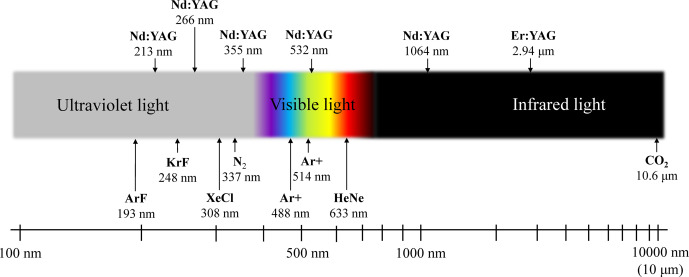
Laser wavelength has a direct effect on how a material absorbs laser energy. This matters because absorption influences processing efficiency, heat input, surface response, and the overall quality of the result. In industrial laser systems, common wavelengths such as 1064 nm, 10.6 μm, and 355 nm are used for different reasons, depending on the material and the required application.
For example, 1064 nm is widely used in fiber laser systems and is highly effective for many metal processing tasks. The 10.6 μm wavelength used in CO2 laser systems is better suited to many non-metal materials, including wood, acrylic, paper, textiles, and some plastics. The 355 nm wavelength used in UV laser systems is preferred for delicate marking and micro-processing because it allows high precision with lower thermal impact. By understanding how wavelength affects material interaction, manufacturers can better match the laser source to the desired processing result.
Key Benefits of Laser Technology in Modern Industries
Laser technology provides numerous benefits that make it an indispensable tool across industries, from manufacturing to medical devices. Here are some of the key advantages:
- Increased Precision and Accuracy: Lasers allow for extremely fine adjustments, enabling high-precision tasks that traditional methods cannot achieve. Whether it’s cutting thin metal sheets or performing intricate medical procedures, lasers deliver unmatched accuracy.
- Faster Production: Laser systems operate at high speeds, reducing cycle times in manufacturing processes. For example, laser cutting is faster and more efficient than traditional methods like plasma or water jet cutting, allowing companies to produce more in less time.
- Non-contact and No Tool Wear: Lasers operate without physical contact with materials, reducing the risk of tool wear and damage. This results in less downtime for maintenance and longer tool life, which can significantly reduce operational costs.
- Reduced Material Waste: Lasers can cut, weld, and process materials with minimal waste, leading to cost savings and sustainability benefits. The precision of laser cutting ensures that there is little to no material loss during the process.
- Versatility Across Industries: Laser technology can be applied in a wide range of fields including automotive, aerospace, medical devices, electronics, and more. Its adaptability allows it to handle a variety of materials such as metals, plastics, ceramics, and composites.
Top Industrial Applications of Laser Technology
Laser technology plays a vital role in many industrial processes. Below are some of the top applications:
Laser Cutting and Drilling
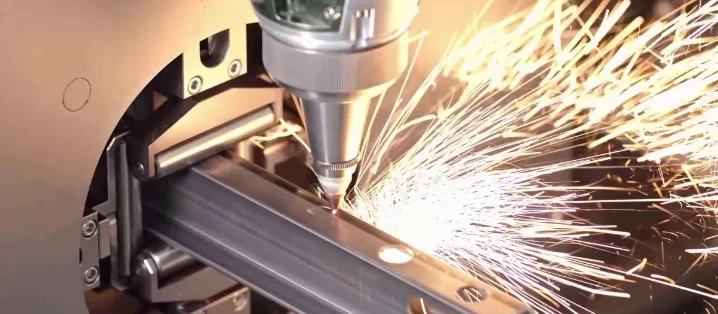
- Laser cutting is used extensively in metal fabrication. Fiber lasers, for instance, can cut through metals like steel and aluminum with great speed and precision, making them ideal for manufacturing parts in industries such as automotive and aerospace.
- Drilling with lasers is used in aerospace to create small, precise holes in materials like turbine blades, which is not possible with traditional mechanical drills.
Laser Welding
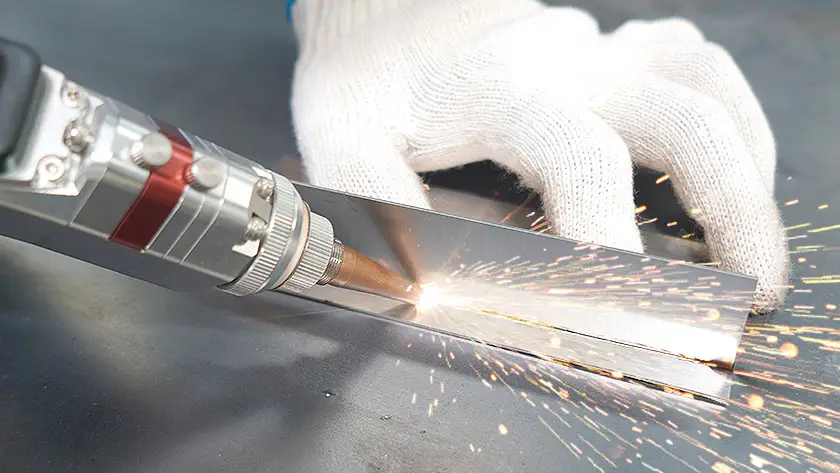
- Laser welding provides a fast and precise way to join metals with minimal heat-affected zones. Unlike traditional welding methods, lasers can work on thin or delicate materials without causing distortion.
- Handheld laser welders have revolutionized industries by allowing workers to weld at much faster speeds compared to traditional methods like TIG welding, with applications in automotive repair and electronic assembly.
Laser Cleaning
- In the automotive industry, laser cleaning is used to remove rust and contaminants from parts before further processing. This process is non-abrasive, environmentally friendly, and does not require chemicals.
- Laser cleaning is also used in cultural heritage conservation to remove old paint from historical monuments and artworks without damaging the underlying surfaces.
Laser Marking
- Laser marking is used for engraving precise markings, logos, and codes on various materials, including plastic, metal, and glass. This is essential for traceability, authentication, and branding in industries such as electronics and medical devices.
Why Is Laser Technology Important in Modern Industry?
Laser technology plays an important role in modern industry because it supports the shift toward faster, cleaner, and more precise manufacturing. As production standards continue to rise, manufacturers need processing methods that can handle complex parts, tight tolerances, and a wide range of materials without sacrificing efficiency. Laser systems meet these demands by providing accurate, repeatable, and non-contact processing for many industrial tasks.
This is why laser technology is now widely adopted across sectors such as automotive, aerospace, electronics, medical devices, and metal fabrication. It helps improve consistency, reduce rework, lower maintenance demands, and support automated workflows in both high-volume and high-precision production. For many companies, lasers are not only a processing tool, but also a practical way to increase productivity and maintain competitive manufacturing standards.
How Does Laser Technology Work?
Laser technology works through a process called stimulated emission, where a medium (solid, liquid, or gas) is excited by energy and emits light in a coherent form. The key components of a laser system include:
- Energy Source (Pump): This provides the energy required to excite the atoms or molecules in the laser medium.
- Laser Medium: A material that, when excited by energy, emits photons. Different materials (e.g., fiber, CO2) create different wavelengths of light.
- Optical Cavity: A set of mirrors that help reflect the emitted light back and forth, amplifying it.
- Output Coupler: A partially reflecting mirror that allows a portion of the light to exit as the laser beam.
Lasers produce light that is highly coherent, meaning the light waves are synchronized and move in the same direction. This is what gives the laser its precision, power, and ability to focus over long distances without losing strength.
Future of Laser Technology: Trends and Innovations
The future of laser technology is incredibly exciting, with continuous advancements pushing the boundaries of what lasers can achieve. Here are a few trends to watch:
- Laser Technology in Additive Manufacturing: Lasers are already integral to 3D printing with metal powders. In the future, advancements in laser sintering and laser cladding could revolutionize how products are made, allowing for customization and faster prototyping.
- Quantum Lasers: Quantum laser technology is emerging as a powerful tool for precision measurements, and could significantly improve the performance of systems like GPS and communications.
- Smarter and Smaller Lasers: As industries move toward miniaturization, there is growing demand for compact laser sources. This is particularly relevant in the medical field for minimally invasive procedures and in electronics for precise component marking.
- Laser in Environmental Monitoring: Lasers are being used to monitor pollutants and greenhouse gases, with future systems allowing for real-time, highly accurate detection.
Safety Standards in Laser Technology
Laser safety is critical, as lasers can be hazardous if not handled properly. Here are the essential safety standards:
- Eye Protection: Direct exposure to laser beams can cause severe eye damage. Operators must wear laser safety glasses that are rated for the specific wavelength being used. For more information on laser welding safety, visit our article on best practices for ensuring operator safety.
- Fume Extraction: Laser processes generate fumes, which can be hazardous to health. Fume extraction systems are mandatory for laser cutting, welding, and cleaning to ensure air quality. Proper filtration, such as HEPA or carbon filtration systems, is essential to maintain safe working environments. To learn more about laser cleaning safety, check out our detailed guide on minimizing risks in industrial cleaning applications.
- Enclosures: Automated laser systems must be housed in interlocked enclosures to prevent accidental exposure. These enclosures should comply with safety standards such as IEC 60825-1.
- Regulatory Compliance: Laser manufacturers and users must comply with national and international standards, including ISO 11553 and IEC 60825, to ensure safety in industrial settings.
FAQs
Laser technology is used for cutting, welding, cleaning, marking, engraving, drilling, and many other precision tasks. It is widely applied in manufacturing, electronics, aerospace, automotive production, and medical devices because it can process materials quickly, accurately, and with minimal physical contact.
Laser technology is important in modern industry because it supports faster, cleaner, and more precise production. It helps manufacturers improve consistency, reduce rework, minimize material waste, and handle complex parts with tight tolerances. These advantages make laser systems valuable in both high-volume and high-precision manufacturing environments.
The main types of laser technology used in industry include fiber lasers, CO2 lasers, and UV lasers. Fiber lasers are widely used for metal processing, CO2 lasers are common for non-metal materials, and UV lasers are preferred for fine marking and micro-processing applications that require high precision and low heat impact.
Different laser wavelengths matter because materials absorb laser energy differently. This affects processing speed, heat input, surface quality, and application suitability. For example, 1064 nm is widely used for many metal applications, 10.6 μm is common for non-metal processing, and 355 nm is often used for fine marking and delicate micro-processing.
Yes, laser technology can be used on both metals and non-metals, but the best laser type depends on the material and the application. Fiber lasers are commonly used for metals such as steel and aluminum, while CO2 lasers are often used for wood, acrylic, paper, textiles, and some plastics. Choosing the right laser system is important for achieving the desired processing result.
Ready to Upgrade Your Production Line?
Riselaser specializes in industrial laser solutions tailored to your specific cycle times and material needs. Whether you need a cost analysis for a new cutting system or a sample weld on your specific alloy, our engineers are ready to assist.