
Yes, a laser cleaning machine can remove paint, but in the industrial sector, the answer is rarely a simple “yes.” While viral videos suggest a “magic eraser” effect, the feasibility of laser paint removal is strictly governed by three variables: the substrate (what is under the paint), the coating thickness, and the laser architecture (Continuous Wave vs. Pulsed).
For maintenance managers and production engineers, this guide cuts through the marketing hype to determine if laser cleaning is a viable replacement for sandblasting or chemical stripping in your specific application.
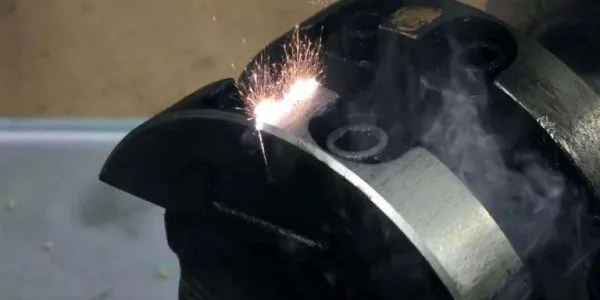
Quick Feasibility Verdict
Before investing capital, check your application against this feasibility matrix.
| Application Scenario | Feasibility Verdict | Why? |
| Thin Metal Sheets (Auto Body) | ✅ High (Pulsed Only) | Non-contact cleaning removes paint without warping or altering the temper of thin steel/aluminum. |
| Heavy Steel (Beams, Bridges) | ✅ High (CW Laser) | Continuous Wave (CW) lasers offer the high power needed for fast bulk stripping of rust and industrial paint. |
| Injection Molds | ✅ High (Pulsed Only) | Essential for preserving critical tolerances and surface textures (e.g., tire molds, shoe molds) without abrasion. |
| Wood Furniture/Siding | ⚠️ Low / High Risk | High risk of charring. Wood is combustible; lasers often burn the grain before removing deep stains or thick varnish. |
| Thick Marine Coatings (>500µm) | ❌ Low Efficiency | Laser ablation is layer-by-layer. For thick, rubbery, or anti-fouling coatings, sandblasting is significantly faster and cheaper. |
| White / Reflective Paint | ⚠️ Difficult | White pigments (TiO2) reflect near-infrared laser beams, drastically slowing down the cleaning speed. |
How Laser Paint Removal Works
Unlike sandblasting, which uses kinetic energy (impact), laser cleaning uses light energy (thermal ablation) to strip paint. When the laser beam hits the surface, three distinct physical reactions occur:
- Thermal Decomposition: The laser beam is focused on the coating, converting light energy into extreme heat instantly. This vaporizes the organic binders in the paint, causing it to crumble and turn into dust/gas.
- Thermal Expansion (The “Pop” Effect): The rapid heating causes the paint layer to expand much faster than the metal substrate underneath. This difference in expansion breaks the mechanical bond, causing the paint to peel off.
- Ablation Shockwaves: On a microscopic level, the rapid plasma expansion creates powerful shockwaves that eject the paint particles away from the surface.
Removing Paint from Metal
When evaluating a laser cleaning machine for metal assets, you must distinguish between what is technically possible and what is economically viable.
The Efficiency Limit
Laser cleaning works by ablation—vaporizing the coating layer by layer (often microns at a time).
- Thin Coatings (Flash rust, spray paint, oil): Lasers are incredibly efficient. A 2000W CW unit can clean thin layers at speeds up to 15–45 m²/h.
- Thick Coatings (Heavy Epoxy, Powder Coat >500 microns): The process becomes exponentially slower. Because the laser energy must vaporize the material volume, stripping thick marine epoxy might require 5–10 passes. In these high-build scenarios, traditional abrasive blasting is often 3x faster and offers a better ROI.
Thin Metal & Warping Risks (The “Oil Canning” Effect)
Heat accumulation is a critical failure point on thin substrates like classic car hoods or aerospace skins.
- The Risk: High-power Continuous Wave (CW) lasers output a constant stream of energy. On sheet metal less than 1mm thick, this creates a significant Heat Affected Zone (HAZ). This heat causes the metal to expand and warp (oil canning), permanently ruining the part’s dimensional accuracy.
- The Solution: You must use a Pulsed Laser. These systems fire nanosecond bursts of light, allowing the surface to cool instantly between pulses. This “cold” cleaning method removes paint without altering the substrate’s metallurgy.
The Truth About Laser Cleaning Wood
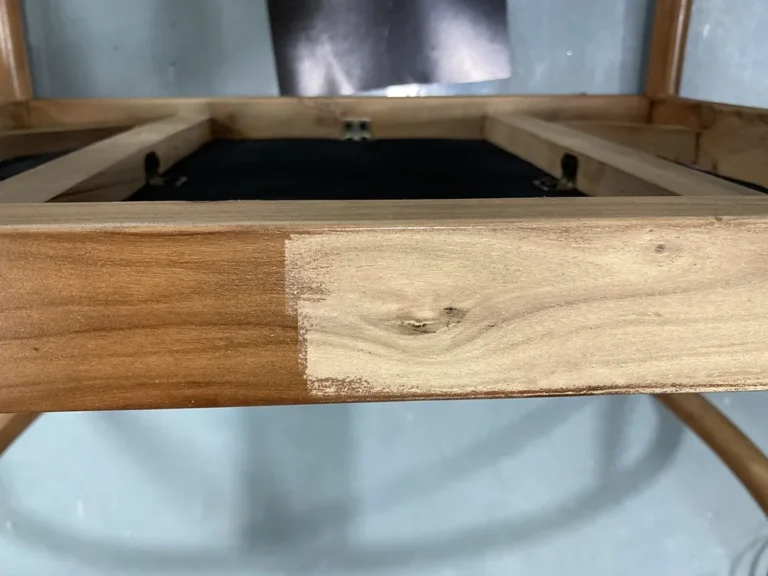
Despite what many dropshipping ads claim, laser cleaning wood is rarely feasible for industrial applications. Wood is a fuel, not a heat sink like steel.
Why “All Paint” Claims Are False
- Charring: The thermal threshold required to vaporize varnish is often higher than the combustion point of wood fibers. Using a CW laser will almost guarantee incineration, leaving a blackened, “toasted” surface that requires heavy sanding to fix.
- The “White Paint” Physics: White and light-colored paints reflect up to 90% of the fiber laser’s energy (1064nm wavelength). To force the paint to absorb energy, operators often increase power, which instantly burns the wood underneath once the paint layer breaks.
- Deep Stains: Lasers are line-of-sight tools. They cannot remove stains that have soaked deep into the wood grain without ablating the wood itself, creating an uneven, pitted texture.
Verdict: Feasibility testing is mandatory. While specialized 200W pulsed lasers can clean some hardwoods carefully, it is not a “point-and-shoot” solution.
Pulse vs. Continuous Wave (CW): Choosing the Right Tool
Buying the wrong machine type is the most common error in the B2B market. The cost of this technology has dropped significantly in 2025, making it more accessible, but the application rules remain strict.
1. High-Power Continuous Wave (CW) Systems
- The “Sledgehammer”: Best for bulk rust stripping, heavy equipment, and thick steel plates where heat input is acceptable.
- Market: Fabrication shops, shipyards, construction.
| Power (CW) | 2026 Estimated Price Range (USD) | Capability |
| 1500W (Entry) | $2,500 – $4,000 | Good for light rust and thin paint on heavy steel. |
| 2000W (Mid) | $3,500 – $6,000 | The industrial standard for speed and efficiency. |
| 3000W+ (High) | $6,000 – $15,000+ | Extreme power for rapid removal on bridges/ships. |
2. Pulsed Laser Systems
- The “Precision Scalpel”: Best for delicate parts, molds, thin automotive metal, and restoration where substrate damage is unacceptable.
- Market: Restoration specialists, aerospace, mold maintenance, R&D.
| Power (Pulsed) | 2026 Estimated Price Range (USD) | Capability |
| 50W – 100W | $3,500 – $5,000 | Portable, slow. Ideal for small spots or localized cleaning. |
| 100W – 300W | $5,000 – $8,000 | The “Sweet Spot” for commercial automotive restoration. |
| 300W – 500W+ | $8,000 – $20,000+ | High-speed precision cleaning for industrial lines. |
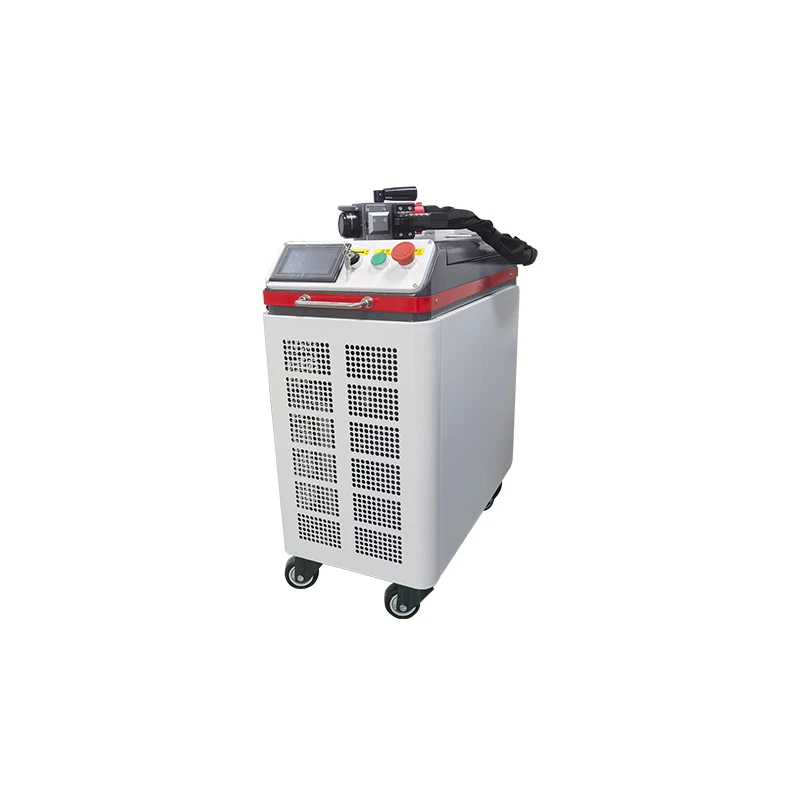
See Our Specific Paint Removal Solutions: Different industries require different laser strategies. We have detailed guides for your specific application:
- Aerospace & Aviation: Paint stripping for composite parts and aluminum skins.
- [Injection Molds]: Residue cleaning for tire, shoe, and plastic molds without abrasion.
- Automotive Restoration: Rust and paint removal for car bodies and chassis.
- Historical Restoration: Gentle cleaning for stone, bronze, and artifacts.
Safety & Compliance
Industrial laser cleaning machines are Class 4 devices—the most hazardous classification regulated by OSHA and ANSI Z136.1.
- Eye Safety: Direct or scattered laser radiation can cause instantaneous, permanent blindness. Standard shop glasses offer zero protection. Operators must wear certified eyewear with an Optical Density (OD) of 6+ or 7+ specific to the 1064nm wavelength.
- Fume Extraction: When paint is vaporized, it turns into hazardous gas and nanoparticulate dust. Vaporizing lead paint, primer, or polyurethane releases toxic fumes (including isocyanates). A high-static-pressure fume extractor with HEPA filtration is mandatory.
- The LSO Requirement: In the U.S., any facility operating Class 4 lasers generally requires a designated Laser Safety Officer (LSO) to oversee safety protocols, hazard zones, and training.
ROI vs. Sandblasting
While the entry cost for a laser is higher than a sandblasting pot, the Operational Expenditure (OpEx) is where the laser wins.
| Cost Factor | Laser Cleaning | Sandblasting |
| Consumables | Near Zero (Protective Lens / Electricity) | High (Grit, Nozzles, Diesel) |
| Waste Disposal | Low (Captured Dust only) | High (Tons of contaminated media) |
| Labor (Cleanup) | Minimal (Sweep up dust) | High (Media containment/removal) |
| Running Cost | <$1.00 / hour | $20.00+ / hour |
The ROI Case: A laser cleaning machine typically pays for itself in environments with high consumable costs (media blasting) or high downtime costs (mold cleaning). For a service provider, charging $150–$300/hour for mobile laser cleaning can yield a rapid ROI, provided the machine is matched correctly to the job.
Conclusion: Is It Feasible for You?
Laser cleaning is a precision instrument, not a universal replacement for abrasive blasting. Use this final checklist to decide:
- Is the substrate metal? (Yes = ✅ Go).
- Is the paint layer <500 microns? (Yes = ✅ Efficient).
- Is the surface highly sensitive (mold/thin auto body)? (Yes = Buy Pulsed).
- Is it heavy rust on thick steel? (Yes = Buy CW).
- Are you cleaning wood? ( Proceed with extreme caution; request a sample test first).
Next Step: Do not rely on spec sheets alone. Request a sample processing video from the manufacturer on your specific material to verify speed and finish before purchasing.
FAQs
Yes, a laser cleaning machine can remove paint from many metal surfaces, including steel, stainless steel, aluminum, and industrial parts. Metal is usually one of the best candidates for laser paint removal because the process offers controlled cleaning without abrasive contact. Results still depend on coating thickness, surface condition, and the type of laser used.
It depends on the job. A CW laser is usually better for heavy steel, large surfaces, and faster bulk paint stripping. A pulsed laser is usually better for thin metal, molds, sensitive parts, and applications where lower heat input and better surface control are needed.
Wood can be cleaned with a laser in some cases, but it depends heavily on the finish and surface condition. Wood should only be cleaned with a pulsed laser cleaner, and a 200W pulsed laser is often a better fit than higher-power options. White paint and varnish are usually poor candidates, and wax should be removed first before laser cleaning is attempted.
Not always. Laser paint removal is usually better when you need controlled cleaning, lower consumable use, less waste, and better surface protection. Sandblasting is often better for very thick coatings, large low-value surfaces, and jobs where maximum stripping speed matters more than precision.