
Getting the perfect laser weld can feel more like an art than a science. If you’ve ever been trapped in the endless cycle of adjusting power and speed, burning through time and expensive materials, you know the frustration. A setup that works for stainless steel might completely fail on aluminum, which is why many professionals now rely on a Laser Welding Parameter Calculator to move beyond simple guesswork.
What if you could skip that frustration and start with a scientifically-backed baseline?
This guide provides exactly that: an expert breakdown of laser welding parameters, perfectly aligned with our free online calculator. The recommendations here aren’t just theory; they are based on extensive experimental data to give you a reliable starting point for common materials and thicknesses, helping you move from setup to production faster than ever.
The Core Tool: Your Instant Laser Welding Parameter Calculator
Our calculator is designed for simplicity and accuracy. By entering your material and its thickness, you get an instant, actionable recommendation. Use the tool below to get a solid baseline for your first test.
How It Works
1. Select Your Material: The calculator groups materials by their welding characteristics.
- Stainless Steel / Carbon Steel: These are the most common materials, known for their excellent weldability.
- Aluminum: This lightweight metal is more challenging due to its high reflectivity and thermal conductivity.
- Brass / Galvanized Steel: These materials require special attention due to the low boiling point of zinc, which is present in both.
2. Input Thickness (mm): Enter the thickness of a single plate. This is the most critical factor for determining the required power.
3. Get Your Results: The calculator provides a recommended power and speed range optimized for a butt weld. This gives you a strong, scientific starting point. For other weld types, see our expert tips in the section below.
Understanding Your Parameters: The ‘Why’ Behind the Weld
Knowing what the numbers mean empowers you to intelligently adjust the baseline figures provided by our Laser Welding Parameter Calculator.
Laser Power (W)
Power is the primary driver of penetration. As you can see in our calculator’s logic, thicker materials require more power to melt completely. Notice that aluminum and brass require more power than steel at the same thickness. This is to overcome their natural reflectivity and heat dissipation.
Welding Speed (mm/s)
Our calculator provides a speed range. Why? Because the ideal speed is a balance. Start in the middle of the recommended range.
- Too Fast (closer to the high end): Can lead to incomplete penetration.
- Too Slow (closer to the low end): Can cause burn-through or an excessively large heat-affected zone (HAZ).
Shielding Gas
The gas protects the molten weld pool from oxygen in the air.
- Ar / N₂: For stainless and carbon steel, Argon (Ar) is a universal choice. Nitrogen (N2) is a more economical option that can work well with many stainless steels.
- Argon (Ar): For aluminum, brass, and galvanized steel, pure Argon is essential. It is inert and prevents reactions with the molten metal, ensuring a clean, strong weld.
Adjusting for Weld Type
Your calculator provides a baseline for butt welds. If you are performing a different type of weld, you will need to adjust the recommended power. Here is a general guide:
- Butt Weld: Use the power recommended by the calculator.
- Lap Weld: This requires more energy to penetrate the top layer and fuse to the bottom. Increase the recommended power by 10-15%.
- Fillet Weld (T-Joint/Corner): This is the most demanding type. Because the heat must cover two surfaces, you should increase the recommended power by 20-30% from the calculator’s value.
The Calculator in Action: Real-World Case Studies
Let’s see how the calculator’s specific recommendations apply to real-world jobs.
Case Study 1: Welding 1.5mm Stainless Steel
- Scenario: A workshop needs to weld 1.5mm stainless steel sheets for a commercial kitchen counter.
- Calculator Inputs: Material = Stainless Steel , Thickness = 1.5 mm.
- Calculator Output: Power = 800W, Speed = 40 – 80 mm/s, Gas = Ar / N₂.
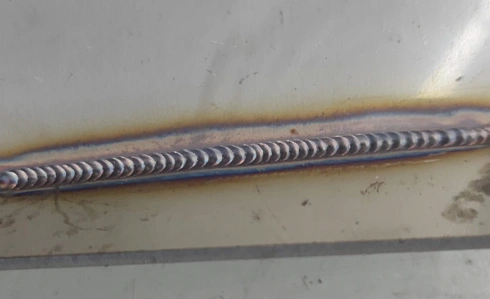
- Result: The resulting weld is a perfect example of what these parameters can achieve. The image below shows a bright, silvery weld seam with a consistent width and smooth, even ripples (“fish scales“). There is no sign of undercut, porosity, or excessive heat tint (discoloration), indicating excellent gas shielding and a perfectly balanced heat input. The weld is both structurally sound and visually flawless, ready for final polishing without extensive post-processing.
Case Study 2: Sealing a 2.0mm Aluminum Casing
- Scenario: An electronics manufacturer is welding a 2.0mm aluminum casing that needs a solid, reliable seal.
- Calculator Inputs: Material = Aluminum, Thickness = 2.0 mm.
- Calculator Output: Power = 1200W, Speed = 35 – 60 mm/s, Gas = Argon (Ar).
- Result: The higher 1200W power successfully overcomes aluminum’s reflectivity. A starting speed of 45 mm/s provides deep penetration without overheating the part, resulting in a strong, continuous seal.
Your Starting Point: Important Disclaimer & Next Steps
This tool is designed to get you into the optimal processing window faster than ever. However, it’s crucial to understand its role.
Important Disclaimer
The values generated are strong recommendations based on common laser welding systems. A perfect weld depends on many variables. Results can be influenced by:
- Your specific laser’s beam quality (M2) and focus.
- Material surface cleanliness (oils or coatings).
- The precision of your part fit-up (weld gap).
We strongly recommend you use these values as your starting point for a test piece. Begin with the recommended power and a speed in the middle of the suggested range, then make small adjustments to perfect the result for your machine.
Ready to Take the Next Step?
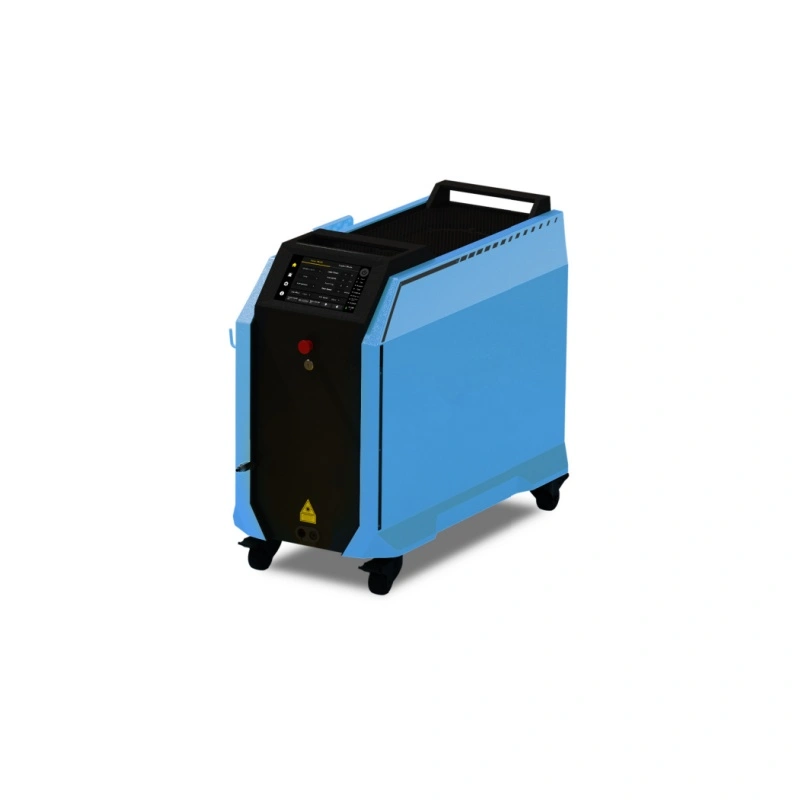
Our team of welding engineers is ready to help you succeed. If you’re facing complex requirements or working with a challenging material, you can get a custom solution by contacting our experts for a free consultation. And if you’re ready to achieve flawless results, the right machine makes all the difference—discover our advanced laser welding equipment engineered for superior performance and reliability.
FAQs
Laser welding parameters are usually based on material type, thickness, and weld type. A calculator helps you estimate the right power, speed, and shielding gas, then you fine-tune the settings with a test weld.
For stainless steel, a good starting point is moderate power, relatively fast travel speed, and argon or nitrogen shielding gas. The exact settings depend on thickness and joint fit-up.
Aluminum usually needs higher power and tighter control than stainless steel because it reflects more laser energy and transfers heat quickly. Pure argon is typically the best shielding gas for aluminum welding.
The required power mainly depends on the material and thickness. Thicker materials need more power, and reflective metals like aluminum usually need more power than steel at the same thickness.
Argon is the most common shielding gas for laser welding because it works well across many materials. For stainless steel and carbon steel, nitrogen can also be a practical option in some cases.
Even with the right baseline settings, poor results can still come from dirty material, incorrect focus, poor fit-up, or weak gas shielding. A calculator gives you a starting point, but test welding is still necessary.