
A thorough laser cleaning technology comparison is the first step toward eliminating the downtime, secondary waste, and substrate damage associated with traditional abrasive blasting. For industrial maintenance and plant engineers, replacing sandblasting or chemical dipping with non-contact cleaning offers a massive return on investment. However, choosing the wrong laser cleaning machine can result in inefficient cleaning or irreversible thermal damage to critical machinery.

This guide breaks down the physics of laser ablation, compares the four primary laser types (Pulsed Fiber, Continuous Wave Fiber, CO2, and Nd:YAG), and maps each technology to its ideal industrial application.
How Laser Cleaning Technology Works
Laser cleaning does not touch the metal physically. Instead, it shoots focused light to safely burn off or flake away rust, paint, and oil. Why doesn’t it melt the metal underneath? It comes down to a rule called the ablation threshold.
Think of the ablation threshold as a breaking point. Every material needs a specific amount of energy to break its chemical bonds. Rust and paint break apart easily. Solid steel needs a lot more heat to melt. When you tune a laser correctly, it has enough power to blast away the rust, but the light safely bounces off the steel base. This leaves your part perfectly intact and achieves a high cleanliness grade, like ISO 8501-1 Sa 2.5 or Sa 3.
The laser removes contaminants in three ways:
Shockwaves (Plasma): Powerful, fast laser pulses create tiny shockwaves that break the paint’s grip on the metal.
Heating and Vaporizing (Photothermal): The rust absorbs the light, gets very hot, and turns to gas.
Thermal Stress (Spallation): Fast heating makes the rust crack and flake off the base metal.
Pulsed Fiber vs CW, CO2, and Nd:YAG: Comparing Laser Types
When buying a system, you need to know the difference between the laser source (what makes the light) and the operating mode (how the light comes out).
1. Pulsed Laser Cleaning Machine (The Precision Tool)
These lasers shoot energy in incredibly fast bursts, measured in nanoseconds. Many use a setup called MOPA, which lets the operator change how long each burst lasts.
- Best for: Cleaning injection molds, prepping aerospace parts, and detailing fine metal pieces like jewelry molds without harming the metal.
- Why it wins: The short pulses do not give heat time to soak into the base metal. This creates a near-zero “Heat-Affected Zone” (HAZ), meaning your delicate parts will not warp or melt.
2. Continuous Wave (CW) Laser Cleaning Machine (The Heavy Lifter)
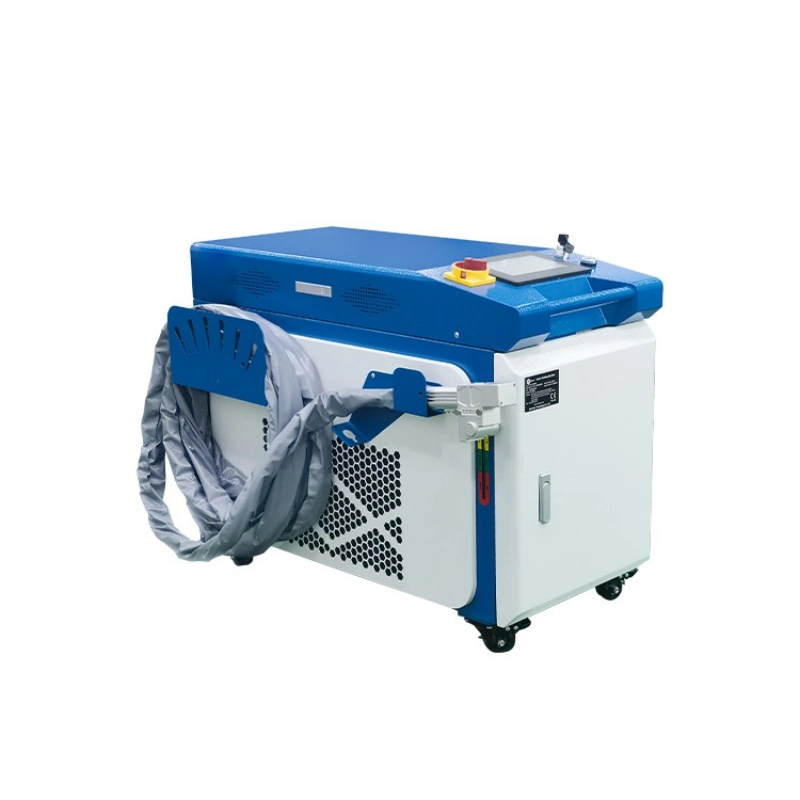
CW lasers shoot a steady, nonstop beam of light. They have high average power and are built to clean huge areas very fast.
- Best for: Stripping thick rust from heavy steel beams, ship hulls, and bridge girders.
- Why it wins: Pure speed. A 1500W CW laser can strip heavy, Grade C rust at speeds over 5 square meters per hour (m²/h). But be careful: the constant heat can warp thin metals.
3. CO2 Laser Cleaning Machine (The Paint Stripper)
Fiber lasers use a wavelength of light (around 1.06 µm) that bounces off metal. CO2 lasers use a longer wavelength (10.6 µm). Non-metal materials soak up this longer wave easily.
- Best for: Removing thick plastics, stripping organic paint, and cleaning airplane parts without damaging the carbon fibers underneath.
- Why it wins: It works incredibly well on non-metals and is highly effective in automated, robotic paint-stripping cells.
4. Nd:YAG Laser Cleaning Machine (The Legacy Tool)
These are older, solid-state lasers that ruled the market before fiber lasers became popular.
- Best for: Restoring historical stone buildings, cleaning bronze statues, and completing older aerospace jobs that require specific legacy instructions.
- Why it wins: People have used them for decades, so there are highly trusted settings for delicate art. However, they usually require more maintenance than newer fiber lasers.
Industrial Laser Cleaning Comparison Matrix
Use this simple chart to compare your options when shopping for a system.
| Feature | Pulsed Fiber (MOPA) | Continuous Wave (CW) Fiber | CO2 Lasers | Nd:YAG (Pulsed) |
| Precision | Very High | Medium | Medium | High |
| Heat Risk to Part | Very Low | Medium to High | Medium | Low to Medium |
| Upkeep Needs | Low | Low | High (Mirrors & Gas) | Medium (Alignment) |
| Energy Efficiency | High | Very High | Low | Low to Medium |
| Best For | Molds, thin metals, fine detail | Heavy structural steel rust | Plastics, thick paint | Historical stone, old |
Safety Rules for Industrial Laser Cleaning Systems
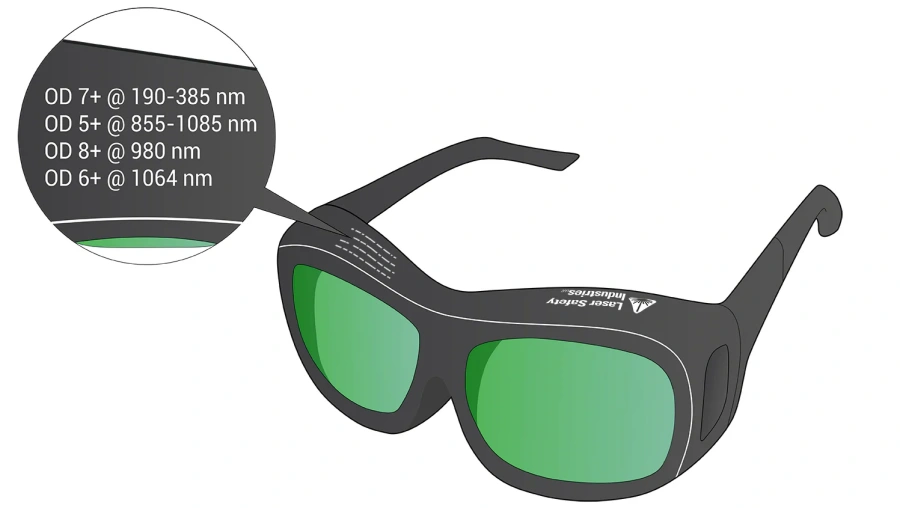
Laser cleaning is very safe if you follow the rules. But remember, these are serious industrial tools.
- Class 4 Laser Rules: Most industrial cleaning lasers are Class 4 devices. Following standard safety rules (like ANSI Z136.1), you need warning signs, a designated Laser Safety Officer (LSO), and a restricted work zone.
- Safety Glasses: Workers must wear laser safety glasses. The glasses must have the correct Optical Density (OD) rating for your specific laser’s wavelength (such as OD 6+ for a fiber laser).
- Fume Extraction is Required: Lasers turn rust, paint, and oil into smoke. This smoke can contain harmful materials like lead or hexavalent chromium. You must use a heavy-duty HEPA fume extractor right at the nozzle to suck up these dangerous particles immediately.
Future Trends in Laser Cleaning Technology
The technology is getting smarter every year. By 2026, you will see more of the following:
- Smart Cameras: Lasers equipped with AI cameras that “see” how thick the rust is and change their power instantly so they do not over-clean the part.
- Combo Systems: Mobile machines that use magnets to heat up massive bridge structures first, then use lasers to strip the rust twice as fast.
Laser vs Sandblasting: The ROI of Non-Contact Cleaning
Switching from messy blasting media to a laser system cuts out waste disposal costs and protects your expensive tools. The most important step is finding the exact laser settings for your specific dirt and metal.
Ready to see it work on your actual parts? Contact the Riselaser team today to schedule a sample cleaning test or an application audit.
FAQs
No, as long as the settings are correct. Lasers rely on the “ablation threshold.” Rust, paint, and oil burn away at a much lower energy level than solid metal melts. Once the laser burns through the dirt, the light simply bounces off the bare metal underneath, leaving it completely undamaged.
A pulsed laser shoots very fast bursts of light (nanoseconds). This keeps the part cool and prevents warping, making it perfect for delicate molds or thin aerospace parts. A CW laser shoots a constant, nonstop beam. It is much faster for stripping heavy rust off thick steel beams, but the constant heat can warp thin metals.
In many cases, yes. A laser can achieve standard industrial cleanliness grades (like ISO 8501-1 Sa 2.5 or Sa 3) without creating dusty secondary waste. However, lasers only clean what they can “see” (line-of-sight). Sandblasting is sometimes still needed for deep, hidden corners or complex internal pipes where the laser beam cannot reach.
Yes, but you must follow strict safety rules. Almost all industrial cleaning lasers are Class 4 devices. Workers must wear specific laser safety glasses with the correct Optical Density (OD) rating (such as OD 6+ for a 1064nm fiber laser). Because burning paint and rust creates toxic smoke, you must also use a heavy-duty HEPA fume extractor to pull the smoke away from the worker’s face.